

Literary history
The movements, magazines and moments that made the classics.
All literary history articles
1–24 of 30

 Literary history · 3 min read
Books About Christmas Traditions, Folklore and History
If you want to follow the stories behind seasonal customs, a historical Christmas book opens a different kind of December reading. Begin with a question rather than an assumption about one universal Christmas.
 Literary history · 4 min read
The golden age of the English ghost story
For roughly eighty years, from the age of Dickens to the First World War, English writers turned the ghost story into an art. Here is what made that golden age, the writers who defined it, and the collections that still chill a winter evening.
 Literary history · 4 min read
What was the sensation novel?
In the early 1860s British readers discovered that the most frightening place in fiction was not a ruined castle but a well-kept country house. Sensation fiction was the result, and critics hated it almost as much as readers loved it.
 Literary history · 4 min read
The New Woman novels of the 1890s
In the 1890s a new heroine walked into English fiction: educated, unmarried by choice, earning her own living and arguing about it. Critics called her the New Woman, and the novels about her were among the most argued-over books of the decade.
 Literary history · 4 min read
The Jazz Age in fiction: Fitzgerald and the novels of the 1920s
The phrase was already in the magazines before F. Scott Fitzgerald borrowed it for a book title in 1922. What he did was give the Jazz Age its fiction: the parties, the money, the bobbed hair, and the hangover that followed.
 Literary history · 4 min read
What is naturalism? Zola and the realist novel
Naturalism was the nineteenth-century novel at its most unflinching: heredity, hunger, money and desire, observed as coolly as a scientist observes an experiment. Here is what Émile Zola meant by it, and where to start reading.
 Literary history · 4 min read
What is the social contract? Hobbes, Locke and Rousseau explained
Three philosophers, one question: why should anyone obey a government? Their answers run from absolute monarchy to the right of revolution, and they still shape how we argue about power.
 Literary history · 5 min read
Who really wrote Nancy Drew and the Hardy Boys? The Stratemeyer Syndicate
Carolyn Keene and Franklin W. Dixon never existed. Behind both names stood one company, the Stratemeyer Syndicate, which turned children’s fiction into something close to a production line.
 Literary history · 4 min read
Transcendentalism explained: Thoreau, Emerson and Whitman
A few dozen ministers, teachers and writers around Concord, Massachusetts, decided that truth was found by looking inward and outward at nature rather than up at authority. The books they wrote are still some of the most read in America.
 Literary history · 4 min read
The Lost Generation writers, explained
The most famous label in American literature may have started as a French garage owner’s complaint about a slow mechanic. Here is who the Lost Generation writers were, how they got their name, and why the man who made it famous never quite believed it.
 Literary history · 3 min read
The Edwardian novel: between Victoria and the war
Edward VII reigned for only nine years, but the novels written under him, and in the four years after, have a flavour all their own: comic, argumentative, anxious about money and class, and lit by a long late summer that everyone now knows was ending.
 Literary history · 4 min read
The slave narratives that changed history
Three words on a title page, “Written by Himself”, were a political act. The narratives written by people who had escaped or survived slavery changed minds in Britain and America, and they remain some of the most powerful books in English.
 Literary history · 4 min read
The Golden Age of children’s literature, explained
In about sixty years, between Alice falling down a rabbit hole and Pooh getting stuck in one, writers in Britain and America invented the modern children’s book. Historians call it the Golden Age of children’s literature, and we are still reading its books.

 Literary history · 4 min read
The pulp magazines that gave us Tarzan, John Carter and Cthulhu
For about sixty years, American readers could buy a fat magazine of new stories printed on paper so cheap it crumbled. Those magazines introduced Tarzan, John Carter of Mars, Zorro and Cthulhu, and invented whole genres along the way.
 Literary history · 4 min read
The Brontës of Haworth: one family, seven novels
Between 1847 and 1857, seven novels by three sisters from one Yorkshire parsonage came into print, two of them among the most famous in English. This is the story of the Brontë family, the house they wrote in, and the order in which to read them.
 Literary history · 3 min read
The golden age of Russian literature
In a single lifetime, Russia went from having almost no novels of its own to producing several of the greatest ever written. Here is what people mean by the golden age of Russian literature, where its edges blur, and how to find your way in.
 Literary history · 4 min read
The books behind the American Revolution, from Locke to the Federalist Papers
The American Revolution was argued on paper before and after it was fought. Four books, none of them long, show how a colonial quarrel became a new kind of country.

 Literary history · 4 min read
Did you know many great Victorian novels first came out in instalments?
Many of the great Victorian novels were not born as fat books. They first reached their readers in thin weekly or monthly instalments, read aloud at the fireside, argued over at work and waited for with real impatience. That rhythm shaped how they were written.
 Literary history · 4 min read
Who were the Bright Young Things? The 1920s set behind Vile Bodies
They threw fancy-dress parties, raced round London on midnight treasure hunts and read about themselves in the morning papers. Then Evelyn Waugh, one of their own, wrote the novel that fixed them in place.
 Literary history · 4 min read
Who collected the fairy tales? Grimm, Andersen and Lang
Three names sit on the spines of the great fairy-tale books, and each did a different job. The Grimms gathered stories from the people around them, Andersen wrote most of his own, and Andrew Lang, by his own cheerful admission, mainly supervised his wife.
 Literary history · 4 min read
Modernism explained in four books
Literary modernism can sound like a seminar topic, but it comes down to a handful of books that changed how a story could be told. Read these four and you will know what the word means, and why it still matters.
 Literary history · 4 min read
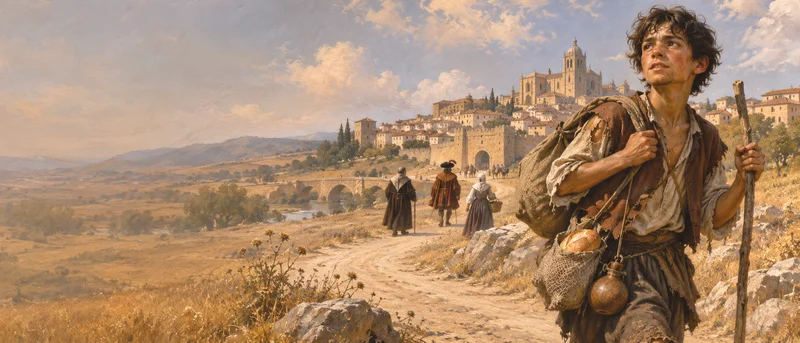
What is a picaresque novel? From Lazarillo de Tormes to Roderick Random
A hungry boy, a series of bad masters, and a narrator who tells you exactly how he cheated them. The picaresque began as a short anonymous book in sixteenth-century Spain and ended up shaping the English novel.
 Literary history · 4 min read
The Harlem Renaissance: where to start reading
In the 1920s Harlem became the capital of Black American writing, music and thought, and a run of books appeared that changed American literature. Here is what the Harlem Renaissance was, where its edges lie, and which books to read first.
 Literary history · 5 min read
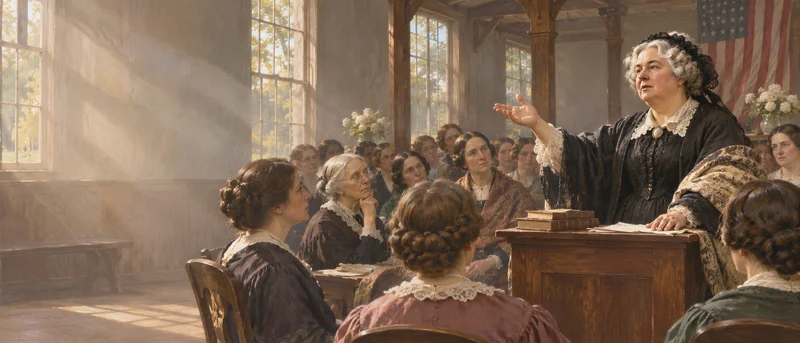
Classic books from the fight for women’s votes
The campaign for women’s votes took more than a century on both sides of the Atlantic, and it left a shelf of books behind it. Read in order, they tell the story of the fight from the inside.