

Authors
Where to begin with the writers behind the classics.
All authors articles
1–24 of 110

 Authors · 3 min read
Mrs. Molesworth’s Christmas Books Aren’t All Fairy Tales
Mrs. Molesworth offers more than one kind of Christmas reading. An enchanted landscape, a portrait of childhood and a gathering of stories each invite a different pace.

 Authors · 3 min read
Marie Corelli’s Christmas Books: Wonder and Satire
Marie Corelli’s Christmas shelf offers two different invitations: a collection of seasonal forms and a supernatural encounter that puts wealth and sympathy under pressure.

 Authors · 3 min read
Christmas Stories or Poems? Eugene Field Gives You Both
Field’s collection lets prose and poetry share a Christmas shelf. Childhood imagination, tenderness and faith give the volume a seasonal center without requiring every piece to sound alike.

 Authors · 3 min read
Christmas at Thompson Hall: Trollope’s Festive Farce
A Christmas journey and a misplaced mustard plaster are enough to upset a respectable couple’s plans. Trollope’s short festive comedy turns embarrassment into its own kind of adventure.

 Authors · 3 min read
The Brownies and Other Tales: Ewing’s Christmas Magic
Ewing’s collection lets domestic life open into imaginative worlds. Christmas trees, lost toys and fairy-tale encounters offer several ways to think about habits, kindness and responsibility.

 Authors · 3 min read
Christmas Beyond the Country House: Jacob Riis’s New York
Riis’s Christmas collection asks readers to notice lives beyond the comfortable festive room. Children, working households and crowded city settings give its goodwill a material context.
 Authors · 3 min read
Did You Know Alcott Wrote a Christmas Thriller?
Alcott’s Christmas writing can welcome you into a family or unsettle a holiday gathering. Little Women and The Abbot’s Ghost make an unusually revealing seasonal pair.

 Authors · 3 min read
Lucy Ellen Guernsey’s Christmas Books: A Reading Guide
A disrupted journey, money earned for Christmas and the adventures of a kitten give Lucy Ellen Guernsey several ways to turn the season into a question about everyday conduct.

 Authors · 3 min read
A Little Book of Christmas—or A Little Book for Christmas?
A small Christmas collection can hold several different approaches to generosity. Bangs brings wit and warmth to four stories that make seasonal certainty worth questioning.

 Authors · 3 min read
A Christmas Garland: 17 Literary Impersonations
The festive title can be misleading if you expect a shelf of cozy holiday plots. A Christmas Garland makes the habits of literary voices part of the entertainment.

 Authors · 3 min read
Harriet Beecher Stowe’s Christmas and Domestic Stories
This three-work volume offers a smaller-scale route into Stowe’s interests in domestic relationships, moral choices and the uses of Christmas history.

 Authors · 3 min read
The Romance of a Christmas Card: A Reader’s Guide
A seasonal greeting can travel farther than the person who sends it. Wiggin makes a Christmas card the center of a compact story about memory, home and the possibility of reconnection.
 Authors · 3 min read
Did you know the first O. Henry stories were published while he was in prison?
The legend says O. Henry discovered writing in a prison cell. The truth is odder: William Sydney Porter was already a writer when he went in, there is no record that he ever lived in a cell, and the name the world remembers first appeared in print while he was working nights in the prison pharmacy.

 Authors · 4 min read
Shakespeare’s comedies, ranked for first-time readers
Not every Shakespeare comedy ends in a wedding, and not every one is easy going. Here are the five that reward a first-time reader most, in the order we would read them.

 Authors · 5 min read
Did you know Jack London went to the Klondike? The books it inspired
Jack London went north in 1897 to dig for gold and came home a year later with almost none. What he carried back instead was a winter’s worth of cold, dogs and desperate men, and it became the Jack London books that people still read first.
 Authors · 4 min read
Did you know Frederick Douglass wrote three autobiographies?
Frederick Douglass published his life story in 1845, again in 1855 and a third time in 1881. Each version tells you something the others could not, because each was written by a man with a different kind of freedom.
 Authors · 4 min read
Where to start with Henry James
Henry James has a reputation as the hardest of the great novelists, and his late sentences can be a workout. But he also wrote short, funny, frightening books, and if you take them in the right order the difficult ones start to sing.
 Authors · 5 min read
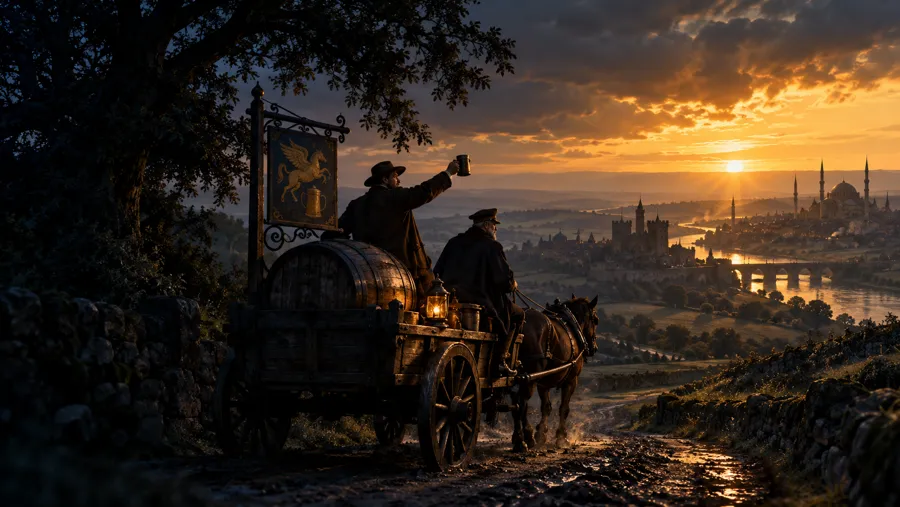
G. K. Chesterton’s comic novels, from The Napoleon of Notting Hill to The Flying Inn
G. K. Chesterton’s novels are comedies with an argument folded inside them. Here they are in order, from The Napoleon of Notting Hill to The Flying Inn, with what each one is really fighting about.

 Authors · 4 min read
Where to start with D. H. Lawrence
Most readers know D. H. Lawrence for one novel, the last he wrote, and know it mainly for a court case. Start there and you may wonder what the fuss was about. Start at the beginning and you will see why he matters.

 Authors · 3 min read
Elizabeth von Arnim and The Enchanted April
In 1898 one of the most talked-about books in London had no author’s name on it. Its writer signed herself Elizabeth, lived on a Prussian estate, and called her husband the Man of Wrath.

 Authors · 4 min read
Ernest Bramah: from Kai Lung to Max Carrados
One of the most quoted “ancient Chinese curses” is sometimes pinned on him, and it is not in his books. Ernest Bramah’s real inventions are stranger: a storyteller who talks his way out of execution, and a detective who cannot see.
 Authors · 4 min read
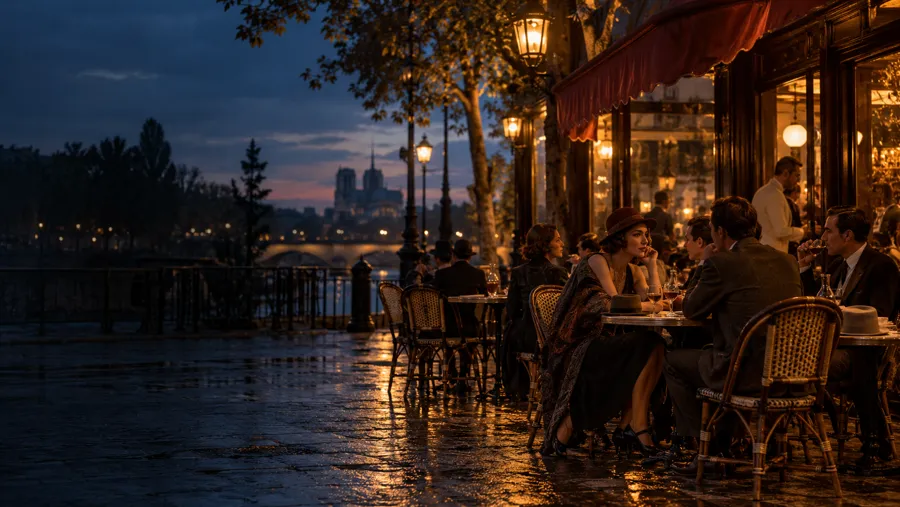
Hemingway’s first great novels: The Sun Also Rises and A Farewell to Arms
In three years Ernest Hemingway went from a young reporter with a few slim books to one of the most imitated prose stylists in America. Two novels did it: one about the peace after the First World War, one about the war itself.

 Authors · 4 min read
Where to start with W. Somerset Maugham
W. Somerset Maugham qualified as a doctor in 1897, a month after his first novel appeared, and never practised. Eleven years later he had four plays running in London at once, and he went on to become one of the most widely read storytellers of the twentieth century.

 Authors · 4 min read
Who was Saki? The sharpest short stories in English
Behind the pen name Saki stood Hector Hugh Munro, a journalist with perfect manners and a merciless imagination. Saki’s short stories are brief, elegant and quietly savage, and they are among the funniest things written in English before the First World War.