
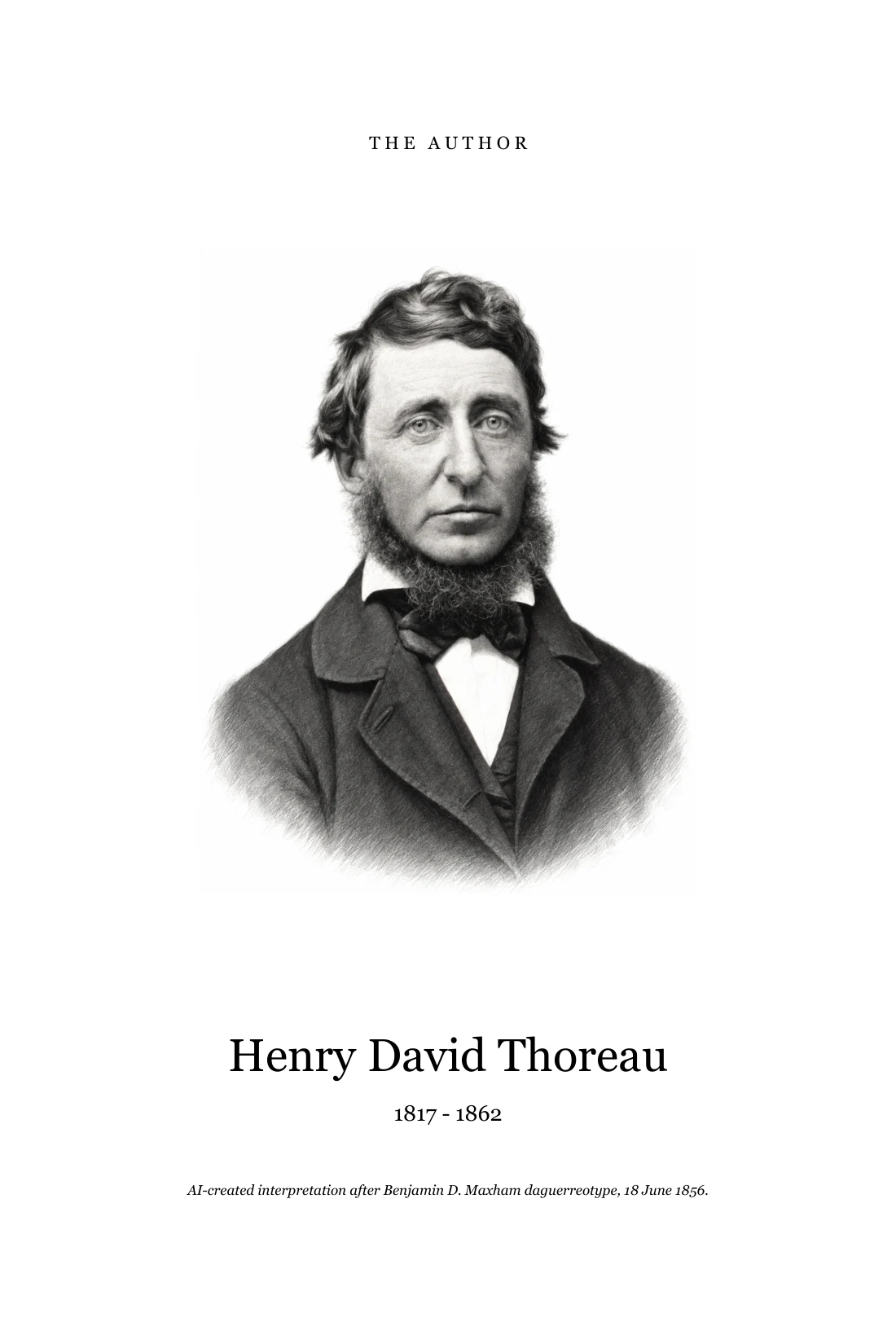
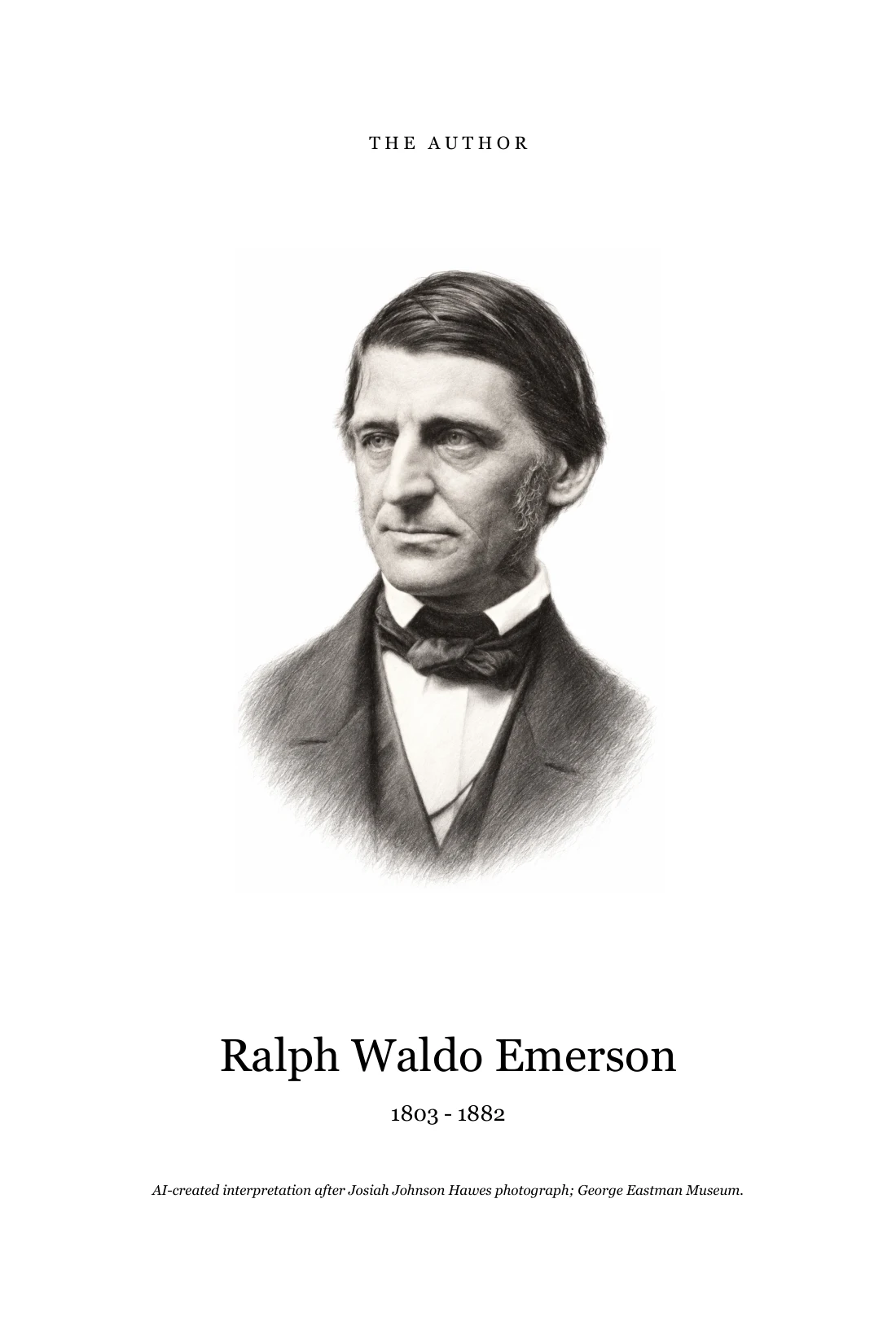
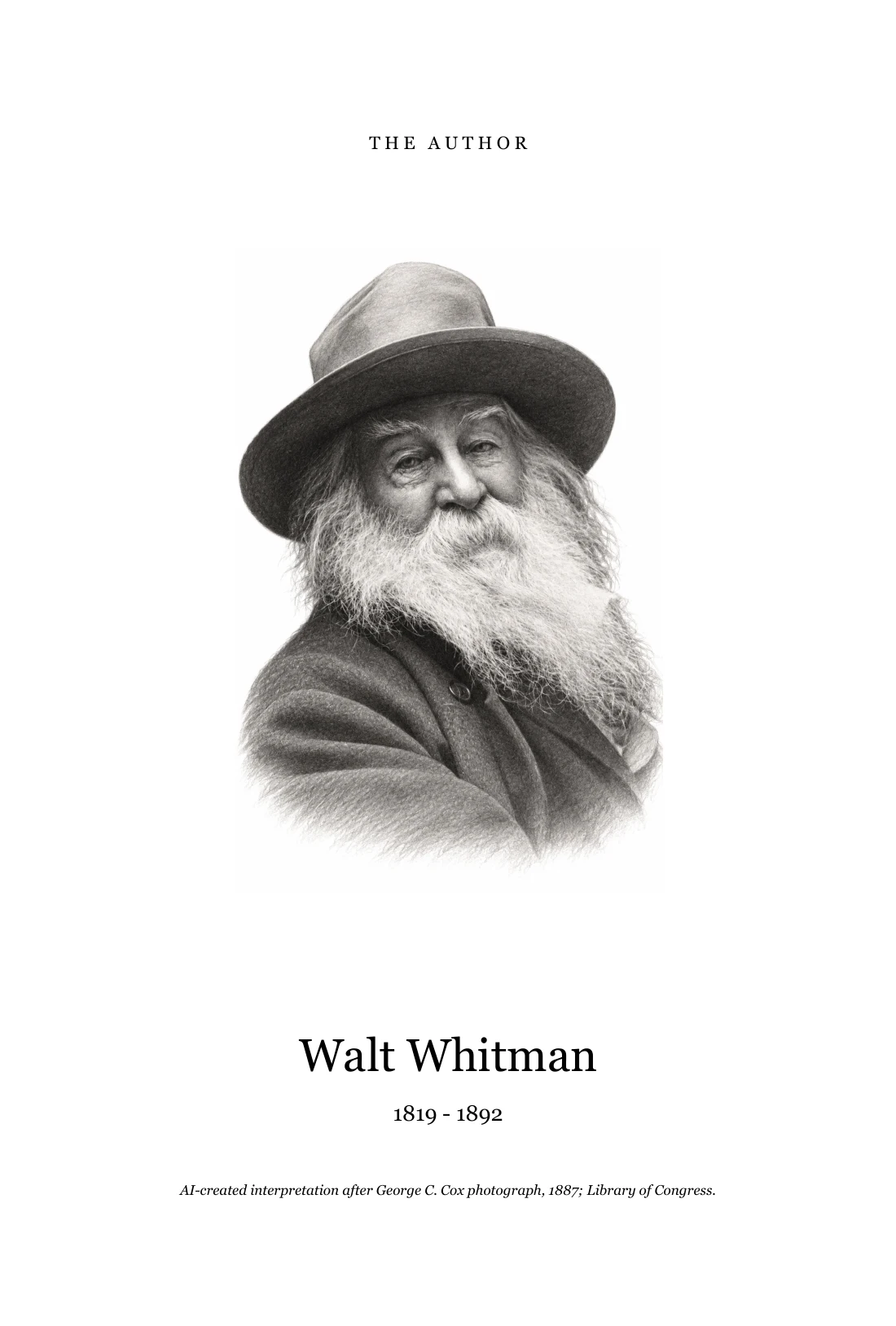
Two of the founding books of American literature began on the Fourth of July. On Independence Day 1845, Henry David Thoreau began sleeping in the small cabin he had built beside Walden Pond, on land owned by his friend Ralph Waldo Emerson. He said the date was an accident. Ten years later, on 4 July 1855, a Brooklyn journalist named Walt Whitman published a thin book of twelve poems at his own expense and called it Leaves of Grass.
Both men were children of Transcendentalism, the movement that Emerson led from Concord from the 1830s. It was less a school of thought than a mood: a conviction that every person can know truth directly, through intuition and through nature, without needing a church, a university or a government to explain it. Its books, from Emerson’s essays to Walden and Leaves of Grass, are the best way to understand it.
What is Transcendentalism?
The movement grew out of Boston Unitarianism, a rational and rather polite form of Protestant Christianity taught at Harvard. Many of the early Transcendentalists were Unitarian ministers who found that faith too cool. Drawing on German philosophy, mostly as relayed by Coleridge and Carlyle, on Romantic poetry and on newly translated Hindu scriptures such as the Bhagavad Gita, they argued that the divine is present in nature and in every individual soul, and that a person’s own intuition is a better guide than custom or creed.
In September 1836 Emerson, Frederic Henry Hedge, George Ripley and George Putnam met in Cambridge, Massachusetts, to talk about forming a club. At first it was called Hedge’s Club, because it met when Hedge was visiting from Maine. The same year Emerson published Nature, a short book that became the movement’s manifesto. Later members included Bronson Alcott, Theodore Parker, Elizabeth Peabody and the critic Margaret Fuller, who became the first editor of the group’s magazine, The Dial.

Emerson: the voice
Emerson’s Essays: First Series (1841) is the movement in its purest form. It contains “Self-Reliance”, “The Over-Soul”, “Circles” and nine more, and its central idea is that each of us should trust our own thoughts over the opinions of society and the past. The essays are made of sentences rather than arguments, and many of them have become proverbs.
Trust thyself: every heart vibrates to that iron string.
Ralph Waldo Emerson, “Self-Reliance”, *Essays: First Series* (1841)
Not everyone was persuaded. One English reviewer complained that Emerson out-Carlyled Carlyle, and Jane Welsh Carlyle privately found him a considerable bore. But the essays found their readers, and their phrases have long outlived the complaints.
Thoreau: the experiment
Thoreau tried to live the ideas. He stayed at Walden from July 1845 to September 1847, two years, two months and two days, growing beans, reading, writing and watching the pond freeze and thaw. Walden (1854) condenses that time into a single year and is part memoir, part nature journal and part sermon against a society that makes people lead lives of quiet desperation. The cabin was a walk from town, and his mother sometimes did his laundry, which critics have enjoyed pointing out ever since; see Walden was near town.
His essay on civil disobedience, published in 1849 after he spent a night in jail for refusing to pay his poll tax, carried the movement’s individualism into politics.

Communes, quarrels and a satire
Some Transcendentalists tried to build new societies. In 1841 George Ripley and his wife Sophia founded Brook Farm, a cooperative community outside Boston where Nathaniel Hawthorne was briefly a member; it closed by 1847, and Hawthorne turned it into fiction in The Blithedale Romance. In 1843 Bronson Alcott and the Englishman Charles Lane started Fruitlands, a farm where members ate no animal products, drank only water and refused to use animal labour. It lasted seven months.
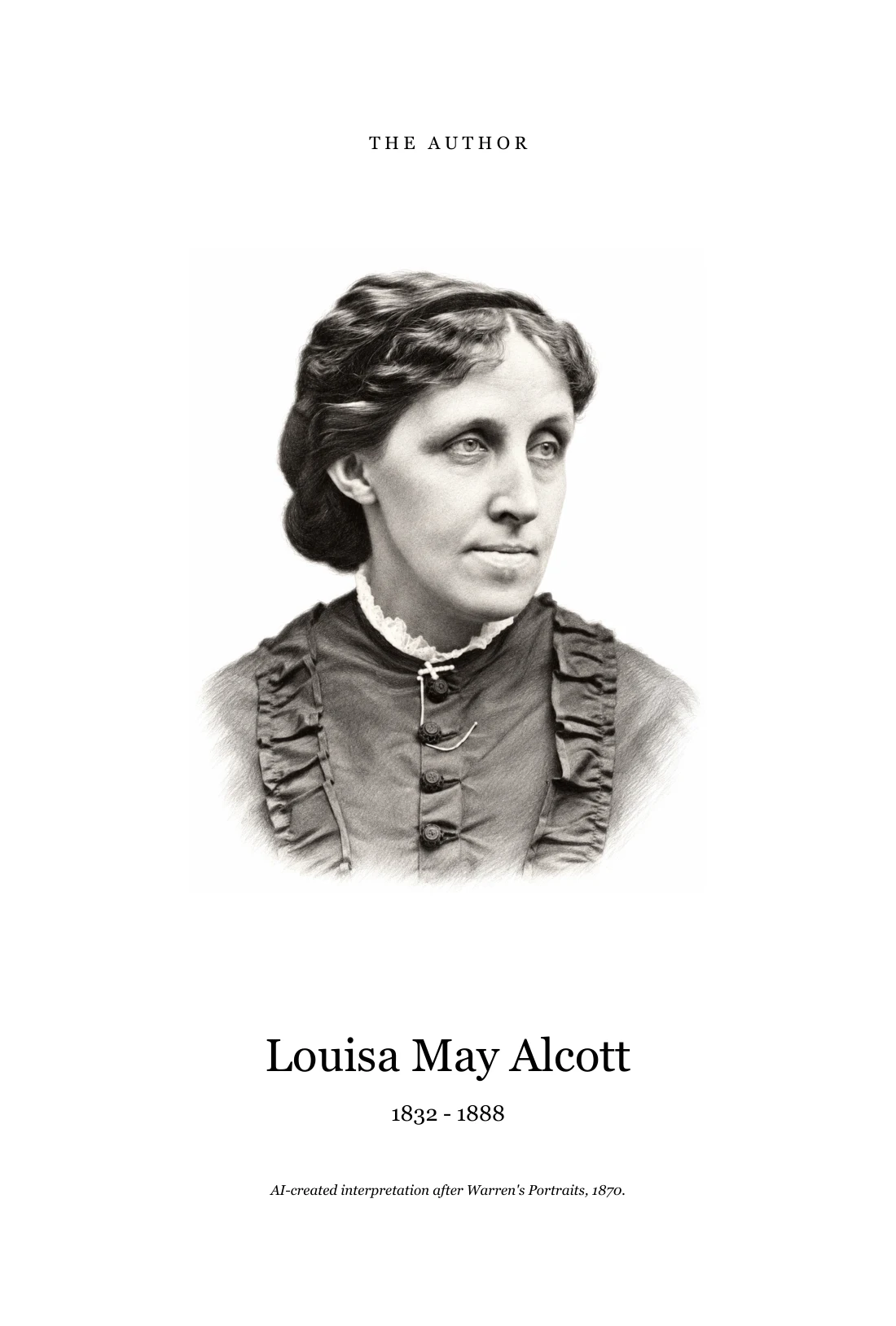
Louisa May Alcott grew up inside the movement. Emerson persuaded the family to move to Concord and paid their rent when money was short, and Thoreau taught her about plants and the natural world. You can feel that upbringing in Little Women, with its idealistic, impractical, absent father and its insistence on self-improvement, though the March girls are far funnier than any sermon.
Whitman: the heir
Whitman read Emerson’s 1844 essay “The Poet”, which called for a new poet equal to America, and set out to be him. When he sent Emerson the first Leaves of Grass, Emerson wrote back with extraordinary praise. Whitman let the letter be printed in the New York Tribune without Emerson’s permission and stamped one line of it, “I Greet You at the Beginning of a Great Career”, in gold on the spine of the 1856 edition. He went on revising and expanding the book until his death in 1892; see Leaves of Grass was rewritten for decades.
Transcendentalism books to read first
Walden
1854. Two years in a cabin, compressed into one: a classic of nature writing and a challenge to how we spend our days.
Essays — First Series
1841. Twelve essays including “Self-Reliance” and “The Over-Soul”, best read slowly, one at a sitting.
Leaves of Grass
1855 onwards. Whitman’s life’s work, from “Song of Myself” to his elegy for Lincoln, a democracy in verse.
Little Women
1868–69. The March sisters of Concord, written by a woman raised among the Transcendentalists, and wiser for it.


For more, see our classic essay collections and classic nature writing. Then begin with Walden by Henry David Thoreau, or with “Self-Reliance” by Ralph Waldo Emerson, and see whether the oldest American advice about trusting yourself still holds.
Questions readers ask
What is Transcendentalism in simple terms?
A nineteenth-century American movement, centred on Concord, Massachusetts, which held that people can find truth through their own intuition and through nature, and should trust themselves rather than tradition or institutions.
Who were the main Transcendentalist writers?
Ralph Waldo Emerson and Henry David Thoreau above all, with Margaret Fuller, Bronson Alcott, Theodore Parker and George Ripley. Walt Whitman is usually seen as their great heir.
What are the most important transcendentalism books?
Emerson’s Nature (1836) and Essays: First Series (1841), Thoreau’s Walden (1854) and his essay on civil disobedience (1849), and Whitman’s Leaves of Grass (1855).
Was Louisa May Alcott a Transcendentalist?
She was raised by one, the educator Bronson Alcott, and taught by Emerson and Thoreau. Her own writing is more practical and humorous, and she satirised her father’s commune in Transcendental Wild Oats (1873).