
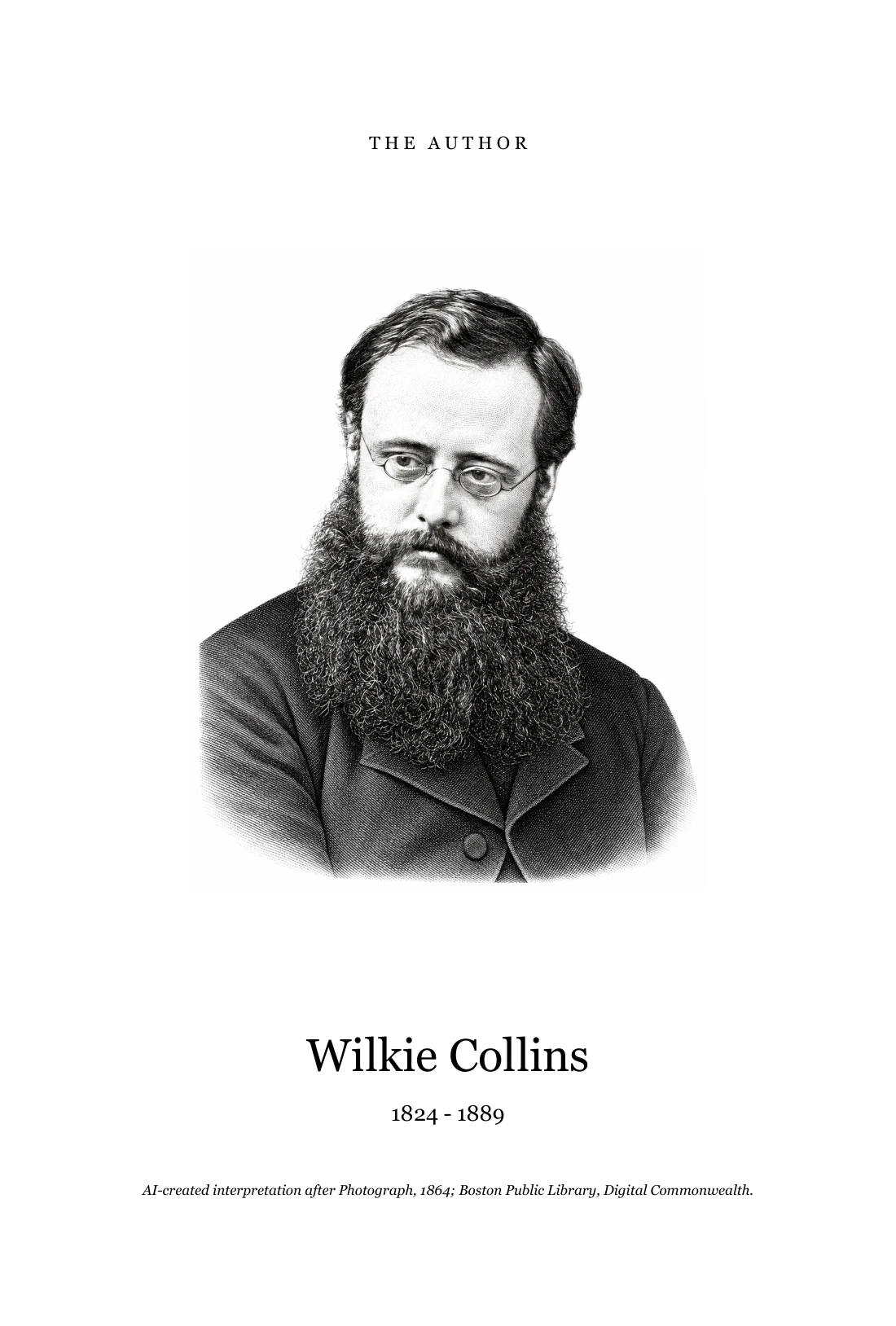
“The Novelist who invented Sensation.” That was the caption Vanity Fair put under its caricature of Wilkie Collins in February 1872, and it was only half a compliment. For more than a decade sensation fiction had been among the best-selling and most criticised kinds of novel in Britain, and Collins, as the caption suggests, took much of the credit and the blame.
So what was the sensation novel? Put simply, it was a crime story set at home. It took the shocks of melodrama and the Gothic, including murder, bigamy, poisoning, forgery, madness and stolen identities, and moved them out of Italian monasteries into English drawing rooms, railway carriages and country estates. Its heroes and villains were people its readers might have dined with. That was the thrill, and for its critics, the danger.
- 1859–60
Collins’s The Woman in White runs week by week in Dickens’s All the Year Round
- 1861
Ellen Wood’s East Lynne, a tale of adultery and disguise, becomes a bestseller
- 1861
An early use of the phrase “sensation fiction” appears in a publisher’s trade paper
- 1862
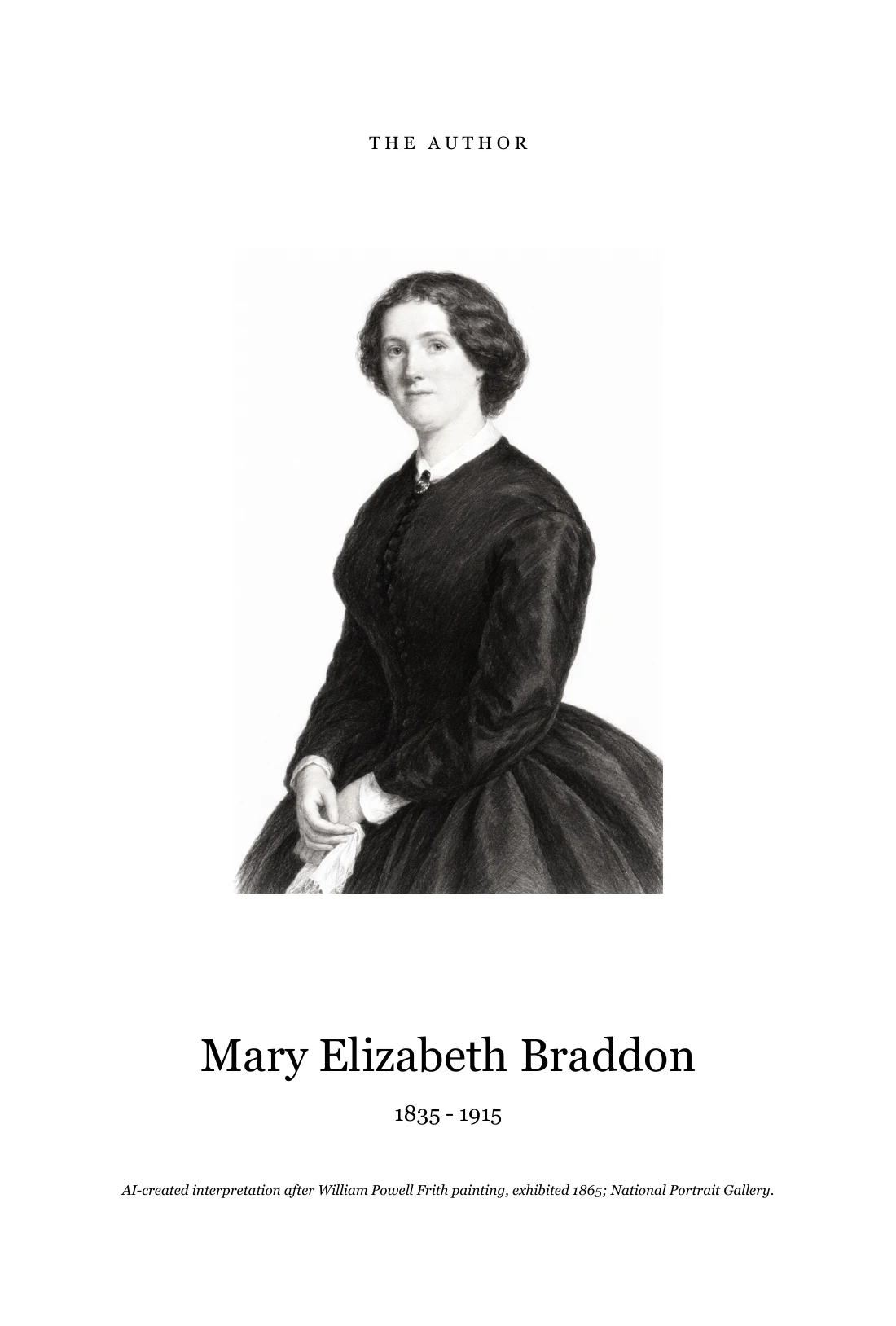
Mary Elizabeth Braddon’s Lady Audley’s Secret is published in three volumes
- 1863
H. L. Mansel attacks the genre at length in the Quarterly Review
- 1868
Collins’s The Moonstone turns sensation into detective fiction
- 1886
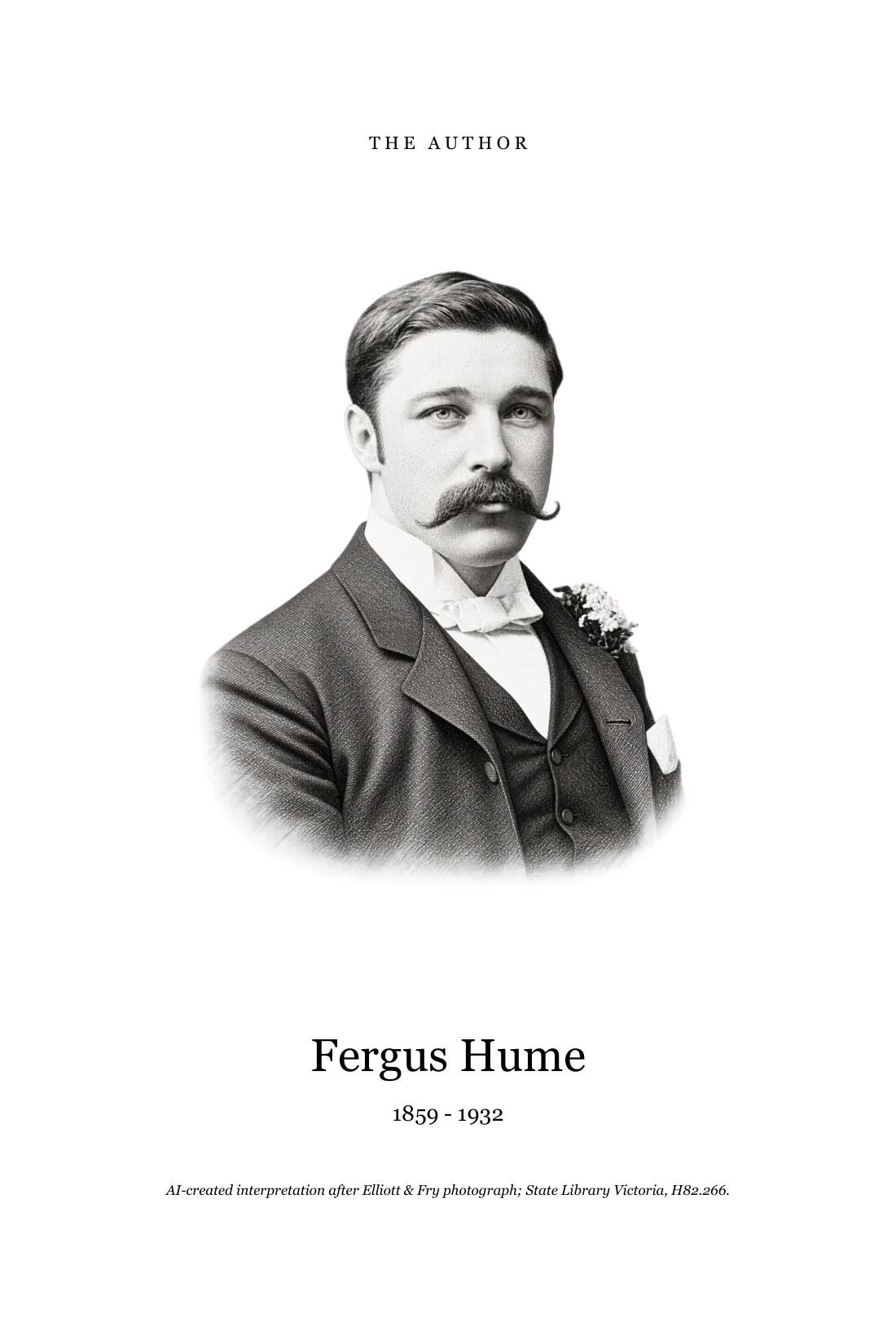
Fergus Hume’s The Mystery of a Hansom Cab sells in huge numbers from Melbourne
The three novels that started it
Sensation fiction is usually said to have taken shape in the wake of three books. The first was The Woman in White, serialised from November 1859 to August 1860. Early on, a young drawing master walking back to London from Hampstead late at night meets a woman dressed from head to foot in white on the lonely high road, and learns soon afterwards that she has escaped from an asylum. Collins set out his method in its very first sentence.
This is the story of what a Woman’s patience can endure, and what a Man’s resolution can achieve.
Wilkie Collins, *The Woman in White*
The second was Ellen Wood’s East Lynne (1861), the story of an aristocratic wife who runs off with a seducer and returns, in disguise and under a new name, to work as governess to her own children. It was adapted for the stage almost at once; by March 1863 three rival versions were drawing crowds in New York.
The third was Lady Audley’s Secret by Mary Elizabeth Braddon. Lucy Audley is golden-haired, childlike and charming, the new young wife of an elderly baronet, and she has a secret that her husband’s nephew is determined to uncover. The book first ran in a magazine called Robin Goodfellow, which folded, and then in the Sixpenny Magazine, before appearing in three volumes in 1862.

What made sensation fiction so shocking?
Partly it was the subject matter. Bigamy, adultery and secret pasts were the staples, and the women in these books were often far from passive: they plotted, lied, schemed and occasionally poisoned. Partly it was the setting. A Gothic horror happened somewhere far away and long ago; a sensation novel happened next door, now, among people with servants and a train to catch.
And partly it was the effect on readers. Critics complained that these books worked on the body rather than the mind, making the heart race and the nerves jump. The philosopher H. L. Mansel, writing in the Quarterly Review in 1863, accused them of appealing to the nerves instead of the judgement, and compared the effect to a feeling of rising nausea. John Ruskin joined the attack, and in 1871 W. S. Gilbert mocked the whole genre in a comic entertainment called A Sensation Novel.
None of it slowed sales. Sensation novels sold in enormous numbers, through serial magazines, circulating libraries and cheap reprints, to an expanding reading public. Braddon, for her part, lived something like one of her own plots: she spent years as the partner of the publisher John Maxwell, who already had a wife, and could not marry him until that wife died in 1874.
From sensation to detection
The sensation novel was always a story with a secret, and readers wanted to see the secret uncovered. That made the step to detective fiction a short one. Collins took it in The Moonstone (1868), in which a sacred Indian diamond vanishes from a Yorkshire country house and a Scotland Yard detective, Sergeant Cuff, is called in. T. S. Eliot later called it the first, the longest and the best of modern English detective novels.
Two decades later, sensation and detection met again in The Mystery of a Hansom Cab (1886) by Fergus Hume, a barrister’s clerk in Melbourne who published the first edition himself. It sold 100,000 copies in its first two printings in Australia and went on to outsell the first Sherlock Holmes novel, A Study in Scarlet.

Sensation novels to read first
The Woman in White
1860. The book that set the pattern: an asylum, a lookalike, a sinister Italian count and a narrative told by a chain of witnesses.
Lady Audley's Secret
1862. Braddon’s bestseller of a charming young wife with a past, and the nephew who will not stop asking questions.
The Moonstone
1868. A stolen diamond, a country house and Sergeant Cuff: sensation fiction turning into the detective novel.
The Mystery of a Hansom Cab
1886. A body in a cab on a Melbourne street, and the Victorian bestseller that outsold Sherlock Holmes.
No Name
1862. Collins’s story of two sisters left illegitimate and penniless, and the younger one’s ruthless campaign of disguise to win back their fortune.


Many of these books first came out in weekly or monthly parts, which is why their chapters so often end on a hook; see Victorian serial novels. We have more on Wilkie Collins’s sensation novels and on why Lady Audley’s Secret caused a sensation, and the genre’s cheap, thrilling descendants appear in the pulp magazines.
Begin with The Woman in White by Wilkie Collins. Read the midnight meeting on the high road from Hampstead, and you will understand at once what the critics were afraid of.
Questions readers ask
What is sensation fiction?
Sensation fiction was a popular kind of Victorian novel, at its height in the 1860s, that set crimes and scandals such as bigamy, murder, fraud and madness in respectable modern homes. Its plots turned on secrets and were built to keep readers in suspense.
What was the first sensation novel?
Wilkie Collins’s The Woman in White (1859–60) is usually seen as the first, followed by Ellen Wood’s East Lynne (1861) and Mary Elizabeth Braddon’s Lady Audley’s Secret (1862).
Why were sensation novels controversial?
Critics thought they excited the nerves rather than the mind, made heroines of scheming women and brought crime into the middle-class home. Their huge popularity made the criticism louder.
Is The Moonstone a sensation novel?
Yes, and also one of the first detective novels in English. It keeps the sensation novel’s country-house secrets but adds a professional detective, Sergeant Cuff.
 Armadale754 pages · $29.99
 The Dead Secret350 pages · $18.99
 Man and Wife576 pages · $24.99
 Basil274 pages · $16.99