
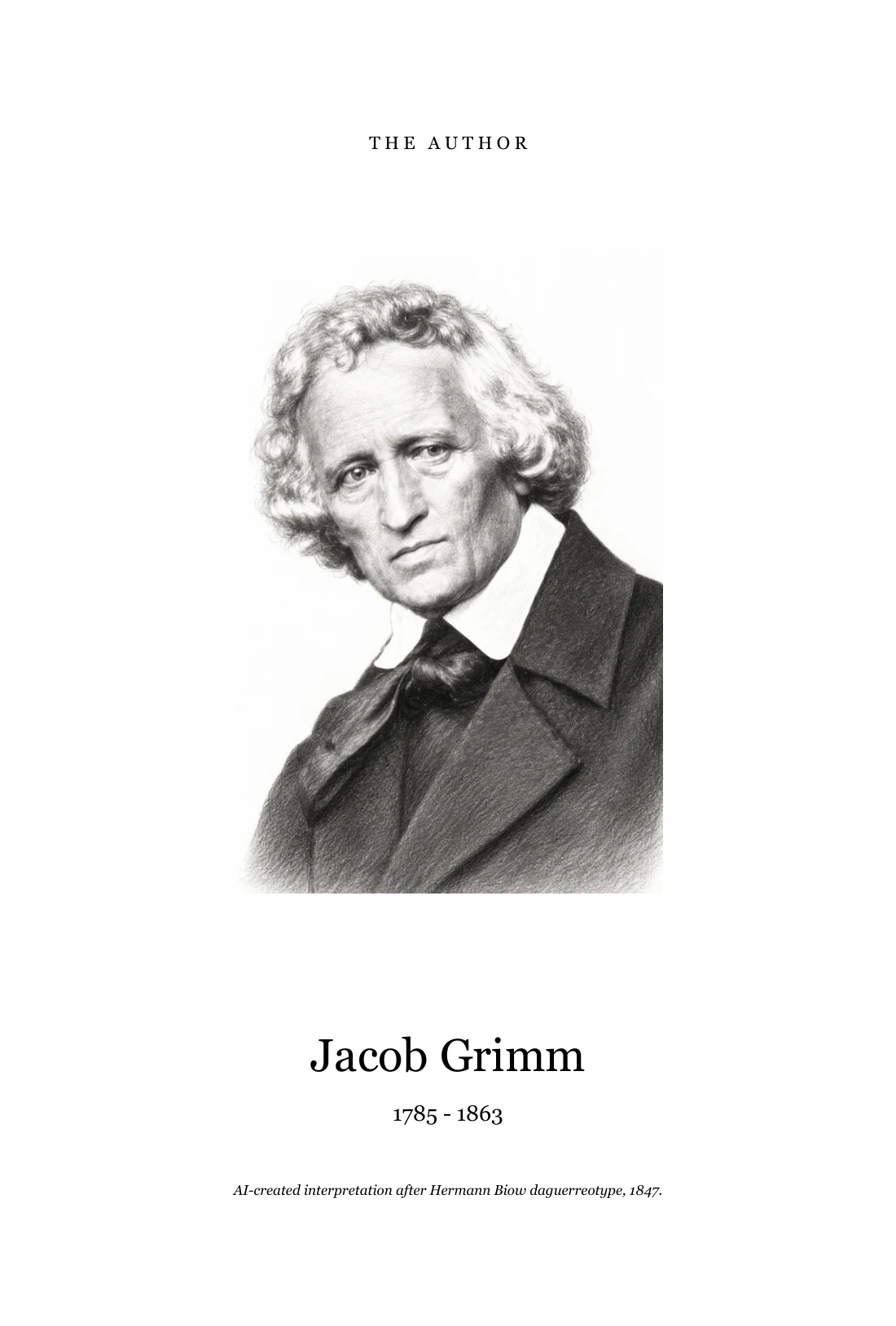
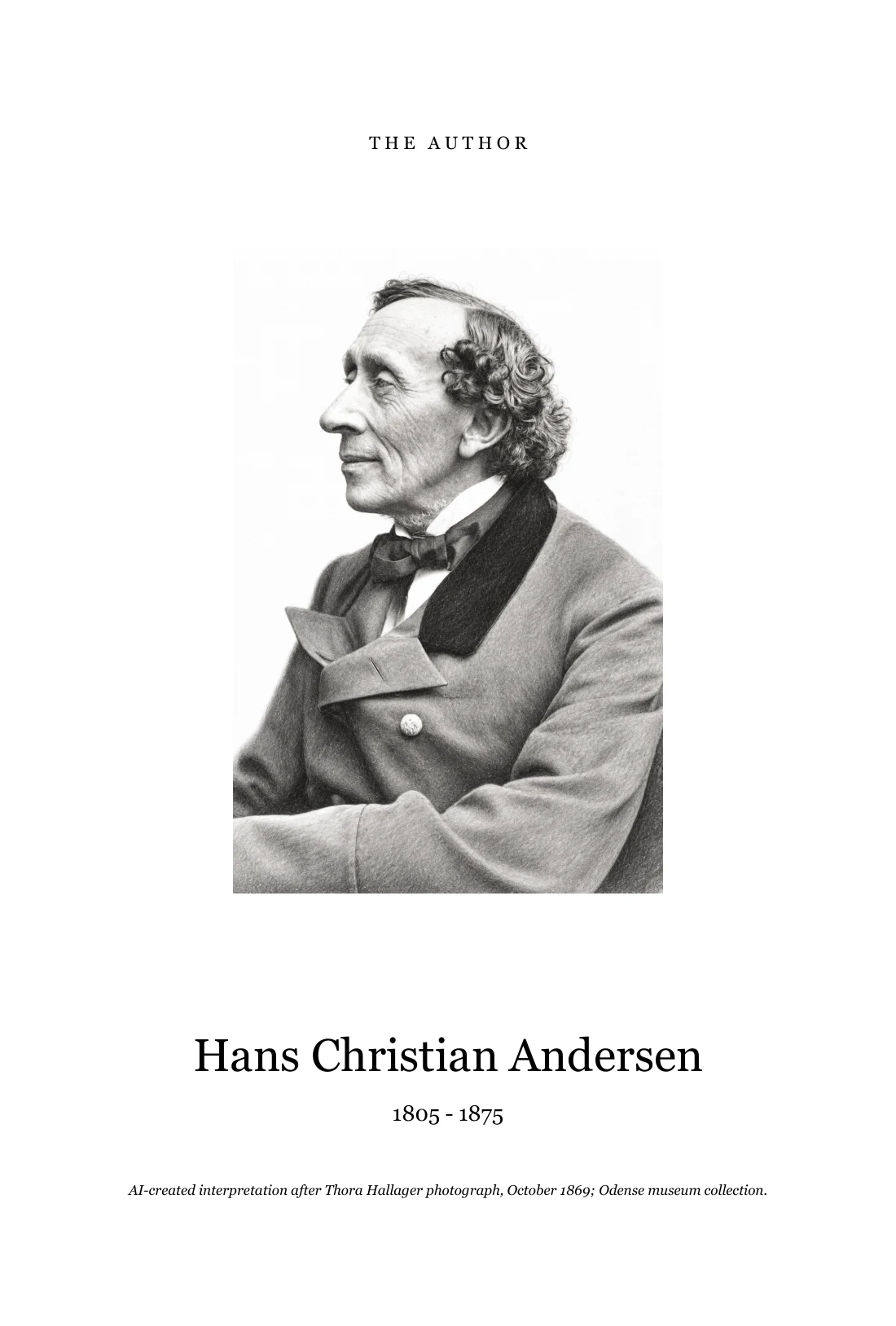
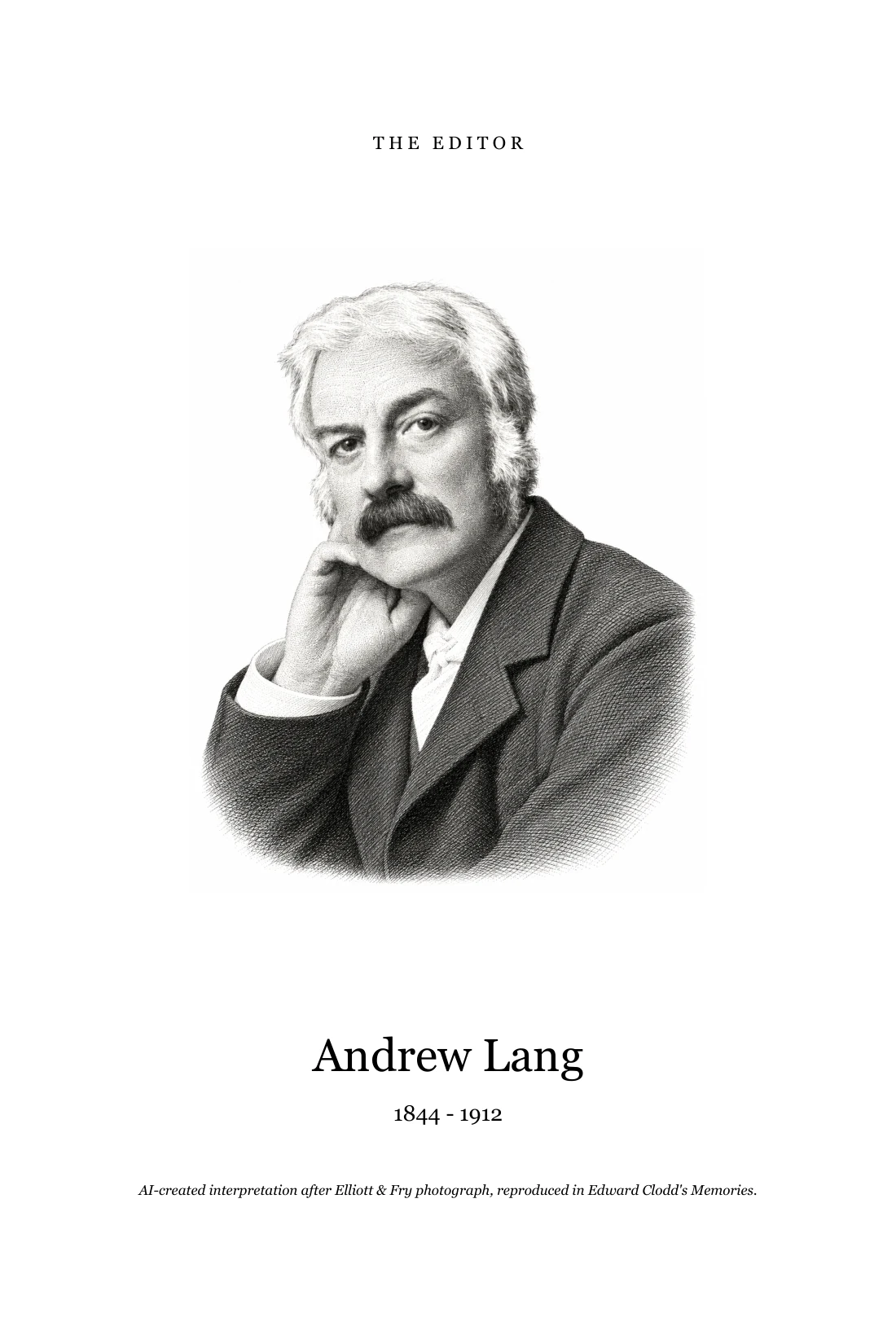
Of the three names readers most associate with fairy tales, only one pair went out and wrote down stories they heard. Jacob and Wilhelm Grimm were collectors. Hans Christian Andersen was mostly an inventor, who began with a few retold folk tales and then wrote his own. Andrew Lang was an anthologist, whose famous coloured fairy books gathered tales already in print across Europe and beyond.
So the short answer to “who collected the fairy tales?” is: the Grimms, from friends and acquaintances in and around Kassel; Charles Perrault in France before them; and, for English readers, Andrew and Nora Lang, who translated and retold hundreds of tales from other people’s collections. Each of them shaped the stories as much as they preserved them.
The Brothers Grimm: collectors who kept editing
The Grimms began gathering tales at the request of their friend, the poet Clemens Brentano, and published the first volume of Kinder- und Hausmärchen (Children’s and Household Tales) on 20 December 1812. It held 86 stories; a second volume of 70 followed in 1815. Over seven editions, the last in 1857, the collection grew to 210 tales.
The popular picture of two scholars taking down stories from peasants by the fire is mostly myth. Many of their storytellers were educated, middle-class young women, some from families of French Huguenot descent who probably knew Perrault’s tales already. Dortchen Wild, who later married Wilhelm, and her family supplied stories including “Hansel and Gretel”.
Nor did the brothers simply transcribe. Wilhelm took charge of the rewriting, adding dialogue and detail until some tales were twice their first length, and in later editions he smoothed the language for a middle-class family readership and removed sexual elements. Our post on how the original fairy tales were darker follows those changes tale by tale.

Hans Christian Andersen: the inventor
Andersen’s first fairy-tale booklet came out in Copenhagen on 8 May 1835. It held four stories: “The Tinderbox”, “Little Claus and Big Claus”, “The Princess and the Pea” and “Little Ida’s Flowers”. The first three were folk tales he remembered from childhood; the fourth he made up for a little girl he knew.
That balance soon tipped. Of Andersen’s 156 tales, many of the most famous, among them “The Little Mermaid”, “The Steadfast Tin Soldier”, “The Ugly Duckling” and “The Snow Queen”, are his own inventions. That is why they feel different from Grimm: the narrator has a personality, the endings are often sad, and the objects in a room can have feelings. He is better thought of as a writer of literary fairy tales than as a collector.
Andrew Lang: the editor and the translator
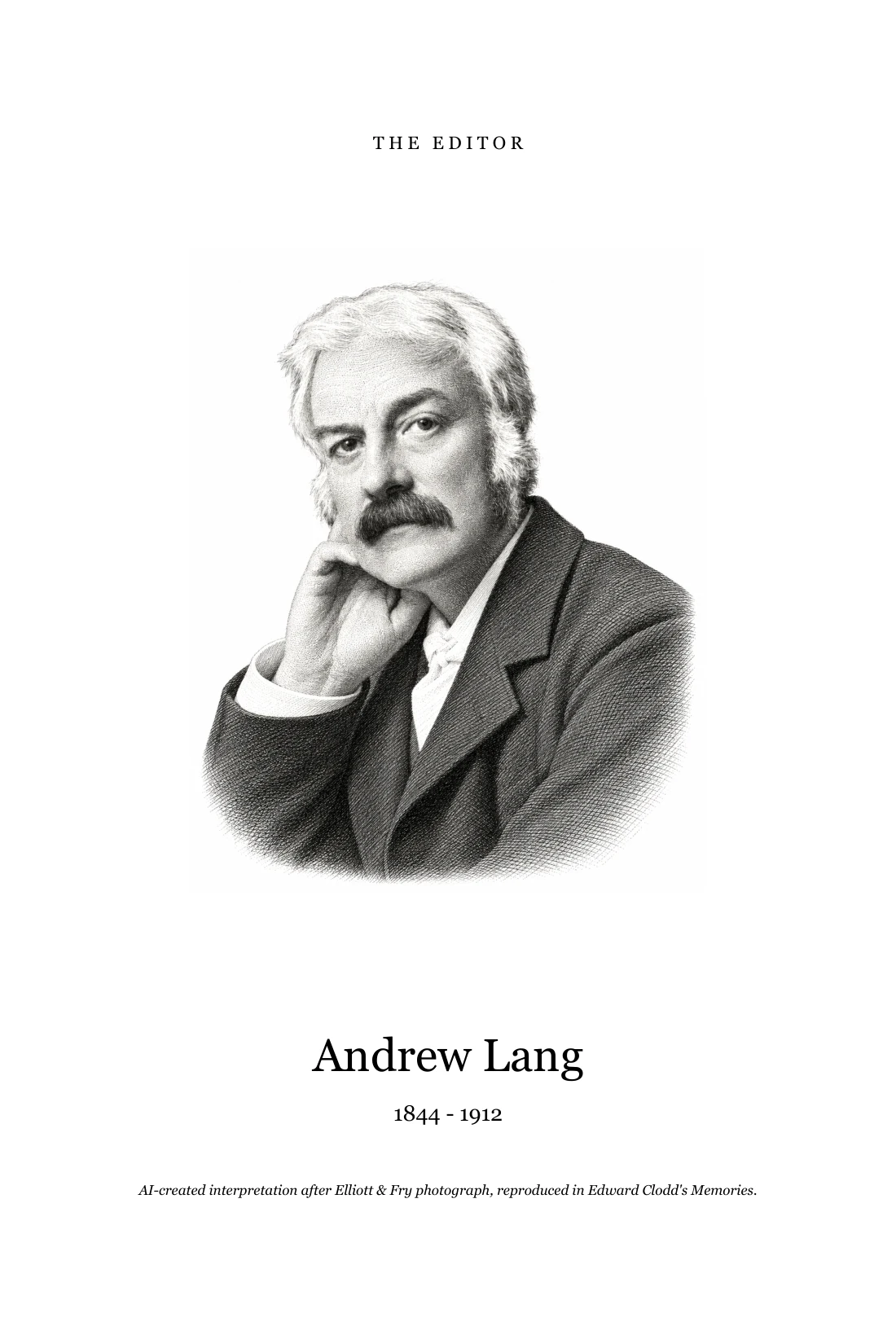
Lang’s Blue Fairy Book appeared in 1889 in a first printing of 5,000 copies, mixing tales from the Grimms, Madame d’Aulnoy, the Arabian Nights and Norwegian collections. Its success led to eleven more coloured volumes over the next two decades. The Langs never collected from oral storytellers; their gift was range, and for many tales their books were the first appearance in English.
The person who did most of the work was Leonora Blanche Lang, known as Nora, whose name never appeared on the covers. Andrew said as much in his preface to The Lilac Fairy Book in 1910, after complaining that people at dinner parties assumed he wrote nothing but fairy books.
The fairy books have been almost wholly the work of Mrs. Lang, who has translated and adapted them from the French, German, Portuguese, Italian, Spanish, Catalan, and other languages.
Andrew Lang, preface to The Lilac Fairy Book
He went on to compare himself to Adam in a Mark Twain joke about the Garden of Eden: “Eve worked, Adam superintended. I also superintend.” See the Lang fairy books in order for the whole rainbow.

Three books, three ways into the fairy tale
Grimms' Fairy Tales
The Grimms’ tales in their spare, quick telling: wolves, witches, enchanted forests and impossible tasks that fall to the youngest son.
Andersen's Fairy Tales
Andersen’s stories, wittier and sadder than the folk tale, told by a narrator with opinions of his own. The proof that a fairy tale could be literature.
The Blue Fairy Book
The first of the coloured books, 1889. Cinderella, Aladdin and East of the Sun and West of the Moon, gathered from half a dozen traditions.
The Lilac Fairy Book
1910. Late in the series, with old tales from Ireland, Portugal and Wales, and the preface in which Lang hands the credit to his wife.


Who came before the Grimms?
The Grimms were not first. In Paris in 1697, Charles Perrault published the collection known in English as Tales of Mother Goose, which fixed the versions of “Cinderella”, “Little Red Riding Hood”, “Puss in Boots”, “Sleeping Beauty” and “Bluebeard” that many readers still know. Through storytellers of Huguenot descent, some of his tales seem to have found their way back into the Grimms’ collection. For tales from further afield, see fairy tales from around the world.
To feel the difference between collector, inventor and editor, read one story from each book on the same evening. Start with Grimms’ Fairy Tales from the Brothers Grimm, then turn to Hans Christian Andersen and Andrew Lang, and notice how each voice changes the same old world.
Questions readers ask
Who collected the most famous fairy tales?
The Brothers Grimm, Jacob and Wilhelm, collected and published 210 tales in their Children’s and Household Tales between 1812 and 1857. Before them Charles Perrault published French versions of tales such as Cinderella in 1697.
Did Hans Christian Andersen collect fairy tales?
Only a few. His first booklet in 1835 included three folk tales from his childhood, but most of his 156 tales, including The Little Mermaid and The Ugly Duckling, were his own inventions.
Did Andrew Lang write the coloured fairy books?
No. He edited them and wrote the prefaces, but he said the books were almost wholly the work of his wife, Nora Lang, and other translators, who adapted tales already published in many languages.
Where did the Brothers Grimm get their stories?
Mostly from educated, middle-class friends and acquaintances, many of them young women, rather than from peasants. Some sources, such as Dorothea Viehmann, told them dozens of tales.