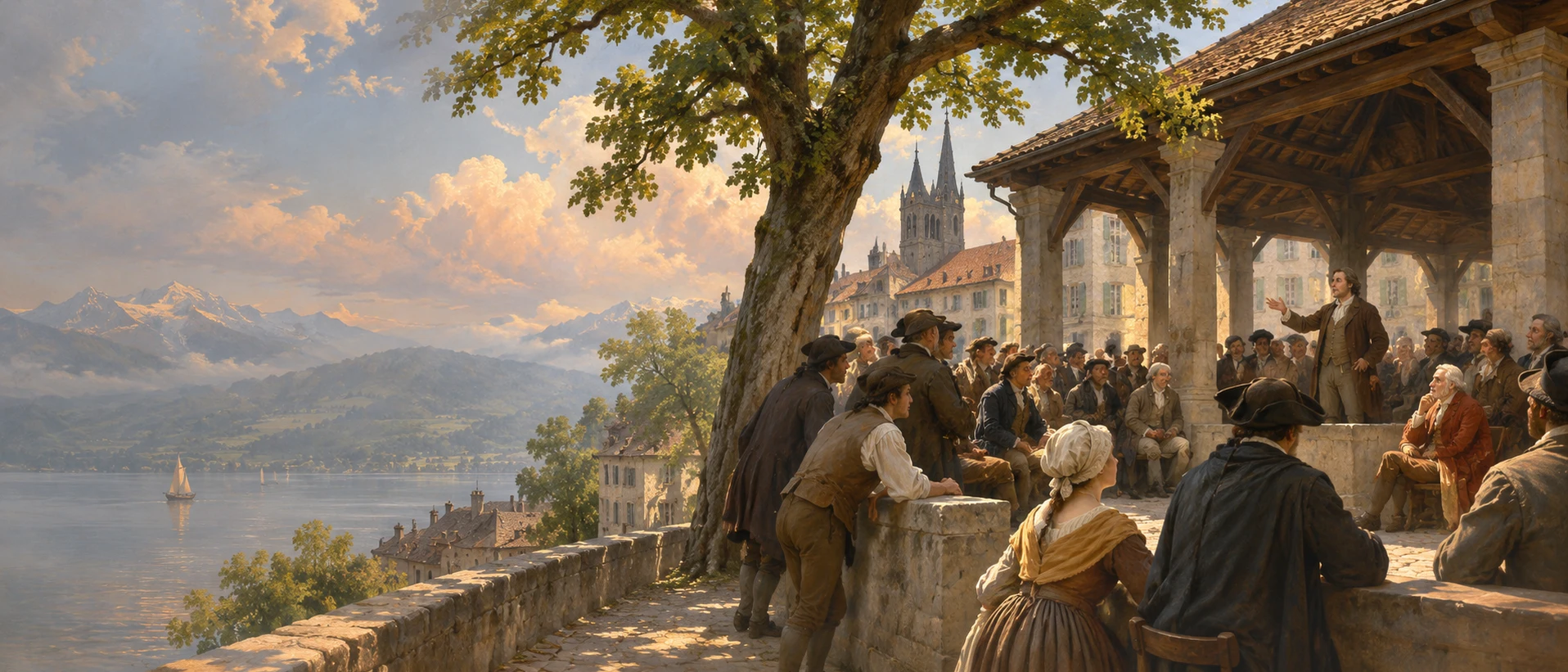
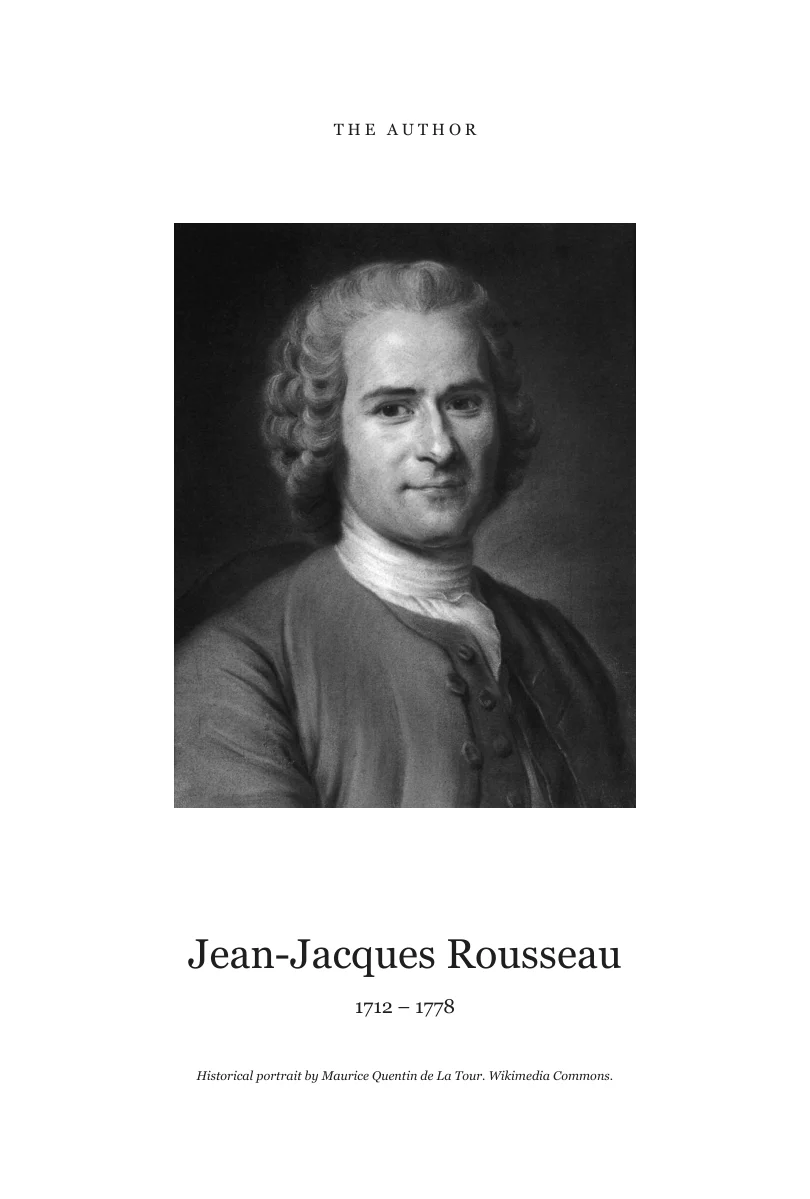
“Man is born free; and everywhere he is in chains.” Jean-Jacques Rousseau opened The Social Contract in 1762 with a sentence that sounds like a battle cry, then admitted in the next breath that he did not know how the change had come about. What he thought he could answer was a different question: what could make it legitimate?
That is the question at the heart of social contract theory. It asks us to imagine people before any government existed, in what Thomas Hobbes called the state of nature, and then to ask why rational people would agree to give up some of their freedom to a ruler or a law. Whatever answer you give tells you what a government is for, and when, if ever, it may be resisted. The idea takes its name from Rousseau’s book, but the three classic versions came from three very different men over a little more than a century.
What is social contract theory?
In simple terms, it is the idea that political authority rests on an agreement among the people who live under it, rather than on God, conquest or inheritance. The agreement is usually hypothetical: nobody signed it. Its value is as a test. A government that people would have agreed to, on reasonable terms, is legitimate; one they would never have accepted is not.
The three great versions differ mainly on two points: how bad life would be without government, and how much of our freedom we hand over to escape it.
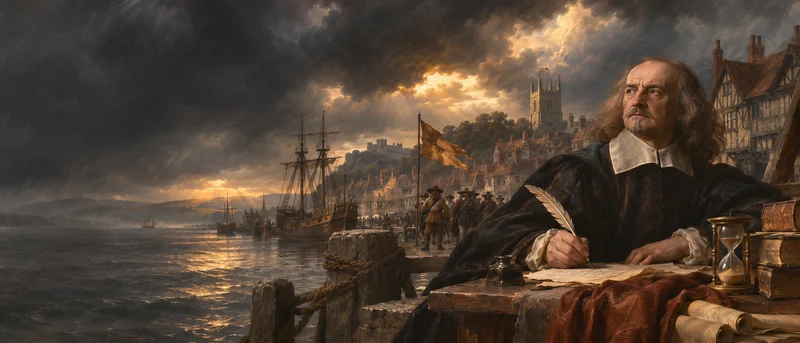
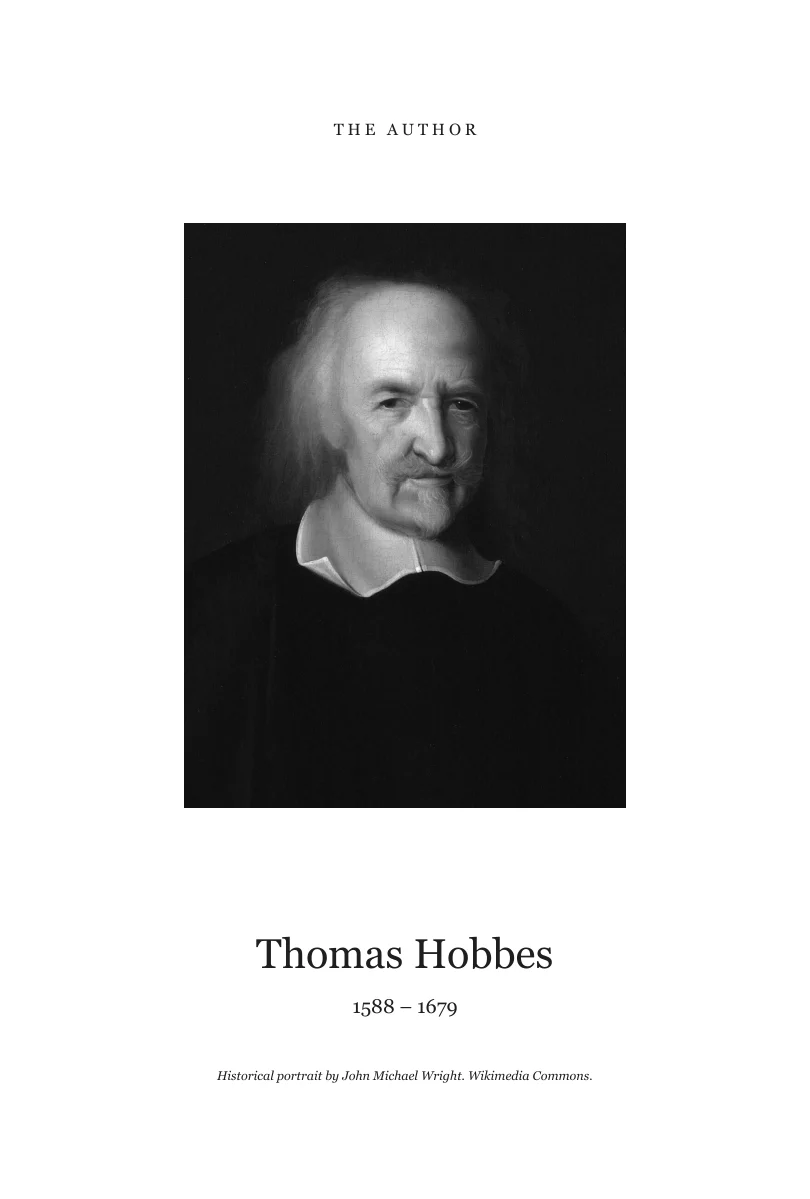
Hobbes: Leviathan (1651)
Hobbes wrote Leviathan during the English Civil War, and it shows. Without a common power to keep them all in awe, he argued, people would live in a war of every man against every man, with no industry, no farming, no trade, no arts and no society.
And the life of man, solitary, poore, nasty, brutish, and short.
Thomas Hobbes, *Leviathan*, chapter XIII
To escape that, people agree among themselves to hand their power to a sovereign, whether one man or an assembly, whose authority must be undivided and, in practice, absolute. Even a harsh ruler is better than civil war. The book’s famous frontispiece, etched by Abraham Bosse, shows a giant crowned figure holding a sword and a bishop’s crosier, rising over a landscape.
Locke: the Second Treatise of Government (1689)
John Locke imagined a gentler state of nature: a condition of freedom and equality, governed by a law of nature that forbids harming others in their life, health, liberty or possessions. The trouble is that everyone is their own judge, so disputes have no impartial referee. People form governments to fix that, and for one purpose above all.
The great and chief end, therefore, of men’s uniting into commonwealths, and putting themselves under government, is the preservation of their property.
John Locke, *Second Treatise of Government*, section 124
By property Locke meant, in his own phrase, people’s lives, liberties and estates. A government that attacks them breaks its trust, and the people may replace it. That right of revolution is the great difference from Hobbes. The Two Treatises were mostly written around 1679–80 and published anonymously in December 1689, with 1690 on the title page, a year after the Glorious Revolution.
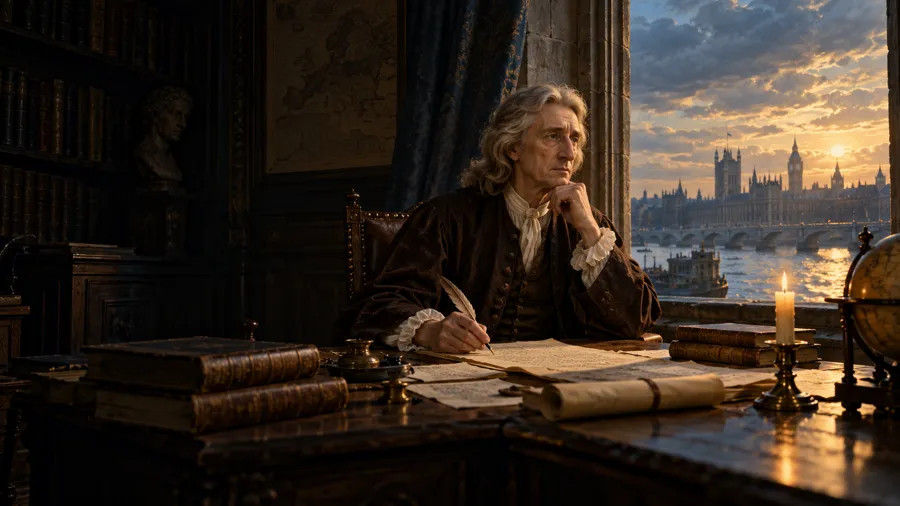
Rousseau: The Social Contract (1762)
Rousseau thought both his predecessors had missed something. Our freedom, he argued, cannot be signed away to anyone else; we can only be free if we obey laws we have made ourselves. His solution is the general will: the whole people, legislating together for the common good, is the sovereign. Governments are merely its agents.
The idea is powerful and slippery, and readers have argued ever since over whether it points towards democracy or towards a state that claims to know your real will better than you do. The Social Contract was burned in Rousseau’s native Geneva, and it went on to inspire reformers and revolutionaries, above all in France.
- *Hobbes:* life without government is war; we surrender nearly everything to an absolute sovereign.
- *Locke:* life without government is free but insecure; we create limited government to protect life, liberty and property, and may overthrow it if it betrays us.
- *Rousseau:* freedom cannot be handed over; legitimate law must express the general will of the whole people.
The social contract in a real quarrel
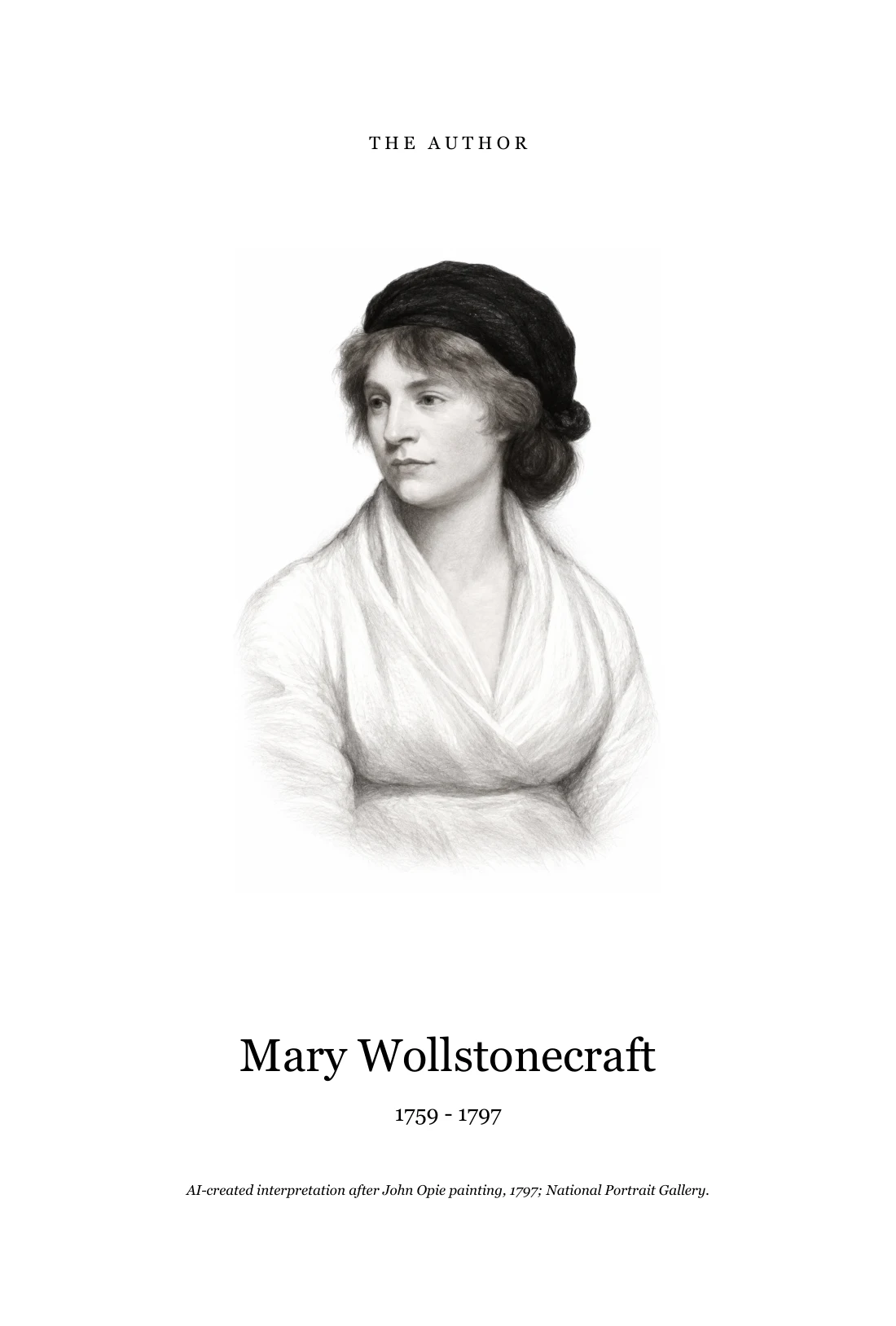
These were never purely academic ideas. When Edmund Burke attacked the French Revolution in his Reflections in November 1790, defending inherited institutions against abstract rights, the first reply came within weeks, from Mary Wollstonecraft. A Vindication of the Rights of Men was published anonymously, sold out quickly, and carried her name from its second edition. It argues that rights are grounded in reason rather than in custom, and it was the first of dozens of replies to Burke in a pamphlet war that ran for years.
Leviathan
1651. The case for an all-powerful sovereign, written in the shadow of civil war. Long, strange, and far more readable in its famous chapters than its reputation suggests.
Second Treatise of Government
1689. Locke’s short account of natural rights, consent and the right to resist a tyrant. Short, plain and enormously influential.
The Social Contract & Discourses
1762. Rousseau’s argument that only laws made by the whole people can be legitimate, with his earlier discourses. Opens with one of the most quoted sentences in political writing.
A Vindication of the Rights of Men
1790. Wollstonecraft’s furious, fast-written answer to Burke, the first of many published replies to Burke over the French Revolution.


To see these ideas at work across the Atlantic, read the books behind the American Revolution. If Hobbes looks daunting, how long is Leviathan? breaks it into a month of reading, and how to read philosophy without a degree has general advice.
If you read only one of the three, make it Locke’s Second Treatise of Government. It is short, clear and still quoted every time someone argues that a government has broken faith with its people.
Questions readers ask
What is social contract theory in simple terms?
It is the idea that a government’s authority comes from the agreement, usually imagined rather than actual, of the people it governs. People give up some freedom in exchange for security and the protection of their rights.
What is the difference between Hobbes, Locke and Rousseau?
Hobbes argued for an absolute sovereign to prevent a war of all against all. Locke argued for limited government that protects life, liberty and property and can be overthrown if it fails. Rousseau argued that only laws expressing the general will of the whole people are legitimate.
Who first came up with the social contract?
The idea has ancient roots, but its classic modern form begins with Thomas Hobbes’s Leviathan (1651), followed by John Locke and Jean-Jacques Rousseau. The name itself comes from Rousseau’s 1762 book The Social Contract.
What does Hobbes mean by nasty, brutish and short?
In Leviathan, Hobbes describes life without government as a war of everyone against everyone, in which human life would be “solitary, poore, nasty, brutish, and short”.