

THE PIPCUB BLOG · 656 ARTICLES
Stories behind the stories.
Reading orders, author guides, hand-picked lists and the surprising histories of the books we love.
Every article
145–168 of 656

 Authors · 4 min read
Émile Zola: where to start
Zola wanted to write novels the way a scientist runs an experiment, and ended up writing some of the most passionate books of the nineteenth century. Two of them are the best way in.

 Did you know? · 4 min read
Did you know the author of Hans Brinker hadn’t been to Holland?
The most famous children’s book about the Netherlands was written by a New York widow who had never been there. When she did reach Amsterdam, in 1873, she found her own story waiting for her in Dutch.
 Reading lists · 4 min read
Books like Agatha Christie: classic mysteries for when you’ve run out of Poirot
Thirty-three novels, fifty-one stories and two plays, and then Poirot is gone. Here are twelve classic mysteries to fill the gap, chosen for the things you love in Christie, and with every culprit left unrevealed.
 Series & reading order · 4 min read
Max Carrados: the blind detective among Sherlock Holmes’s rivals
He reads headlines with his fingertips, recognises old friends by their voices and can tell a forged coin by its taste. Max Carrados lost his sight in an accident and gained a career, and he is one of the most original detectives of the Sherlock Holmes era.

 Did you know? · 3 min read
Did you know The Legend of Sleepy Hollow first appeared in a book of sketches?
If you go looking for The Legend of Sleepy Hollow as a book, you will find it inside another one. Washington Irving’s Headless Horseman first rode out among travel essays, Christmas scenes and English country churches.
 Authors · 4 min read
Did you know Thomas Hardy gave up novels after Jude the Obscure?
At fifty-five, Thomas Hardy was one of the most famous novelists in the English-speaking world. Then Jude the Obscure was savaged by the critics, and he never wrote another novel. He spent his last thirty years writing poetry instead.
 Did you know? · 4 min read
Did you know Agatha Christie’s first novel was rejected?
Agatha Christie’s career began with rejection slips. Her very first novel never found a publisher, and her first detective story spent years in limbo before it appeared.
 Reading lists · 3 min read
Post-apocalyptic novels from before the atomic age
Plague, poison gas, a dying sun and a London swallowed by swamp. Long before the atomic bomb, writers were imagining the end of the world, and what might come after it.
 Did you know? · 3 min read
Did you know Marcus Aurelius never meant Meditations to be read?
The most widely read book of Stoic philosophy was never meant for an audience. Meditations is a Roman emperor talking to himself — and that is exactly why it still speaks to strangers nearly two thousand years later.

 Authors · 4 min read
Where to start with Rudyard Kipling
Kipling wrote for children and adults with the same voice and the same seriousness, which makes the Rudyard Kipling books unusually easy to share. Here is where to begin, whether you are reading aloud or reading alone.

 Reading time · 3 min read
How long is Moby-Dick?
Moby-Dick has a reputation as a book that never ends. In fact it is shorter than most of the great Victorian novels; it just keeps changing direction. Here are the numbers, and what they mean for your reading time.
 Young readers · 3 min read
Short classics for reluctant readers: six books that never outstay their welcome
A reluctant reader is usually not a child who hates stories, just one who has not yet met a book short enough, funny enough or strange enough. These six classics are all three.
 Reading lists · 3 min read
Cosy classics: comfort reads for a quiet night in
Some nights call for a book that asks nothing of you but to sit down and stay a while. These cosy classic books are warm, gentle and quietly funny — the literary equivalent of a pot of tea and a fire.
 Books on screen · 4 min read
The Count of Monte Cristo on screen, and what every version leaves out
One Irish-born American actor played Edmond Dantès more than six thousand times and never escaped him. The screen has been trying to fit Dumas’s enormous revenge story into a couple of hours ever since.
 Series & reading order · 4 min read
Eight Cousins and Rose in Bloom: Alcott’s other family saga
One orphaned heiress, seven boy cousins, six aunts and an uncle with very modern ideas. Louisa May Alcott’s Rose Campbell books are a two-part family saga, and the second half was promised before it existed.
 Did you know? · 3 min read
Did you know Fathers and Sons made the word “nihilist” famous?
In 1862 a short, quiet novel about a summer on two country estates gave Russia a word to fight over. The word was “nihilist”, and the man who carried it was Yevgeny Bazarov.
 Did you know? · 3 min read
Did you know Gogol burned the second part of Dead Souls?
Nikolai Gogol meant Dead Souls to be his masterpiece in three parts. He finished one. The second he worked on for a decade, then fed to the fire one February night in 1852 — and within days he was dead.

 Authors · 3 min read
Did you know E. Nesbit helped found the Fabian Society? Meet the mother of modern children’s fantasy
The writer who gave us the Psammead and The Railway Children was also a political radical who helped found one of Britain’s most influential socialist societies. Her books were quietly revolutionary too.
 Literary history · 4 min read
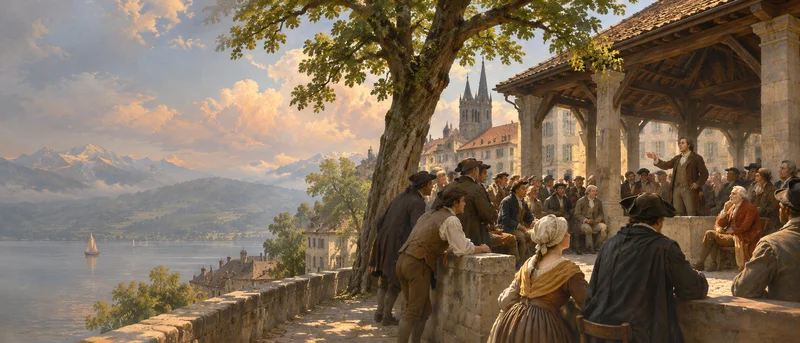
What is the social contract? Hobbes, Locke and Rousseau explained
Three philosophers, one question: why should anyone obey a government? Their answers run from absolute monarchy to the right of revolution, and they still shape how we argue about power.
 Reading lists · 4 min read
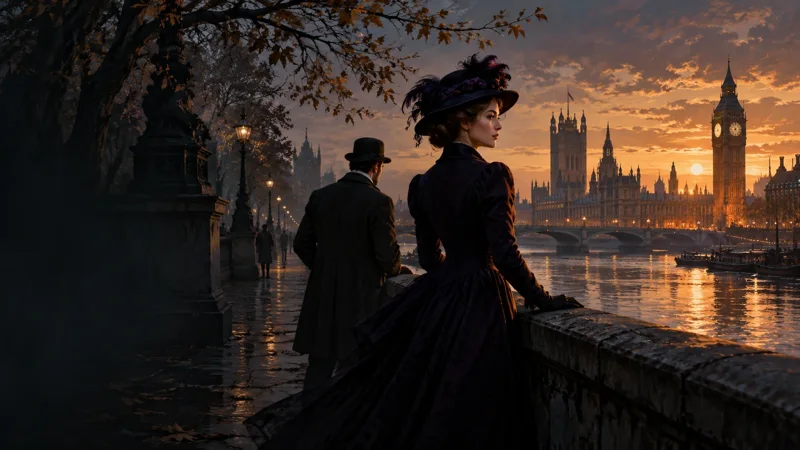
Female detectives in classic fiction, from Lady Molly to Miss Marple
Fictional women were solving crimes decades before real police forces would let them try. Here are the classic female detectives worth meeting, and the order in which they arrived.

 Did you know? · 4 min read
Did you know Understood Betsy was written by a Montessori champion?
The word “Montessori” never appears in Understood Betsy. But its author had sat in Maria Montessori’s classrooms in Rome and written three books about her methods before she wrote this one.
 How to read · 4 min read
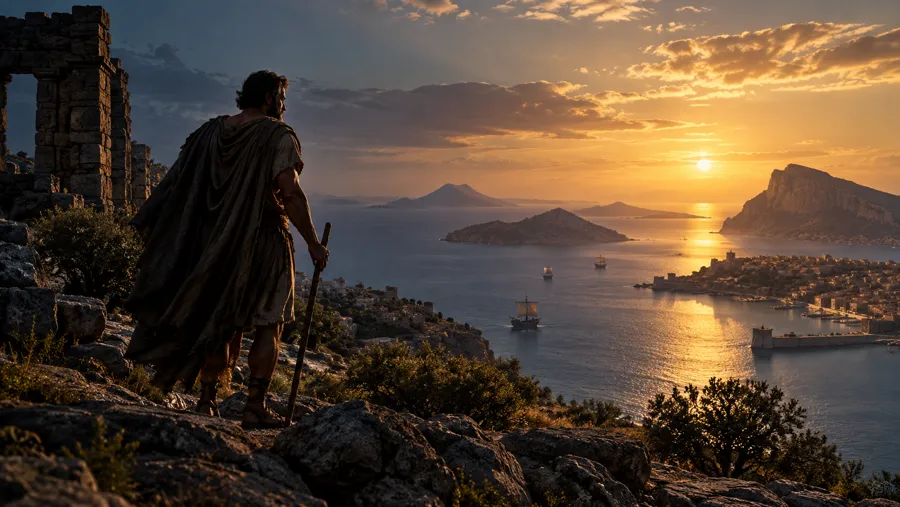
How to read The Odyssey for the first time
Homer’s Odyssey is a story about storytelling, told out of order, full of gods with two names and a hero who spends much of it in disguise. Here is how to find your way in on a first reading.

 Series & reading order · 4 min read
Brigadier Gerard: the funniest hero Conan Doyle ever wrote
Brave, handsome, gallant with the ladies and almost entirely without self-knowledge, Etienne Gerard tells his own Napoleonic adventures and never once notices the joke. Conan Doyle let his readers notice for him.

 Authors · 4 min read
F. Scott Fitzgerald’s early books in order
Between 1920 and 1925 F. Scott Fitzgerald went from rejected first novelist to the author of The Great Gatsby. Read the Fitzgerald books in order and you can watch it happen, story by story.