

THE PIPCUB BLOG · 656 ARTICLES
Stories behind the stories.
Reading orders, author guides, hand-picked lists and the surprising histories of the books we love.
Every article
169–192 of 656
 Reading lists · 4 min read
Novels published during the First World War, from The Good Soldier to The Rough Road
Between August 1914 and November 1918, British readers bought novels that had been finished in peacetime, novels that were banned, and thrillers written to keep up morale. Here are the best of them, in the order they appeared.
 Did you know? · 3 min read
Why did H. P. Lovecraft rate The Willows so highly?
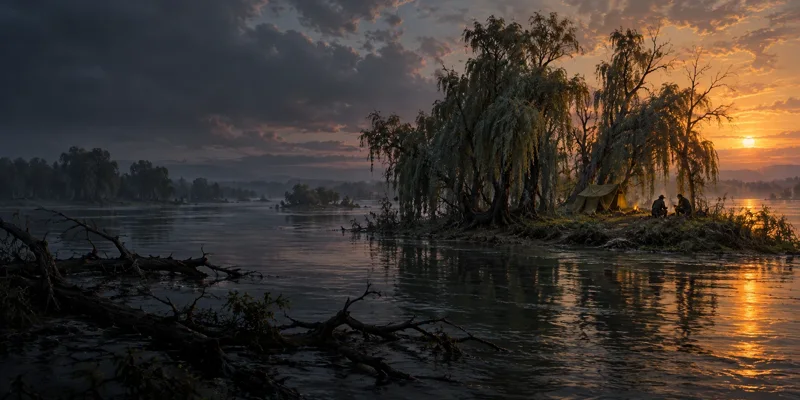
Two friends pitch their tent on a tiny island in the flooded Danube. Nothing attacks them. Almost nothing is seen. And yet H. P. Lovecraft, the master of cosmic horror, is said to have considered it the greatest weird story ever written.

 Did you know? · 3 min read
Did you know Milton dictated Paradise Lost after he went blind?
The greatest epic poem in English was never written down by its author. John Milton composed Paradise Lost in his head, in darkness, and spoke it aloud to whoever was at hand to take it down.
 Young readers · 4 min read
Louisa May Alcott’s other children’s books: Under the Lilacs, Jack and Jill and more
Little Women made Louisa May Alcott famous, and for the next twenty years her young readers would not let her stop. These are the children’s books she wrote around it, before and after.
 Reading lists · 4 min read
Scottish classics for Burns Night
Burns Night honours Scotland’s national poet, but the country’s novelists deserve a toast as well. Here are the Scottish literature classics to read after the haggis, from Walter Scott to Stevenson’s last unfinished page.
 Books on screen · 4 min read
The Merchant of Venice on screen, from silent film to Al Pacino
Shakespeare’s most uncomfortable comedy has been filmed less often than you might expect. Every version has had to answer the same question: what do you do with Shylock?
 Authors · 4 min read
Did you know Alexandre Dumas wrote with a collaborator?
The best-loved Alexandre Dumas books were not written by Dumas alone. Behind The Three Musketeers and The Count of Monte Cristo stood Auguste Maquet, who researched, plotted and drafted, and whose name was kept off the cover.
 Did you know? · 3 min read
Did you know Dostoevsky wrote The Gambler in 26 days to keep the rights to his books?
In the autumn of 1866 Fyodor Dostoevsky was in the middle of writing Crime and Punishment when a deadline he had ignored came due. If he did not deliver a whole new novel within a month, he stood to lose the rights to his own work for years. So he dictated The Gambler in twenty-six days.
 Series & reading order · 4 min read
Chronicles of Avonlea: the Anne stories you might have missed
Two books of stories about Anne Shirley’s neighbours, one published with Montgomery’s blessing and one published against her will. Between them they hold some of her funniest writing.
 Did you know? · 3 min read
Did you know Treasure Island began with a map?
The history of Treasure Island starts not with a pirate but with a painted map, drawn to amuse a schoolboy on a wet holiday in the Highlands. Stevenson wrote the novel afterwards, to explain it.
- Reading lists · 4 min read
Sea adventures for young readers: pirates, castaways and mermaids
Shipwrecks, buried gold, desert islands and kingdoms under the waves: the classic sea adventure books for kids have it all, and most of them were written to be read aloud.

 Reading time · 4 min read
How long are Dickens’s novels? Page counts from Hard Times to The Pickwick Papers
The shortest Dickens novel on our shelves takes an afternoon and an evening. The longest takes a fortnight of evenings. The difference has a lot to do with how each one was first sold.
 Authors · 4 min read
Henry James’s shorter novels: the easiest way into a difficult writer
Henry James is easiest at short length. Here are six of his shorter novels, arranged from quickest to longest, from Daisy Miller to What Maisie Knew, and what each one does that his long books take a thousand pages to manage.
 Did you know? · 4 min read
Did you know The Sound and the Fury takes its title from Macbeth?
Faulkner found his title in one of the darkest speeches Shakespeare ever wrote, and then built the first section of his novel to fit it almost literally.
 Literary history · 5 min read
Who really wrote Nancy Drew and the Hardy Boys? The Stratemeyer Syndicate
Carolyn Keene and Franklin W. Dixon never existed. Behind both names stood one company, the Stratemeyer Syndicate, which turned children’s fiction into something close to a production line.
 Reading lists · 4 min read
The best classic novellas, and why so many of them are stories within stories
Too long for a magazine story, too short for a three-volume novel, the novella has been home to some of the most unsettling books ever written. Here are the classic novellas to read first, and the trick so many of them share.
 Did you know? · 3 min read
Did you know a real reporter raced Phileas Fogg around the world?
Phileas Fogg went around the world in eighty days on paper. In 1889 a young American reporter named Nellie Bly set out to do it faster for real, and stopped in France on the way to meet the man who had invented him.
 Authors · 4 min read
Louisa May Alcott’s novels for adults: Moods, Work and Hospital Sketches
Louisa May Alcott wrote for grown-ups under her own name long before Little Women: a Civil War memoir, a novel about a mismatched marriage and, later, the story of a woman who works for her living. Here is where to begin.
 Series & reading order · 5 min read
Did you know Tarzan has a son? The later Tarzan books in reading order
In the language of the apes, Korak means Killer, and it is the name Tarzan’s own son earns in the jungle. From that book on, Edgar Rice Burroughs’s series grows into a family saga, a war story, a run of lost cities and, eventually, a joke at Hollywood’s expense.
 Did you know? · 4 min read
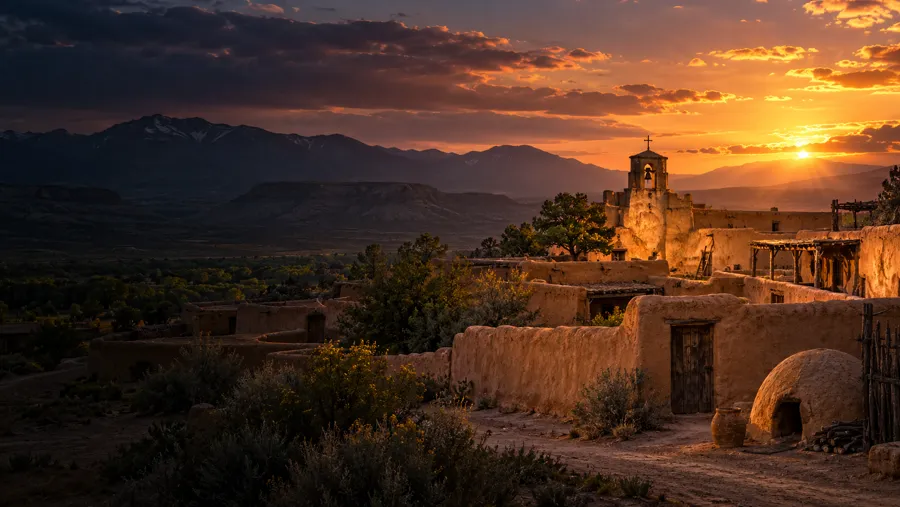
Did you know Death Comes for the Archbishop is based on a real archbishop?
Bishop Jean Marie Latour never existed. Jean-Baptiste Lamy, a French priest from the Auvergne who became the first Archbishop of Santa Fe, very much did, and Willa Cather built her most serene novel from his life.
 Young readers · 4 min read
Forgotten classic stories for girls, from Katie Robertson to Peggy
In the half-century after Little Women, publishers filled a long shelf with girls’ stories that almost nobody reads now. Some deserve their obscurity. These five do not.
 Reading lists · 5 min read
The best opening lines in classic literature
A first line is a contract. The great ones tell you, in a dozen words, how the book will talk to you, what it finds funny, and sometimes how it will end.
- Books on screen · 4 min read
Treasure Island on screen, from Disney to the Muppets
The pirate voice everybody does, all rolling r’s and “arr”, is not in Stevenson’s book. It is usually traced to a 1950 Disney film. Here is how Treasure Island travelled from the page to the screen, and what each version took with it.

 Did you know? · 3 min read
Did you know Rabindranath Tagore was the first non-European to win the Nobel Prize in Literature?
In November 1913 the Nobel Prize in Literature went, for the first time, to a writer from outside Europe — a Bengali poet whose prize-winning book most of the committee could only read in his own English translation.