
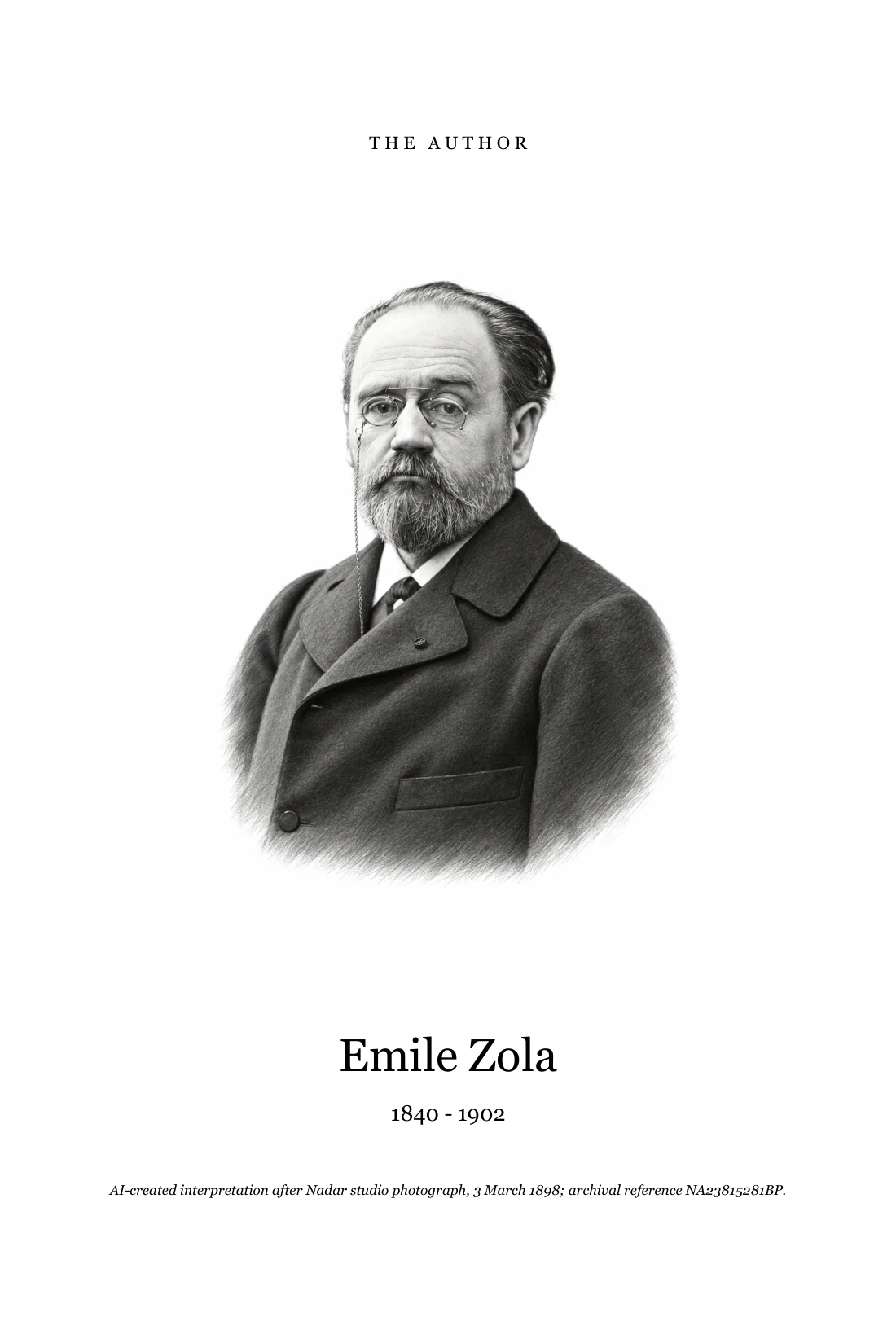
Germinal was the name of a month that no longer exists. In the calendar of the French Revolution it was the month of spring, of seeds beginning to sprout, and in 1885 Émile Zola gave the name to his novel about a coal strike in northern France. The title is a promise: whatever happens to these miners, something is growing underground.
Émile Zola is the great novelist of naturalism, the school that tried to show human beings as products of their heredity and surroundings. He was also a campaigning journalist who risked everything for a wrongly convicted army officer. Among Émile Zola’s books, two are the classic starting points: Thérèse Raquin, the short, lurid novel that made him notorious, and Germinal, the epic most readers consider his masterpiece.
Where to start with Émile Zola’s books
- $14.99
Theresa Raquin
1867. Thérèse, her sickly husband, his mother and her lover, shut up together above a dingy shop in a Paris arcade. A crime of passion and its terrible aftermath, told with clinical intensity. Short, shocking and the quickest way into Zola.
- $21.99
Germinal
1885. A young unemployed mechanic arrives at the mining town of Montsou, goes down the pit and helps lead a strike. Zola’s great novel of labour, hunger and hope, and the summit of his twenty-novel cycle.


Thérèse Raquin: the scandal
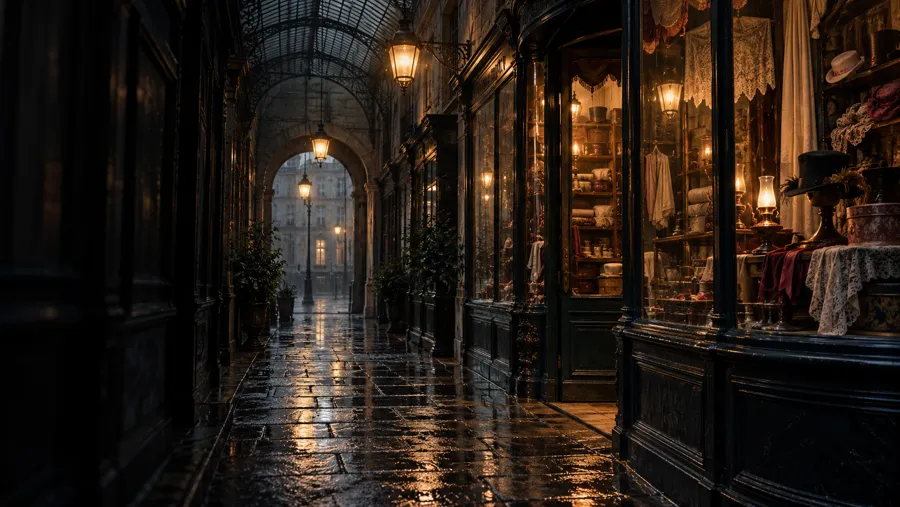
Zola was a young clerk at the publishing house Hachette in the 1860s when he began to make a name for himself as a writer, and Thérèse Raquin (1867) was the book that made him notorious. It is set in the narrow, dark arcade of the Passage du Pont-Neuf, where Thérèse helps run a haberdashery with her aunt and her feeble cousin-husband, Camille. When Camille’s boisterous friend Laurent starts visiting, the novel turns into a study of desire, guilt and fear so intense it reads at times like a horror story.
Critics were appalled. Writing in Le Figaro, Louis Ulbach denounced the book as “putrid literature”. Zola answered in a preface to the second edition of 1868, explaining that he had set out to study not characters but temperaments, people driven by their nerves and blood:
Thérèse and Laurent are human brutes, nothing more. I have sought to follow these brutes, step by step, in the secret labour of their passions, in the impulsion of their instincts, in the cerebral disorder resulting from the excessive strain on their nerves.
Zola’s preface to the 1868 edition, as quoted in the Vizetelly translation
That preface is one of the founding statements of literary naturalism. The novel itself is less theory than nightmare. Zola turned it into a play himself, first staged in 1873.
Germinal: the masterpiece
Germinal is the thirteenth novel in Les Rougon-Macquart, Zola’s twenty-novel “natural and social history of a family under the Second Empire”. Its hero, Étienne Lantier, has already appeared in L’Assommoir; here he walks out of the night into the coal country and finds work at a pit called the Voreux. Zola makes the mine into a living monster:
This pit, piled up in the bottom of a hollow, with its squat brick buildings, raising its chimney like a threatening horn, seemed to him to have the evil air of a gluttonous beast crouching there to devour the earth.
Germinal (1885), translated by Havelock Ellis
Zola did his homework. In 1884 he toured the mining towns of northern France, saw the aftermath of a strike at Anzin and went down a working pit at Denain. The result is a novel of extraordinary physical detail, from the cramped seams to the miners’ crowded cottages, and of overwhelming collective scenes as the strike gathers force. Claude Berri filmed it in 1993, with Gérard Depardieu and Miou-Miou.

Do you need to read the Rougon-Macquart in order?
No. Each of the twenty novels, published between 1871 and 1893, stands on its own, and most readers simply start wherever the subject appeals. They follow different members of one sprawling family into different corners of French society, from the Paris markets to the railways. Once Germinal has hooked you, the obvious next books are L’Assommoir, his great novel of drink and poverty in working-class Paris, Nana and La Bête humaine. Zola modelled the whole enterprise on the example of Balzac, but confined it to one family; see Balzac’s Human Comedy: where to start and, for the theory behind it, What is naturalism?
Zola and the Dreyfus affair
Zola’s fame today rests almost as much on a newspaper article as on his novels. On 13 January 1898 he published an open letter to the President of France, Félix Faure, on the front page of L’Aurore, Georges Clemenceau’s Paris daily, accusing the army of covering up the wrongful conviction of Captain Alfred Dreyfus. Its headline, “J’Accuse”, has entered the language. Zola was convicted of libel and fled to England, where he lived until June 1899. He died in Paris in September 1902, poisoned by carbon monoxide from a blocked chimney; whether the blockage was an accident has never been settled. In 1908 his remains were moved to the Panthéon.
Start in the arcade, though. Thérèse Raquin is brief, and within a few chapters you will understand why Paris was so outraged, and so unable to stop reading.
Questions readers ask
Which Émile Zola book should I read first?
Of Émile Zola’s books, start with Thérèse Raquin (1867) if you want something short and intense, or Germinal (1885) if you want his masterpiece. Both stand alone.
Is Thérèse Raquin part of the Rougon-Macquart?
No. Thérèse Raquin was published in 1867, before Zola began the twenty-novel Rougon-Macquart cycle, which appeared between 1871 and 1893.
What is Germinal about?
Germinal follows Étienne Lantier, a young mechanic who finds work in a northern French coal mine and helps lead the miners in a desperate strike against the company.
Why is Émile Zola famous?
He is famous for his naturalist novels, especially the Rougon-Macquart cycle, and for “J’Accuse”, his 1898 open letter defending Alfred Dreyfus.
 His Masterpiece350 pages · $18.99
 The Ladies' Paradise398 pages · $19.99