James O’Neill first played Edmond Dantès on stage in the 1880s, in Charles Fechter’s adaptation of the novel. Critics were cool, audiences adored him, and he went on playing the part for some thirty years. By Britannica’s count the role earned him nearly a million dollars over more than six thousand performances. It also trapped him: whenever he tried other parts, the public wanted Monte Cristo. His son, the playwright Eugene O’Neill, later drew him as the father, James Tyrone, in Long Day’s Journey into Night.
In 1913, in his sixties, O’Neill finally played Dantès on film. It was one of the first of many Count of Monte Cristo movies, and like all of them it faced the same problem: Alexandre Dumas’s novel runs to well over a thousand pages, and its revenge is a slow, intricate machine that takes years to run.
The Count of Monte Cristo movies and series
- 1913
James O’Neill films his famous stage role for Famous Players, directed by Joseph A. Golden and Edwin S. Porter.
- 1934
Robert Donat and Elissa Landi star in Rowland V. Lee’s version, the first with sound; five silent films had come before.
- 1954
Jean Marais plays Dantès in Robert Vernay’s French-Italian film, seen by nearly eight million people in France.
- 1961
Louis Jourdan stars in Claude Autant-Lara’s French version.
- 1975
Richard Chamberlain plays Dantès in a television film, with Tony Curtis, Kate Nelligan and Louis Jourdan as Villefort.
- 1998
Gérard Depardieu stars in Josée Dayan’s four-part French miniseries.
- 2002
Kevin Reynolds directs Jim Caviezel, Guy Pearce and Richard Harris as the Abbé Faria.
- 2024
Pierre Niney stars in Matthieu Delaporte and Alexandre de La Patellière’s French film, a huge hit at home.
- 2024
Sam Claflin leads Bille August’s eight-part English-language series, with Jeremy Irons.
What every version keeps
The first quarter of the novel is so perfectly built that almost no adaptation tampers with it. A young sailor, Edmond Dantès, comes home to Marseille to be made captain and to marry Mercédès. Three men who envy him, the shipmate Danglars, the rival Fernand and the ambitious magistrate Villefort, have him arrested on his wedding day and buried without trial in the Château d’If. There, after years alone, he meets the Abbé Faria, who educates him and tells him where a vast treasure lies hidden. The escape that follows is one of the great scenes in fiction, and every film builds towards it.
What every version leaves out
After the escape, Dumas’s plot opens out into a huge society novel. The Count arrives in Paris and spends hundreds of pages laying traps for his enemies through their wives, children, finances and secrets. There are poisonings in the Villefort household, a bandit in the catacombs of Rome, a bogus Italian prince, a bankruptcy and a courtroom revelation, and a large cast of younger characters whose futures hang on the Count’s decisions.
No film has room for all of this. Films usually keep one strand of revenge per villain and lose the rest. That changes the book’s meaning. In the novel, the Count’s revenge spreads further than he intended, and the closing chapters are about the limits of playing Providence. Some screen versions prefer a cleaner triumph. Kevin Reynolds’s 2002 film, for example, keeps the imprisonment and revenge but changes the relationships between the main characters and the ending.
…until the day when God shall deign to reveal the future to man, all human wisdom is summed up in these two words,—‘Wait and hope.’
Alexandre Dumas, The Count of Monte Cristo (1844–46)
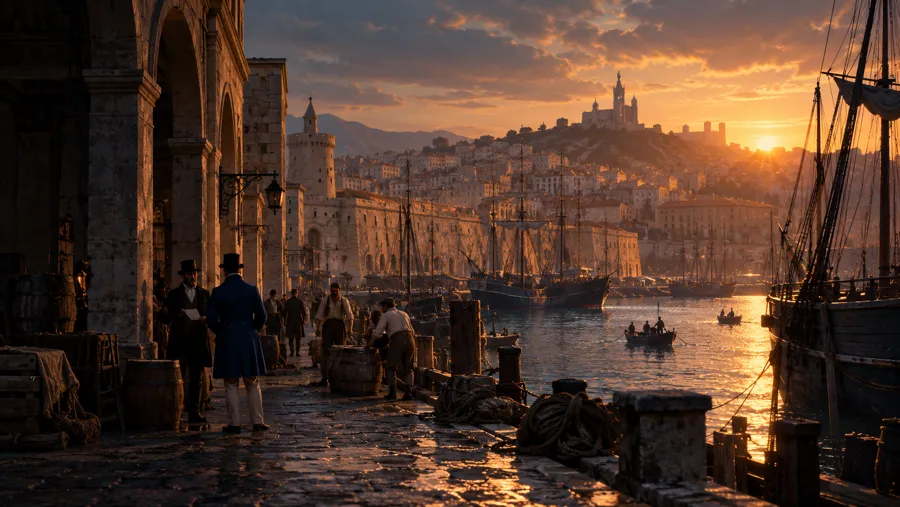
What is the best Count of Monte Cristo movie?
For a classic Hollywood telling, the 1934 film with Robert Donat holds up well. For the most material, the long-form versions win: the 1998 Depardieu miniseries and the 2024 Claflin series have hours to spend on Paris. Of the recent films, the 2024 French version with Pierre Niney sold more than nine million tickets in France and received fourteen nominations at the César Awards, France’s national film prizes, and it makes a serious attempt to capture the scale of the book.
But no screen version gives you what the novel does: the slow pleasure of watching a plan come together across a thousand pages, and the shock of seeing what it costs.
How long is the book, really?
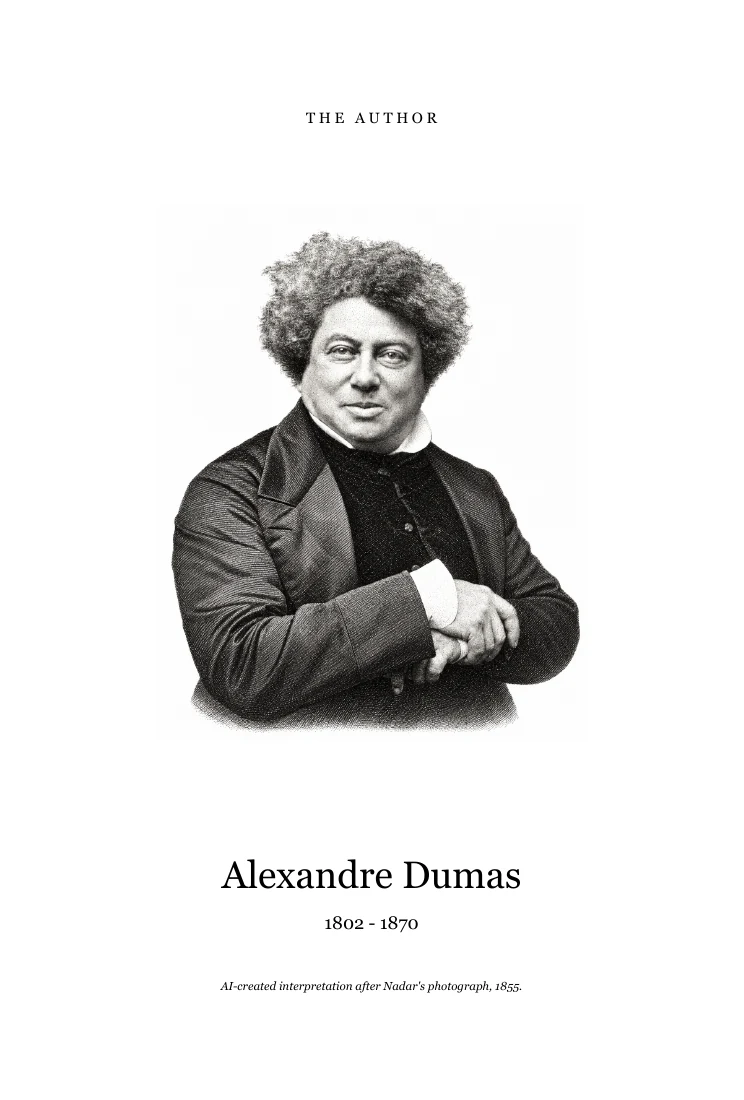
Long, but not slow. It first appeared as a newspaper serial, built to keep readers coming back for the next instalment, and it reads that way. We publish it in five volumes so that each one is a comfortable size to carry; see why our edition comes in five volumes. If you have seen a film, start with volume one and stop after the escape if you must. Most readers find they cannot.
For more Dumas, try The Three Musketeers, or read about the collaborator behind Dumas’s novels. And when you reach Paris in volume two, remember that the films have already left most of what follows on the cutting-room floor.
Questions readers ask
What is the best Count of Monte Cristo movie?
The 1934 film with Robert Donat is the classic Hollywood version, the 2002 film with Jim Caviezel is a brisk modern retelling, and the 2024 French film with Pierre Niney is a big-screen epic. For completeness, the 1998 and 2024 miniseries cover far more of the novel.
Is the 2002 Count of Monte Cristo faithful to the book?
It follows the main storyline of betrayal, imprisonment and revenge, but it changes several relationships between the main characters and gives the story a different ending.
How many Count of Monte Cristo films are there?
There have been many film and television versions. The best known include the 1913 silent with James O’Neill, the 1934 film with Robert Donat, the 1954 and 1961 French films, the 2002 film with Jim Caviezel and the 2024 French film with Pierre Niney.
 The Count of Monte Cristo — Volume 2362 pages · $18.99
 The Count of Monte Cristo — Volume 3354 pages · $18.99
 The Count of Monte Cristo — Volume 4286 pages · $16.99
 The Count of Monte Cristo — Volume 5266 pages · $15.99