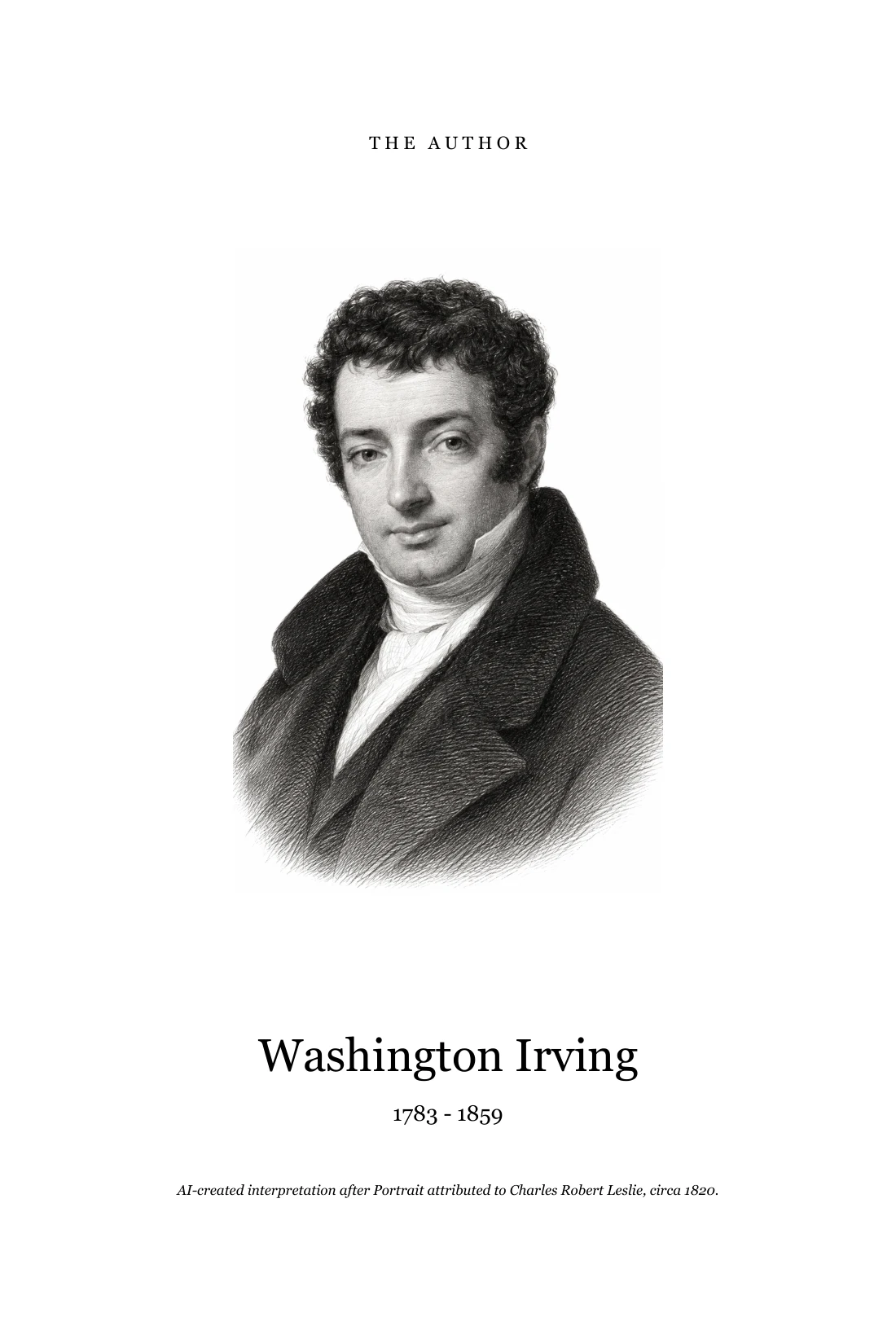
The Legend of Sleepy Hollow was first published in 1820 as part of The Sketch-Book of Geoffrey Crayon, Gent., a collection of essays and stories by Washington Irving. The book came out in instalments in America in 1819 and 1820, and Rip Van Winkle appeared in the very first one. Between them, those two tales made Irving one of the first American writers to win a large following in Europe.
So the best way to read the Sleepy Hollow book is the way its first readers did: in the company of the sketches around it. The Headless Horseman is only one voice in a book full of ghosts, legends, old customs and gentle humour.
What is The Sketch Book?
Irving published under the pen name Geoffrey Crayon, an amiable American bachelor wandering through England and setting down what he sees. Most of the book is made of short essays: a visit to Westminster Abbey, a pilgrimage to Shakespeare’s Stratford, rural funerals, an old London tavern, and a much-loved sequence on an old-fashioned English Christmas at the country house of Squire Bracebridge.
Among these, like ghosts in a drawing room, sit a handful of tales. Rip Van Winkle and The Legend of Sleepy Hollow are both presented as stories found among the papers of Diedrich Knickerbocker, a fussy old Dutch-American historian Irving had invented years earlier. The joke of the frame is that the most American stories in the book are smuggled in among the most English ones.
What happens in The Legend of Sleepy Hollow?
Ichabod Crane, a lanky, superstitious schoolmaster, arrives in a drowsy Dutch settlement near Tarrytown on the Hudson. He sets his heart on Katrina Van Tassel, the daughter of a wealthy farmer, and on her father’s overflowing larders, which is where he runs into Brom Bones, the local hero, who has the same plan. Locals tell of a Hessian trooper who lost his head to a cannonball and rides out at night in search of it.
The story is much funnier than its reputation. Irving lingers over Ichabod’s appetite and vanity, and over the feast at the Van Tassel farm, before the famous night ride home. And the ending is deliberately open: the narrator gives you the facts and the gossip, and lets you decide what really happened on that road.
Its companion tale is just as famous. In Rip Van Winkle, an idle, good-natured villager in the Catskill Mountains wanders off with his dog, shares a drink with a strange company of old Dutch sailors playing ninepins, and wakes twenty years later to find that the American Revolution has come and gone without him.
Both stories borrow from German folk tales, which Irving transplanted to the Hudson Valley and filled with Dutch-American farmers, taverns and local gossip. That is a large part of their charm: they feel like legends a place has always told about itself, even though Irving made them up.
Is The Sketch Book worth reading today?
Yes, especially if you take it in pieces. The tales are the obvious draw, and Rip Van Winkle and Sleepy Hollow are both short enough for an autumn evening. The essays are quieter and more old-fashioned, but the Christmas chapters have real warmth, and they helped shape the nineteenth century’s idea of a traditional English Christmas. Charles Dickens was among Irving’s admirers.
Some of the essays reflect their era. Two pieces on Native Americans were sympathetic by the standards of 1819 but use the language and assumptions of their time. Most readers dip in and out, and the book is built for exactly that.

Where to go next
Sleepy Hollow is a natural October read, and it sits beside Poe, Stoker and M. R. James in our Halloween reads. For the Christmas side of the book, follow Irving’s influence into Did you know A Christmas Carol was the first of five Christmas books by Dickens?, and start with A Christmas Carol itself. Readers who like short tales in a single volume will find more in The best classic short story collections.
But begin in the hollow. Turn to the Legend in The Sketch Book, read it after dark, and listen for hoofbeats.
Questions readers ask
What book is The Legend of Sleepy Hollow in?
It first appeared in The Sketch Book of Geoffrey Crayon, Gent., a collection of essays and stories by Washington Irving published in instalments in 1819–20.
When was The Legend of Sleepy Hollow written?
Washington Irving wrote it while living in England, and it was published in 1820 in one of the later instalments of The Sketch Book.
Is Rip Van Winkle in the same book as Sleepy Hollow?
Yes. Both stories are in The Sketch Book. Rip Van Winkle appeared in the first instalment in 1819 and Sleepy Hollow in a later one in 1820.