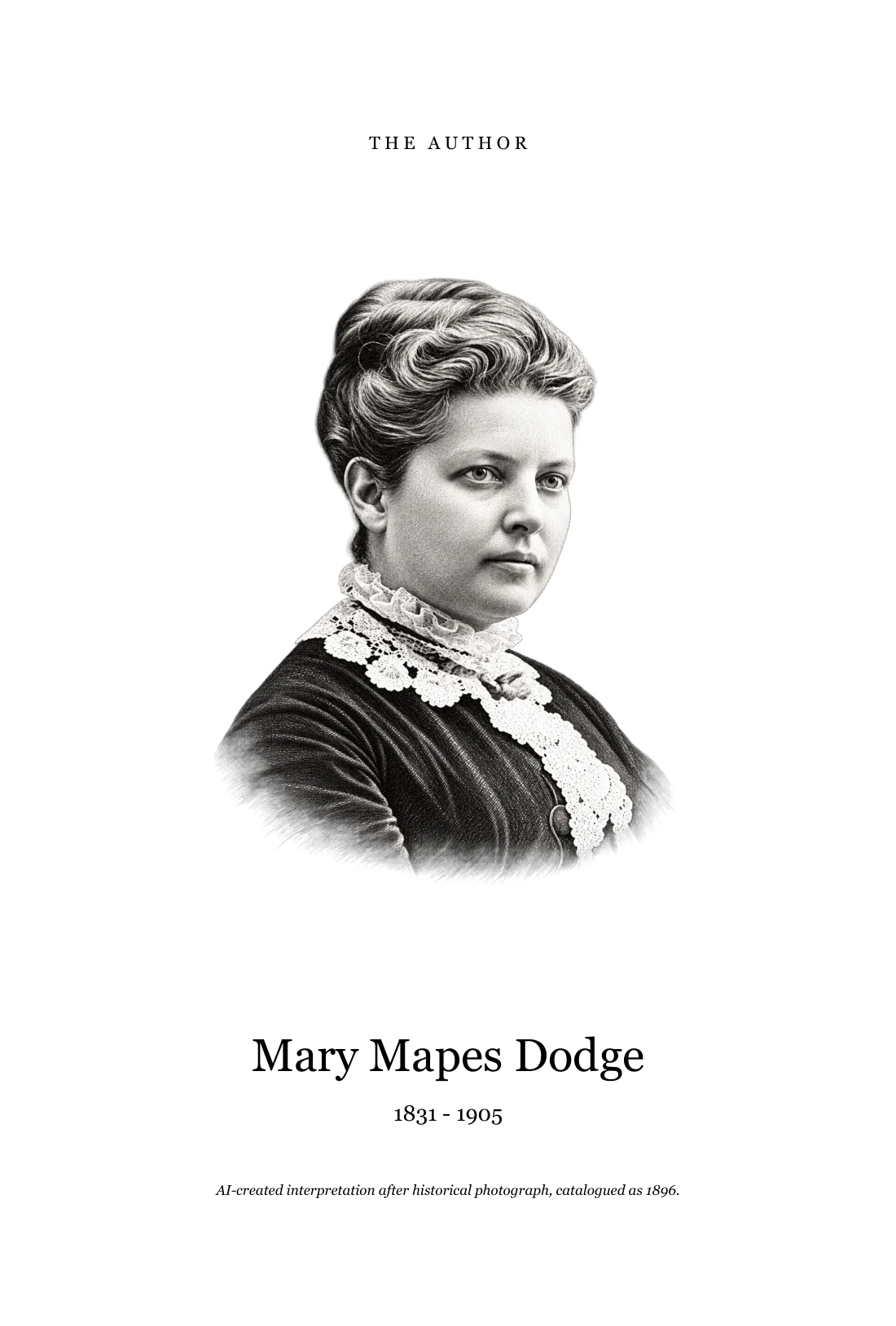
“Amsterdam, July 30, 1873,” the letter begins. Writing to her young readers from a hotel window, Mary Mapes Dodge describes the crooked gabled houses, the dogcarts and wooden shoes, an old woman selling boiling water and burning peat for a Dutch cent, and the washerwomen scrubbing in the street. Then she adds one more thing. In an Amsterdam bookshop she has just found Hans Brinker translated into Dutch, a handsome volume full of words so formidable that she felt sorry for the little Hollanders who would have to read them.
It must have been a strange moment. Dodge had written Hans Brinker, or The Silver Skates in 1865 without ever setting foot in the Netherlands. The letter was added to later editions of the book, and it is one of the few places she lets the reader see how far her Holland had been made from reading, listening and imagination.
How did Mary Mapes Dodge write about Holland without going there?
By doing her homework, and by asking. Dodge read John Lothrop Motley’s histories of the Dutch Republic, which she mentions by name in the book, and she drew on her Dutch immigrant neighbours, the Scharff family, for the texture of daily life. Her preface thanks “those kind Holland friends” who looked back at their country for her sake, seeing it as it had been twenty years before, when the story is set.
She was clear about what she was attempting:
This little work aims to combine the instructive features of a book of travels with the interest of a domestic tale.
Mary Mapes Dodge, preface to Hans Brinker; or, The Silver Skates
That double aim explains the book’s shape. A family story, of the poor Brinkers living beside a frozen canal near Amsterdam, alternates with what amounts to a guided tour: a party of boys skating from Broek by way of Haarlem and Leiden to The Hague, stopping at churches, galleries and museums and trading facts about Dutch history, tulip mania and the dikes. The preface also insists that the story of the father, Raff Brinker, is “founded strictly upon fact”.

What is Hans Brinker about?
Hans and his sister Gretel are fifteen and twelve. Ten years earlier their father, a dike worker, fell from the scaffolding during a storm, and his mind and memory have been gone ever since. The family is poor, their skates are clumsy pieces of wood that Hans made himself, and the great race on the frozen river, with a pair of silver skates as the prize, seems far beyond them. Meanwhile there is a doctor, a missing sum of money and a long-lost son to account for.
Dodge wrote it at thirty-four, as a widow with two small boys to support. Her husband, the lawyer William Dodge, had disappeared in 1858 and been found drowned. She began the story as a bedtime tale for her sons and worked it up into a novel, and it became a best-seller: in its first year it was reportedly outsold only by Dickens’s Our Mutual Friend.
Where did the boy with his finger in the dike come from?
Not, as many people assume, from Dutch folklore, and not from Hans. The tale of the little boy who saves Haarlem by plugging a leak with his finger appears in chapter eighteen of Dodge’s novel, but it was already circulating: English versions go back to 1850, and it probably derives from a French story, Le Petit Éclusier, published by the French children’s writer Eugénie Foa in 1848. Dodge herself frames it as a foreign tale. In the novel it is read aloud as “Lesson 62. The Hero of Haarlem” by a boy in an English schoolroom, while a Dutch boy across the sea tells the same story to an English visitor.

What happened to Mary Mapes Dodge?
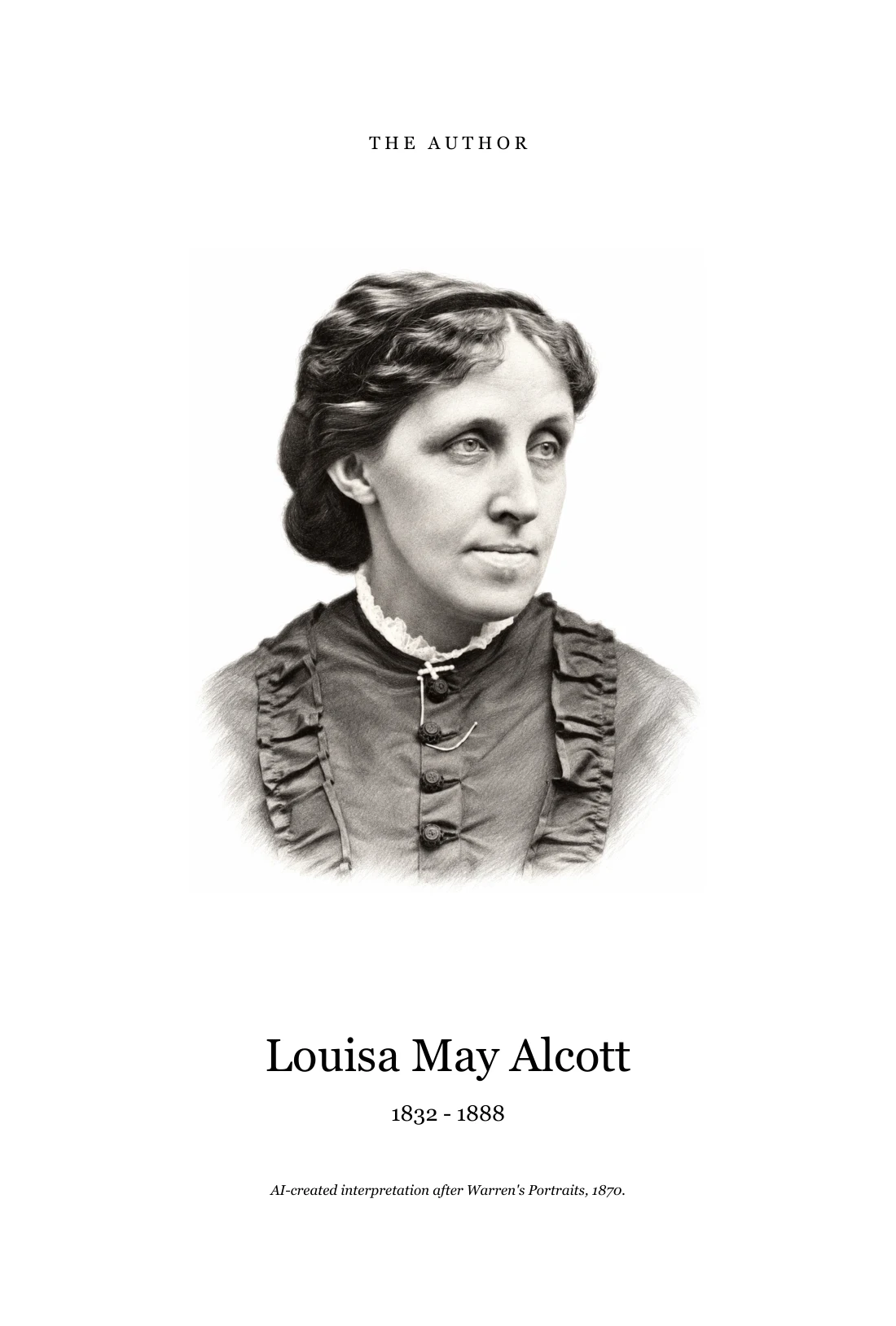
Hans Brinker made her name. In 1873, the year of the Amsterdam letter, she became editor of the new children’s magazine St. Nicholas, and she edited it for many years, publishing Louisa May Alcott, Mark Twain and Robert Louis Stevenson for a young audience. She died in 1905 at her summer cottage in the Catskills. The book has been adapted many times, including as a 1962 Disney television film, and it loosely inspired a 1998 Disney Channel film that turned the story into an inline-skating race in Los Angeles.
Hans Brinker; Or, The Silver Skates
1865. A poor Dutch brother and sister, a father lost to an accident, and a race for silver skates. Half family story, half guided tour of Holland on ice.
Little Women
Louisa May Alcott, one of Dodge’s star contributors at St. Nicholas, published this story of four sisters three years after Hans Brinker. A natural companion for winter reading.


Where to go next
With its frozen canals and its Saint Nicholas feast, Hans Brinker belongs on Classics for long winter nights and among Family read-aloud adventures. For more of the same era’s children’s books, browse our children’s classics.
Then lace up with Hans Brinker; Or, The Silver Skates. It is a Holland seen from across an ocean, through borrowed memories and library books, and the Dutch themselves were translating it within a few years.
Questions readers ask
Did Mary Mapes Dodge visit Holland?
Not before she wrote Hans Brinker. She published the novel in 1865 using histories, especially Motley’s, and the memories of Dutch neighbours. She visited Amsterdam later, writing a letter from there in 1873 that appears in later editions.
Is the boy who put his finger in the dike Hans Brinker?
No. The tale is a story within the novel, read aloud as “The Hero of Haarlem”, and its boy is unnamed. It predates Dodge’s book and is not widely known in the Netherlands.
What age is Hans Brinker suitable for?
It suits confident readers of about eight and up, and works well as a family read-aloud. Its chapters on Dutch history and art are slower going than the skating and family scenes.