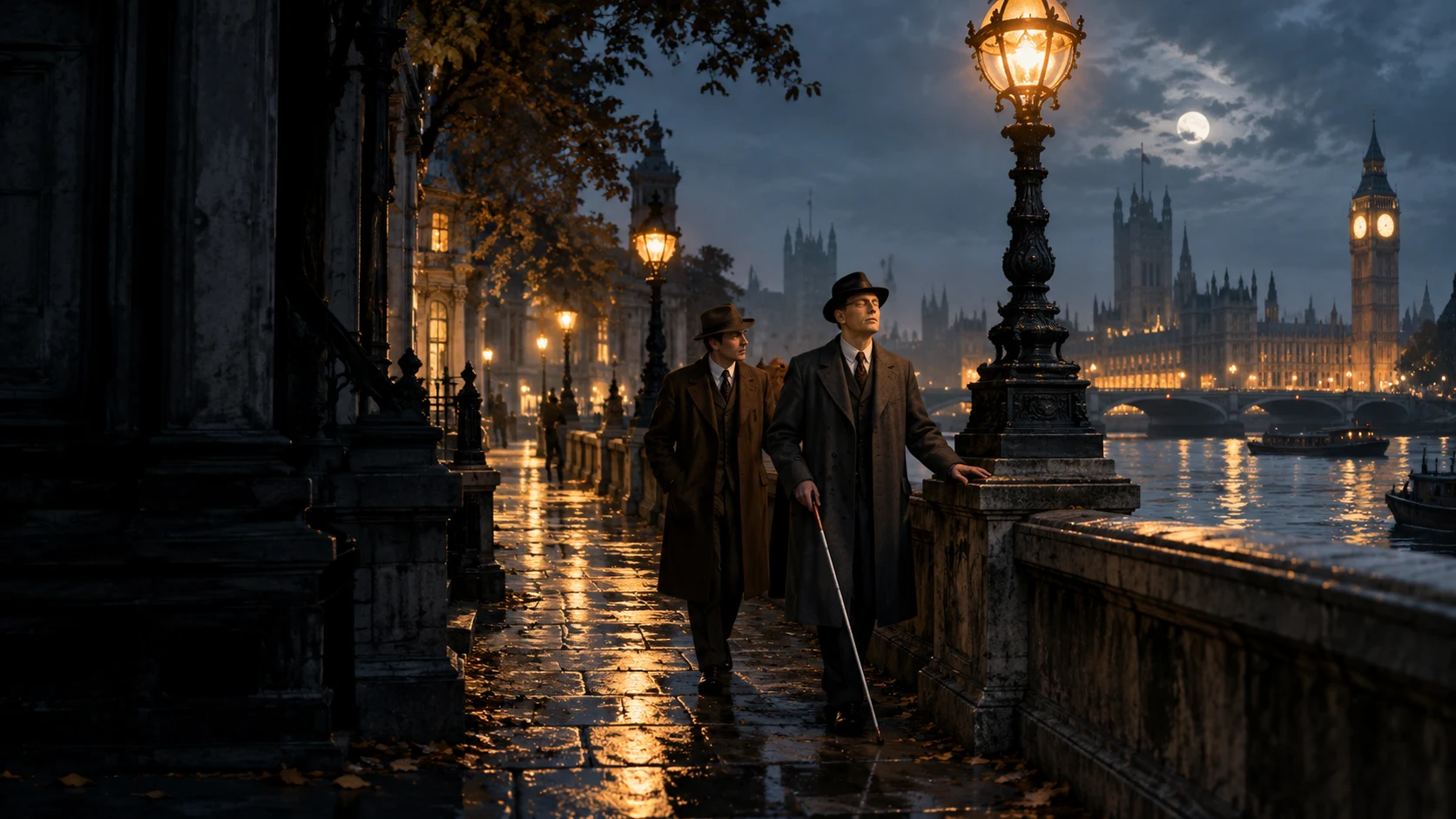
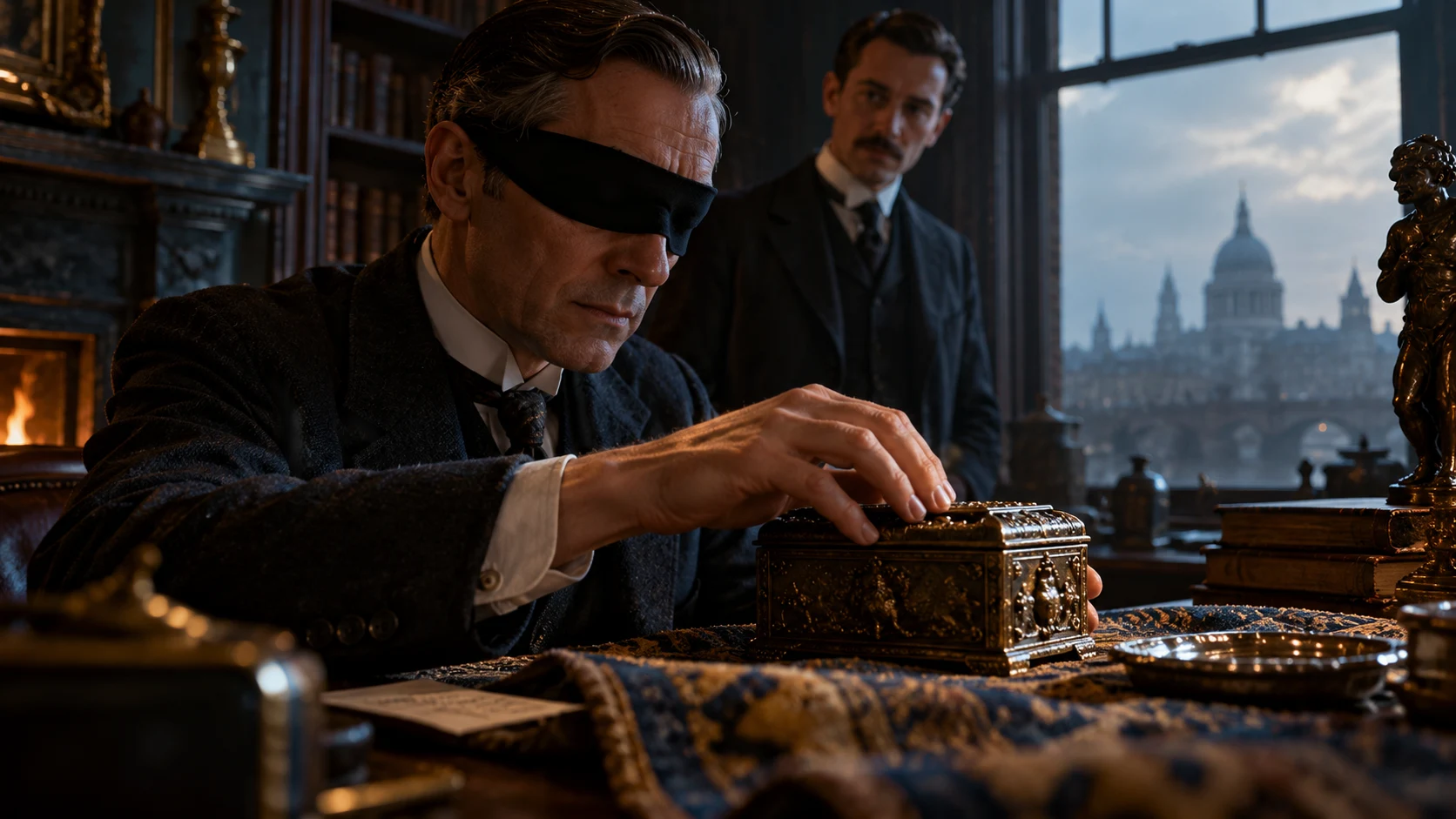
A private detective, grinning at his own cleverness, hands a rare Sicilian coin to an old school friend who cannot see. The friend runs his fingertips over it, weighs it in his palm and finally touches it with his tongue. Then, very politely, he tells the detective a good deal more about the case than the detective knows. That is the opening of “The Coin of Dionysius”, the first story about Ernest Bramah’s blind detective Max Carrados, and it is as neat an entrance as any detective has made.
Carrados first appeared in 1913 and starred in three collections of stories and a late novel. Read them in order: Max Carrados (1914), The Eyes of Max Carrados (1923), Max Carrados Mysteries (1927) and the novel The Bravo of London (1934). The first two are the ones to have, and they are both on our shelf.
Who is Max Carrados?
He was born Max Wynn, and took the name Carrados as the condition of a fortune left to him by an American relative. About a dozen years before the first story, riding along a bridle path, he was flicked in the eye by a twig, and the injury led to total blindness. He now lives comfortably at Richmond, collects ancient coins with an expert’s eye for forgery, and has trained his other senses to an extraordinary pitch.
His partner is Louis Carlyle, an old schoolfriend, once a solicitor, who left the profession under a cloud and now runs a private inquiry agency. Carrados also relies on his manservant Parkinson, trained to notice everything and interpret nothing, and on a secretary to read him anything in small print. As he cheerfully explains to Carlyle, he can follow the headings in a newspaper with his finger, but anything much smaller defeats him.
Asked whether blindness is an advantage, Carrados is thoughtful rather than self-pitying.
A new world to explore, new experiences, new powers awakening; strange new perceptions; life in the fourth dimension.
Ernest Bramah, Max Carrados (1914)

The Max Carrados books in order
- $14.99
Max Carrados
1914. Eight stories, from the forged coin to a railway signal mystery and a cottage where a woman may be in mortal danger. The freshest and sharpest of the collections, and the place to start.
- $16.99
The eyes of Max Carrados
1923. Nine more cases, with spies, ghosts and a poisoned dish of mushrooms, and a long introduction in which Bramah defends his hero’s powers with examples from real life.


The later Max Carrados Mysteries (1927) adds more stories, and The Bravo of London (1934) is the only full-length Carrados novel. Carrados is a short-story detective at heart, and the first two books show him at his best.
Was a blind detective believable?
Bramah expected the question, and he answered it at length in his introduction to The Eyes of Max Carrados. He argued that the abilities he gave Carrados were drawn from real blind people, and that he had actually left out feats that seemed too improbable for fiction. Carrados, he wrote, “is by no means a super-blind-man”.
His evidence included John Metcalf, “Blind Jack of Knaresborough”, the eighteenth-century road-builder who lost his sight to smallpox as a child and went on to an astonishingly active life. Bramah’s point was not that Carrados was ordinary, but that the line between the sighted and the blind was drawn in the wrong place, and his stories treat blindness as a different way of perceiving rather than a tragedy to be overcome.
Max Carrados and Sherlock Holmes
Carrados belongs to the generation of detectives who arrived in the wake of Holmes, each with a twist. Some were scientists, some were criminals, some were women; Carrados was blind. He shares his era with R. Austin Freeman’s forensic expert, whom we cover in Dr. Thorndyke in order, and you will find more of his rivals in Books like Sherlock Holmes.
George Orwell, writing in 1936, bracketed the first two Carrados books with the stories of Conan Doyle and Freeman as the only detective fiction since Poe worth rereading. Bramah wrote to thank him.
On screen, Robert Stephens played Carrados in a 1971 episode of the television series The Rivals of Sherlock Holmes, and Simon Callow and others have played him on BBC radio.
The other Ernest Bramah
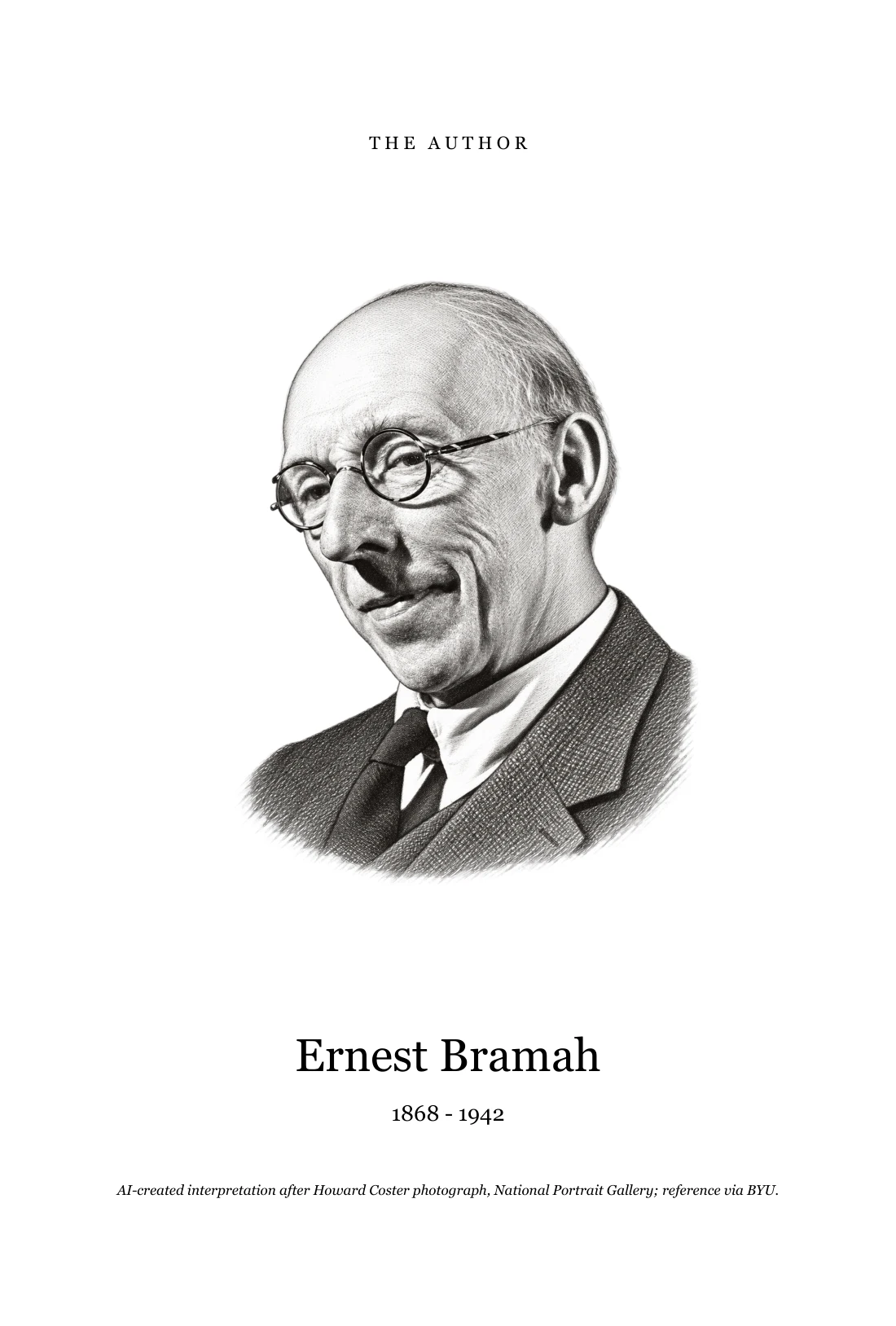
Readers who know Bramah only as the creator of Carrados are often surprised to learn that his first fame came from something entirely different: the ornately polite Chinese storyteller of Kai Lung. The two series could hardly be less alike, and yet both are built on the same pleasure in precise, unexpected sentences. His whole career is surveyed in Ernest Bramah: from Kai Lung to Max Carrados.
Begin where Carlyle did, with a doubtful coin and a man he was sure could not help him. Max Carrados is a book of eight short cases, and once Carlyle has stopped laughing you will see why he never doubted his friend again.
Questions readers ask
Who is Max Carrados?
Max Carrados is a blind amateur detective created by Ernest Bramah. He first appeared in 1913 and solves crimes using his highly trained senses of touch, hearing, taste and smell.
What order should I read the Max Carrados books in?
Start with Max Carrados (1914), then The Eyes of Max Carrados (1923) and Max Carrados Mysteries (1927). The Bravo of London (1934) is the only Carrados novel.
How did Max Carrados go blind?
In the stories, a twig flicked into his eye while he was riding along a bridle path about twelve years earlier, and the injury led to total blindness.
 The Wallet of Kai Lung214 pages · $14.99
 Kai Lung's Golden Hours230 pages · $14.99
 The Mirror of Kong Ho144 pages · $12.99