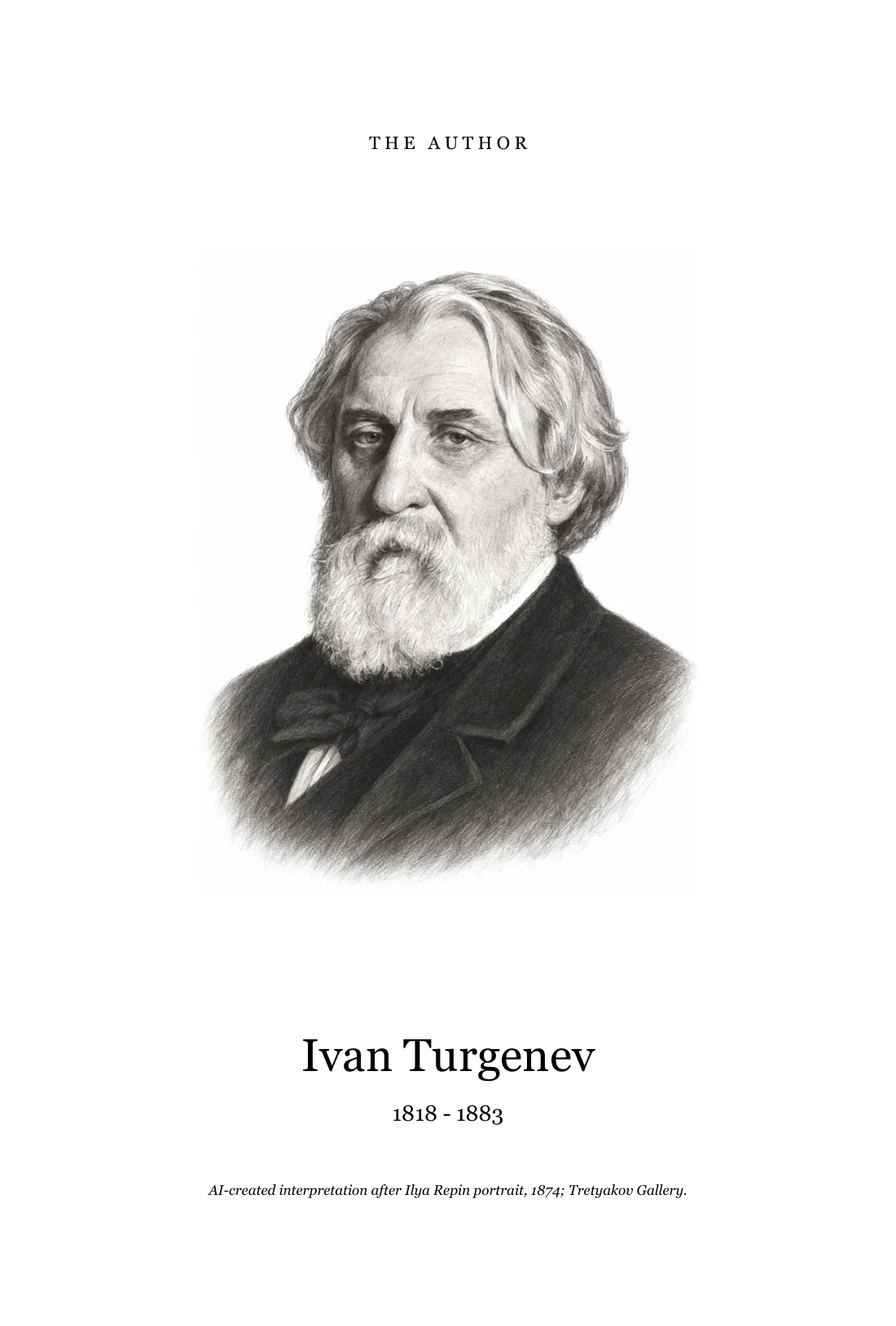
Few novels have put a word into a whole country’s mouth. Fathers and Sons, published by Ivan Turgenev in 1862, did exactly that. Its hero, a young medical student named Bazarov, calls himself a nihilist, and within months the word was everywhere in Russian newspapers and drawing rooms.
Turgenev did not invent it. “Nihilism” had been used by European philosophers and Russian critics decades earlier. But it was Fathers and Sons that gave the word a face, an attitude and a generation, and it has carried Bazarov’s shadow ever since.
What does nihilism mean in Fathers and Sons?
Early in the novel, young Arkady Kirsanov brings his friend Bazarov home to his father’s estate for the summer. When the older Kirsanovs ask what kind of man Bazarov is, Arkady explains that he is a nihilist: someone who bows to no authority and accepts no principle on faith, however much it is respected.
In practice, Bazarov’s nihilism is less a philosophy of meaninglessness than a creed of hard-headed science. He dissects frogs, believes in what can be tested, and dismisses art, poetry, romantic love and the old aristocratic manners as sentimental nonsense. A good chemist, he says in effect, is worth twenty poets.
Arkady’s uncle, Pavel Petrovich, an elegant relic of the 1840s with perfect cuffs and liberal principles, finds all this intolerable. Their quarrels over dinner are some of the sharpest scenes in Russian fiction, and Turgenev lets both men score points.
Why did Fathers and Sons cause a scandal?
Russia in 1862 was in upheaval. The serfs had been emancipated the year before, and a new generation of radical students, many of them sons of priests and minor officials rather than nobles, were impatient with the gentlemanly liberals who had come before them. Turgenev, a gentleman liberal himself, set out to portray the new type honestly.
Nobody was satisfied. Many young radicals took Bazarov as a cruel caricature of their cause. Conservatives accused Turgenev of flattering the young and grovelling before them. Some readers decided Bazarov was a hero, others a monster. Turgenev, wounded by the attacks from both sides, spent more and more of his life abroad.
The argument did not stop with him. Nikolai Chernyshevsky’s novel What Is to Be Done? (1863) offered radicals a more admiring portrait of the “new people”, and Fyodor Dostoevsky answered Chernyshevsky in turn with Notes from Underground. Russian literature in the 1860s was, in part, a long argument about Bazarov.
Fathers and Sons
1862. Two young graduates, two fathers and one long summer. Short, funny, tender and still argued over.
Notes from Underground
Dostoevsky’s furious, brilliant reply to the age of reason and progress — the next round of the argument Turgenev started.
Crime and Punishment
Another young man who believes ideas can justify anything, and the price he pays for testing his theory.


What is Fathers and Sons like to read today?
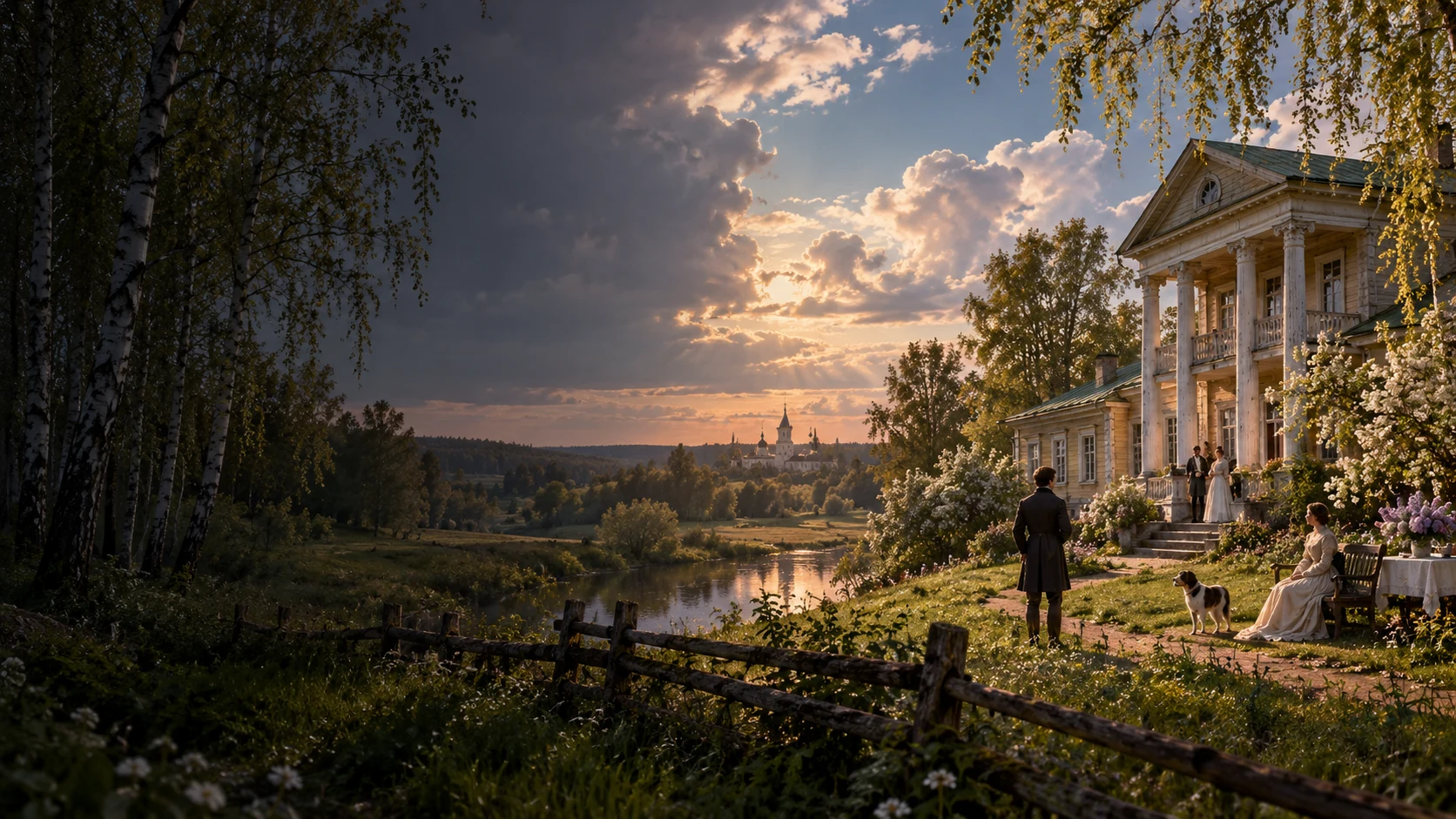
Far gentler than the scandal suggests. Fathers and Sons is a short novel, and much of it takes place on country estates in early summer: lime trees, ponds, dinners on the terrace, servants gossiping, a widow’s elegant house in the provinces.
What makes it last is Turgenev’s fairness. Arkady’s father, Nikolai Petrovich, is a kind, slightly foolish man who plays the cello and wants his son to love him; Bazarov’s own parents are touchingly in awe of their brilliant boy. The generational clash feels uncannily modern, and the book’s sympathy runs in every direction. Then Bazarov meets the cool, intelligent Anna Odintsova, and his theories about love are put to the test.
There is plenty of comedy, too. Arkady tries hard to be as radical as his friend and never quite manages it, and Pavel Petrovich’s fastidious outrage at Bazarov’s manners is as funny as it is sad. Turgenev was a master of landscape and mood, and his summer evenings, gardens and long drives through the countryside give the arguments a beauty that makes them easy to read.
It suits anyone new to Russian fiction who wants a way in that will not take a month. We suggest more starting points in Russian classics for beginners, and look at Turgenev’s great contemporary in Did you know Gogol burned the second part of Dead Souls?. For the wider story of that extraordinary generation of writers, see the golden age of Russian literature.
Begin at a coaching inn on a May afternoon, with Nikolai Petrovich waiting anxiously for his son to come home from university. In Fathers and Sons, he has no idea what — or whom — Arkady is bringing with him.
Questions readers ask
Who is the nihilist in Fathers and Sons?
Yevgeny Bazarov, a young medical student and the friend of Arkady Kirsanov. He rejects all authority, tradition and sentiment that cannot be proved by science.
Did Turgenev invent the word nihilism?
No. The word had been used earlier by philosophers and Russian critics, but Fathers and Sons (1862) made it famous and attached it to a generation of young Russian radicals.
What is Fathers and Sons about?
It follows two young graduates, Arkady and Bazarov, through a summer spent with their families and friends in the Russian countryside, and the clash between the liberal older generation and the radical young.
Is Fathers and Sons a good first Russian novel?
Yes. It is short, clearly written and has a small cast, which makes it one of the most approachable classics of nineteenth-century Russian literature.