

THE PIPCUB BLOG · 656 ARTICLES
Stories behind the stories.
Reading orders, author guides, hand-picked lists and the surprising histories of the books we love.
Every article
97–120 of 656
 Series & reading order · 4 min read
The Story Girl and The Golden Road: L. M. Montgomery’s other duology
Before Road to Avonlea, there were two books about a girl who could make a whole kitchen go quiet with an old family legend. L. M. Montgomery’s Story Girl novels are short, golden and complete in two volumes.
 Did you know? · 4 min read
Did you know The Riddle of the Sands warned Britain about a German invasion?
Two young Englishmen in a small yacht, a tangle of Frisian sandbanks, and a secret that could put an army on the English coast. Erskine Childers meant it as a warning, and said so.
 Reading lists · 4 min read
Classic novels set in London, from Dickens’s fog to Mrs Dalloway’s June
Read these classics in the right order and you watch London change from a city of mud, fog and lawyers into one of motor cars, aeroplanes and Big Ben on a bright June morning.
 Authors · 3 min read
Elizabeth von Arnim and The Enchanted April
In 1898 one of the most talked-about books in London had no author’s name on it. Its writer signed herself Elizabeth, lived on a Prussian estate, and called her husband the Man of Wrath.
 How to read · 4 min read
How to read Shakespeare (and actually enjoy it)
Shakespeare is hard for about twenty minutes. Once you know what the verse is doing and how a few old words work, the plays read like what they are: fast, funny, frightening scripts written to grip a crowd.
 Did you know? · 4 min read
Did you know The Art of War says the best victory needs no battle at all?
The most famous book on warfare ever written is suspicious of fighting. Read The Art of War closely and the battle itself is the part Sun Tzu most wants you to avoid.
 Literary history · 4 min read
The New Woman novels of the 1890s
In the 1890s a new heroine walked into English fiction: educated, unmarried by choice, earning her own living and arguing about it. Critics called her the New Woman, and the novels about her were among the most argued-over books of the decade.
 Reading lists · 4 min read
The sharpest satires in classic literature, from gentle to savage
Satire comes in strengths. Some books tease their targets, some skewer them, and a few leave readers unsure whether to laugh at all. Here are the great classic satires, arranged from the gentlest to the most savage.
- Did you know? · 3 min read
Did you know Great Expectations has two endings?
The ending of Great Expectations that most readers know is not the one Charles Dickens first wrote. He finished the novel one way, showed it to a friend, and changed his mind at the last minute.

 Authors · 4 min read
Ernest Bramah: from Kai Lung to Max Carrados
One of the most quoted “ancient Chinese curses” is sometimes pinned on him, and it is not in his books. Ernest Bramah’s real inventions are stranger: a storyteller who talks his way out of execution, and a detective who cannot see.
 Series & reading order · 4 min read
Did you know Pollyanna has a sequel?
The girl who could find something to be glad about in anything did not stay eleven for ever. Eleanor H. Porter sent her to Boston, then to Europe, then home again as a young woman, and the sequel tests the glad game harder than the first book ever did.
 Did you know? · 4 min read
Did you know Jane Eyre was first published as “an autobiography”?
The title page of October 1847 made no mention of a novel. It offered readers the life story of a woman called Jane Eyre, told in her own words, and named its author only as the editor.
 Young readers · 3 min read
The Tarzan Twins: the Tarzan book Edgar Rice Burroughs wrote for children
Most Tarzan books ran first in the pulp magazines, for grown-up readers. This one was written for children, and dedicated to three of them in particular.
 Reading lists · 4 min read
Robert Louis Stevenson’s best short stories, from The Suicide Club to The Bottle Imp
Before Treasure Island, Stevenson was a writer of short stories, and he never really stopped. His three great collections take you from a London club for would-be suicides to a Scottish manse, a Spanish mountain house and a cursed bottle in Hawaii.
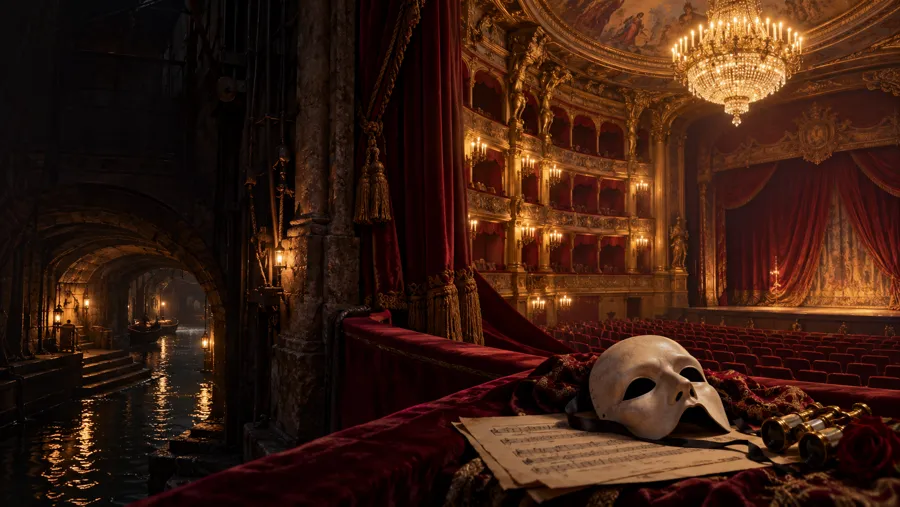
 Books on screen · 4 min read
Classic books that became musicals
George Bernard Shaw refused, for the rest of his life, to let anyone set Pygmalion to music. Little more than five years after his death it became My Fair Lady. Here are the classics behind the songs, and what the songs did to them.
 Reading time · 3 min read
How long is Little Women? Two books in one, and the curtain in the middle
Little Women is really two novels of five or six hours each, published about six months apart, and the first even ends by bringing the curtain down. Together they fill 526 pages.
 Did you know? · 4 min read
Did you know Tristram Shandy has a completely black page?
In 1759 a Yorkshire clergyman published a novel in which a character’s death is marked by a page printed solid black. It was only the first of the book’s jokes about what a book can be.
 Authors · 4 min read
Hemingway’s first great novels: The Sun Also Rises and A Farewell to Arms
In three years Ernest Hemingway went from a young reporter with a few slim books to one of the most imitated prose stylists in America. Two novels did it: one about the peace after the First World War, one about the war itself.
 Reading lists · 4 min read
Debut novels by famous authors, and what they reveal
A writer’s first novel is a snapshot taken before the legend set in: rough, eager and full of clues. Some are masterpieces in their own right. Others are fascinating precisely because they are not.
 Did you know? · 4 min read
The House on the Borderland: the strangest novel of 1908
1908 gave readers Toad of Toad Hall, Anne Shirley and Lucy Honeychurch. It also gave them an old man in a haunted house in the west of Ireland who watches the solar system die.

 Series & reading order · 4 min read
Pellucidar in order: the world at the Earth’s core
Five hundred miles beneath your feet, says Edgar Rice Burroughs, there is another world: a Stone Age land under a sun that never sets, ruled by winged reptiles, where nobody can tell you what time it is.
 Did you know? · 4 min read
Did you know the Holy Grail first appears in a poem by Chrétien de Troyes?
The most famous object in Arthurian legend enters literature in a French poem of the 1180s, carried through a castle hall by a young woman. It is not called holy, nobody says what it is for, and the poem breaks off unfinished.
 Authors · 4 min read
Where to start with W. Somerset Maugham
W. Somerset Maugham qualified as a doctor in 1897, a month after his first novel appeared, and never practised. Eleven years later he had four plays running in London at once, and he went on to become one of the most widely read storytellers of the twentieth century.
 Reading lists · 3 min read
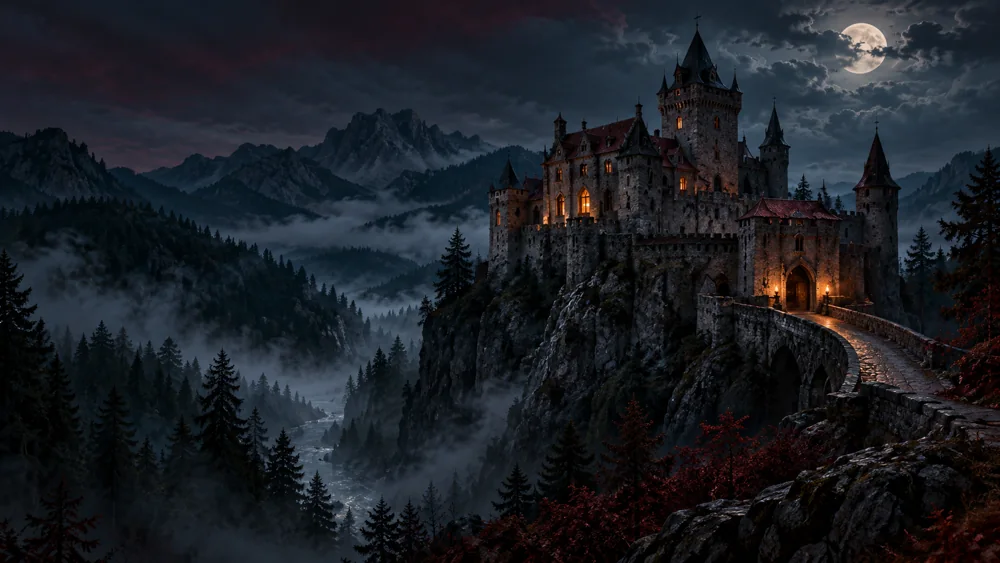
Novels told in letters: the best epistolary classics
Frankenstein opens with a letter to a sister, Dracula with a traveller’s journal, and Daddy-Long-Legs is nothing but letters. Here are the best epistolary novels, and why telling a story in letters works so well.