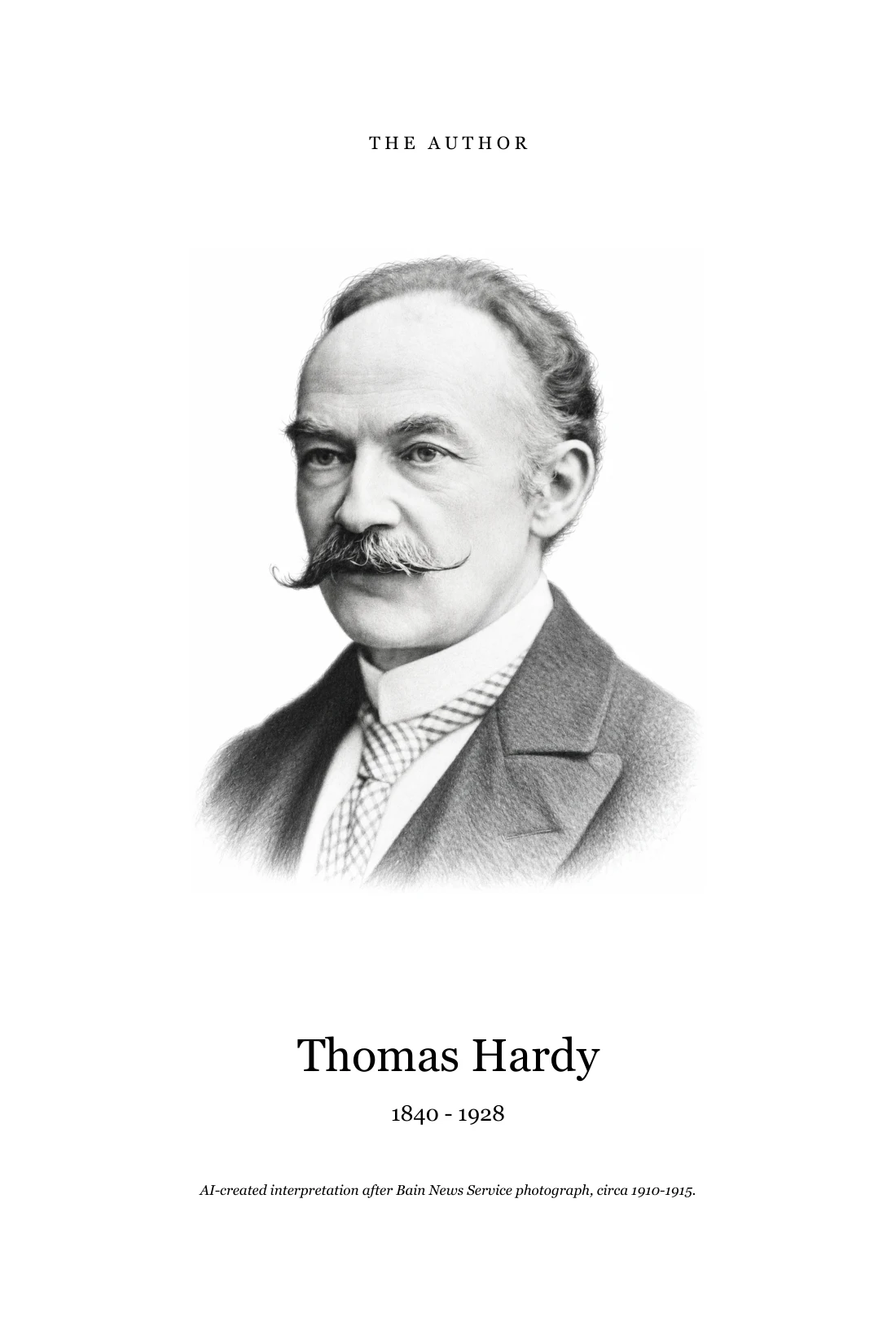
Jude the Obscure appeared as a book in 1895 and caused a storm. Reviewers called it immoral and pessimistic, one critic nicknamed it “Jude the Obscene”, and Hardy later recalled that a bishop had thrown his copy into the fire. Thomas Hardy had written fourteen novels in a little under twenty-five years. After Jude, he wrote none.
He did not retire. He turned to poetry, which had been his first love, and over the next three decades published hundreds of poems and an enormous verse drama about the Napoleonic wars. Many critics now rank him among the great English poets of the twentieth century as well as the great novelists of the nineteenth.
Why did Thomas Hardy stop writing novels?
The hostile reception of Jude was the trigger, but it was not the only reason. Hardy had spent years fighting magazine editors who insisted on cutting or softening his work before it could be serialised for family readers. Tess of the d’Urbervilles had been heavily bowdlerised for its magazine appearance, and even then had shocked some readers when it came out in full.
Hardy was also financially secure by the 1890s, thanks to the success of his novels, so he no longer needed to write fiction for a living. He had written poems since his twenties, long before his first novel, and in his own account he had always considered verse the higher calling. Jude simply made the decision for him. His first collection, Wessex Poems, appeared in 1898.
Thomas Hardy’s novels in order
Hardy published fourteen novels between 1871 and 1895. Most are set in Wessex, his name for a half-real, half-imagined version of Dorset and the surrounding counties of south-west England, and they can be read in any order. Reading them in sequence, though, shows his darkening vision, from the pastoral comedy of the early books to the tragedies at the end. Here are eleven of the twelve we publish, in the order they first appeared.
- $19.99
Desperate Remedies
1871. His first published novel, a sensation-style melodrama of secrets and scandal, issued anonymously. Rough, but recognisably Hardy.
- $13.99
Under the Greenwood Tree
1872. A gentle comedy about a village church band and a pretty new schoolmistress. Hardy at his lightest and most affectionate.
- $19.99
A Pair of Blue Eyes
1873. A young woman torn between two suitors, set on the Cornish coast where Hardy met his first wife. Famous for a scene on a cliff edge.
- $19.99
Far from the Madding Crowd
1874. Bathsheba Everdene and her three very different suitors. His first great success, and the first novel to name Wessex.
- $19.99
The Return of the Native
1878. Passions flare on the wild heathland of Egdon Heath. Moody, atmospheric and among his finest landscapes.
- $15.99
Two on a Tower
1882. A romance between a lady of the manor and a young astronomer who sets up his telescope in her tower.
- $17.99
The Mayor of Casterbridge
1886. A man sells his wife and child at a country fair while drunk, then spends his life trying to make amends. One of the great openings in fiction.
- $19.99
The Woodlanders
1887. Love and class among the woodland villages. Hardy is said to have counted it among his own favourites.
- $19.99
Tess of the d'Urbervilles
1891. A young woman wronged by one man and judged by another. Hardy subtitled it “A Pure Woman”, and many readers think it his masterpiece.
- $13.99
The Well-Beloved
Serialised 1892, revised as a book in 1897. A sculptor pursues his ideal of beauty through three generations of women. Hardy’s most fanciful novel.
- $20.99
Jude the Obscure
1895. A stonemason dreams of a university education and runs into every barrier class and convention can raise. His last novel, and his bleakest.


Two are missing from our shelves, The Hand of Ethelberta (1876) and A Laodicean (1881), both less often read today. *The Trumpet-Major* (1880), set on the Dorset coast during the Napoleonic Wars, is here. The Well-Beloved is the one complication: it ran in a magazine in 1892, before Jude, but was only revised and published as a book in 1897, which is why it sometimes appears last on lists of his novels.
Where to start with Thomas Hardy
If you have never read him, start with Far from the Madding Crowd. It has the full Hardy landscape, a heroine of real spirit and a great deal of humour, and it ends more kindly than the later books. The Mayor of Casterbridge is the best next step, short by his standards and gripping from its first chapter.
Save Tess and Jude until you know what you are in for. Both are magnificent, and both are among the most heartbreaking novels in English. Like most of Hardy’s fiction they first appeared in instalments, a world we explore in Victorian serial novels, and if you want guidance on tackling the longer books, see how to read Victorian novels.

Hardy the poet
It is worth following Hardy where he went next. His poems are often short, plain-spoken and quietly devastating, especially the ones he wrote after his first wife’s death in 1912. They belong alongside the books we gather in classic poetry collections.
But begin with the novels he left behind. Open Far from the Madding Crowd, step into Wessex, and you will understand why readers still mourn the books Hardy chose not to write.
Questions readers ask
What order should I read Thomas Hardy’s novels in?
Publication order runs from Desperate Remedies (1871) to Jude the Obscure (1895), but each novel stands alone. Most readers start with Far from the Madding Crowd, then The Mayor of Casterbridge, before the darker Tess of the d’Urbervilles and Jude the Obscure.
Why did Thomas Hardy stop writing novels?
After the hostile reviews of Jude the Obscure in 1895, Hardy gave up fiction and devoted himself to poetry, which he had always valued most. He was financially secure by then and tired of editors censoring his work.
What was Thomas Hardy’s last novel?
Jude the Obscure (1895) was the last novel he wrote. The Well-Beloved was published as a book in 1897, but it had been serialised in 1892 and was a revision of earlier work.
How many novels did Thomas Hardy write?
Hardy published fourteen novels, along with several collections of short stories and more than nine hundred poems.
 The Trumpet-Major320 pages · $17.99
 Life's Little Ironies218 pages · $14.99