

THE PIPCUB BLOG · 656 ARTICLES
Stories behind the stories.
Reading orders, author guides, hand-picked lists and the surprising histories of the books we love.
Every article
577–600 of 656
 Authors · 4 min read
Shakespeare’s tragedies, ranked for first-time readers
For about a century and a half, audiences who went to see King Lear watched Cordelia survive. The real ending was thought too cruel to stage. That tells you something about where to put Lear on your reading list.
 Did you know? · 3 min read
Did you know The Wind in the Willows began as bedtime stories?
Before Mole, Ratty and Toad were in a book, they were in a bedroom. The Wind in the Willows began as stories Kenneth Grahame told his small son at bedtime, and some of it was first written down as letters to him.
 Reading lists · 4 min read
Classic novels about gardens, from locked doors to Italian wistaria
In the best books about gardens, the garden is never just scenery. It changes the people who dig in it, rent it, trespass in it or argue in it, and it usually changes them for the better.
 Literary history · 4 min read
The Strand Magazine: where Holmes, Wodehouse and Christie met readers
For almost sixty years, a sixpenny monthly with a picture of a London street on its cover was where British readers met their favourite detectives and their funniest valet. Here is how The Strand Magazine worked, and the books that began in its pages.
 Did you know? · 3 min read
Did you know Harriet Jacobs hid in a tiny attic for seven years?
For nearly seven years, Harriet Jacobs lived in a space beneath a roof too low to stand in, watching her children through a tiny hole she had bored in the wall. Then she escaped, and wrote one of the most powerful books in American history.
 How to read · 3 min read
How long does it take to read the great classics?
The Great Gatsby takes an evening or two; David Copperfield takes about sixteen hours. Here is how long the great classics really take to read, worked out page by page, and how to fit even the longest into an ordinary month.
 Authors · 5 min read
Wodehouse before Jeeves took over: his romantic comedies of Americans and aristocrats
A broke English lord who inherits an American fortune, a Broadway composer chasing a girl into a Hampshire castle, a New York boarding-house dancer with a legacy to spend. Wodehouse’s early standalone novels are love stories first and farces second, and they are some of his sunniest books.
 Reading lists · 4 min read
The funniest classic plays, from Lysistrata to The School for Scandal
Six classic comedies that read as well as they play, from a 2,400-year-old Athenian sex strike to Lady Bracknell and her handbag, and what makes each of them so funny.
 Did you know? · 4 min read
Did you know The Circular Staircase became The Bat, the play that helped inspire Batman?
A spinster rents a country house for the summer and finds a body at the foot of the stairs. That 1908 novel became a Broadway play about a masked criminal called the Bat, and the play’s second film helped give a young cartoonist an idea.
 Series & reading order · 3 min read
Where to start with Jeeves and Wooster: the early books in order
A cheerful, hopeless young gentleman and the valet who saves him from every scrape: P. G. Wodehouse wrote about Bertie Wooster and Jeeves for nearly sixty years. Here is how it began, and where you should begin too.
 Did you know? · 3 min read
Did you know Kipling wrote The Jungle Book in Vermont?
The most famous jungle in literature was dreamed up in a New England winter. Rudyard Kipling wrote The Jungle Book in Brattleboro, Vermont, thousands of miles from the India of Mowgli, Baloo and Bagheera.

 Authors · 4 min read
Did you know Edgar Rice Burroughs was selling pencil sharpeners when he wrote his first story?
In 1911 a thirty-five-year-old Chicago salesman with a family to feed and a string of failed careers behind him decided he could write better stories than the ones he was reading. Within two years he had invented John Carter of Mars and Tarzan of the Apes.
 Young readers · 4 min read
The first Hardy Boys books: The Tower Treasure and The House on the Cliff
Two brothers, two motorcycles and a shore road above Barmet Bay. The first Hardy Boys books appeared together in 1927, written by a young Canadian reporter whose name was nowhere on the cover.
 Reading lists · 3 min read
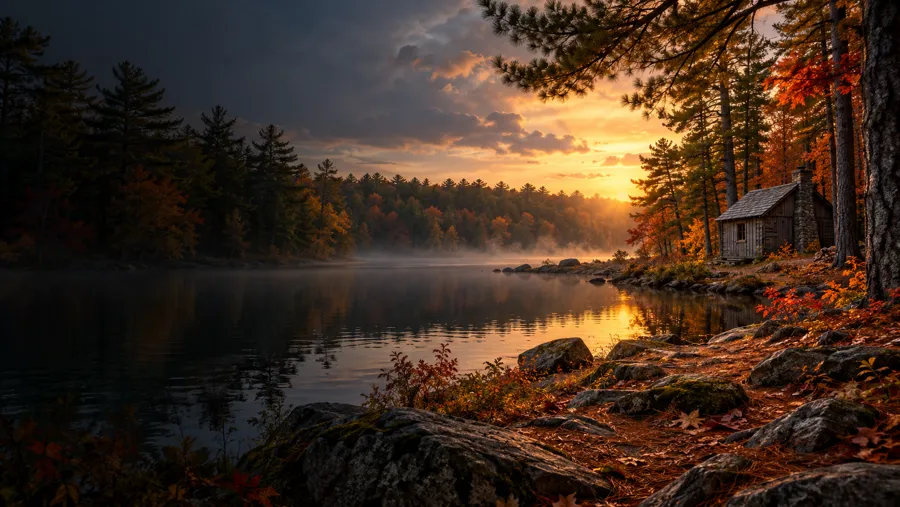
Classic nature writing: Walden, a donkey in the Cévennes and the moths of the Limberlost
Before ‘nature writing’ was a shelf in a bookshop, it was a habit of attention: a man counting the cost of his cabin nails, a girl hunting moths at night, a traveller arguing with a donkey. These are the classics that taught readers to look.
 Books on screen · 3 min read
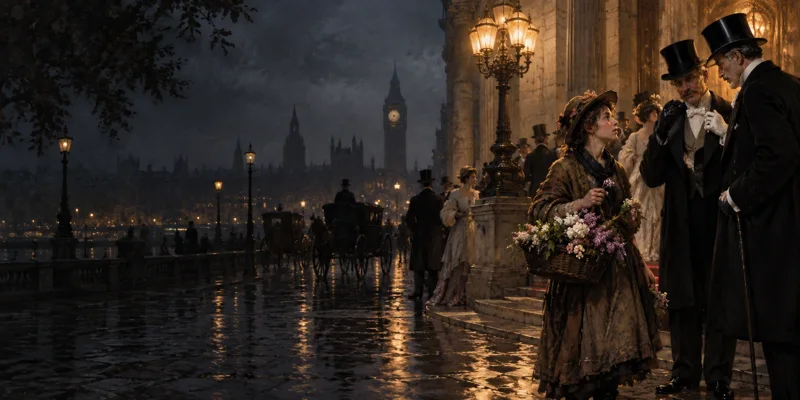
Did you know My Fair Lady is based on Pygmalion?
Before the songs, the ballgown and Ascot, there was a sharp, funny play by George Bernard Shaw that ends very differently. My Fair Lady is Pygmalion with music, and Shaw spent years arguing against the kind of ending the musical chose.
 Did you know? · 4 min read
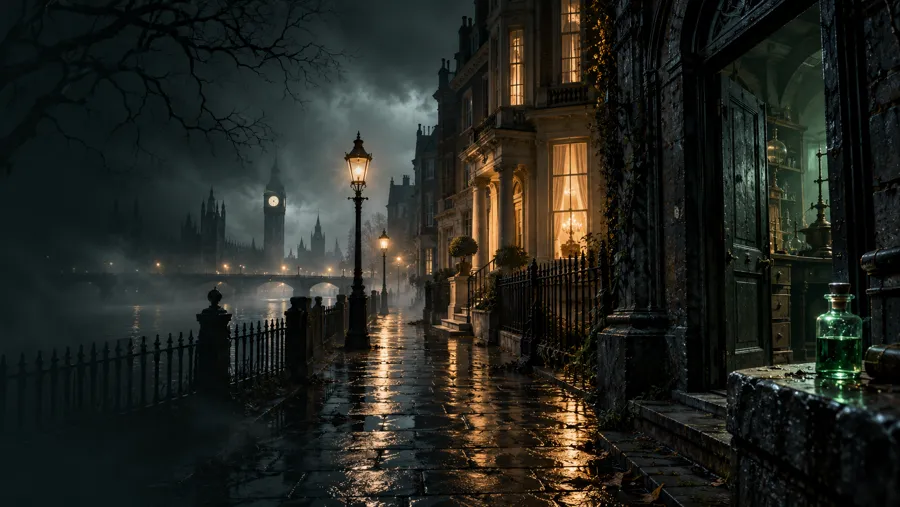
Did Stevenson really burn the first draft of Jekyll and Hyde?
Every account of Jekyll and Hyde includes the fire: a first draft thrown in the grate and rewritten in days. The evidence for that scene is thinner than you might think, and a letter found in 2000 points to a different hand.
 Did you know? · 5 min read
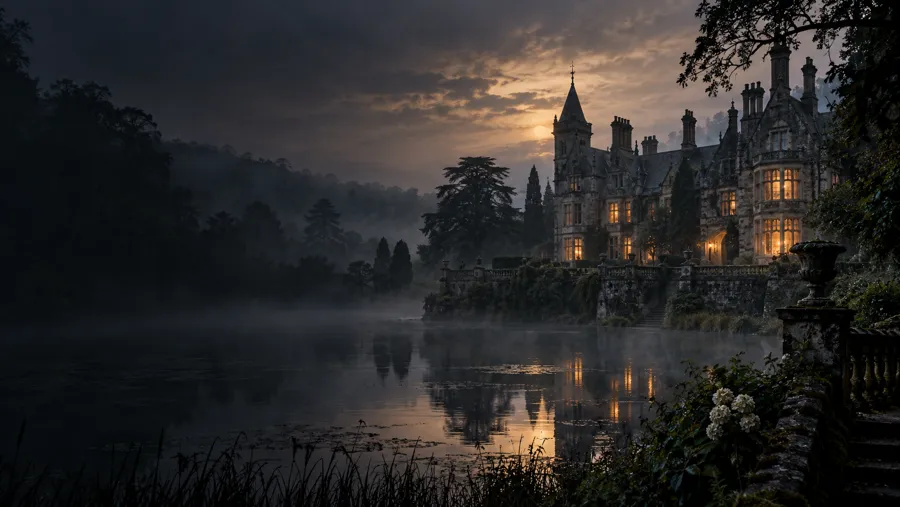
Did you know The Turn of the Screw begins on Christmas Eve?
Henry James’s great ghost story is set in summer and autumn at a lonely country house. But it opens on Christmas Eve, among guests trading ghost stories round a fire, and that is where its title comes from.

 Series & reading order · 4 min read
She and Ayesha: H. Rider Haggard’s immortal queen and her return
A Cambridge scholar, his beautiful ward and a broken potsherd lead to a queen who has waited two thousand years in the caves of Kôr. Haggard brought her back, again and again, and the sequel is stranger than the original.

 Reading lists · 4 min read
Classic books to give for Father’s Day, from Treasure Island to Meditations
A pirate story that a father helped to write, an emperor’s thank-you to the man who raised him and a thriller said to be named by a child counting stairs. These are the classic Father’s Day books, with a father hiding behind almost every one.
 Reading time · 4 min read
How long is The Brothers Karamazov?
Dostoevsky’s last novel is one of the longest on our shelves, and he meant it to be only the first half of a bigger story. Here is how long it really takes to read, and how to break it into manageable pieces.
 Authors · 4 min read
Arthur Machen: the Welsh master of the weird
In September 1914 a London evening paper printed a short story about phantom archers saving British soldiers at Mons. Within months, people were swearing it had really happened. Its author, Arthur Machen, had spent twenty years writing stories in which the boundary between the real and the impossible was just as thin.
 Did you know? · 4 min read
Did you know Stevenson dismissed The Black Arrow as “tushery”?
Written in a hurry for a boys’ paper, mocked by its author in his letters and dedicated to the one reader who could never get through it. The Black Arrow had a hard start, and it is better than its reputation.
 Literary history · 4 min read
The Golden Age of detective fiction, explained
Between the two world wars, detective fiction became a game with rules, played between author and reader. Here is what the Golden Age was, who its stars were, and why one of its best-loved books was later put on trial by Raymond Chandler.
 Reading lists · 3 min read
The most romantic classic novels
Second chances, forbidden passions, a letter that says everything at last. These are the most romantic classic novels on our shelves, and the kind of love story each one tells.