In 1681 the poet Nahum Tate rewrote King Lear with a happy ending. Lear lives, the Fool vanishes, and Cordelia marries Edgar. Tate’s version held the English stage until the nineteenth century, when Edmund Kean and then William Macready brought back the tragic close. For generations, theatregoers simply preferred not to watch the play William Shakespeare actually wrote.
That is the best argument for reading the Shakespeare tragedies in a sensible order. Start with the fastest and most gripping, Macbeth, then Othello and Romeo and Juliet, and come to Hamlet and King Lear once you have your bearings. The two greatest are also the two that ask the most of a reader.
The five great Shakespeare tragedies, ranked for beginners
- $11.99
Macbeth
c. 1606. A prophecy, a murder and a long unravelling. Shakespeare’s shortest tragedy, with barely a subplot to slow it down, and it moves like a thriller.
- $12.99
Othello
c. 1603–04. A general, his new wife and the ensign who poisons his mind against her. A tight, domestic plot built around two of the biggest roles Shakespeare wrote.
- $12.99
Romeo and Juliet
c. 1595. Two teenagers from feuding families in Verona. Half of it plays like a comedy, which makes the turn after Mercutio’s death all the harder to bear.
- $13.99
Hamlet
c. 1599–1601. A prince ordered by his father’s ghost to take revenge, who thinks about it instead. His longest play, and the one you will get most out of on a second pass.
- $12.99
King Lear
c. 1605–06. An old king divides his kingdom by asking his daughters who loves him most. The bleakest and the most enormous of them all; read it last.


Why Macbeth first?
Speed. It is the shortest of the tragedies, it opens with witches and a battle, and Macbeth has murdered his king by the second act. Everything after that is consequence, so the plot never asks you to keep several stories in your head at once. If you know crime fiction, you already know its rhythm.
Shakespeare took the story from Holinshed’s Chronicles, the same history he used for King Lear, and bent it hard, squeezing a reign that lasted years into what feels like a few frantic weeks.
Tomorrow, and tomorrow, and tomorrow, / Creeps in this petty pace from day to day, / To the last syllable of recorded time
Macbeth, Act 5
Othello and Romeo and Juliet: the middle of the list
Othello is the most claustrophobic of the great tragedies. After a first act in Venice, it moves to Cyprus and almost never leaves one household, and it turns on a single question: will Othello believe Iago? Iago has more lines than Othello himself, one of the longest parts in all of Shakespeare. He talks to you directly, too, which makes you an uncomfortable accomplice. Shakespeare found the plot in a 1565 Italian story by Cinthio and gave its nameless villain an unforgettable voice.
O, beware, my lord, of jealousy; / It is the green-ey’d monster which doth mock / The meat it feeds on.
Iago, Othello, Act 3
Readers often expect Romeo and Juliet to come first, and it is an easy play to love. We put it third because its first half is so much lighter than its second, all puns, bawdy jokes and the Nurse’s rambling, that a first-time reader can mistake its pace for a comedy’s and be caught off guard. Know that going in and it becomes one of the most rewarding of the five.
Is Hamlet hard to read?
Not line by line. It is full of phrases you already know, from “Something is rotten in the state of Denmark” onwards. The difficulty is length and mood: Hamlet is the longest play Shakespeare wrote, at about 3,900 lines in editions that combine the early texts, and its hero spends much of it thinking rather than acting. That is the point of the play, but it is easier to enjoy once you trust Shakespeare to get you to the end.
Saving King Lear for last
Lear has a double plot, two old fathers betrayed by their children, and a storm scene that is closer to poetry than to drama. It opens with a fairy-tale test and ends somewhere very dark. Tate’s audiences could not take it; modern readers often call it the greatest thing Shakespeare wrote. Read it when the other four have taught you how he builds a tragedy, and it will hit with its full weight.
As flies to wanton boys are we to the gods, / They kill us for their sport.
Gloucester, King Lear, Act 4
Beyond the big five
The Roman plays make a natural next step. Julius Caesar is compact and fiercely political, built around one of the most famous speeches in English. Antony and Cleopatra sprawls across an empire, and Coriolanus is a hard, brilliant study of a soldier who despises the people he serves.
If you would rather ease in more gently, our ranking of Shakespeare’s comedies for first-time readers works the same way, and Which Shakespeare play should you read first? helps you choose between the two. How to read Shakespeare covers the practical side.
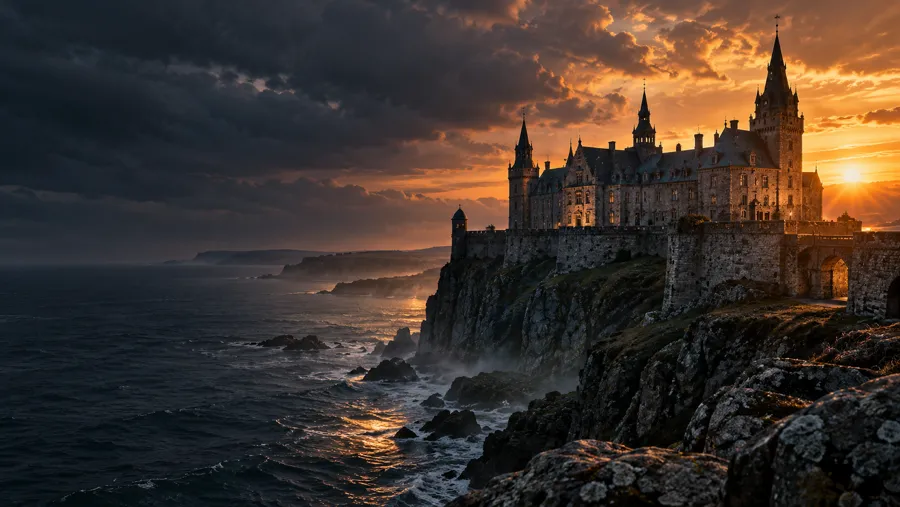
Three witches, a heath and a question about when they will meet again: the shortest route into the tragedies is the opening of Macbeth, and that first scene is over before you have finished your tea.
Questions readers ask
What are Shakespeare’s four great tragedies?
Hamlet, Othello, King Lear and Macbeth are traditionally grouped as the four great tragedies, all written between about 1599 and 1606. Romeo and Juliet, written earlier, is the other tragedy most people know.
Which Shakespeare tragedy should I read first?
Macbeth. It is the shortest of the tragedies, has a single fast-moving plot, and its witches and murders hook most readers immediately.
What is the longest Shakespeare tragedy?
Hamlet, which is also the longest of all his plays, at roughly 3,900 lines in editions that combine its early printed texts.
 A Midsummer Night’s Dream92 pages · $10.99
 Much Ado about Nothing114 pages · $11.99
 Twelfth Night112 pages · $11.99
 As You Like It114 pages · $11.99