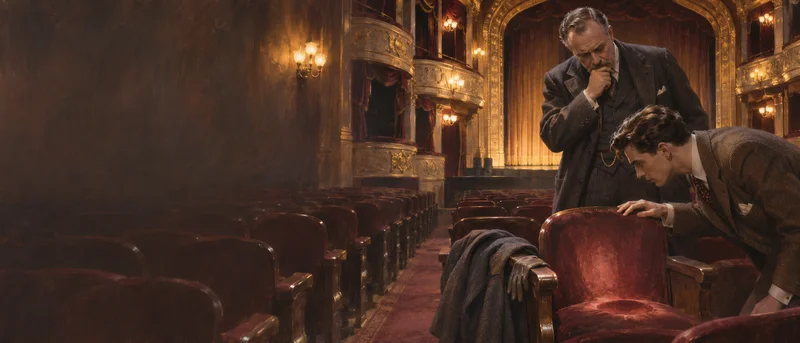
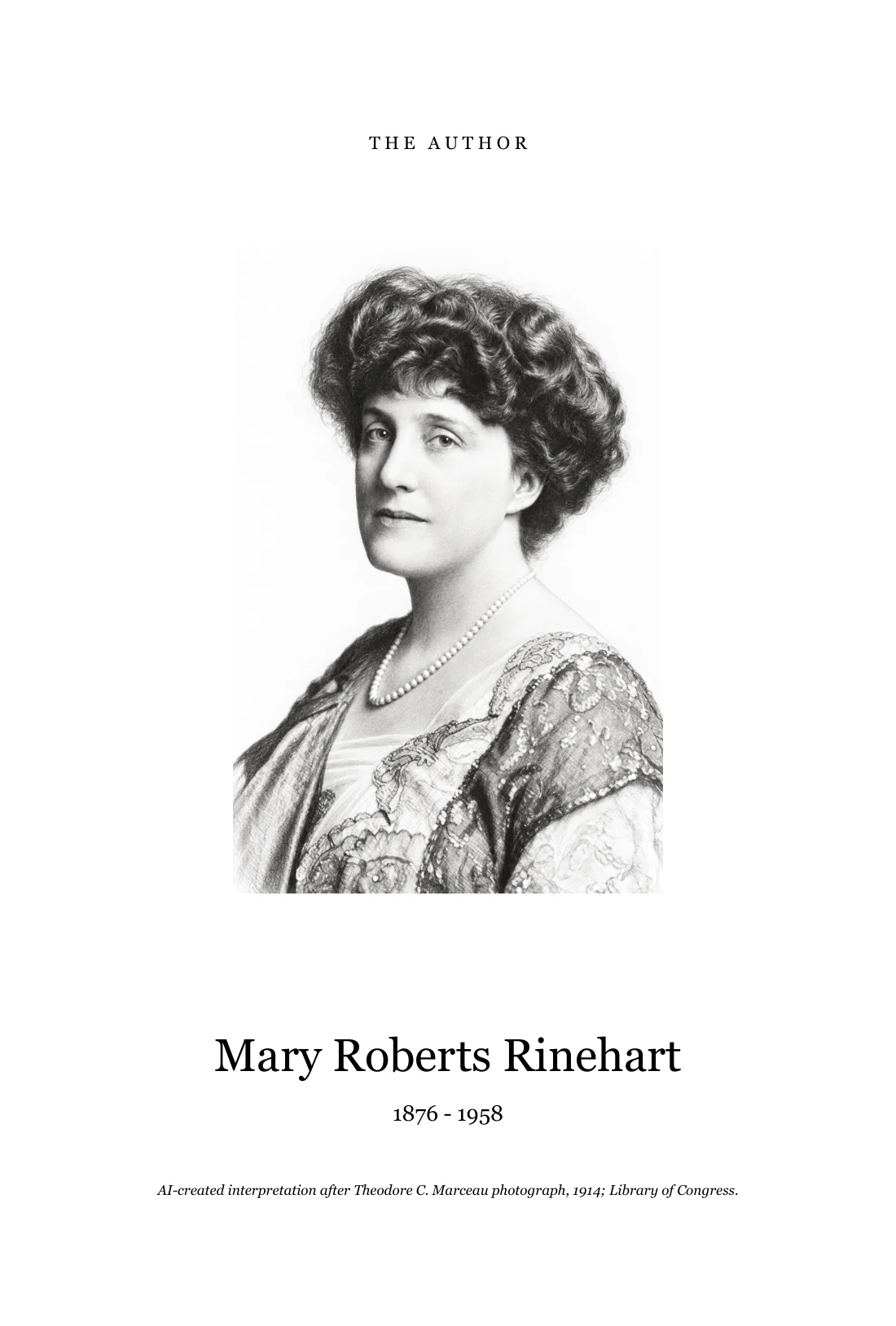
When Bob Kane, the artist who created Batman with the writer Bill Finger, looked back on where the character came from, he named three things in particular: Douglas Fairbanks swashbuckling as Zorro, Leonardo da Vinci’s sketch of a flying machine with great bat-like wings, and a 1930 film called The Bat Whispers, whose villain wore a bat costume. Batman made his debut in Detective Comics #27 in May 1939.
The Bat Whispers was the second film of a Broadway play, The Bat. And The Bat began as a novel published in 1908 by Mary Roberts Rinehart: The Circular Staircase. Follow the chain back and one of the most famous costumed heroes in the world has a distant ancestor in a mystery about a middle-aged woman, a rented summer house and a body at the bottom of the stairs.
What is The Circular Staircase about?
Rachel Innes is a comfortable city spinster who has brought up her orphaned niece and nephew, Gertrude and Halsey. One summer they talk her into renting a big country house called Sunnyside, and on the second night there a man is found shot dead at the foot of its circular staircase. Miss Innes, who has never been near a crime in her life, decides she will stay put until she knows what happened. There are midnight footsteps, a failed bank, a missing nephew and a house that seems to have more secrets than rooms. We will not say more.
This is the story of how a middle-aged spinster lost her mind, deserted her domestic gods in the city, took a furnished house for the summer out of town, and found herself involved in one of those mysterious crimes that keep our newspapers and detective agencies happy and prosperous.
Mary Roberts Rinehart, *The Circular Staircase* (1908)
The novel first ran in the pulp magazine All-Story from November 1907, and was published as a book in 1908. It was Rinehart’s first great success and made her one of the most popular writers in America. It is often said to have started the “Had-I-but-known” school of mystery, in which a narrator, usually a woman, looks back and hints at the disasters she might have prevented. Miss Innes does it with a dry wit: the evening, she reflects at one point, “had been full of significant happenings, had I only held the key.”
How did The Circular Staircase become The Bat?
Rinehart began adapting the novel for the stage in 1917, and the playwright Avery Hopwood later joined her to finish it. They renamed the characters, changed the plot and, crucially, added a new villain: a master criminal known as the Bat, who hides his identity behind a frightening bat costume until the final scene. After trying out in Washington under the title A Thief in the Night, The Bat opened at Broadway’s Morosco Theatre on 23 August 1920. It was an immediate hit and ran for two years, with a London production and touring companies besides.
There is an odd twist. The success of the play led to a legal tangle over film rights, because a company called Selig had filmed The Circular Staircase back in 1915 and promptly re-released its old film under the title The Bat. Rinehart responded by insisting that the play had nothing to do with the novel, and in 1926 a novelisation of The Bat, credited to her but ghost-written by the poet Stephen Vincent Benét, helped keep the two apart. So the author of both books ended up denying the family resemblance.
Did The Bat really inspire Batman?
By Bob Kane’s account, yes, in part. He said that the villain of The Bat Whispers was one of his inspirations. Batman borrowed plenty from elsewhere too, from pulp heroes such as the Shadow to the double life of the Scarlet Pimpernel, and Bill Finger shaped the character as much as Kane did. But the image of a cloaked figure in a bat costume, haunting a big house at night, is unmistakably there in Rinehart and Hopwood’s play.

Was The Circular Staircase Rinehart’s first novel?
It was her first book, but not quite the first novel she wrote. The Man in Lower Ten, a mystery about a murder in a sleeping car, had already been serialised in All-Story in 1906, though it did not appear in book form until 1909, when it became one of the year’s best-sellers. Rinehart had trained as a nurse in Pittsburgh and turned to writing after she and her husband lost their savings in the stock-market crash of 1903. In that first year she produced forty-five short stories.
The Circular Staircase
1908. Miss Innes, her niece and nephew, a rented house and a shot in the night. Brisk, funny and genuinely creepy, and the root of The Bat.
The Man in Lower Ten
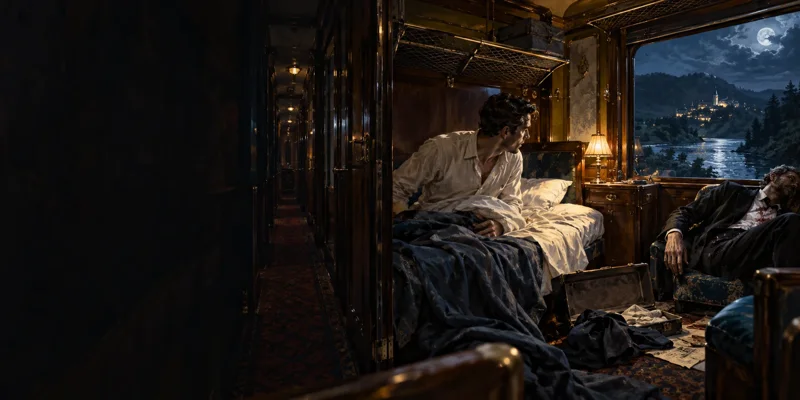
1909. A young lawyer on an overnight train finds that the berth he paid for, lower ten, has been taken by a stranger, who is murdered in it. Rinehart’s other early best-seller, and written first.


For more mysteries of this vintage, try Golden Age detective novels to start with, female detectives in classic fiction or our pick of classic mystery novels for beginners.
Turn to the first page of The Circular Staircase for one of the great opening sentences in crime fiction. By the end of the second night at Sunnyside you will see why an audience in 1920 was ready to scream at a man in a bat costume.
Questions readers ask
Is The Bat based on The Circular Staircase?
Yes. The 1920 Broadway play The Bat, by Mary Roberts Rinehart and Avery Hopwood, was adapted from her 1908 novel, though it added the masked villain called the Bat and changed much else. Rinehart later denied the connection during a dispute over film rights.
Did The Bat inspire Batman?
Bob Kane, who created Batman with Bill Finger, said the villain of The Bat Whispers (1930), the second film of the play, was one of his inspirations.
What is the Had-I-but-known school of mystery?
It is a style in which the narrator, often a woman, looks back on events and hints at what might have been avoided had she known more. The Circular Staircase is usually credited with popularising it.
When was The Circular Staircase published?
It was serialised in All-Story magazine from November 1907 and published as a book in 1908.
 Tish Plays the Game170 pages · $13.99
 The Door316 pages · $17.99