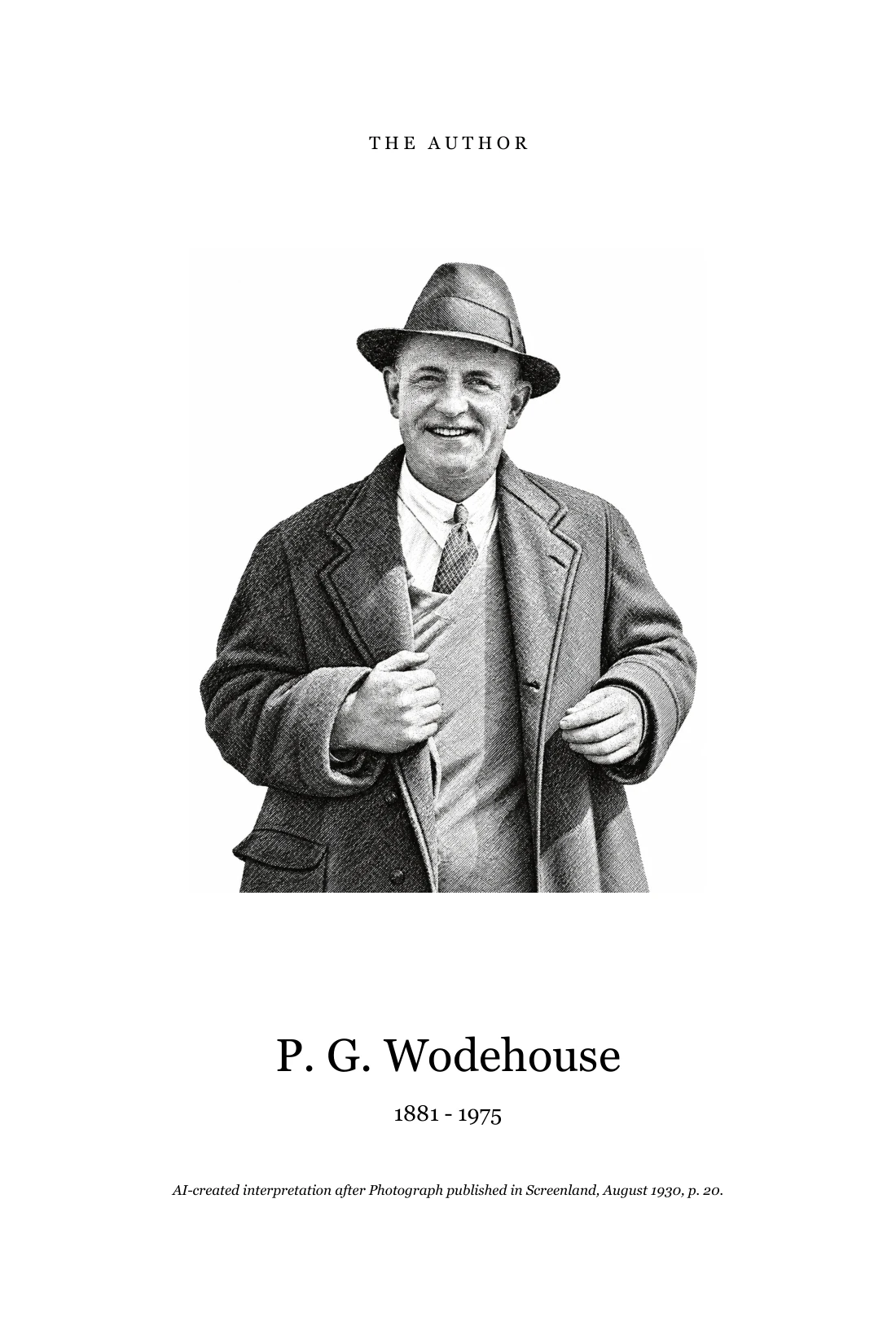
What was P. G. Wodehouse writing while Jeeves was still a minor character? Mostly love stories. Jeeves first appeared in a short story in 1915, but for the next two decades he and Bertie lived only in short fiction; the first Jeeves novels did not arrive until 1934. In between, P. G. Wodehouse was turning out romantic comedies for the American magazine market, novels in which a pair of mismatched young people, usually one American and one English, fall in love across a tangle of money, misunderstanding and impossible relatives.
These are the Wodehouse standalone novels, and the best way to meet them is through five books from 1916 to 1922, plus a story collection that shows him learning the trade: Uneasy Money, Piccadilly Jim, A Damsel in Distress, Indiscretions of Archie, The Adventures of Sally and The Man Upstairs. Each can be read alone, and none needs any knowledge of Blandings or the Drones Club.
Why are there so many Americans in early Wodehouse?
Because he was living among them and selling to them. Wodehouse was in New York when the First World War began and stayed in the United States throughout it. He married Ethel Wayman there in September 1914, and from 1916 he was writing musical comedies for Broadway with Guy Bolton and Jerome Kern. In 1915 The Saturday Evening Post paid him $3,500 to serialise Something New, and its editor, George Horace Lorimer, came back for more: brisk, cheerful love stories with Americans in them.
The formula he found is simple and endlessly adaptable. Send an Englishman to New York, or an American to an English country house, give somebody a fortune they did not expect and somebody else a reason to hide their name, and let the two cultures misread each other until the last chapter.
The Wodehouse standalone novels, in order
- $16.99
The Man Upstairs and Other Stories
1914. Nineteen stories, most of them about love, set mainly in London and the English countryside, with excursions to France and New York. The apprentice workshop for everything that follows.
- $14.99
Uneasy Money
1916. Bill, Lord Dawlish, a broke club secretary, inherits a fortune from an American he once gave a golf tip, and sails to New York to share it with the dead man’s niece. Long Island, a pet monkey and a great deal of misplaced nobility.
- $15.99
Piccadilly Jim
1917. A young American scapegrace whose London scrapes keep him in the papers crosses to New York under a false name and is hired to impersonate himself. The densest farce of the group.
- $15.99
A Damsel in Distress
1919. An American composer of hit musical comedies helps a girl escape a pursuer in Piccadilly and follows her to her family’s castle in Hampshire, where the servants are running a sweepstake on whom she will marry.
- $15.99
Indiscretions of Archie
1921. Archie Moffam, a cheerful, penniless Englishman, has married the daughter of the New York hotel owner who loathes him most. Linked episodes, each a fresh disaster at the Hotel Cosmopolis.
- $15.99
The Adventures of Sally
1922. Sally Nicholas, a dance-hall instructress living in a New York boarding house, inherits $25,000 and tries to spend it well, on a holiday in France, a hopeless brother, a playwright and a red-haired Englishman called Ginger.


Uneasy Money and Piccadilly Jim: Englishmen in New York
Uneasy Money ran in the Post from December 1915 and came out as a book in New York in March 1916, more than a year before its British edition. It opens on a young man outside a Shaftesbury Avenue restaurant who looks troubled, until Wodehouse lets you into his head.
William FitzWilliam Delamere Chalmers, Lord Dawlish, had no secret sorrow. All that he was thinking of at that moment was the best method of laying a golf ball dead in front of the Palace Theatre.
P. G. Wodehouse, Uneasy Money (1916)
The village of Brookport on Long Island, where much of the story takes place, seems to have been drawn from Bellport, where the Wodehouses spent time, and the church “just round the corner from Fifth Avenue” where the lovers plan to marry is evidently the Little Church Around the Corner, where Wodehouse married Ethel. Piccadilly Jim followed in the Post in 1916. We look at it more closely in Where to start with P. G. Wodehouse, where it is one of the four ways in.
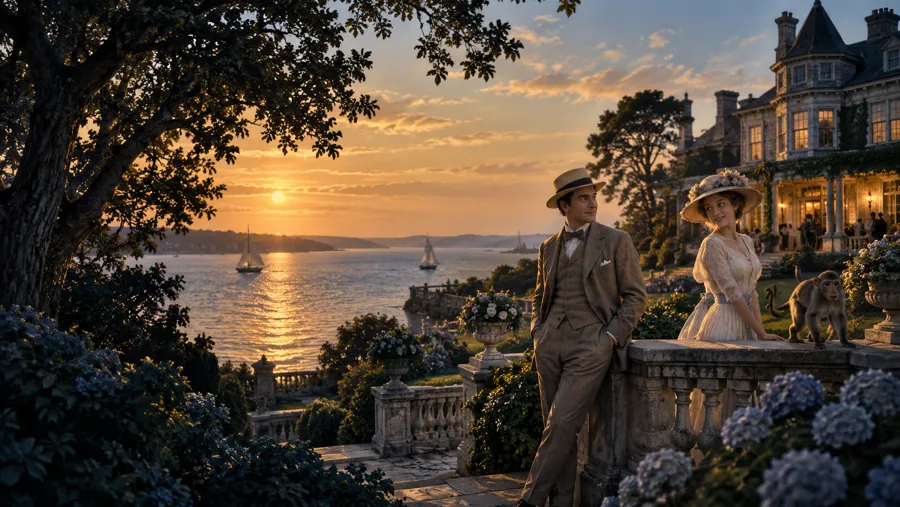
A Damsel in Distress: an American at the castle
Here the setting is wholly English and only the hero is American. George Bevan, a composer of successful musicals and a keen golfer, is bored and lonely in London when a girl in brown jumps into his taxi to escape a man in the street. She is Lady Maud Marsh, and her family seat is Belpher Castle. Wodehouse begins by refusing to describe it.
He must leap into the middle of his tale with as little delay as he would employ in boarding a moving tramcar. He must get off the mark with the smooth swiftness of a jack-rabbit surprised while lunching.
P. G. Wodehouse, A Damsel in Distress (1919)
The novel ran in the Post in May and June 1919, and in 1937 George Stevens filmed it with Fred Astaire, Joan Fontaine and songs by George and Ira Gershwin, among them “A Foggy Day” and “Nice Work If You Can Get It”. Wodehouse shared the screenplay credit with Ernest Pagano and S. K. Lauren.
Archie, Sally and The Man Upstairs
Indiscretions of Archie began as stories in the Strand and Cosmopolitan in 1920–21 and was rewritten into a novel: Archie Moffam (pronounced “Moom”) against his father-in-law, Daniel Brewster, owner of the Hotel Cosmopolis. It starts with Archie at the front desk asking to see the manager, and never really slows down.
The Adventures of Sally, published in Britain in 1922 and in America the next year as Mostly Sally, is built around a level-headed young woman surrounded by men who need rescuing. And The Man Upstairs, from 1914, is where to watch the romantic formula being worked out in miniature, beginning with a girl composing a waltz who is driven to distraction by a knocking in the room above.
Which should you read first?
A Damsel in Distress is the most polished, and its castle, butler and sweepstake point straight towards Blandings. Uneasy Money is the gentlest. If you already know the Jeeves stories, see how the early ones were put together in Jeeves and Wooster books in order, and for Wodehouse’s other early hero, the Psmith books in order. Romantic comedies of a later vintage are gathered in second-chance romance classics.
Then jump into the taxi. Open A Damsel in Distress, let the girl in brown climb in beside George Bevan, and see how long it takes Wodehouse to get you to the castle.
Questions readers ask
What are P. G. Wodehouse’s standalone novels?
His standalone novels are those outside the Jeeves, Blandings, Psmith and Ukridge series. The best-known early ones include Uneasy Money (1916), Piccadilly Jim (1917), A Damsel in Distress (1919), Indiscretions of Archie (1921) and The Adventures of Sally (1922).
When did Jeeves first appear?
In the short story “Extricating Young Gussie” in 1915. Jeeves appeared only in short stories until 1934, when the first Jeeves novels were published.
Is A Damsel in Distress set in America?
No. It is set in London and at Belpher Castle in Hampshire; only its hero, the composer George Bevan, is American. It was filmed in 1937 with Fred Astaire and songs by the Gershwins.
Which Wodehouse standalone novel should I read first?
A Damsel in Distress is the most polished and the best introduction; Uneasy Money and Piccadilly Jim are good next steps if you enjoy Wodehouse’s Americans.
 My Man Jeeves150 pages · $12.99
 Psmith, Journalist176 pages · $13.99
 Something New216 pages · $14.99
 Psmith in the City170 pages · $13.99