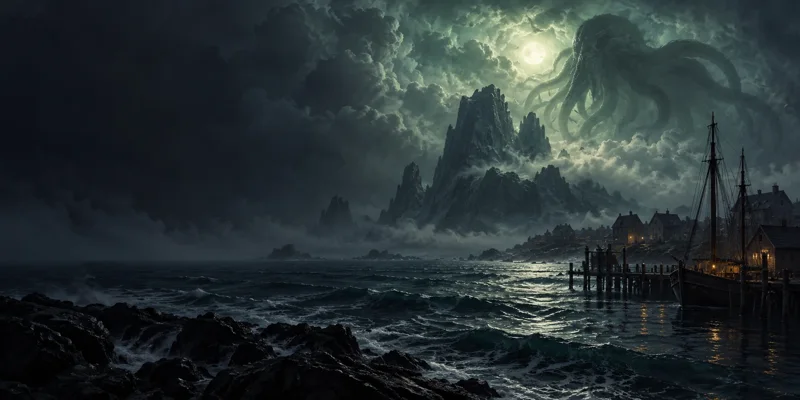
The story was “The Bowmen”, and it appeared in The Evening News on 29 September 1914, a few weeks after the British retreat from Mons. In it, a soldier under fire murmurs a prayer to St George, and a line of shining bowmen from Agincourt appears and cuts down the German advance. Arthur Machen, who worked on the paper, meant it as fiction. But it was not labelled as a story, and readers wrote in asking for his sources.
Then parish magazines asked to reprint it, and a priest who wanted to publish it as a pamphlet refused to believe Machen when he said he had made it up. By 1915 versions were circulating as eyewitness fact, the bowmen had become angels, and Machen admitted, in the introduction to a 1915 book of the stories, that where he had hoped to succeed in literature he had succeeded instead, quite unintentionally, at deceit. The Angels of Mons are still discussed today.
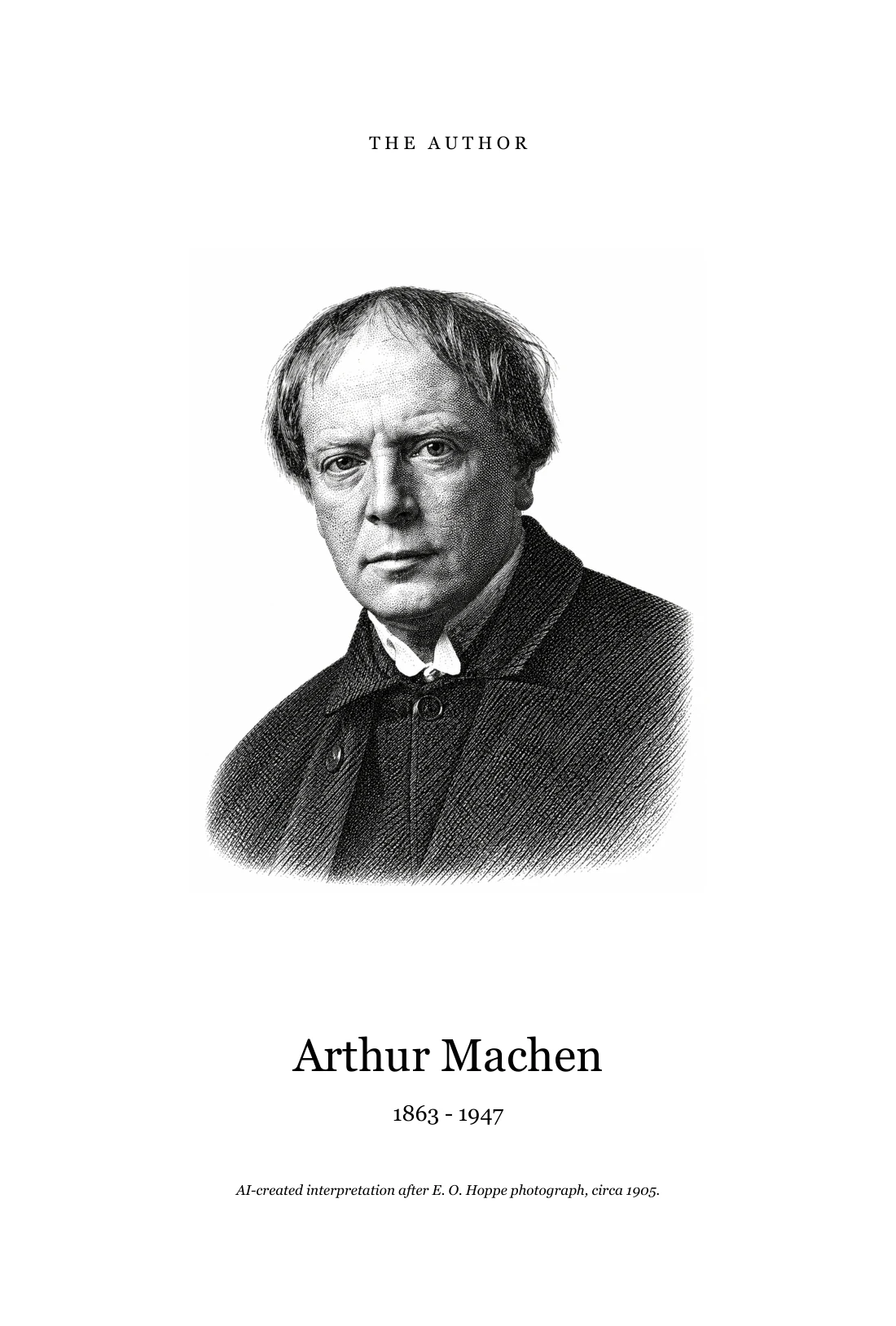
Who was Arthur Machen?
He was born Arthur Llewellyn Jones in 1863 at Caerleon, in Monmouthshire, a small town built on the remains of a Roman fortress. His father was a clergyman, and he grew up in a rectory in the hills of Gwent surrounded by Roman ruins, old churches and folklore, a landscape that colours nearly all his fiction. He went to London young and poor, worked as a cataloguer and translator, and in the 1890s became one of the most notorious writers of the decadent movement.
The Great God Pan, published in book form in 1894, was denounced for its sexual and horrific suggestions and sold very well as a result. The novel The Three Impostors followed in 1895. Then came the scandal of Oscar Wilde’s trials, and publishers grew wary of anything that smelled of decadence. Some of Machen’s best work waited years for a book, and he spent part of the 1900s as an actor in Frank Benson’s touring company before taking a job on The Evening News in 1910.
Which Arthur Machen book should you read first?
Start with The House of Souls. First published in 1906, it gathers the best of the work Machen wrote in the 1890s, including The Great God Pan, “The Inmost Light” and “The White People”. The last is a young girl’s diary of the secret rites her nurse taught her, framed by a conversation about the nature of evil, and it is often named among the finest horror stories ever written.
‘Sorcery and sanctity,’ said Ambrose, ‘these are the only realities. Each is an ecstasy, a withdrawal from the common life.’
Arthur Machen, “The White People”, in The House of Souls
The opening of The Great God Pan sets out Machen’s whole idea. A doctor performs an operation on a young woman’s brain to let her see the world beyond the senses; “the ancients knew what lifting the veil means,” he says. “They called it seeing the god Pan.” Machen never shows you what lies behind the veil. He shows you the people who have glimpsed it, and what it does to them.
The best Arthur Machen books, in reading order
- $14.99
The House of Souls
1906. The essential Machen: The Great God Pan, “The White People” and other tales of the 1890s. Begin here.
- $12.99
The Three Impostors
1895. Three sinister storytellers hunt a young man in spectacles across London, spinning strange tales to strangers as they go. Includes “The Novel of the Black Seal” and “The Novel of the White Powder”, two of his most admired stories.
- $12.99
The Hill of Dreams
1907. Lucian Taylor, a dreamy boy from a Welsh town much like Caerleon, has visions on an old Roman fort and goes to London to be a writer. Machen’s most personal book, and often called his masterpiece.


Machen and Lovecraft
H. P. Lovecraft admired Machen enormously. In his essay Supernatural Horror in Literature he singled out “The Novel of the Black Seal” and “The Novel of the White Powder” as perhaps the high-water mark of Machen’s skill, and the idea of an ancient, hidden race surviving in the remote hills echoes through stories such as “The Dunwich Horror” and “The Whisperer in Darkness”. Even John Buchan’s early story “No-Man’s Land” (1899), about a malevolent hidden people in remote hills, has been compared to “The Black Seal”.
Machen’s own reputation rose and fell. The Hill of Dreams, written in the late 1890s, was barely noticed when it finally appeared in 1907; American admirers revived his work in the 1920s; and an appeal for his eightieth birthday in 1943, backed by T. S. Eliot, George Bernard Shaw and Algernon Blackwood among others, eased his last years. He died in 1947. Read him alongside Algernon Blackwood: ghost stories from the wild places and the wider tradition in Weird fiction before Lovecraft.
Save a quiet evening for “The White People” in The House of Souls, and read the girl’s diary slowly. You will not see anything dreadful. You will just become certain that she has.
Questions readers ask
What is Arthur Machen best known for?
The Great God Pan (1894), a classic of horror fiction, and the short story “The Bowmen” (1914), which was mistaken for fact and gave rise to the legend of the Angels of Mons.
Which Arthur Machen book should I read first?
The House of Souls (1906), which collects The Great God Pan, “The White People” and other stories from his finest period, the 1890s.
Were the Angels of Mons real?
There is no evidence that they were. The legend grew from Arthur Machen’s short story “The Bowmen”, published in The Evening News in September 1914, which readers took for a true account.