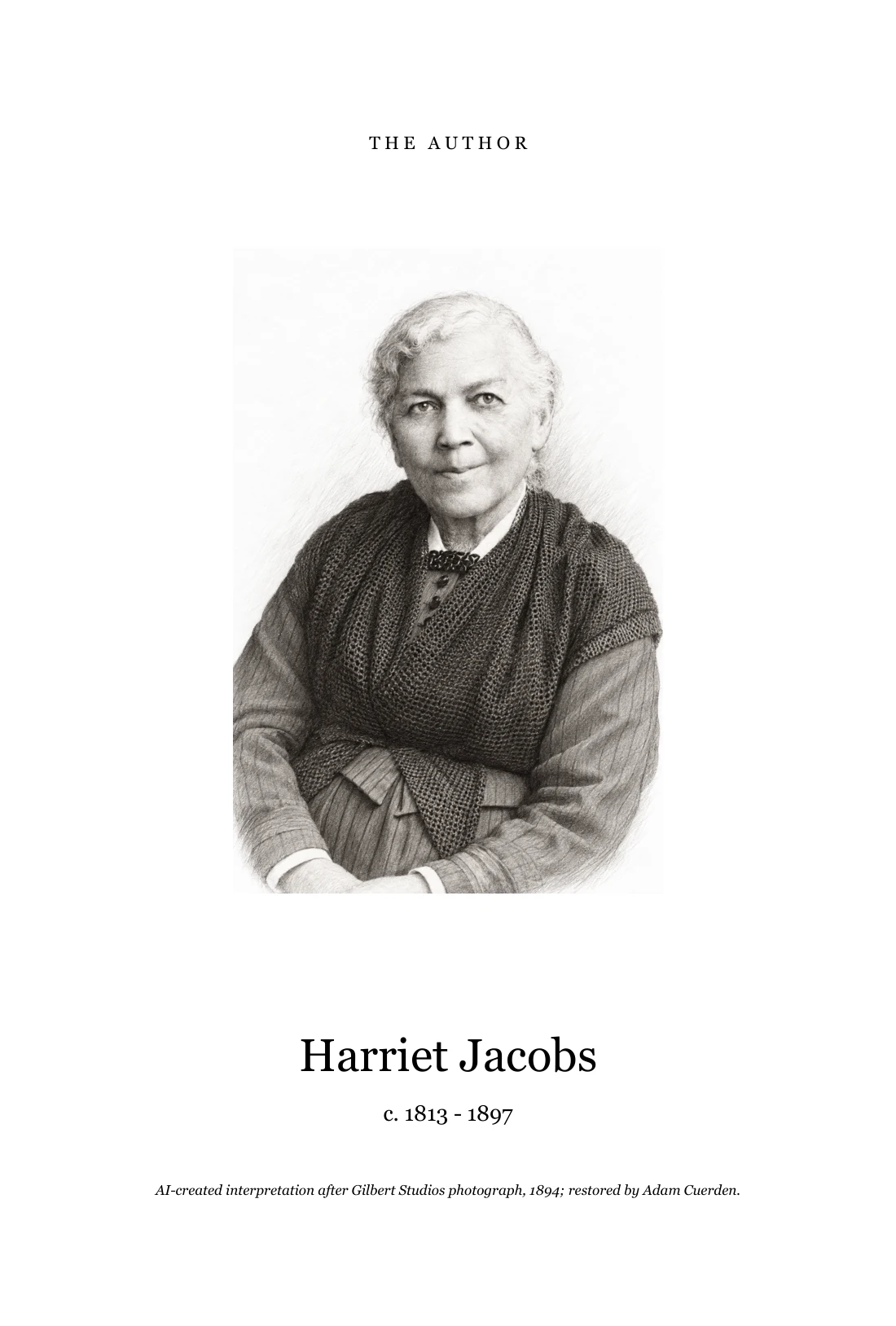
Harriet Jacobs was born into slavery in Edenton, North Carolina, around 1813. In 1835, to escape the man who enslaved her and had harassed her since she was a girl, she went into hiding. The place she found was a tiny crawlspace above a storeroom in her grandmother’s house, in the same town. She stayed there for almost seven years.
She later told the whole story in Incidents in the Life of a Slave Girl, published in 1861 under the name Linda Brent. It is the best-known narrative of slavery written by a woman, and one of the few to speak openly about the sexual abuse that enslaved women faced.
Why did Harriet Jacobs hide for seven years?
When she was nearly twelve, Jacobs became the property of a young girl whose father, a local doctor, began pursuing her relentlessly when she was fifteen. In the book he is called Dr. Flint. To protect herself, Jacobs formed a relationship with another white man, a lawyer, and had two children with him. Her enslaver’s response was to threaten to send her children to work on a plantation to break her will.
Jacobs believed that if she disappeared, he would sell the children rather than keep them, and that their father would buy them. She hid first with sympathetic neighbours, then in the crawlspace at her grandmother’s. The plan worked: the children were bought by their father. But Jacobs could not leave without risking recapture, so she stayed hidden, unable to stand, frozen in winter and scorched in summer, listening to her children playing below without being able to tell them she was there.
In 1842 she finally escaped north by boat. Even then she was not safe. The Fugitive Slave Act of 1850 made it possible to seize people who had escaped slavery anywhere in the United States, and Jacobs’s freedom was eventually bought in 1852 by her New York employer, an act Jacobs had not wanted, because she refused to accept that she could be bought and sold.
Incidents in the Life of a Slave Girl
1861. Harriet Jacobs’s own account of her girlhood in slavery, her years in hiding and her escape, written under the name Linda Brent. Unflinching and deeply moving.
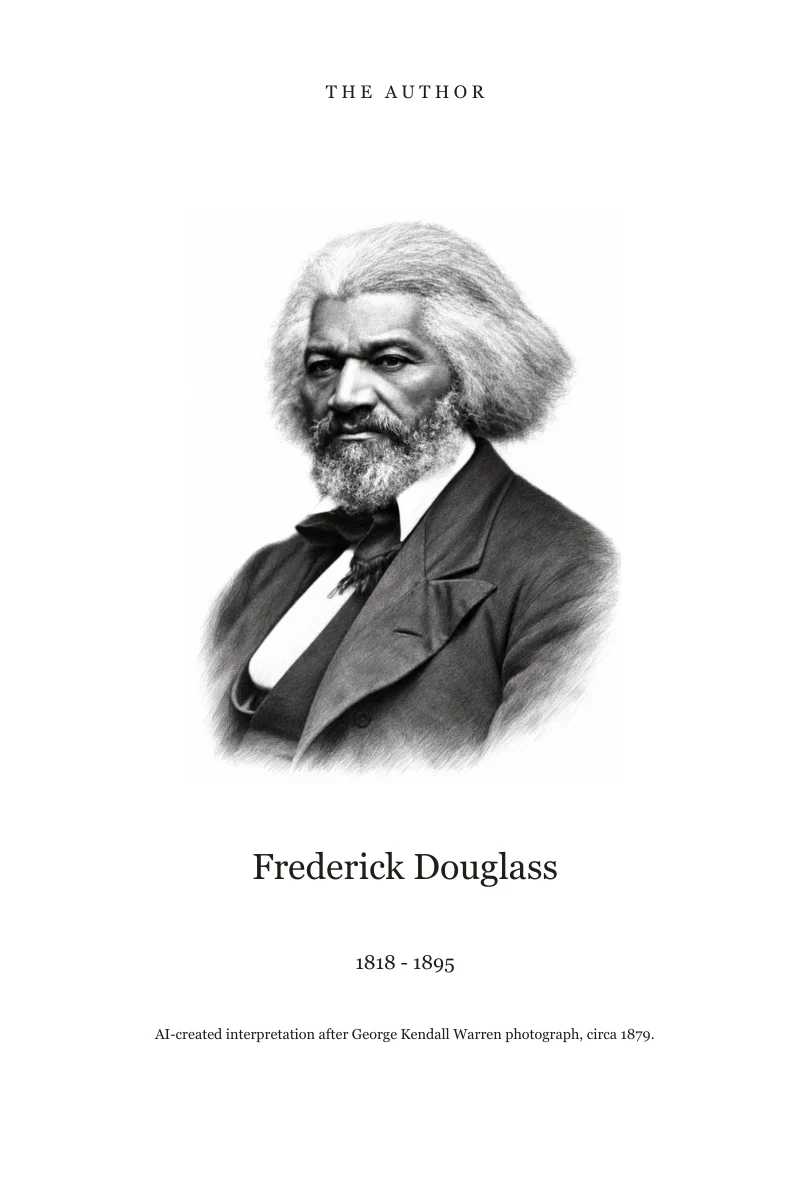
Narrative of the Life of Frederick Douglass, an American Slave
1845. Frederick Douglass’s first autobiography, the most famous slave narrative of the century, and the natural companion to Jacobs’s book.


Was Incidents in the Life of a Slave Girl a true story?
Yes. For more than a century, though, it was often doubted. Jacobs used invented names to protect the people involved, the book was edited by the white abolitionist Lydia Maria Child, and some critics assumed Child had written it, or that it was a novel. In the 1980s the scholar Jean Fagan Yellin used Jacobs’s letters and local records to show that the book was Jacobs’s own work and that its people and events were real.
Since then it has become one of the essential American memoirs, widely taught and widely read.
Jacobs did not stop at writing. During the Civil War she went south to help people who had escaped slavery, and with her daughter she founded a school for freed children in Alexandria, Virginia. She spent much of the rest of her life in relief and reform work, and died in Washington in 1897.
What is the book like to read today?
Direct, intelligent and often gripping. Jacobs writes for Northern women readers of 1861, and she speaks to them openly, asking them to understand what choices are possible for a woman with no legal rights over her own body. Some passages use the formal, moral language of the period, but her anger and her wit come through clearly. The account of the years in the crawlspace is unforgettable.
It deals frankly with sexual harassment, violence and cruelty, so it suits older teenagers and adults. It is a book that rewards discussion, and it is a natural choice for a reading group or for anyone exploring the history of slavery through the voices of those who lived it.

Where to go next
Jacobs belongs to a powerful tradition. The slave narratives that changed history follows it from Olaudah Equiano to Booker T. Washington, and Classics by Black writers to read this Black History Month suggests more. Did you know Frederick Douglass wrote three autobiographies? explores Douglass’s own story in depth, including My Bondage and My Freedom.
But if you read one, read Jacobs. Incidents in the Life of a Slave Girl is the story of a woman who refused, at enormous cost, to let anyone else decide what her life would be.
Questions readers ask
Who was Harriet Jacobs?
Harriet Jacobs (c. 1813–1897) was an African American writer and abolitionist who escaped slavery in North Carolina. She wrote Incidents in the Life of a Slave Girl, published in 1861.
How long did Harriet Jacobs hide in the attic?
Jacobs hid for almost seven years, from 1835 to 1842, in a tiny crawlspace above a storeroom in her grandmother’s house in Edenton, North Carolina.
Why did Harriet Jacobs use the name Linda Brent?
She published under a pseudonym and changed the names of others to protect herself, her family and the people who had helped her escape.