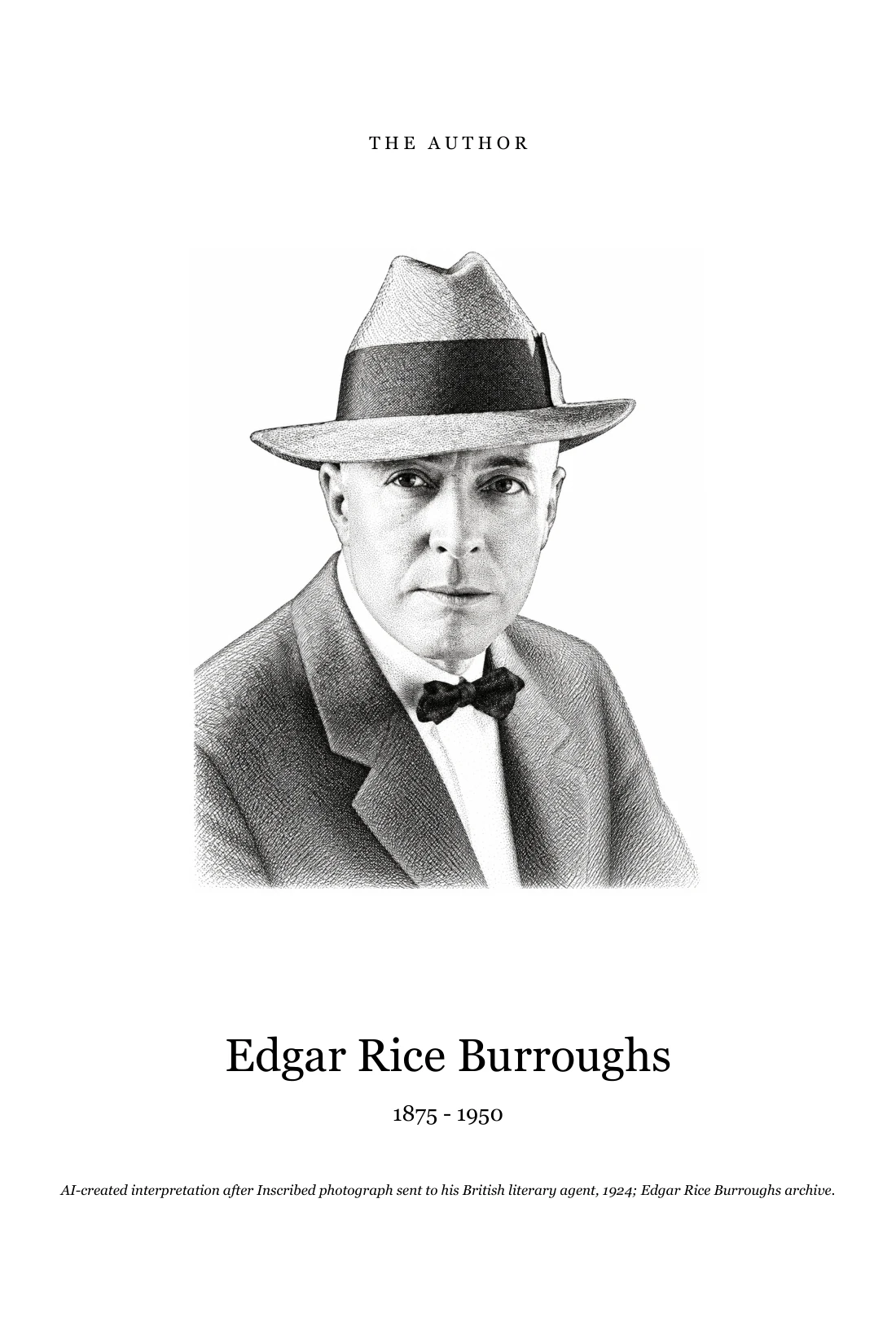
By his own account, Edgar Rice Burroughs came to fiction almost by accident. In 1911 he was running a small agency selling pencil sharpeners from a borrowed office in Chicago, and with time on his hands he began writing a story on the backs of old letterheads. He had come to know the pulp magazines through checking advertisements in them (accounts differ over whether these were for the sharpeners or an earlier venture), and in 1929 he recalled deciding that if people were paid for writing “rot” like some of what he read there, he could write stories just as rotten.
He was right. His first story, Under the Moons of Mars, ran in The All-Story magazine in 1912 and became A Princess of Mars. Later that same year The All-Story printed Tarzan of the Apes. The pencil sharpeners were soon forgotten, and the Edgar Rice Burroughs books that followed made him one of the best-selling writers of the twentieth century.
A string of jobs that didn’t work out
Burroughs was born in Chicago in 1875 and spent his twenties trying one thing after another. He served in the US Cavalry in Arizona until he was discharged on medical grounds, tried gold prospecting in the West, worked as a railway policeman, and held a series of office and sales jobs in Chicago. None of it lasted, and by 1911 he was married with young children and short of money.
That restless decade shows in the fiction. His heroes are soldiers, wanderers and men of action dropped into wild country with nothing but their wits and their strength. It is easy to read John Carter, a Civil War veteran prospecting in Arizona when he is whisked to Mars, as a daydream about the life Burroughs once wanted.

Why did his first story appear under a different name?
Burroughs was worried that writing pulp romances would make him look foolish, so he submitted his Martian story under the joke pseudonym “Normal Bean”, meaning a sensible, ordinary head. An editor or typesetter assumed it was a mistake and printed it as “Norman Bean”. By the time Tarzan appeared, he was writing under his own name. We tell that story in full in A Princess of Mars and the case of Norman Bean.
The best Edgar Rice Burroughs books to start with
Burroughs wrote fast and wrote a great deal, more than seventy books across several series. These four are the doors into his biggest worlds, and each one is the first book of its series.
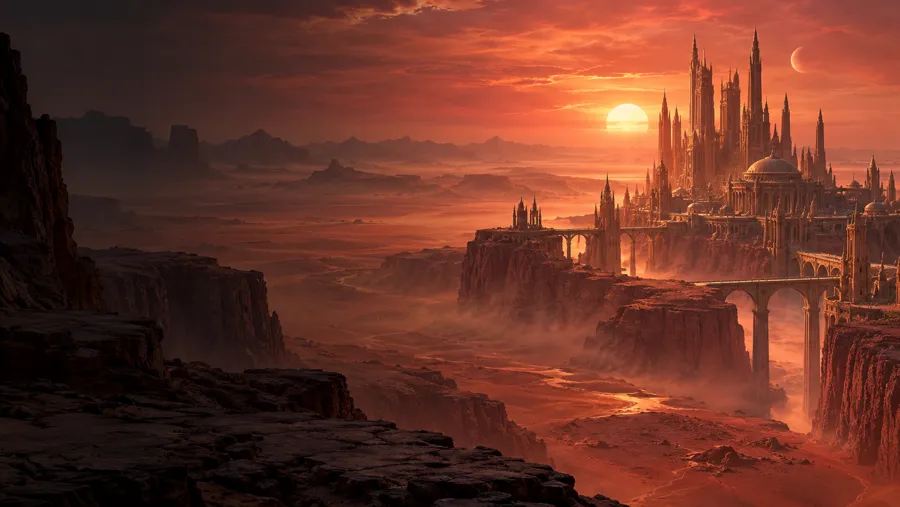
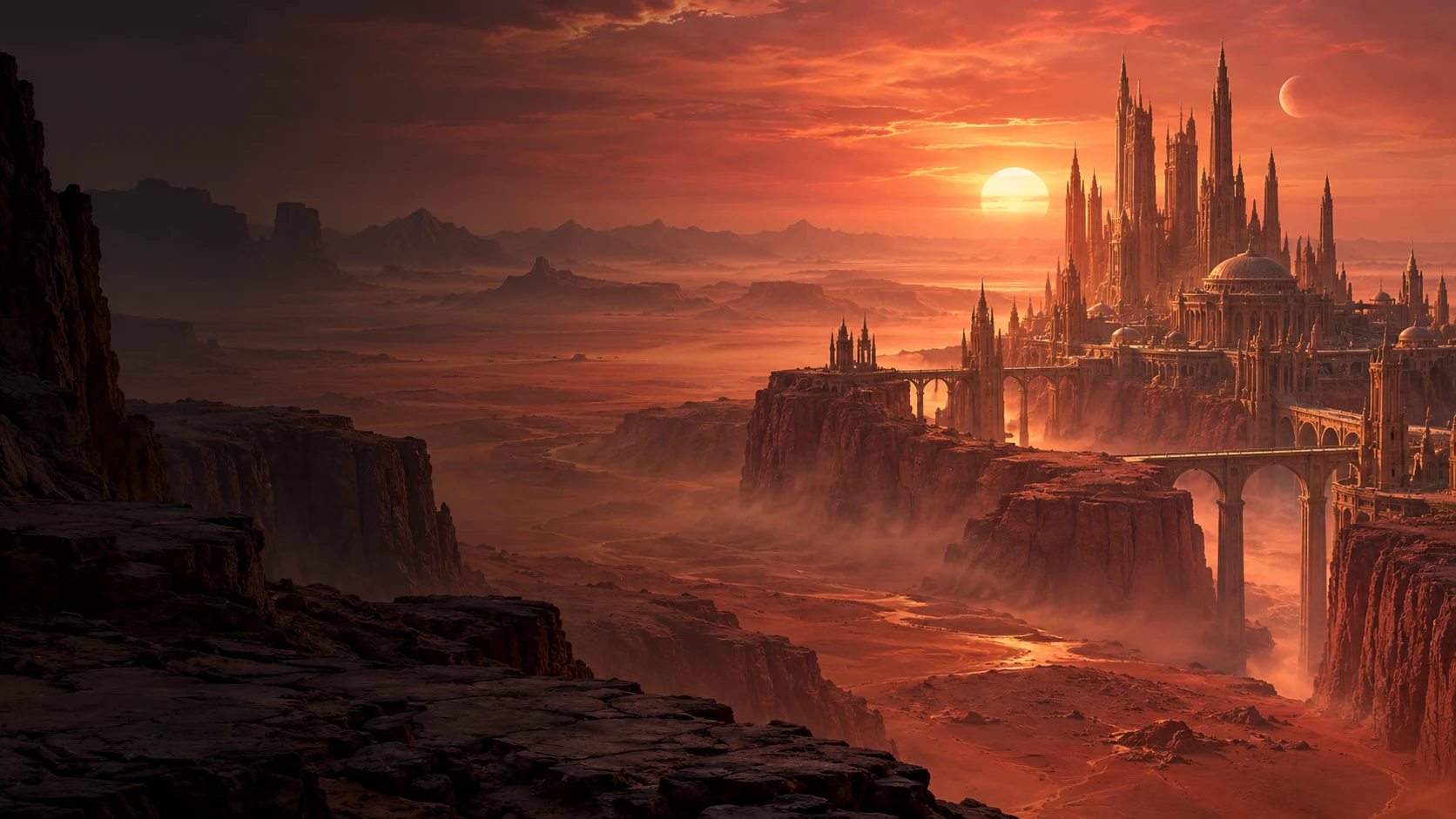
A Princess of Mars
1912 (as a serial). John Carter wakes on Mars, among four-armed green warriors and the princess Dejah Thoris. The book that launched a century of planetary romance.
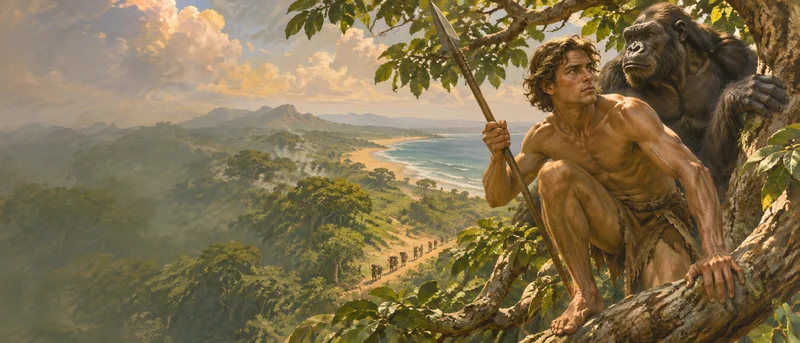
Tarzan of the Apes
1912 (as a serial). An English lord’s son, orphaned in the African jungle and raised by apes, teaches himself to read from his dead parents’ books.
At the Earth's Core
1914 (as a serial). David Innes and an elderly inventor bore through the crust in a mechanical mole and find Pellucidar, a hidden world lit by an inner sun.
The Land That Time Forgot
1918 (as a serial). A wartime sinking leaves a mixed crew of survivors on Caprona, an uncharted island where prehistoric creatures still roam.


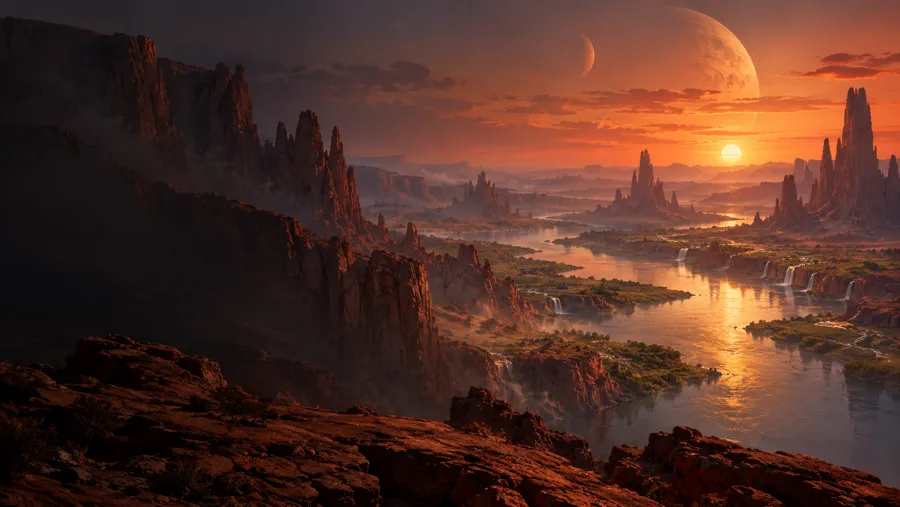
Tarzan, Barsoom and Pellucidar
Tarzan became the phenomenon, with more than twenty sequels, but many readers think the Mars books are Burroughs at his most inventive. His Barsoom has its own languages, dying oceans, airships and ancient cities, and writers from Ray Bradbury to the makers of countless space adventures have acknowledged the debt. If you enjoy the first, carry on with The Gods of Mars and our guide to the Barsoom books in order.
For the jungle, The Return of Tarzan picks up directly from the first book’s ending, and Tarzan books in order maps the rest. The hollow-earth adventure continues in Pellucidar, and Caprona belongs to a tradition we explore in lost world novels.
It is worth saying plainly that these are pulp adventures written more than a century ago, and they carry the racial and colonial assumptions of their time, most obviously in the Tarzan books’ portrayal of Africa and Africans. They are best read with that in mind: thrilling, imaginative and very much products of 1912.
Why do Burroughs’s books still work?
Burroughs never claimed to be writing great literature. What he had was pace. His chapters end on cliffhangers because they were written for magazines, where each instalment had to make you buy the next issue, and that momentum still carries a modern reader along. His books are also short: most run to well under three hundred pages.
He was a shrewd businessman too. He was one of the first authors to form his own company to manage his rights, and he kept tight control of Tarzan in films, comics and merchandise. Not bad for a man who, a few years earlier, had been trying to sell pencil sharpeners.
If you want to see where it all began, start on Mars. A Princess of Mars is fast, strange and over before you know it, and it is easy to imagine that salesman in 1911 grinning as he wrote it.
Questions readers ask
What was Edgar Rice Burroughs’s first story?
His first published story was Under the Moons of Mars, serialised in The All-Story magazine in 1912 under the pen name Norman Bean. It was later published as a book titled A Princess of Mars.
What job did Edgar Rice Burroughs have before he was a writer?
He tried many, including cavalry soldier, gold prospector, railway policeman and salesman. When he began writing in 1911 he was working as a wholesaler of pencil sharpeners.
What are the most famous Edgar Rice Burroughs books?
Tarzan of the Apes and A Princess of Mars are the best known. At the Earth’s Core and The Land That Time Forgot are also popular, and each began a series of its own.
Is Tarzana named after Tarzan?
Yes. Burroughs bought a California ranch with his earnings and named it Tarzana, and the Los Angeles community that grew up there kept the name.
 The Return of Tarzan240 pages · $15.99
 The Gods of Mars228 pages · $14.99
 The Warlord of Mars160 pages · $12.99
 The Chessmen of Mars234 pages · $14.99