

Did you know?
The surprising stories behind famous books.
All did you know? articles
169–192 of 192
 Did you know? · 4 min read
Cane: the Harlem Renaissance landmark whose author refused the label
Jean Toomer’s Cane is counted among the landmark books of the Harlem Renaissance, praised by Langston Hughes and loved by Alice Walker. It barely sold, never visits Harlem, and its author spent the rest of his life refusing to be called a Negro writer.
 Did you know? · 3 min read
Did you know The Wind in the Willows began as bedtime stories?
Before Mole, Ratty and Toad were in a book, they were in a bedroom. The Wind in the Willows began as stories Kenneth Grahame told his small son at bedtime, and some of it was first written down as letters to him.
 Did you know? · 3 min read
Did you know Harriet Jacobs hid in a tiny attic for seven years?
For nearly seven years, Harriet Jacobs lived in a space beneath a roof too low to stand in, watching her children through a tiny hole she had bored in the wall. Then she escaped, and wrote one of the most powerful books in American history.
 Did you know? · 4 min read
Did you know The Circular Staircase became The Bat, the play that helped inspire Batman?
A spinster rents a country house for the summer and finds a body at the foot of the stairs. That 1908 novel became a Broadway play about a masked criminal called the Bat, and the play’s second film helped give a young cartoonist an idea.
 Did you know? · 3 min read
Did you know Kipling wrote The Jungle Book in Vermont?
The most famous jungle in literature was dreamed up in a New England winter. Rudyard Kipling wrote The Jungle Book in Brattleboro, Vermont, thousands of miles from the India of Mowgli, Baloo and Bagheera.
 Did you know? · 4 min read
Did Stevenson really burn the first draft of Jekyll and Hyde?
Every account of Jekyll and Hyde includes the fire: a first draft thrown in the grate and rewritten in days. The evidence for that scene is thinner than you might think, and a letter found in 2000 points to a different hand.
 Did you know? · 5 min read
Did you know The Turn of the Screw begins on Christmas Eve?
Henry James’s great ghost story is set in summer and autumn at a lonely country house. But it opens on Christmas Eve, among guests trading ghost stories round a fire, and that is where its title comes from.
 Did you know? · 4 min read
Did you know Stevenson dismissed The Black Arrow as “tushery”?
Written in a hurry for a boys’ paper, mocked by its author in his letters and dedicated to the one reader who could never get through it. The Black Arrow had a hard start, and it is better than its reputation.
 Did you know? · 4 min read
Did you know Trent’s Last Case was meant to poke fun at detective stories?
Its detective is young, impulsive and all too human. E. C. Bentley built a classic of the genre out of his impatience with it.
 Did you know? · 4 min read
Did you know ghost stories were once a Christmas tradition?
Halloween gets the ghosts now, but for generations of British readers the proper time for a ghost story was Christmas Eve, round the fire, with the lamps turned low.
 Did you know? · 3 min read
Did you know Thoreau’s Walden cabin was within walking distance of town?
The most famous retreat into the wilderness in American writing was a short walk from the village shops, on land borrowed from a friend, beside a busy railway. Thoreau never pretended otherwise.
 Did you know? · 3 min read
Did you know d’Artagnan was a real musketeer?
The hot-headed young Gascon who rides into Paris at the start of The Three Musketeers had a real counterpart — a soldier who served Cardinal Mazarin, arrested a minister for Louis XIV and died leading his men in battle.
 Did you know? · 4 min read
Did you know Tolkien admired The Worm Ouroboros — and argued with it?
J. R. R. Tolkien admired E. R. Eddison’s great fantasy of 1922 for its writing, disliked its heroes, and thought its names were a mess. All three reactions are a good way into the book.
 Did you know? · 4 min read
Did you know Sam Spade appears in only one novel?
He defined the private eye for a century of books and films, but Sam Spade has exactly one novel to his name. Everything people remember about him starts in The Maltese Falcon.
 Did you know? · 4 min read
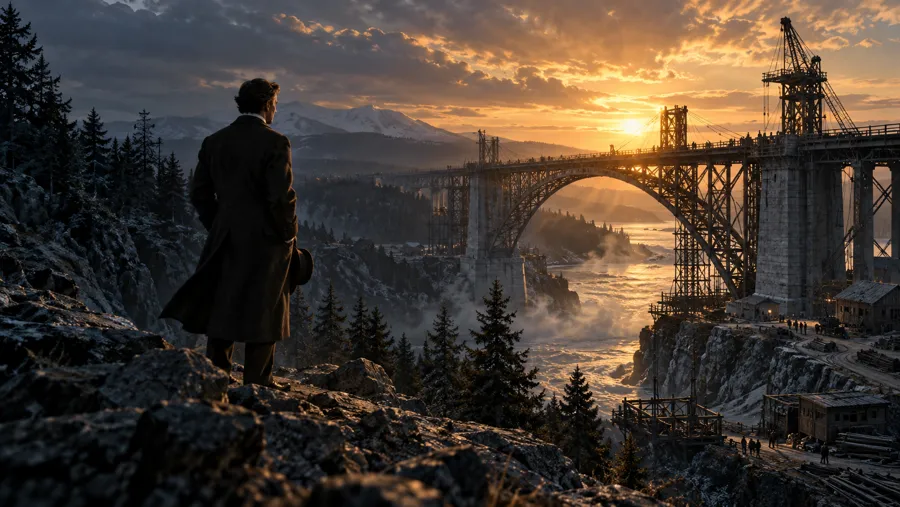
Was Willa Cather’s first novel inspired by a real bridge collapse? The story of Alexander’s Bridge
In 1907 the biggest cantilever bridge ever attempted fell into the St Lawrence River. Five years later Willa Cather published a novel about an engineer whose record-breaking Canadian bridge does the same. Critics have connected the two ever since, though Cather herself never did.
 Did you know? · 3 min read
Did you know Helen Keller wrote The Story of My Life as a college student?
Helen Keller was not an old woman looking back when she wrote her autobiography. She was a student at Radcliffe College, in her early twenties, writing between lectures and exams.
 Did you know? · 4 min read
Lady Audley’s Secret: the scandalous Victorian bestseller
A golden-haired governess marries a rich baronet, and a young man asks too many questions. Mary Elizabeth Braddon’s 1862 novel made its author independent and its publisher rich, while her own private life gave the gossips plenty to say.
 Did you know? · 3 min read
Did you know Winnie-the-Pooh was named after a real bear?
The real bear behind Winnie-the-Pooh was a black bear called Winnipeg, who travelled from Canada to London in 1914 and became the favourite animal of a small boy named Christopher Robin Milne.
 Did you know? · 3 min read
Did you know Dracula is told entirely through diaries, letters and other documents?
Dracula has no narrator. Bram Stoker built the whole novel out of diaries, letters, telegrams, a ship’s log and newspaper cuttings, and that is exactly why it still gets under the skin.
 Did you know? · 3 min read
Did you know Alice in Wonderland began as a story told on a boat trip?
The origin of Alice in Wonderland is a summer afternoon on the river: a young Oxford lecturer, three little girls in a rowing boat, and a story invented on the spot to keep them entertained.

 Did you know? · 4 min read
Did you know Dickens wrote A Christmas Carol in six weeks?
The history of A Christmas Carol is a race against the calendar. Charles Dickens began it in October 1843, finished it in about six weeks, and had it in the shops a week before Christmas.

 Did you know? · 3 min read
Did you know Frankenstein was written by an 18-year-old?
Who wrote Frankenstein? Mary Shelley — and she was eighteen when the idea came to her, on a rainy night beside Lake Geneva in the summer of 1816.
 Did you know? · 3 min read
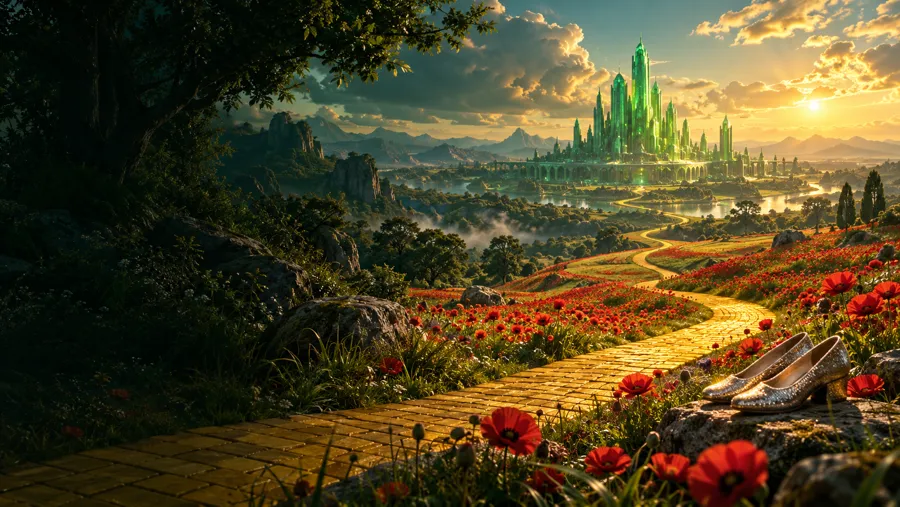
Did you know Dorothy’s slippers were silver in the book?
The ruby slippers are one of the most famous props in film history, but they are not in the book. In L. Frank Baum’s original Wizard of Oz, Dorothy walks the yellow brick road in a pair of Silver Shoes.
 Did you know? · 3 min read
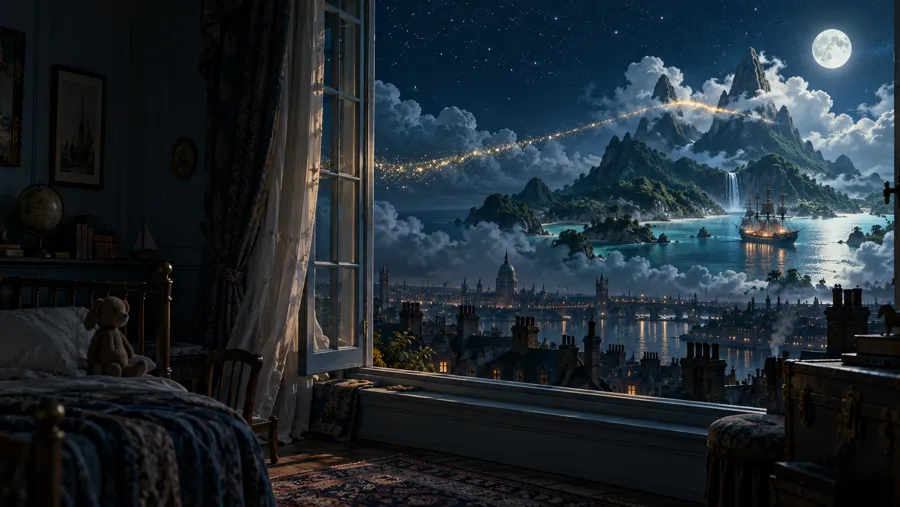
Did you know Peter Pan was a play before it was a novel?
The story of Wendy, Neverland and Captain Hook began on the London stage in 1904. The novel came seven years later, and Peter himself had already made a quiet debut in a book for grown-ups.