
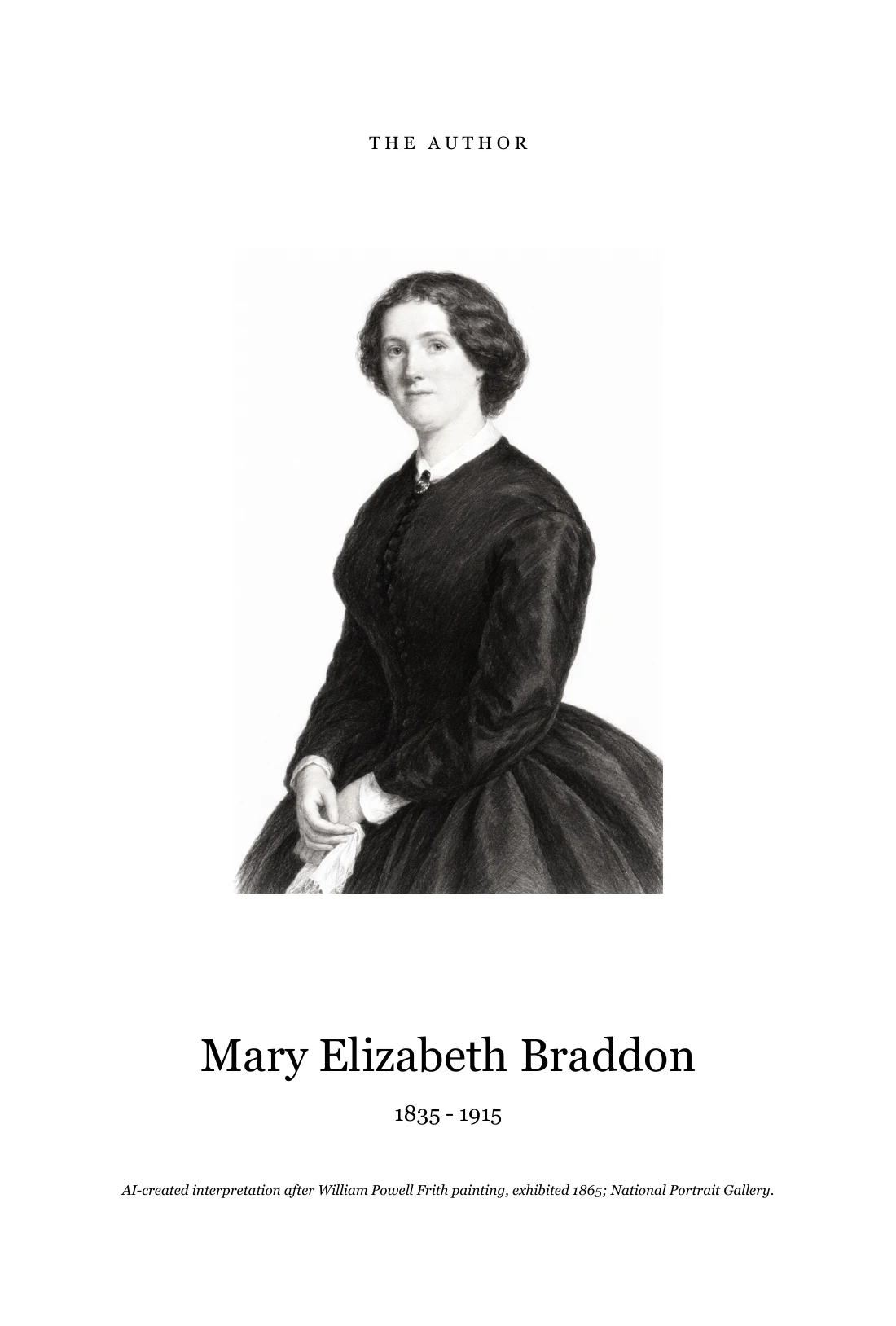
In Barnes, on the edge of London, the publisher William Tinsley built himself a villa and called it Audley Lodge. He could afford to, because in October 1862 he had published Lady Audley’s Secret by Mary Elizabeth Braddon, and it had made his fortune. Few publishers have named a house after the book that paid for it, and few books have earned the tribute so thoroughly.
Lady Audley’s Secret went through nine editions in its first year and has stayed in print ever since. The critic John Sutherland has called it the most sensationally successful of all the sensation novels. Here is how it happened, and why, more than a century and a half later, you should still read it knowing as little as possible.
What is Lady Audley’s Secret about?
Lucy Graham arrives in an Essex village as a governess, answering an advertisement placed in The Times by the local surgeon. She is young, charming and covered in flaxen curls, and before long she has married Sir Michael Audley, a widowed baronet of fifty-five, and become mistress of Audley Court, an ancient house with a lime walk, a dry moat and an old well at the bottom of the garden.
Then two young men arrive. One is Sir Michael’s nephew Robert, a barrister who has never had a brief and has never wanted one. The other is his friend George Talboys, newly home from Australia. When George vanishes, Robert, the laziest man in the Temple, turns himself into a detective. That is as far as we will go.

How Lady Audley’s Secret became a bestseller
Its route into print was ragged. The novel began as a serial in Robin Goodfellow, a magazine run by the Irish publisher John Maxwell, in the summer of 1861, but only part of it appeared there. It was serialised in full in the Sixpenny Magazine through 1862, and Braddon wrote the final third in less than two weeks.
Tinsley brought it out in three volumes on 1 October 1862. It ran yet again as a serial in The London Journal in 1863, the same year Colin Henry Hazlewood’s stage version opened at the Victoria Theatre in London. The Woman in White had shown in 1860 how hungry readers were for crime behind respectable doors. Braddon gave them more, faster, and with a heroine nobody could quite take their eyes off.
Braddon’s own descriptions of Audley Court show how the book works. Everything is pretty, peaceful and slightly too quiet:
an avenue so shaded from the sun and sky, so screened from observation by the thick shelter of the over-arching trees that it seemed a chosen place for secret meetings or for stolen interviews; a place in which a conspiracy might have been planned, or a lover’s vow registered with equal safety; and yet it was scarcely twenty paces from the house.
Mary Elizabeth Braddon, Lady Audley’s Secret (1862)
Why was Lady Audley’s Secret scandalous?
Partly because of what it suggested about the respectable home. The sensation novel’s great discovery was that crime did not have to happen in slums or foreign castles; it could happen in a country house, behind a pretty face, a few paces from the drawing room. A novel that made its readers suspicious of a sweet-tempered young wife was a novel that worried its critics.
And partly because of its author. Braddon had spent most of the 1850s as an actress in provincial theatres, supporting herself and her mother. In 1861 she met John Maxwell and moved in with him. He was already married, with five children, and could not marry her until his wife died in 1874. In 1864 Maxwell falsely told the newspapers that he and Braddon were married, and when the truth came out it caused a minor scandal; their servants gave notice. The couple eventually had six children together.

What happened to Braddon?
The novel’s success left her financially independent from then on. She followed Lady Audley’s Secret with Aurora Floyd in 1863, founded the magazine Belgravia in 1866, and wrote more than eighty novels in a long career that ran from sensation fiction to ghost stories and historical romance. She died in Richmond in 1915. The 1862 novel remains the one everybody knows, adapted for silent film in 1920 and for television in 2000.
Lady Audley's Secret
1862. A golden-haired governess, a baronet’s fortune, a vanished friend and an idle barrister who will not let it go. Often called the most successful sensation novel of all, and best read unspoiled.
The Woman in White
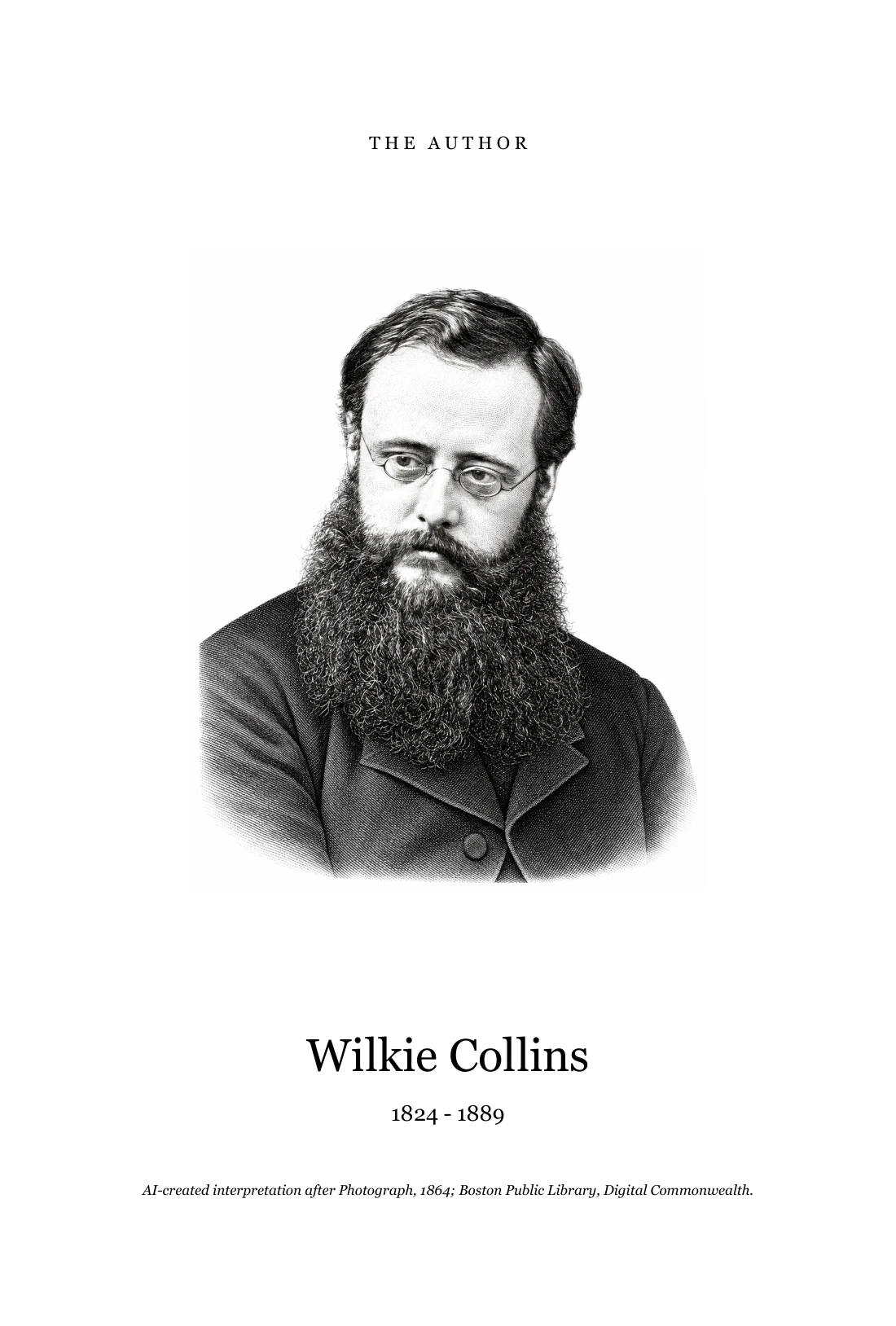
1860. Wilkie Collins’s novel of a mysterious woman on a moonlit road, which showed Braddon and everyone else what a sensation novel could do.


What was the sensation novel? traces the genre Braddon helped define, and for the book that started it, see Did you know The Woman in White caused a merchandise craze?. Braddon’s novel was a serial before it was a book, like many of its rivals; Did you know many great Victorian novels first came out in instalments? explains how that worked.
Then go to Audley Court. Open Lady Audley’s Secret, walk down the lime avenue towards the old well, and try to work out the secret before Robert Audley does.
Questions readers ask
What is Lady Audley’s Secret about?
It follows Lucy Graham, a charming governess who marries the wealthy Sir Michael Audley, and his nephew Robert, who begins investigating when his friend George Talboys disappears. The secret itself is best discovered by reading.
When was Lady Audley’s Secret published?
It was serialised in 1861–62 and published in three volumes by William Tinsley on 1 October 1862. It ran through nine editions in its first year.
Is Lady Audley’s Secret a sensation novel?
Yes. Alongside Wilkie Collins’s The Woman in White, it is one of the defining sensation novels of the 1860s, the genre of crimes and secrets hidden inside respectable homes.
 The Trail of the Serpent422 pages · $20.99