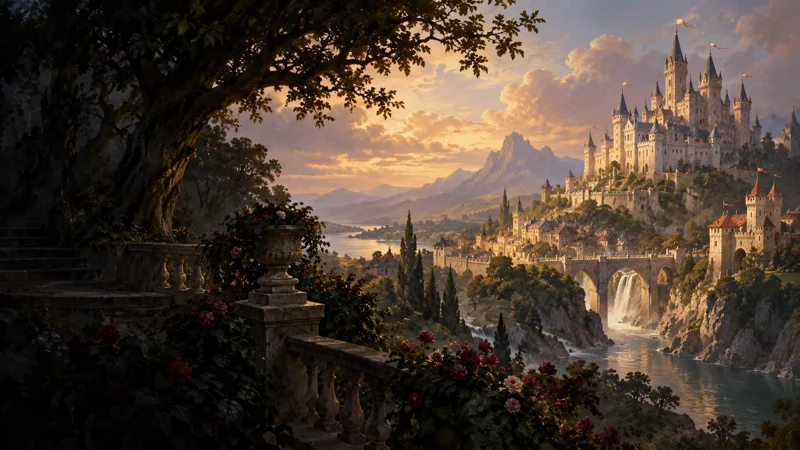
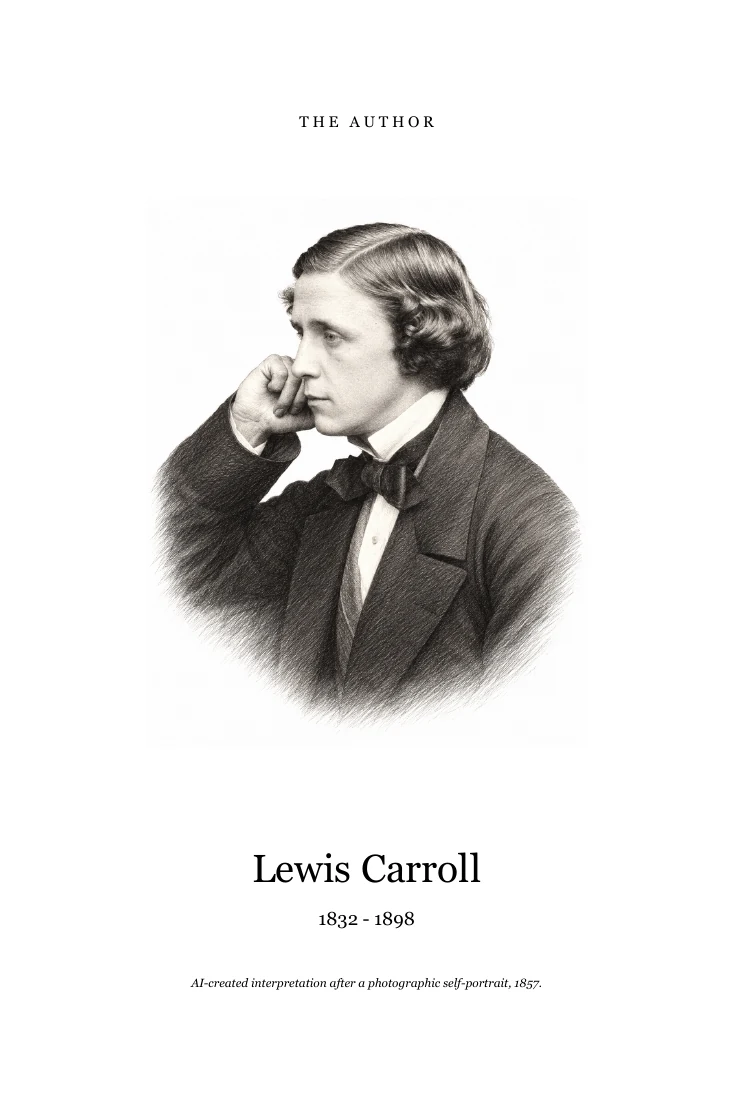
On 4 July 1862, Charles Dodgson, a mathematics lecturer at Christ Church, Oxford, set out on the Thames with his friend the Reverend Robinson Duckworth and the three daughters of the college’s dean: Lorina, Alice and Edith Liddell. They rowed upstream from Folly Bridge towards Godstow, and somewhere along the way the girls asked for a story.
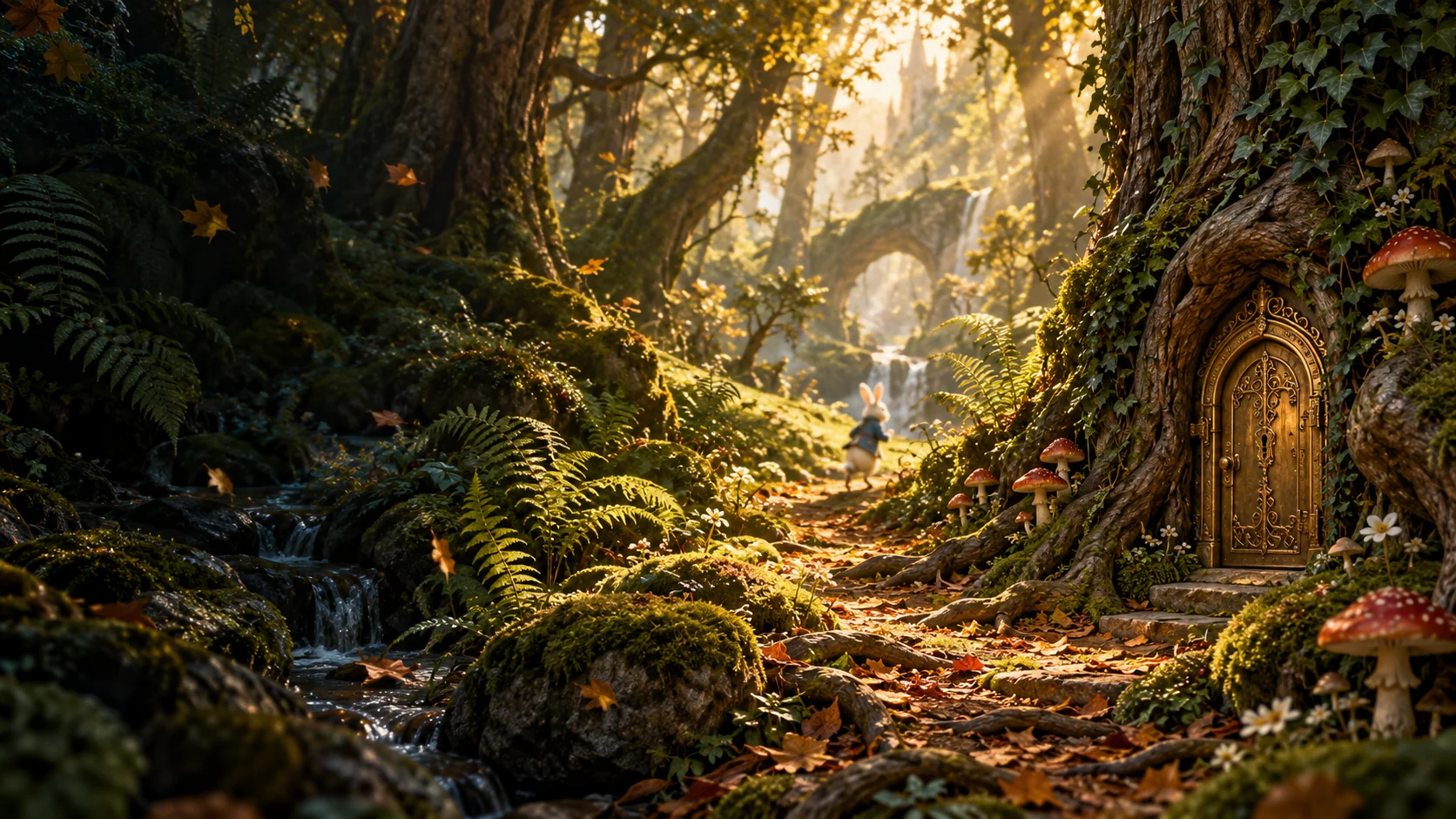
Dodgson began telling one about a girl called Alice who fell down a rabbit hole. Ten-year-old Alice Liddell liked it so much that she asked him to write it down. He did, and three years later, under the pen name Lewis Carroll, it became Alice’s Adventures in Wonderland.
The origin of Alice in Wonderland, step by step
The writing down took a while. Dodgson worked the river story into a handwritten book called Alice’s Adventures Under Ground, illustrated with his own drawings, and gave it to Alice Liddell in late 1864. That manuscript survives and is now held by the British Library.
Friends who read it urged him to publish. He expanded the story considerably, adding scenes now inseparable from it, such as the Mad Tea-Party and the Cheshire Cat, and engaged John Tenniel, the leading illustrator at Punch, to draw the pictures. Macmillan published the book in 1865.
Carroll never let the river trip be forgotten. The book opens with a poem recalling that afternoon, the three sisters at the oars and the story they demanded:
All in the golden afternoon / Full leisurely we glide
Lewis Carroll, Alice’s Adventures in Wonderland (1865)
Whether the day was quite as golden as he remembered is another matter. Some later researchers have questioned the weather that July, and memory may have done some gilding. But the essentials of the story, the boat, the girls and the request to write it down, are well documented by the people who were there.
The book also seems to wink at the people in the boat. The Dodo is generally taken as Dodgson’s joke on himself, while the Duck is often linked to Duckworth and the Lory and the Eaglet to Lorina and Edith. And the story opens with Alice sitting on a bank beside her sister, bored of a book with no pictures, just before a White Rabbit runs past.
What is Alice in Wonderland like to read today?
Shorter and stranger than most people expect. The book has twelve brisk chapters, and its humour is built on logic games, puns and parodies of the improving verses Victorian children had to learn by heart. Children enjoy the sheer nonsense; adults tend to notice how sharply Carroll mocks grown-up rules, manners and lessons.
It reads aloud beautifully, because it began as something spoken. If you are sharing it with a child, take it a chapter a night and let the arguments with the Caterpillar and the Duchess land in full. Older readers might try it straight through in an evening; it is nearer a novella than a full-length novel.
- $12.99
Alice's Adventures in Wonderland
1865. Alice follows a White Rabbit underground and finds a world where size, time and manners obey no rules she recognises.
- $10.99
Through the Looking-Glass
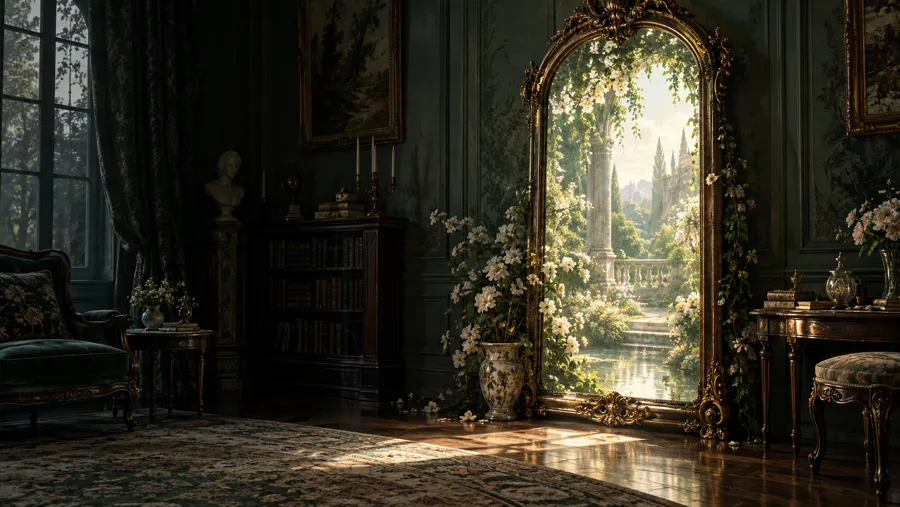
1871. Alice steps through a mirror into a land laid out like a chessboard, meeting Tweedledum and Tweedledee, Humpty Dumpty and the White Knight.


Is there a sequel to Alice in Wonderland?
Yes. Through the Looking-Glass, and What Alice Found There followed in 1871, with Tenniel again providing the pictures. It is, if anything, even cleverer, built around a game of chess and home to “Jabberwocky” and “The Walrus and the Carpenter”. Many readers who know both books think of them as one long dream. We cover it fully in Did you know Alice in Wonderland has a sequel?
If you enjoy Carroll, the wider world of Victorian and Edwardian children’s fantasy is waiting. The Wonderful Wizard of Oz is often compared with Alice, another tale of a girl alone in a strange land, and Peter and Wendy began, like Alice, with stories told to real children, as told in Did you know Peter Pan was a play before it was a novel? For the bigger picture, see the Golden Age of children’s literature.
Or simply go back to the beginning. Open Alice’s Adventures in Wonderland at that opening poem, picture the boat drifting upstream, and follow the White Rabbit down.
Questions readers ask
What is the origin of Alice in Wonderland?
It began as a story Charles Dodgson (Lewis Carroll) told the three Liddell sisters on a rowing trip up the Thames from Oxford on 4 July 1862. Alice Liddell asked him to write it down, and he published an expanded version in 1865.
Was Alice in Wonderland based on a real girl?
The story was invented for Alice Liddell, the ten-year-old daughter of the Dean of Christ Church, Oxford, and the heroine shares her first name. How closely the fictional Alice resembles her is less certain.
Who was Lewis Carroll?
Lewis Carroll was the pen name of Charles Lutwidge Dodgson, a mathematician, deacon and photographer who spent most of his life at Christ Church, Oxford.