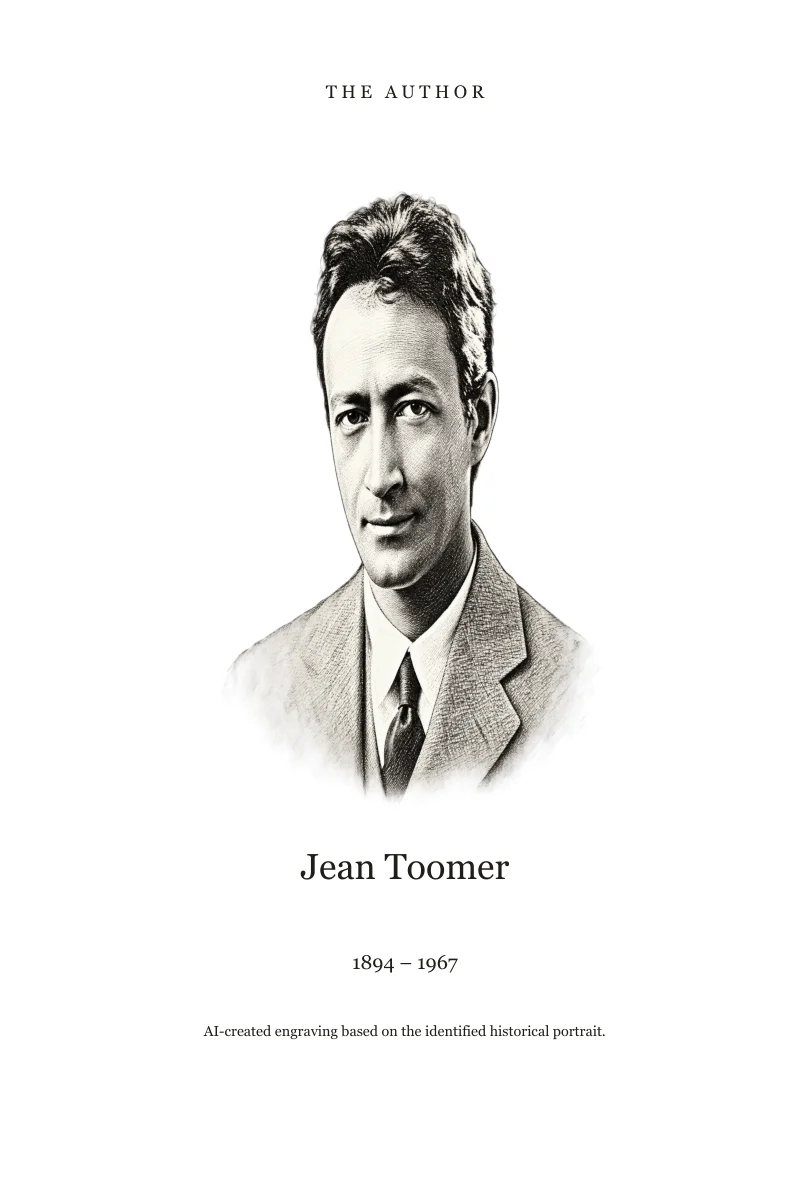

Is Cane a novel? It is usually catalogued as one. But open it and you find short prose portraits of women in a Georgia town, then a sonnet, then a song, then a story, then a free-verse prayer, and at the end a long piece laid out as a play. Jean Toomer built it like a collage, and readers have been arguing about what to call it ever since.
What nobody argues about is its importance. Cane is one of the landmark books of the Harlem Renaissance, the flowering of Black American writing, music and art in the 1920s, and one of the boldest experiments of American modernism. It is also the only book of its kind Toomer ever wrote.
Where did Cane come from?
From a short spell in the Deep South. Toomer was born in Washington, D.C., in 1894, the grandson of P. B. S. Pinchback, who had briefly been governor of Louisiana during Reconstruction. He went to segregated Black schools in Washington and an all-white school in New Rochelle, and in the autumn of 1921 he took a short job as a substitute principal at the Sparta Agricultural and Industrial Institute in rural Georgia, near where his father had lived.
What he saw there, the sawmills and cane fields, the evening singing, segregation and near-servitude on the land, made him identify more strongly with his father’s past. He began writing on the train back north in November 1921, and by Christmas he had a draft of the Georgia sketches and of “Kabnis”. His friend the novelist Waldo Frank suggested he make them a book, and Toomer added a middle section of city pieces to fill it out.
In time, for though the sun is setting on / A song-lit race of slaves, it has not set; / Though late, O soil, it is not too late yet / To catch thy plaintive soul, leaving, soon gone
Jean Toomer, “Song of the Son”, Cane
That is the book’s central fear. Toomer believed the folk culture of the rural South, its spirituals and work songs, was disappearing as Black Americans moved to towns and cities, and Cane is his attempt to catch it before it went.

What is Jean Toomer’s Cane about?
It moves in three parts. The first is set in Georgia, a sequence of portraits of women, among them Karintha, Becky, Carma, Fern and Esther, threaded with short poems about reapers, cotton and dusk. The second moves north to the streets, theatres and boarding houses of Washington and Chicago. The third is “Kabnis”, a dramatic piece about an educated Northern Black man who comes south to teach and is undone by what he finds there.
Toomer said the design was a circle, South to North and back again. The language is musical, repetitive, often startlingly beautiful, and it does not explain itself. Even sympathetic early readers, W. E. B. Du Bois among them, admitted to finding parts of it puzzling.
Why did Toomer reject the Harlem Renaissance label?
Because he rejected racial labels altogether. In 1923, as Cane was going to press, the publisher Horace Liveright asked him to play up his “colored blood” in the publicity. Toomer was furious, replied that his racial make-up was nobody’s business but his own, and said he would not present himself as a Negro writer. He came to describe himself simply as an American, and after Cane he largely stopped writing about Black characters at all.
His later life was spent on spiritual searching: years as a follower of the teacher G. I. Gurdjieff, then the Quakers in Pennsylvania. He published little more of note and died in 1967. Cane had faded into obscurity by then, and it was rediscovered in the late 1960s, when new editions brought it back to readers; it has stayed in print since.

Was Cane a success?
Critically, yes; commercially, no. Langston Hughes put it plainly in his 1926 essay “The Negro Artist and the Racial Mountain”, writing that both Black respectability and white expectation “would have told Jean Toomer not to write ‘Cane.’ The colored people did not praise it. The white people did not buy it.” In the same paragraph he called its prose the finest written by a Black American, with the single exception of Du Bois.
Cane
1923. Poems, sketches and a closing drama, moving from the cane fields of Georgia to Washington and back. Short, strange and unforgettable, with a foreword by Waldo Frank that begins “This book is the South.”
Winesburg, Ohio: A Group of Tales of Ohio Small Town Life
1919. Sherwood Anderson’s linked stories of one small Ohio town. Toomer corresponded with Anderson, and critics often set the two books side by side.
The Autobiography of an Ex-Colored Man
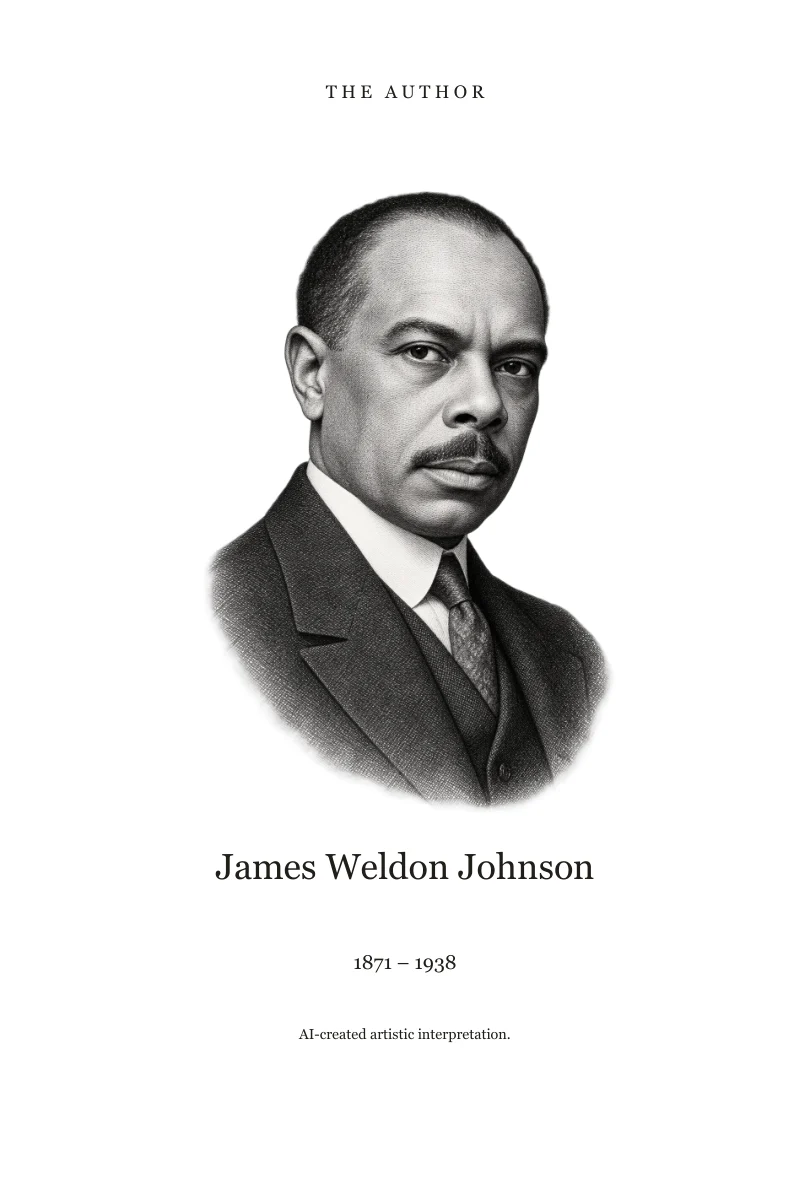
1912. James Weldon Johnson’s novel, first published anonymously, about a man who chooses to pass as white. It asks many of the identity questions that haunted Toomer’s own life.


For the wider movement, see The Harlem Renaissance: where to start reading and Early African American novels. The modernist side of the story is in Modernism explained in four books.
Begin with the first page, “Karintha”, and read it aloud. Cane is a book you hear as much as read, and its music will tell you what it is long before you have decided what to call it.
Questions readers ask
What is Cane by Jean Toomer about?
Cane (1923) is a mixed work of poems, sketches, stories and a short drama about Black life in rural Georgia and in the cities of Washington and Chicago. It mourns a Southern folk culture Toomer feared was vanishing.
Is Cane part of the Harlem Renaissance?
Yes. It is considered one of the movement’s landmark books and influenced many later Black writers, though Toomer himself resisted being classed as a Negro writer and the book is not set in Harlem.
Is Cane a novel or a poetry collection?
Both and neither. It is usually classed as a novel, but it combines verse, prose vignettes and a play, and critics often call it a composite novel or a short story cycle.
Where did Jean Toomer get the idea for Cane?
From a short spell in the autumn of 1921 as a substitute principal at a school in Sparta, Georgia. He began writing the Georgia sketches on the train home.