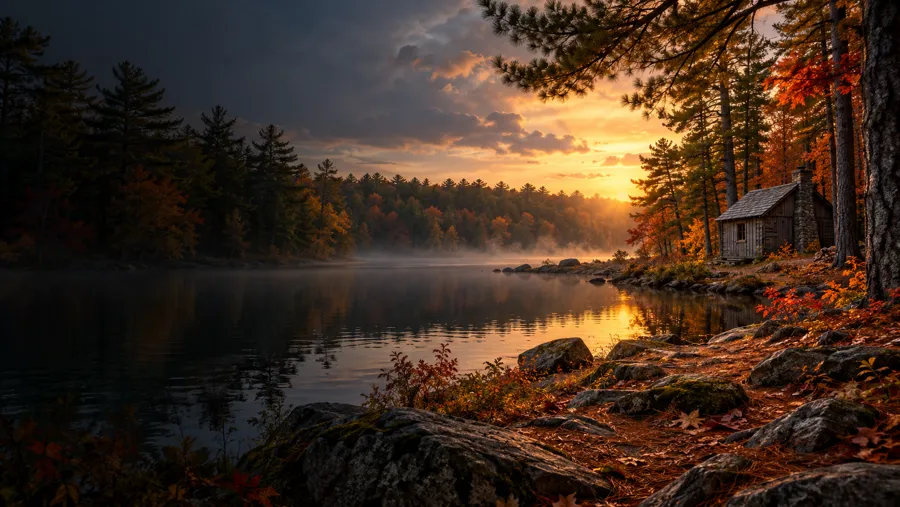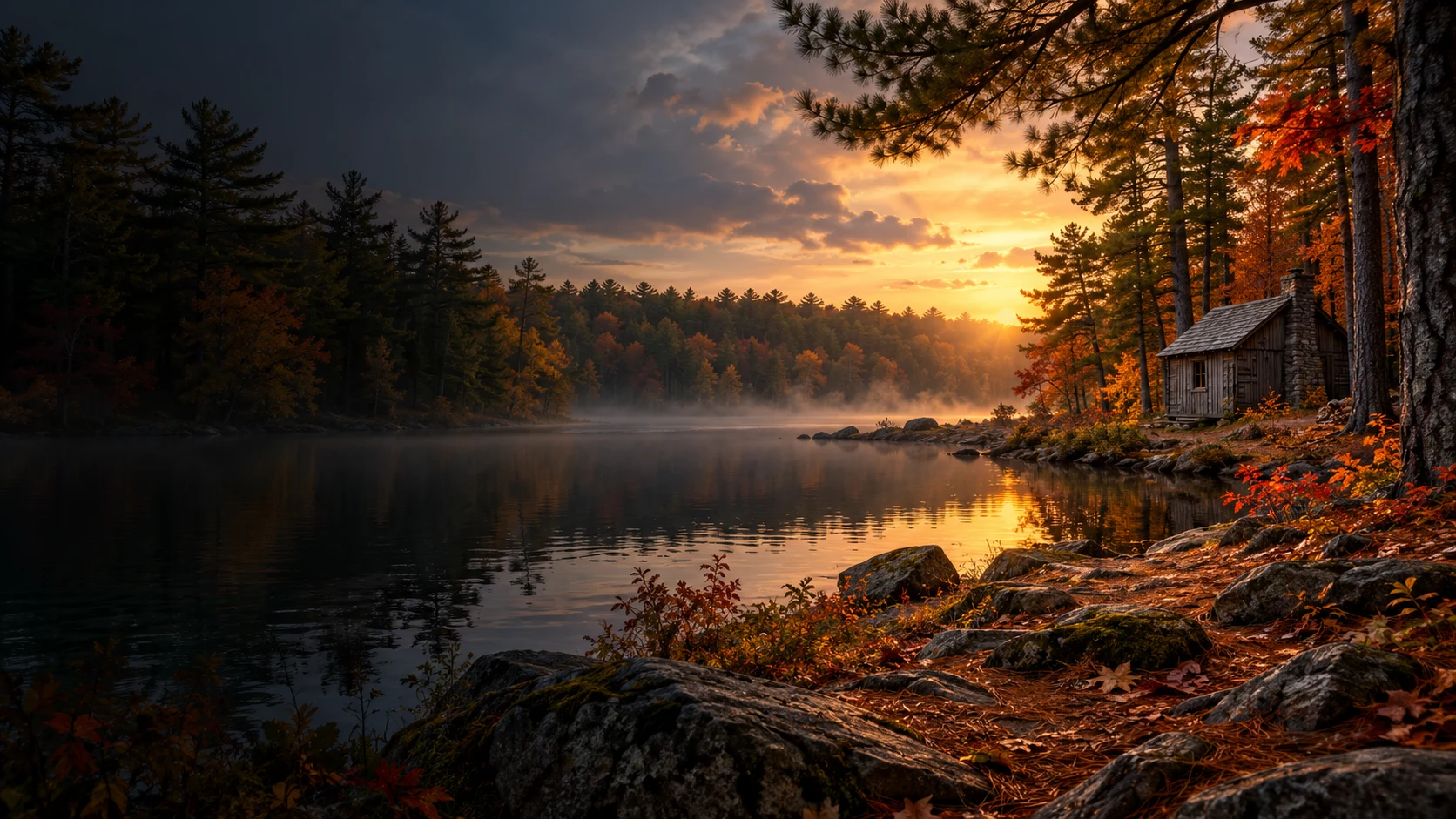
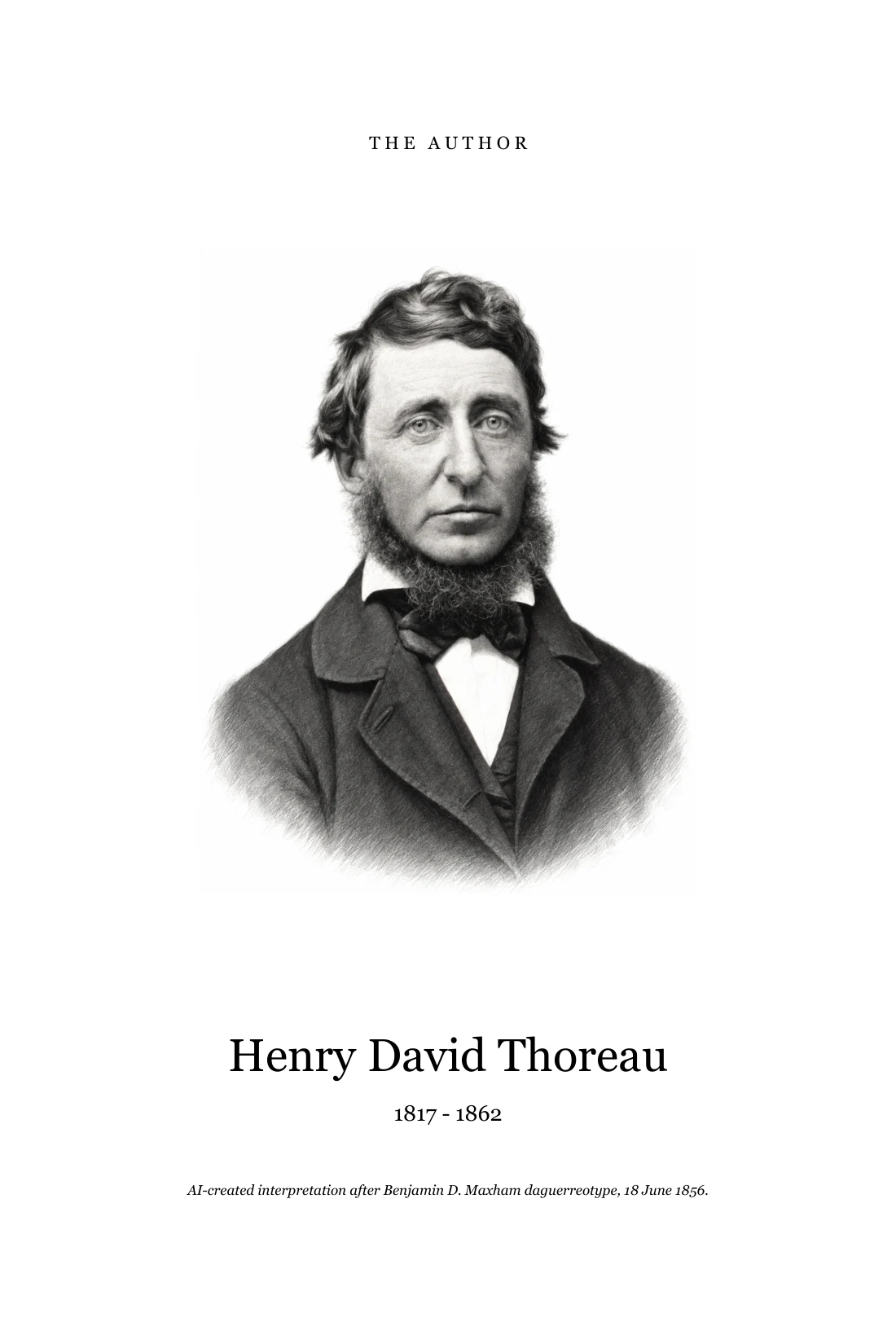
The freight trains came by every day, and the men on them bowed. Henry David Thoreau, living in a one-room house he had built at Walden Pond, noticed that the crews who rode the whole length of the line greeted him “as to an old acquaintance”, they passed him so often. The Fitchburg Railroad ran along the edge of the pond, and he usually walked into Concord along its causeway.
So yes: the cabin at the heart of Walden was within easy walking distance of town. Thoreau tells us himself that he lived “about a mile and a half south of the village of Concord”, on a wooded plot that his friend Ralph Waldo Emerson had bought. He moved in on 4 July 1845 and left on 6 September 1847, and in all that time he was never more than a stroll from his family, the post office and the gossip.
How far was Walden Pond from Concord?
About a mile and a half from the village centre, by Thoreau’s own reckoning, or roughly half an hour on foot. It was in woods between Concord and the neighbouring town of Lincoln, a little higher than the village, and so low among the trees that the wooded far shore, half a mile away, was his most distant horizon. He described himself in the book’s opening lines as living “a mile from any neighbor”, which is perfectly true and also, carefully, not the same as a mile from anyone at all.
Every day or two I strolled to the village to hear some of the gossip which is incessantly going on there
Henry David Thoreau, Walden (1854), “The Village”
He did not hide this. A whole chapter, “The Village”, describes his walks into Concord to watch the townspeople “as curious to me as if they had been prairie dogs”. Another, “Visitors”, is about the stream of callers who came out to see him. The man in the woods was very rarely alone for long.

Was Thoreau a hermit?
No, and he never claimed to be. The point of the experiment was not to escape people but to strip life down to its necessities and see what was left. He built the house himself, with boards bought from a railway labourer’s shanty, and he recorded what it cost him to the half-cent: $28.12½ in all. He grew beans, did odd jobs around Concord for cash, and wrote.
His mother and sisters, by most accounts, visited regularly with food, and his mother is often said to have taken his washing home. Critics have used that to mock him for generations. It misses what he was doing. He was not trying to survive alone in the wild; he was trying to find out how little a person actually needs, and he did it close enough to town to keep comparing.
Why does the distance matter?
Because Walden is a book about attention, not escape. Thoreau sat close enough to the railway to hear it, and the trains run all through the book as the noise of the modern world, the thing he is measuring his own life against. If he had walked fifty miles into the forest, he could not have made that comparison so sharply.
I had three chairs in my house; one for solitude, two for friendship, three for society.
Henry David Thoreau, Walden (1854), “Visitors”
The book itself was a long time coming. Thoreau worked through several drafts between 1846 and 1854, and he compressed his two years and two months at the pond into a single year that moves from summer through winter to spring. The real stay was looser, more sociable and more interrupted than the book’s neat seasons suggest, which is where the art comes in.
Can you visit Thoreau’s cabin today?
You can visit the pond. The original house is long gone, but a replica can be seen at what is now Walden Pond State Reservation, a state park. Emerson’s descendants and other families gave the land around the pond to the Commonwealth of Massachusetts in 1922.
For the ideas behind the experiment, see Transcendentalism explained: Thoreau, Emerson and Whitman and Philosophy books for beginners. If you prefer your solitude in book form, Did you know Marcus Aurelius never meant Meditations to be read? is a good companion.
Walk out to the pond with him: start Walden with the chapter “Where I Lived, and What I Lived For”, and see how far from town you really feel.
Questions readers ask
How far was Thoreau’s cabin from Concord?
About a mile and a half south of the village of Concord, Massachusetts, by Thoreau’s own account. He walked into town every day or two.
How long did Thoreau live at Walden Pond?
Two years and two months, from 4 July 1845 to 6 September 1847. In the book he compresses the stay into a single year.
Who owned the land where Thoreau built his cabin?
Ralph Waldo Emerson, his friend and mentor, who had bought woodland on the shore of Walden Pond and let Thoreau build there.