Was d’Artagnan real? Yes. Charles de Batz de Castelmore, who called himself d’Artagnan after his mother’s family, was a Gascon nobleman born in the early 1610s. He came to Paris as a young man, served in the King’s Musketeers, carried messages for Cardinal Mazarin, and eventually rose to command the company. He was killed at the siege of Maastricht in 1673.
Alexandre Dumas did not dig him out of the archives himself. He met d’Artagnan in a book — and that book was already part fiction.
Who was the real d’Artagnan?
The real d’Artagnan grew up at the small château of Castelmore in Gascony, a younger son of a family with more pride than money, which is exactly how Dumas presents his hero. He seems to have arrived in Paris in the 1630s and found his way into the musketeers, the mounted company that served as the king’s own guard.
When the musketeers were disbanded in 1646 he attached himself to Cardinal Mazarin, Richelieu’s successor, and served him as a trusted courier through the civil wars known as the Fronde. Once the company was re-formed he returned to it, and by the late 1660s he was its acting commander, answering directly to the king.
His most famous assignment came in 1661, when Louis XIV ordered him to arrest Nicolas Fouquet, the immensely rich superintendent of finances. D’Artagnan carried out the arrest at Nantes and then spent years as Fouquet’s escort and gaoler. In 1673, during the war against the Dutch, he was shot and killed in an assault on the defences of Maastricht.
How did Dumas find him?
In 1700, long after d’Artagnan’s death, a writer named Gatien de Courtilz de Sandras published the Memoirs of Monsieur d’Artagnan, written as though by the man himself. Courtilz had never been near his subject’s private papers. He used a real career as a frame for adventures, intrigues and love affairs of his own devising.
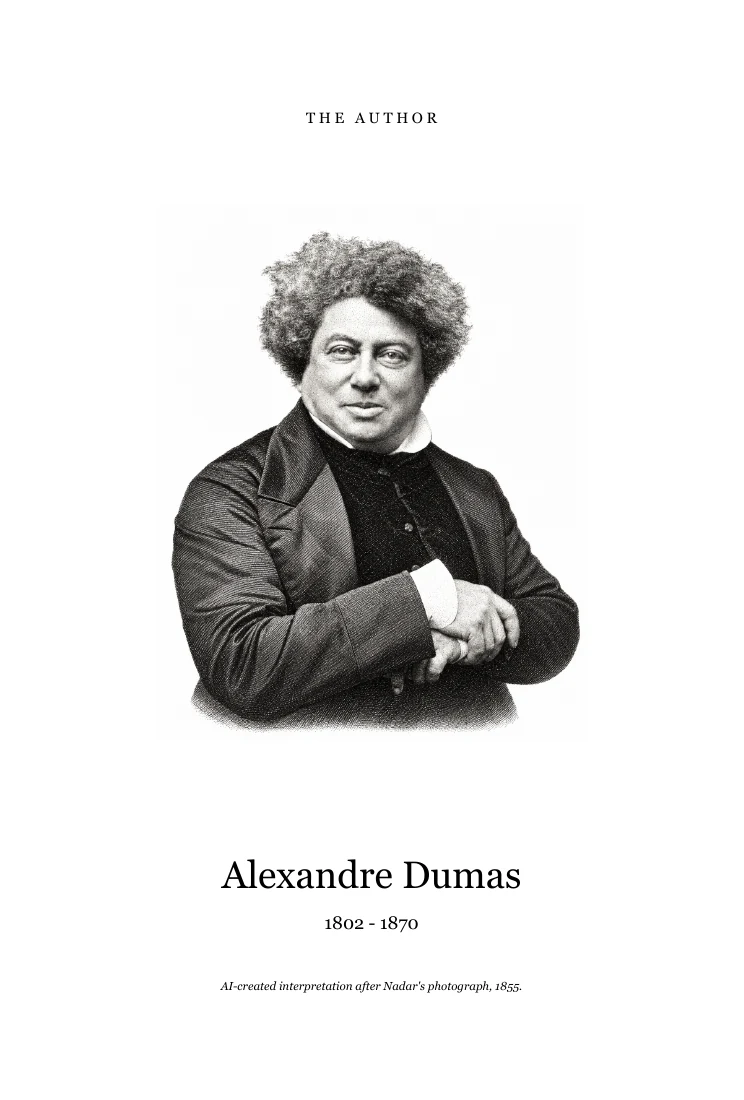
Dumas came across the book in the early 1840s and saw what it could become. Working with his collaborator Auguste Maquet — a partnership we look at in our post on Dumas’s collaborator — he turned it into The Three Musketeers, serialised in a Paris newspaper in 1844. His preface cheerfully claims to have found the memoirs in the royal library, then a second manuscript besides, playing the same game of invented sources that Courtilz had played.
What Dumas changed
Nearly everything that happens. The novel opens in 1625 and runs through the siege of La Rochelle in 1627–28, when the real d’Artagnan was a boy in Gascony. Milady, the diamond studs and the duel-a-minute friendships are fiction, though the backdrop of Richelieu, Anne of Austria and the Duke of Buckingham is real history, freely rearranged.
What Dumas kept was the shape of the man: poor, proud, brave, ambitious and loyal to the crown. And in the sequels he edged closer to the record. Twenty Years After puts d’Artagnan in Mazarin’s service during the Fronde and The Vicomte de Bragelonne has him arrest Fouquet.
The Three Musketeers
1844. D’Artagnan arrives in Paris with a yellow horse, a letter of introduction and a quick temper, and has arranged three duels in a single morning.
The Count of Monte Cristo — Volume 1
Dumas’s other great adventure, begun the same year: a betrayed sailor, a prison island and a fortune. The first of five volumes.
Cyrano de Bergerac
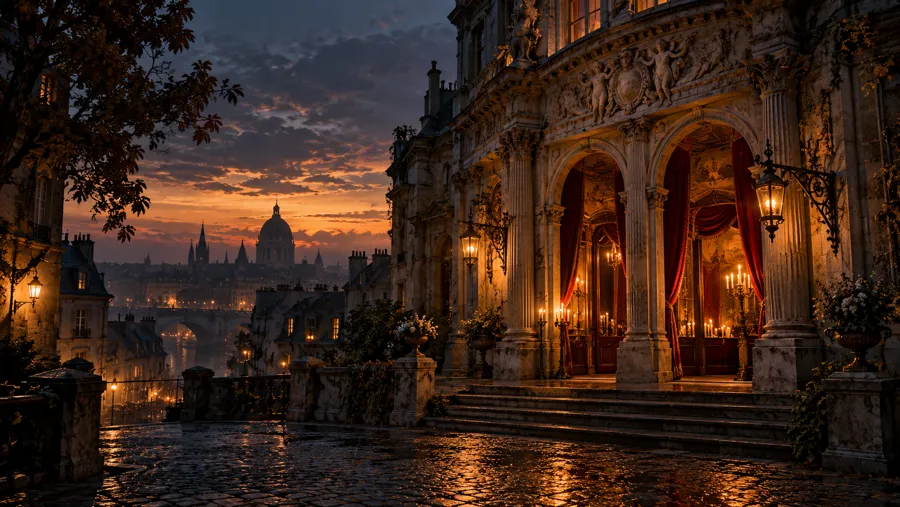
Rostand’s play about another real soldier of the same generation, Cyrano de Bergerac, a Parisian who served among Gascon guardsmen and was turned into a romantic legend.


Is The Three Musketeers still worth reading?
Very much so, and it is funnier than its swashbuckling reputation suggests. Dumas wrote for newspaper readers who had to be brought back the next day, so chapters are short and nearly every one ends on a hook. The four friends bicker over money, servants and dinner as much as they fight.
It is also darker than the films. Milady is a genuinely frightening villain, and the last section of the book turns on a long, grim pursuit. Readers who enjoy The Count of Monte Cristo will find the same energy here in a more compact form; we explain how that novel’s five volumes fit together in The Count of Monte Cristo in five volumes, and set out d’Artagnan’s later adventures in the Three Musketeers sequels.
The real d’Artagnan was a capable officer whose name might have survived only in footnotes. Dumas made him immortal. To meet him, begin at the inn at Meung, where The Three Musketeers opens with a stranger laughing at a young man’s horse — a mistake nobody makes twice.
Questions readers ask
Was d’Artagnan a real person?
Yes. Charles de Batz de Castelmore, known as d’Artagnan, was a Gascon soldier who served in the King’s Musketeers and rose to command them. He died at the siege of Maastricht in 1673.
Were the Three Musketeers real?
Their names were. Musketeers called Athos, Portau and Aramitz served in the seventeenth century, but their adventures in the novel are Dumas’s invention.
Is The Three Musketeers based on a true story?
Loosely. Dumas drew on a fictionalised memoir of d’Artagnan published in 1700 and set his story against real events, but the plot and most of the characters’ adventures are invented.
How did the real d’Artagnan die?
He was shot during an assault on the fortifications of Maastricht in June 1673, during Louis XIV’s war against the Dutch Republic.
 The Count of Monte Cristo — Volume 2362 pages · $18.99
 The Count of Monte Cristo — Volume 3354 pages · $18.99
 The Count of Monte Cristo — Volume 4286 pages · $16.99
 The Count of Monte Cristo — Volume 5266 pages · $15.99