

Did you know?
The surprising stories behind famous books.
All did you know? articles
145–168 of 192
 Did you know? · 4 min read
Did you know Le Morte d’Arthur was written by a prisoner?
The book that gave English its King Arthur, its Round Table and its quest for the Holy Grail was finished around 1470 by a man who asked his readers to pray for his release.
 Did you know? · 3 min read
Did you know Raffles was created by Conan Doyle's brother-in-law?
The most famous gentleman thief in English fiction was born in Sherlock Holmes’s own family. E. W. Hornung married Conan Doyle’s sister, then turned the Holmes formula upside down.
 Did you know? · 4 min read
Spoon River Anthology: a whole town speaking from the graveyard
Every poem in Spoon River Anthology is spoken by someone already buried. Between them, more than two hundred of the dead tell the truth about the small Illinois town they lived in, and the living never quite forgave the man who wrote them down.
 Did you know? · 4 min read
Did you know Thackeray wrote a fairy-tale pantomime for children?
Six years after Vanity Fair, Thackeray spent a winter in Rome drawing Twelfth-Night kings and queens for a children’s party. The story he made up around them became The Rose and the Ring, one of the funniest fairy tales of the Victorian age.
 Did you know? · 4 min read
Did you know a story about a jumping frog made Mark Twain famous?
A gambler, a trained frog called Dan’l Webster and an old man who will not stop talking. Mark Twain’s tall tale of 1865 was reprinted across America, and ten years later he gave it a second life by translating it back from the French.

 Did you know? · 4 min read
Did you know The Swiss Family Robinson was written by a pastor for his own sons?
Johann David Wyss never meant The Swiss Family Robinson for the public. He wrote it in the 1790s as a family story and lesson-book for his children, and it took a son of his to turn the manuscript into a book.
 Did you know? · 3 min read
Did you know Moby-Dick was inspired by a real whale attack?
The true story behind Moby-Dick is a shipwreck. In 1820 a sperm whale turned on the Nantucket whaleship Essex and sank her in the middle of the Pacific, and Herman Melville never forgot it.
 Did you know? · 4 min read
Did you know Zane Grey was a dentist before he wrote Riders of the Purple Sage?
He studied dentistry on a baseball scholarship and filled teeth in New York while dreaming of the outdoors. Then he married, moved to the Delaware River, gave up the drill, and wrote the western that defined the genre.
 Did you know? · 4 min read
Did you know The Time Machine popularised the idea of time travel?
Characters had slept, dreamed and been spirited into other times long before 1895. H. G. Wells gave them a machine to do it on purpose, and the idea never left.
 Did you know? · 4 min read
Did you know Cyrano de Bergerac was a real person?
The poet with the famous nose was not invented for the stage. Savinien de Cyrano de Bergerac lived, fought and wrote in seventeenth-century Paris — and the real man was, if anything, stranger than Rostand’s.
 Did you know? · 4 min read
Did you know Virgil asked for The Aeneid to be burned?
The poem that became Rome’s national epic was meant to be destroyed. According to the ancient biographers, Virgil died believing The Aeneid unfinished and asked for it to be burned.
 Did you know? · 3 min read
Did you know Madame Bovary was put on trial?
Before it was ever a book, Madame Bovary was a court case. In January 1857 Gustave Flaubert was prosecuted for offending public morals, and the trial helped turn his first novel into a sensation.

 Did you know? · 3 min read
Did you know Michael Crichton borrowed The Lost World from Conan Doyle?
When Michael Crichton wrote a sequel to Jurassic Park, he called it The Lost World. The title was a tip of the hat to Arthur Conan Doyle, who had sent explorers to meet living dinosaurs more than eighty years earlier.

 Did you know? · 4 min read
Kwaidan: the Japanese ghost stories retold by a Greek-Irish writer
Some of the best-known Japanese ghost stories in English were set down by a man born on a Greek island, raised in Dublin and trained as a reporter in Cincinnati, who died a Japanese citizen with a Japanese name.
 Did you know? · 4 min read
Did you know Agatha Christie turned her round-the-world tour into The Man in the Brown Suit?
The dedication gives it away: “To E. A. B. In memory of a journey, some lion stories and a request…” In 1922 Agatha Christie went round the world with a trade mission, and the trip, and its overbearing leader, became her most light-hearted thriller.

 Did you know? · 4 min read
Did you know Flatland is a satire disguised as a geometry lesson?
Maths teachers hand out Flatland to explain the fourth dimension. Read the first half, though, and you find a headmaster’s savage joke about Victorian England, in which the poor are narrow triangles and women are not allowed to stop talking in the street.
 Did you know? · 3 min read
Did you know Three Men in a Boat was meant to be a travel guide?
Three Men in a Boat is one of the funniest books in English. It was supposed to be a guide to the River Thames, with its history and scenery, and the jokes were meant to be the light relief.
 Did you know? · 4 min read
The Law and the Lady: Wilkie Collins’s wife-detective and the verdict “Not Proven”
Scotland once had three verdicts: guilty, not guilty and a third that meant neither. Wilkie Collins built a whole novel on that third verdict, and on a young wife who refuses to live with it.

 Did you know? · 4 min read
Did Jules Verne really scoff at H. G. Wells’s The First Men in the Moon?
One sent his travellers to the Moon from a 900-foot cannon, the other built a glass-lined sphere with shutters of an anti-gravity metal. In 1903 the older man made it very clear which method he preferred.
 Did you know? · 3 min read
Did you know The Sorrows of Young Werther started a fashion craze?
A short novel in letters by a 24-year-old lawyer made Goethe famous overnight — and sent young men across Europe out to buy a blue coat and a yellow waistcoat.
 Did you know? · 4 min read
Where does “I would prefer not to” come from? Melville’s Bartleby, the Scrivener
Five words, said mildly from behind a screen in a Wall Street office, and a lawyer’s comfortable world begins to come apart. Melville wrote them in 1853, and readers have been arguing about them ever since.
 Did you know? · 3 min read
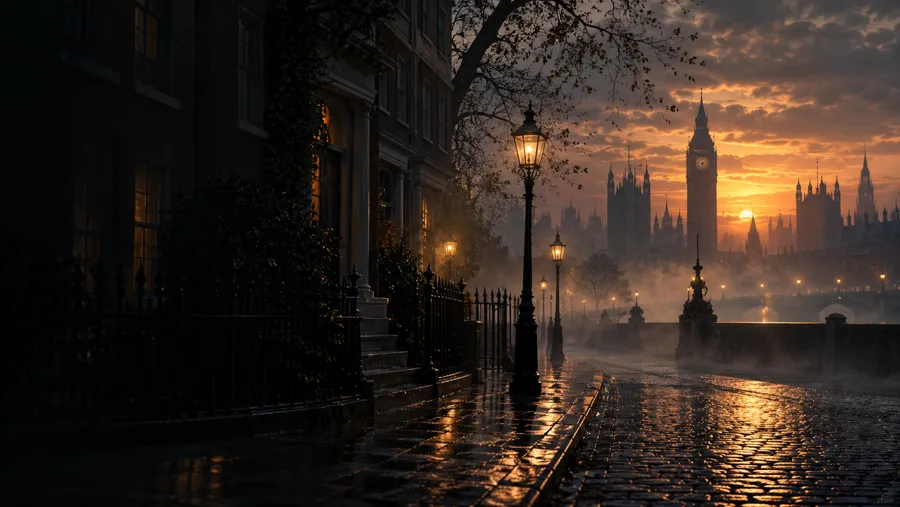
Did you know The Lodger was inspired by Jack the Ripper?
A quiet gentleman rents the rooms upstairs, pays in advance and goes out only at night. Meanwhile a killer is stalking the London fog. The Lodger turned the Jack the Ripper panic into one of the great novels of suspense.
 Did you know? · 4 min read
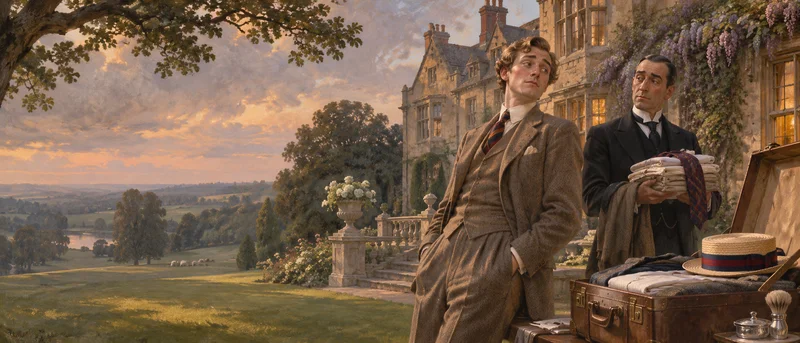
Did you know Right Ho, Jeeves was published in America as Brinkley Manor?
Ten days apart in October 1934, the same comic novel appeared on both sides of the Atlantic under two different names. British readers got Right Ho, Jeeves. Americans got Brinkley Manor, named after a house that in the story is called Brinkley Court.
 Did you know? · 4 min read
Did you know D. H. Lawrence’s The Rainbow was seized and burned in 1915?
Weeks after publication, Lawrence’s fourth novel was the subject of a police warrant. Its publisher apologised in court, and the author was not there to defend it.