

THE PIPCUB BLOG · 656 ARTICLES
Stories behind the stories.
Reading orders, author guides, hand-picked lists and the surprising histories of the books we love.
Every article
313–336 of 656
 Did you know? · 4 min read
Did you know The Prophet has never gone out of print?
A slim book of sermons by a Lebanese-American painter, published in New York in 1923, sold modestly in its first year. More than a century later, it has never once gone out of print.

 Series & reading order · 3 min read
Richard Hannay in order: from The Thirty-Nine Steps to Mr. Standfast
A bored mining engineer opens his London flat to a frightened stranger, and within days he is running for his life across the Scottish moors. The Thirty-Nine Steps launched Richard Hannay, and John Buchan kept him running through the whole of the First World War.
 Authors · 4 min read
Rafael Sabatini: the master of the swashbuckler
In a churchyard at Adelboden, in the Swiss Alps, Rafael Sabatini’s grave carries a single sentence: the first line of his most famous novel. It is the best introduction to him anyone could write.
 Young readers · 4 min read
Books like The Secret Garden: five classics with the same quiet magic
The Secret Garden is about a lonely child, a hidden place and the slow work of getting well. These five classics share that mood, from Burnett’s own London attic to an Alpine meadow.

 Reading lists · 3 min read
Classic spy novels from before James Bond
James Bond arrived late. By 1953 the British spy novel already had sandbanks and secret codes, anarchist double agents, invasion scares and a man running across the Scottish moors with a notebook full of ciphers.

 Books on screen · 3 min read
Ben-Hur: the novel behind the chariot race
The most famous chariot race in film began as a set piece in an 1880 novel, and it was being staged with live horses on Broadway sixty years before Charlton Heston took the reins.
 Did you know? · 4 min read
Did you know L. Frank Baum wrote an origin story for Santa Claus?
Two years after he sent Dorothy to Oz, L. Frank Baum turned to an even bigger question: where did Santa Claus come from? The Life and Adventures of Santa Claus is his answer.
 Reading time · 4 min read
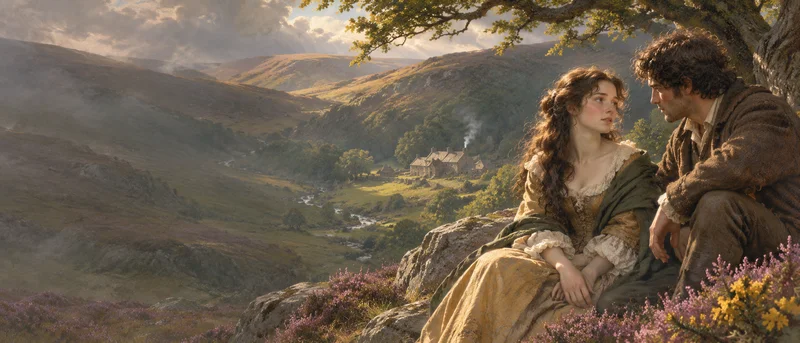
How long is Lorna Doone? Reading time and a plan
Lorna Doone takes about sixteen hours to read in our 784-page edition. That is a big book by any standard, but it is told by a farmer who loves a good story, in short chapters that make a steady month of evenings.

 Did you know? · 4 min read
Did you know Edith Wharton called Summer her “Hot Ethan”?
Ethan Frome is buried in snow. Summer, its sister novel, takes place in June heat in the same hill country, and its heroine wants everything Ethan never dared to. Wharton knew exactly what she had made.

 Literary history · 4 min read
The Brontës of Haworth: one family, seven novels
Between 1847 and 1857, seven novels by three sisters from one Yorkshire parsonage came into print, two of them among the most famous in English. This is the story of the Brontë family, the house they wrote in, and the order in which to read them.
 Reading lists · 4 min read
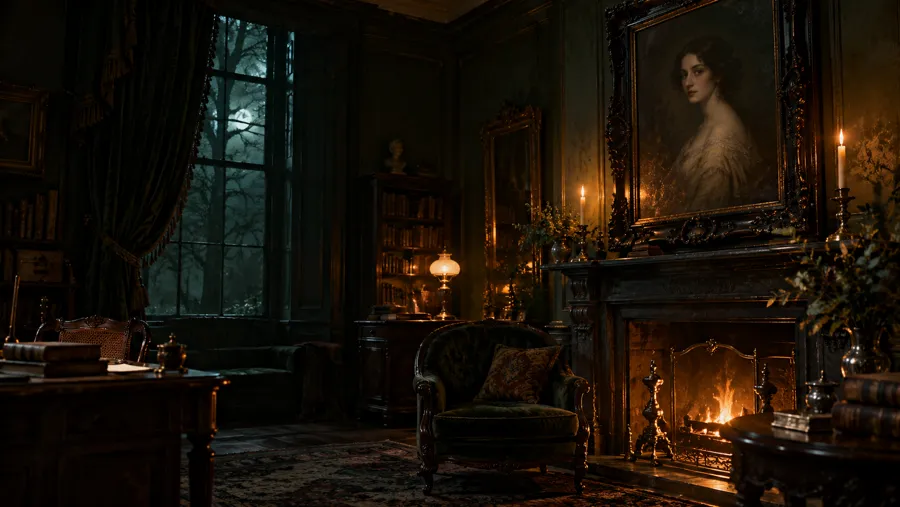
Horror stories by writers you wouldn’t expect, from E. Nesbit to Conan Doyle
Some of the best classic horror stories were written by people the world remembers for something else entirely: a children’s author, a detective writer, a sensation novelist and a chronicler of New York society.
 Authors · 3 min read
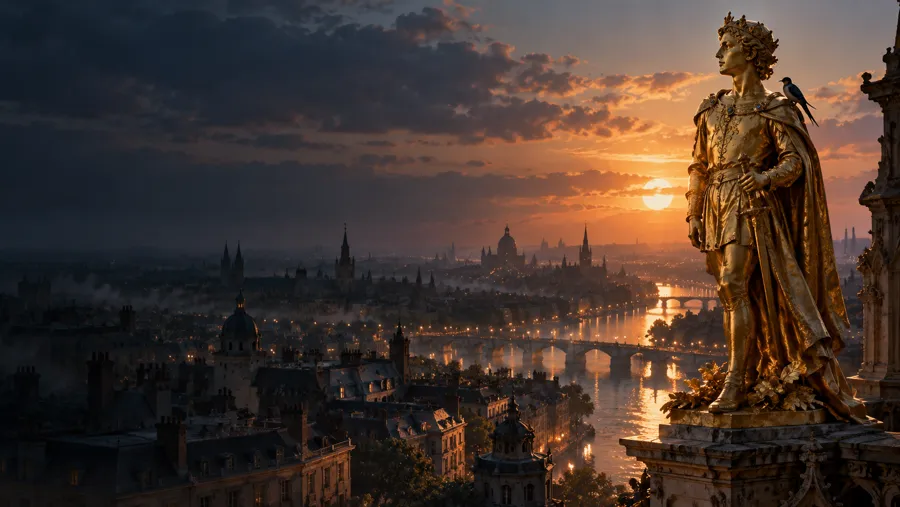
Did you know Oscar Wilde wrote fairy tales?
The wittiest man in Victorian London also wrote some of the saddest, most beautiful fairy tales in English. Oscar Wilde’s nine stories about swallows, giants, nightingales and statues have been read aloud to children for well over a century, and they were never only for children.

 Did you know? · 4 min read
Did you know The Scarlet Pimpernel was on stage before it was in print?
The Scarlet Pimpernel is one of the great adventure novels, but audiences met him in a theatre first. When publishers turned the book down, Baroness Orczy took her hero to the stage, and only after the play became a hit did the novel reach print.

 How to read · 5 min read
How to read Nietzsche: which book to start with, and in what order
Nietzsche wrote in aphorisms, parables, polemics and verse, and he asked to be read slowly. Start in the right place and he is one of the most exhilarating writers in philosophy.
 Series & reading order · 4 min read
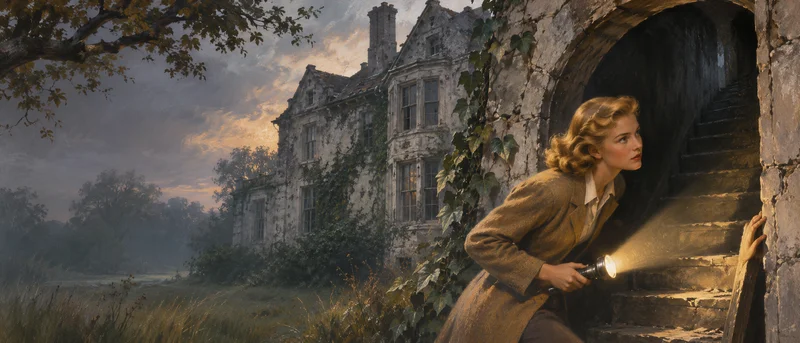
Did you know the first three Nancy Drew books came out together? The series in order
Nancy Drew did not arrive one book at a time. Grosset & Dunlap launched her with three mysteries at once in the spring of 1930, a trial run that turned into one of the longest series in American publishing.

 Reading lists · 3 min read
Lost world novels: dinosaurs, hidden kingdoms and forgotten peoples
Before satellites mapped every square mile, there was still room on the globe for a plateau full of dinosaurs or a kingdom no outsider had seen. The lost world novel was born in that gap, and it has never quite gone away.
 Did you know? · 3 min read
Did you know Pride and Prejudice was first called First Impressions?
The original title of Pride and Prejudice was First Impressions. Jane Austen drafted it before her twenty-second birthday, saw it turned down without being read, and waited sixteen years to see it in print.
 Authors · 4 min read
Lord Dunsany, the fantasist who shaped Lovecraft and caught Tolkien’s eye
Somewhere above the gods sits a drummer who must never stop, because if he does, the god who dreams the world will wake. That image opens Lord Dunsany’s first book, and the writers who read it never quite forgot it.
 Did you know? · 4 min read
Did you know Gulliver’s Travels was a political satire?
Tiny people, giants, a flying island and talking horses: Gulliver’s Travels looks like a fairy tale. In 1726 it was a book its publisher was afraid to print as written.
 Young readers · 4 min read
A homeschool classics reading list: six books from Homer to Green Gables
Six books, more than two and a half thousand years apart at the extremes, that will carry a homeschooled child from first read-alouds at five to reading Homer at eleven or twelve, with a history lesson built into the order.

 Reading lists · 3 min read
Famous pen names in classic literature — and the real names behind them
Mark Twain was Samuel Clemens, Lewis Carroll was a mathematics don and Carolyn Keene was never one person at all. Here are the famous pen names of classic literature and the real names behind them.
- Books on screen · 3 min read
Hitchcock films based on classic books
Alfred Hitchcock rarely invented his own stories. Two of his breakthrough films, The Lodger and The 39 Steps, came from popular novels you can still read today, and both books are very different from the films they became.

 Did you know? · 3 min read
The Bridge of San Luis Rey: a Pulitzer winner you can read in an evening
The best-selling novel in America in 1928 was a slim book about five strangers who fall to their deaths in eighteenth-century Peru. It won the Pulitzer Prize, and you can finish it before bedtime.
- Authors · 4 min read
Did you know the author of The Thirty-Nine Steps became Governor General of Canada?
In 1935 Alfred Hitchcock’s The 39 Steps reached cinemas, and the man who had written the novel was raised to the peerage and sent to Ottawa as the King’s representative. John Buchan spent his last years as Governor General of Canada, and kept writing to the end.