In America, many people meet Lorna Doone first as a biscuit. Nabisco introduced its square shortbread cookie of that name in 1912, possibly naming it after the heroine of R. D. Blackmore’s novel, though nobody has found a record of why. The book behind the name is a good deal more substantial.
How long is Lorna Doone? In our edition it fills 784 pages. Our book cards assume a reader gets through about fifty pages an hour, which puts it at roughly sixteen hours. Fast readers will take less and careful ones more; speeds vary a great deal, and Blackmore’s Exmoor dialect slows most people down a little. By our count, the Project Gutenberg text comes to about 270,000 words across 75 chapters.
Is Lorna Doone a long book?
Yes, though not an unusually long one for its time. It belongs to the Victorian tradition of the three-volume novel, and it is a little shorter than The Pickwick Papers by our counts. What makes it feel manageable is the chapter length. The 75 chapters average about 3,600 words each, a quarter of an hour or so for many readers, and nearly all of them end at a natural pause.
It also helps that the whole book is told by one voice. John Ridd, a yeoman farmer of the parish of Oare, sets the tone in the first sentence, apologising in advance for his plainness:
If anybody cares to read a simple tale told simply, I, John Ridd, of the parish of Oare, in the county of Somerset, yeoman and churchwarden, have seen and had a share in some doings of this neighborhood, which I will try to set down in order, God sparing my life and memory.
R. D. Blackmore, Lorna Doone (1869)
That leisurely, conversational voice is the reason the book runs long, and also the reason readers love it. John digresses about sheep, weather, wrestling and the work of the farm. Let him. The digressions are where Exmoor comes to life.
A four-week plan for reading Lorna Doone
Read about nineteen chapters a week, or roughly three a day, and the book divides into four parts of almost equal length. The chapter titles make useful signposts.
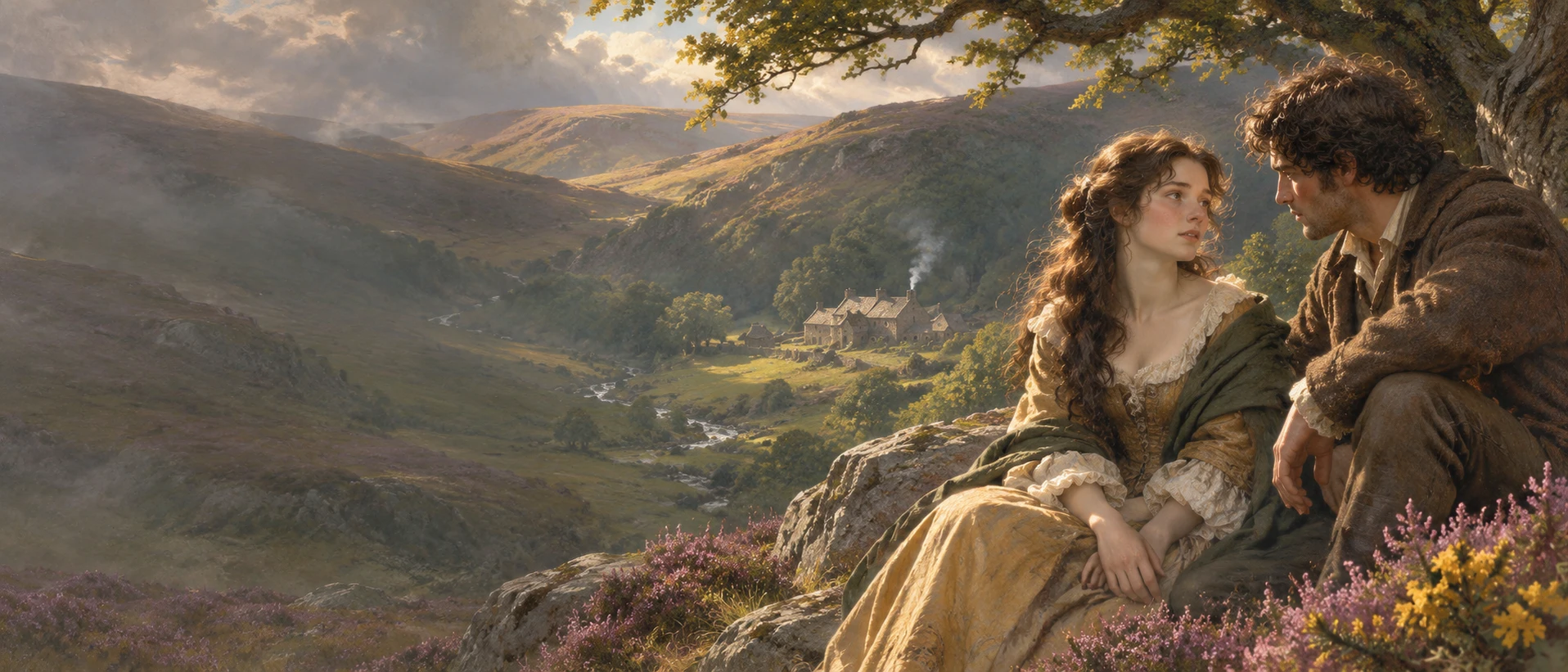
- Week one, chapters 1–19: John’s schooldays at Blundell’s in Tiverton, the outlaw Doones and what they do to his family, and the chapter Blackmore calls simply “A Boy and a Girl”.
- Week two, chapters 20–38: Lorna tells her own story, and a summons arrives that takes John all the way to London, in “A Royal Invitation”.
- Week three, chapters 39–56: the weather turns. Chapter 42, “The Great Winter”, describes a real and famously bitter season, and the snow shapes everything that follows.
- Week four, chapters 57–75: history catches up with Exmoor in the form of the Duke of Monmouth’s rebellion, and the story reaches its end.
How to make the hours go faster
Two things help more than anything else. First, read the dialect aloud, at least in your head. Blackmore took great care over the way his Devon and Somerset characters speak, and words that look baffling on the page usually make sense once you hear them. Second, don’t rush the landscape. Blackmore was a market gardener as well as a novelist, and he writes about weather, crops and seasons with a grower’s eye. Those passages are slower, but they are what make the valley of the Doones feel like a real place.
Blackmore himself insisted, in a short preface dated March 1869, that the book was a romance rather than a historical novel, and he was right to warn readers. Real events, including the Great Winter and Monmouth’s rising, run through it, but its heart is a love story, an outlaw clan and a hero of enormous strength. Read it as an adventure and the length disappears.
How does Lorna Doone compare with other long classics?
At sixteen hours on our cards, Lorna Doone sits among the longer books in our library, in the same company as David Copperfield and The Pickwick Papers. If you are planning a winter of long reads, The longest classic novels in our library ranks them, and How long are Dickens’s novels? compares Blackmore’s great rivals in length. For the tradition Blackmore was writing in, see Did you know Walter Scott is credited with inventing the historical novel?, and for general advice on books of this size, How to read a long Victorian novel.
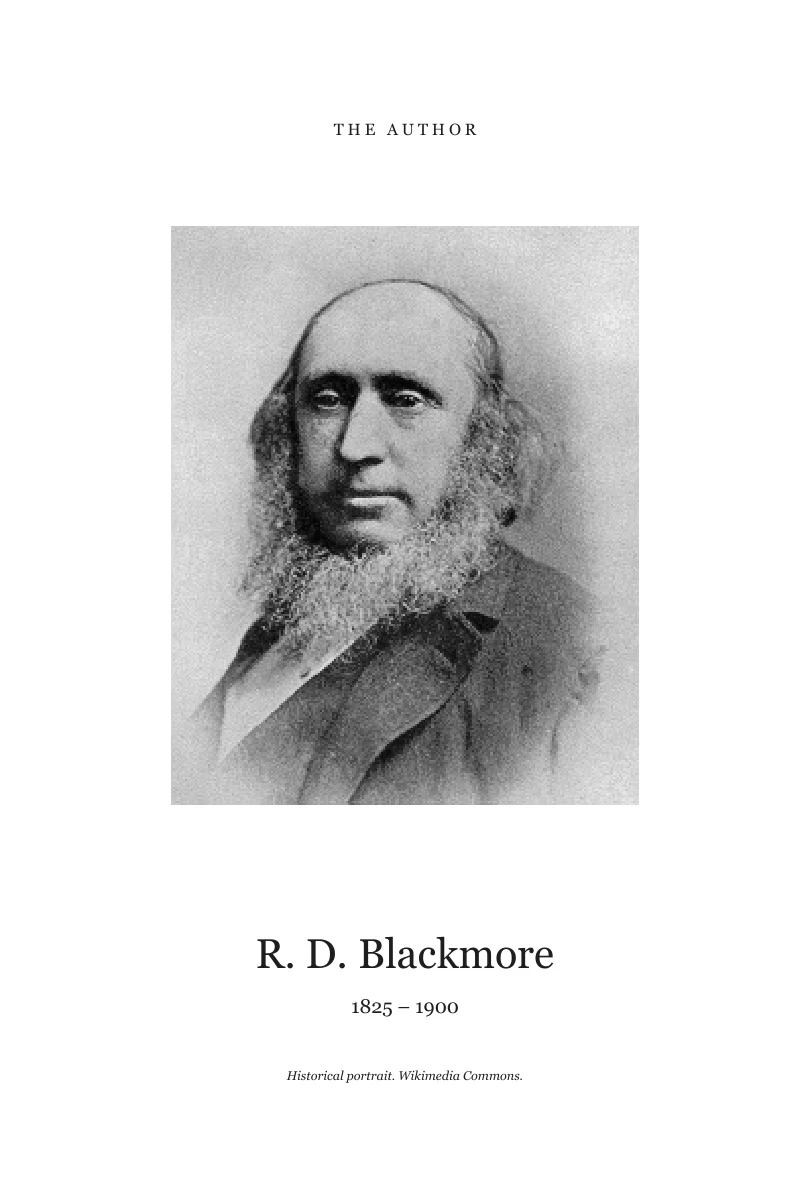
More about the author, his Teddington fruit farm and his other novels is on the R. D. Blackmore page. When the evenings draw in, turn to chapter one of Lorna Doone and let a plain man of Oare tell his simple tale at whatever length he likes.
Questions readers ask
How long does it take to read Lorna Doone?
About sixteen hours for many readers. Our 784-page edition comes to roughly sixteen hours at 50 pages an hour, though reading speeds vary and the dialect slows some readers down.
How many chapters are in Lorna Doone?
Seventy-five. They average about 3,600 words each, so three a day will take you through the book in under a month.
Is the Lorna Doone cookie named after the book?
Possibly. Nabisco introduced the shortbread cookie in 1912, and it is thought to be named after Blackmore’s heroine, but no record explains the choice of name.