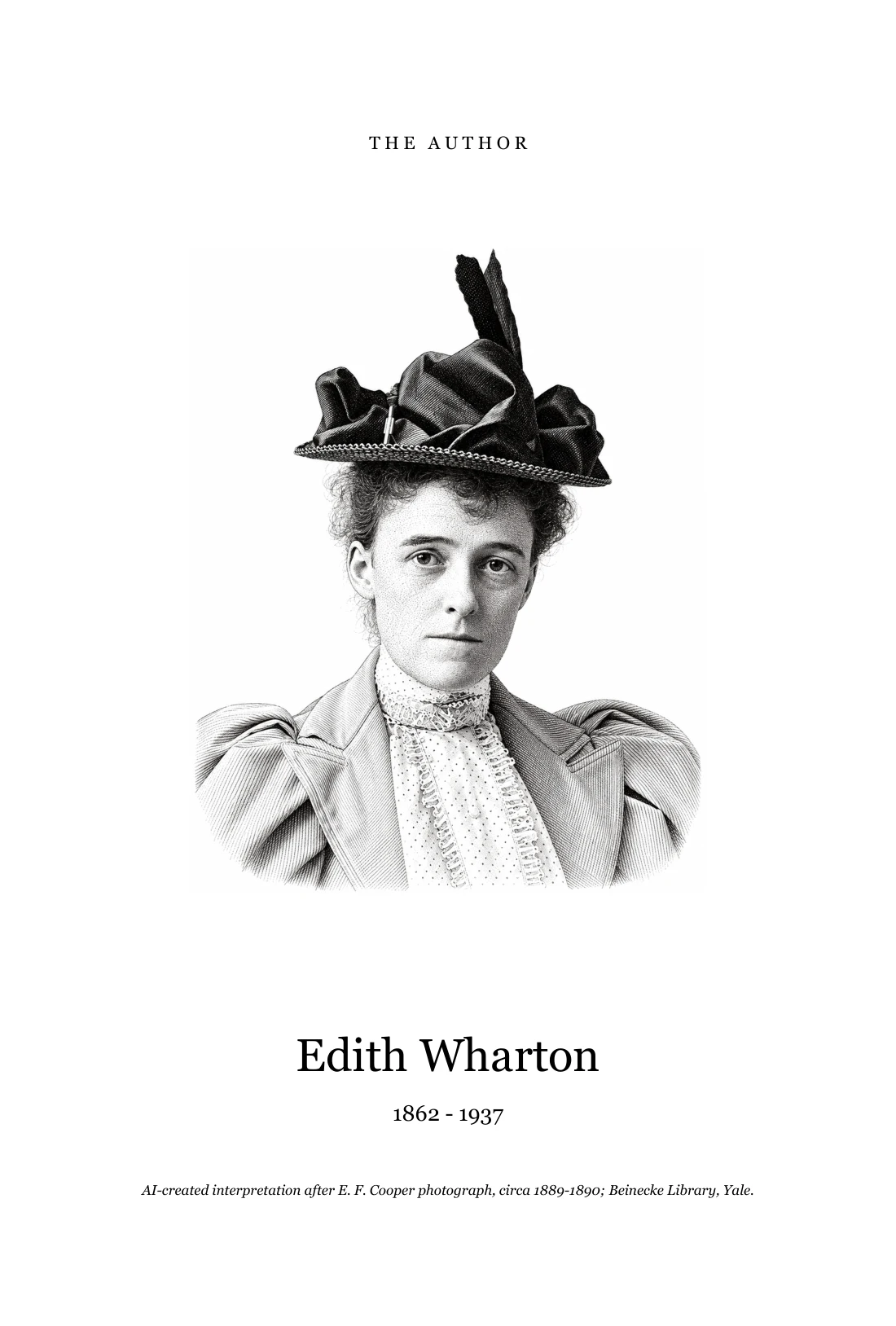
Ethan Frome opens in deep winter, with a stranger piecing together a story he has heard bit by bit. Summer opens on a June afternoon, with a young man’s straw hat blowing into a duck-pond. Edith Wharton meant the contrast. In a letter to her friend Gaillard Lapsley she reported that she and her circle called the new book “the Hot Ethan”.
She wrote it in the middle of a war. From the autumn of 1914 she was in Paris running relief work for refugees, many of them Belgian, and in 1916 France made her a Chevalier of the Legion of Honour for it. Yet in the summer of 1916 the idea for Summer came to her, and by early 1917 it was finished; she told Lapsley she could hardly see how it had got written amid the rush of her wartime life, but it did. Edith Wharton’s Summer is the warm-weather twin of Ethan Frome (1911): another short novel of poor, isolated people in the hill villages of western Massachusetts, with the snow replaced by June sunshine and a frozen marriage replaced by a young woman’s first love affair.
What is Edith Wharton’s Summer about?
Charity Royall is seventeen and bored to the bone in North Dormer, a hill village with one street and a library with infrequent visitors, where she is the custodian. She was born “up the Mountain”, among a poor, isolated community fifteen miles off, and brought down as a small child by lawyer Royall, the town’s leading man, who raised her. The novel opens on the day she first sees Lucius Harney, a young architect from the city who has come to sketch the old houses of the district.
A girl came out of lawyer Royall’s house, at the end of the one street of North Dormer, and stood on the doorstep.
Edith Wharton, Summer (1917)
What follows is a summer romance told with a frankness that startled Wharton’s readers. Harney takes Charity on drives through the countryside and to the Fourth of July celebrations in the nearby town of Nettleton, and she discovers desire, and what it can cost a girl with no money and no family name. Overhead, all the time, is the Mountain.
The Mountain was a good fifteen miles away, but it rose so abruptly from the lower hills that it seemed almost to cast its shadow over North Dormer.
Edith Wharton, Summer (1917)
How is Summer like Ethan Frome?
Wharton set both books in the country she knew from her years at The Mount, her house at Lenox in the Berkshires, where she gathered material for each of them. Each takes an outsider’s glimpse of rural poverty and turns it into tragedy on a small scale, and each is short enough to read in a day. But they are built in opposite ways.
- Ethan Frome is told by an outsider, an engineer stranded in Starkfield for a winter, who pieces the story together years after it happened. Summer stays close to Charity from first page to last.
- Ethan Frome is about a man who wants to escape and cannot act. Summer is about a young woman who acts, and has to live with the result.
- Ethan Frome is a book of silence and cold; Summer is full of heat, colour and longing, which is the point of its nickname.
- Both turn on a household of three: Ethan, his wife and her cousin Mattie; Charity, Royall and Harney, the stranger who takes his meals at their table.
Wharton’s narrator in Ethan Frome describes his first sight of the farmer in a sentence that could stand for that whole book.
He seemed a part of the mute melancholy landscape, an incarnation of its frozen woe, with all that was warm and sentient in him fast bound below the surface.
Edith Wharton, Ethan Frome (1911)
Summer is what happens when everything warm and sentient breaks the surface.
Should you read Summer or Ethan Frome first?
Either way round works, but reading them in order of publication lets the nickname land. Start with the winter book, then read Summer and see the same landscape in another season.
- $10.99
Ethan Frome
1911. A farmer, his ailing wife and her young cousin, snowed in at Starkfield, Massachusetts. Wharton’s most famous short novel, and the cold half of the pair.
- $12.99
Summer
1917. A seventeen-year-old librarian from nowhere, a visiting architect and one long, hot New England summer. The Hot Ethan itself, franker and more hopeful than its twin, and less known than it deserves.


For the rest of Wharton’s short fiction, see Where to start with Edith Wharton’s ghost stories and novellas, and for the novels she is best known for, Did you know Edith Wharton was the first woman to win the Pulitzer Prize for fiction? More of her neglected books are in Edith Wharton’s overlooked books, and Summer also belongs on any list of classic summer reads.
Then pick a warm afternoon. Open Summer, wait on lawyer Royall’s doorstep with Charity, and watch the wind take a young man’s hat into the duck-pond.
Questions readers ask
Why did Edith Wharton call Summer the Hot Ethan?
Because it was a companion piece to Ethan Frome (1911): another short novel of poverty and passion in rural western Massachusetts, but set in summer heat rather than winter, with a story of sexual awakening. Wharton told Gaillard Lapsley that it was known to her and her friends as the Hot Ethan.
What is Summer by Edith Wharton about?
It follows Charity Royall, a young librarian in the hill village of North Dormer, during a summer romance with a visiting architect, Lucius Harney, and the consequences it brings for a girl with no money and an outcast background.
Where is Summer set?
In the fictional village of North Dormer, in the hills of western Massachusetts near the Berkshires, the same country that inspired Ethan Frome.
When was Summer published?
Summer was published in New York by D. Appleton and Company in 1917, six years after Ethan Frome.
 The Age of Innocence250 pages · $15.99
 The House of Mirth314 pages · $17.99
 The Custom of the Country368 pages · $18.99
 The Reef272 pages · $16.99