Five paragraphs of Gulliver’s Travels were too dangerous for its first readers. They describe a city called Lindalino rising up against the flying island of Laputa, which governs it from above, and they were an only lightly disguised account of Ireland’s revolt against an unpopular English copper coinage. The episode was left out of the first edition in 1726, and it seems to have stayed out of print until a collected edition of Swift’s works in 1899.
Gulliver’s Travels is a political satire, then, and a pointed one. Jonathan Swift built it out of the party quarrels, court scandals and colonial grievances of early eighteenth-century Britain and Ireland, then dressed it as a sailor’s travel memoir. Children have loved the adventure for three centuries. The adults of 1726 also knew whom it was laughing at.
What is Gulliver’s Travels satirising?
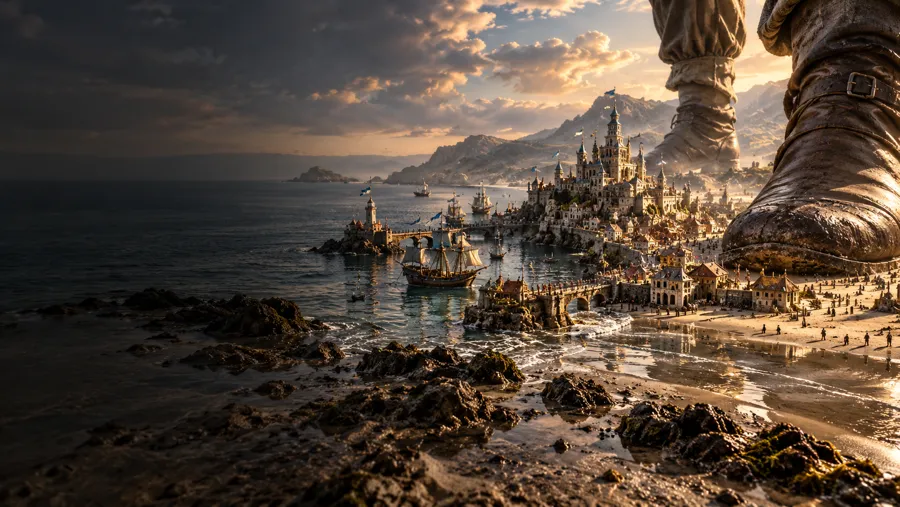
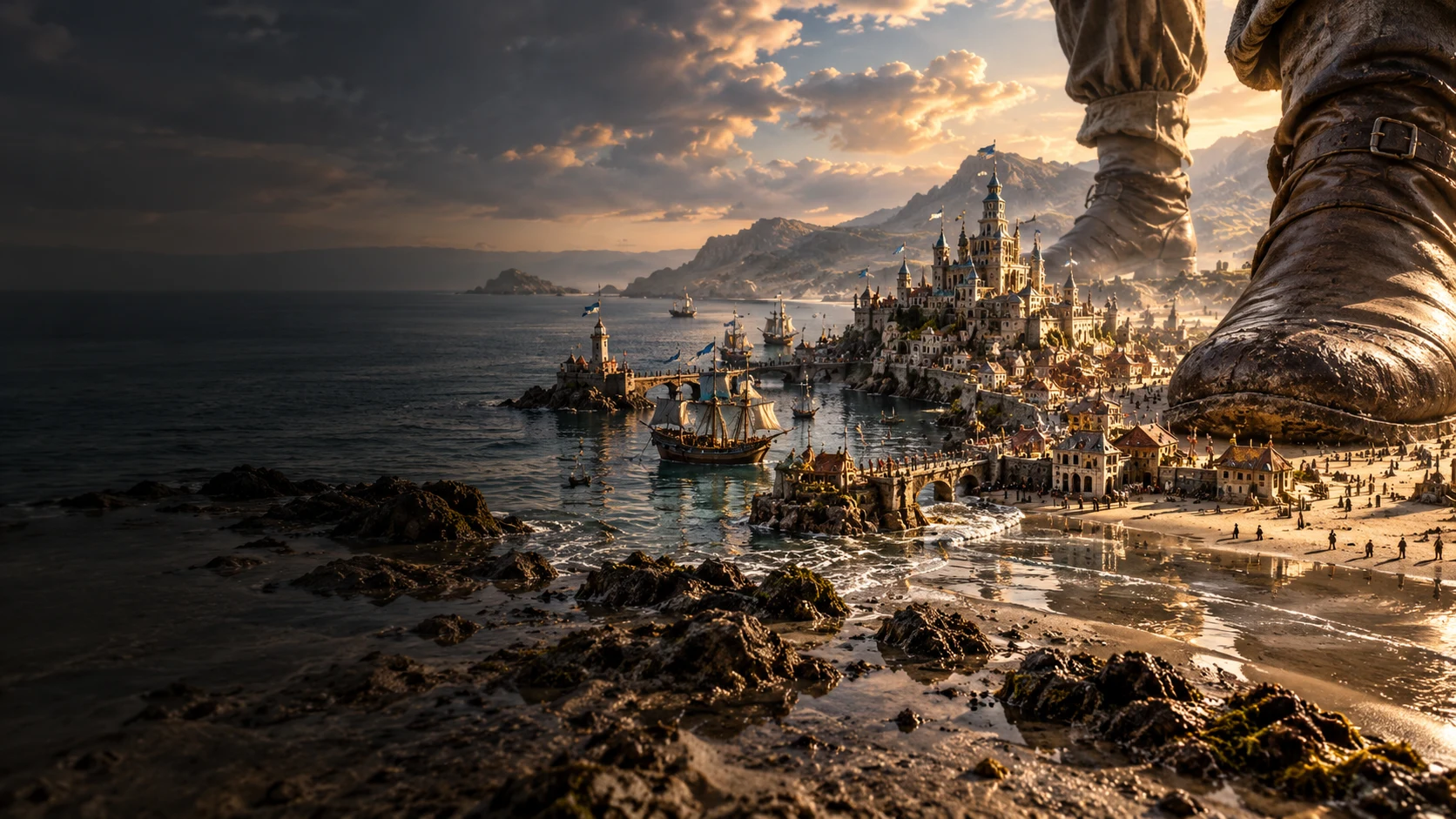
Almost everything, but the politics come first. In Lilliput, the first voyage, Gulliver finds a court where ministers win high office by dancing on a tightrope before the emperor, and where the two great parties are distinguished by the height of their heels. The high heels and low heels are usually read as Swift’s Tories and Whigs, and the nimble treasurer Flimnap as Sir Robert Walpole, the Whig chief minister whom Swift disliked.
Flimnap, the treasurer, is allowed to cut a caper on the straight rope, at least an inch higher than any other lord in the whole empire.
Jonathan Swift, Gulliver’s Travels (1726)
Lilliput is also at war with its neighbour Blefuscu, commonly seen as a stand-in for France, over which end of a boiled egg to break. Swift’s account of that quarrel, with its six rebellions in which “one emperor lost his life, and another his crown”, sounds very like the religious conflicts that had cost Charles I his head and James II his throne. The joke is how absurdly small the cause is, and how large the slaughter.
- Lilliput (Part I): court politics, party labels and the pettiness of power, seen at one-twelfth scale.
- Brobdingnag (Part II): Gulliver boasts of English institutions to a giant king, who concludes that they must be “the most pernicious race of little odious vermin that nature ever suffered to crawl upon the surface of the earth”.
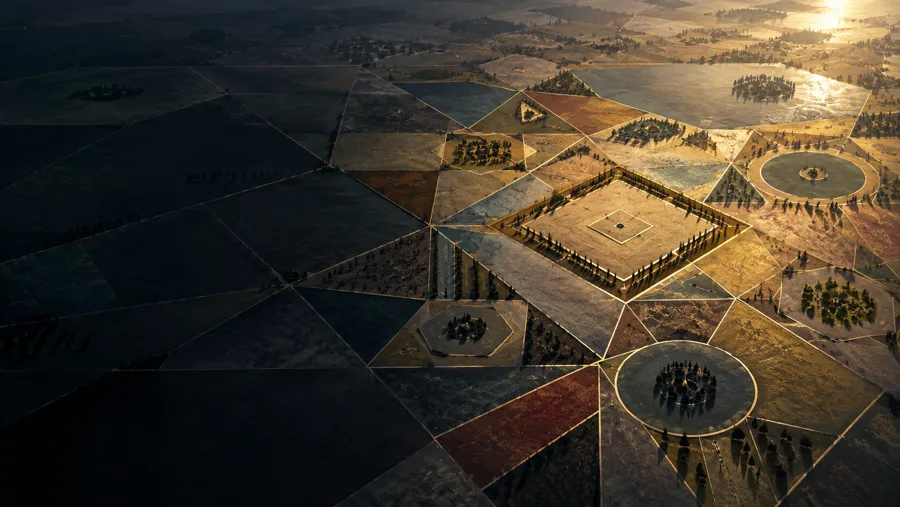
- Laputa and Balnibarbi (Part III): a flying island of absent-minded theorists, and an academy of projectors widely read as a swipe at the Royal Society, plus the suppressed revolt of Lindalino.
- The Houyhnhnms (Part IV): rational horses and brutish human Yahoos, where the satire stops being about parties and turns on humanity itself.
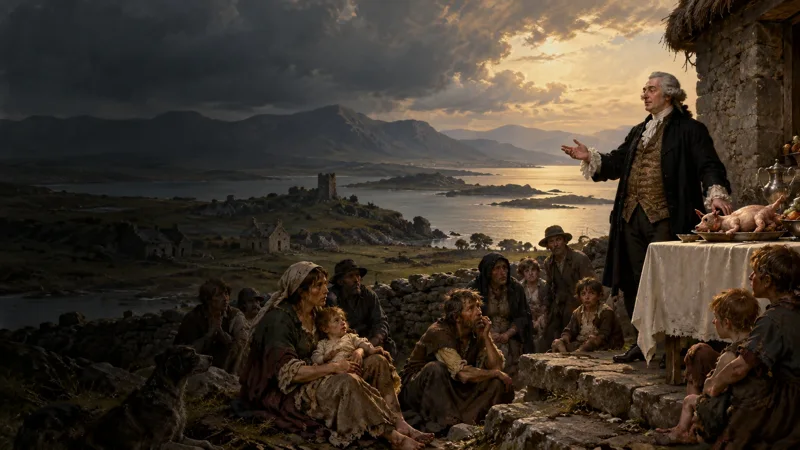
Why was Swift so political?
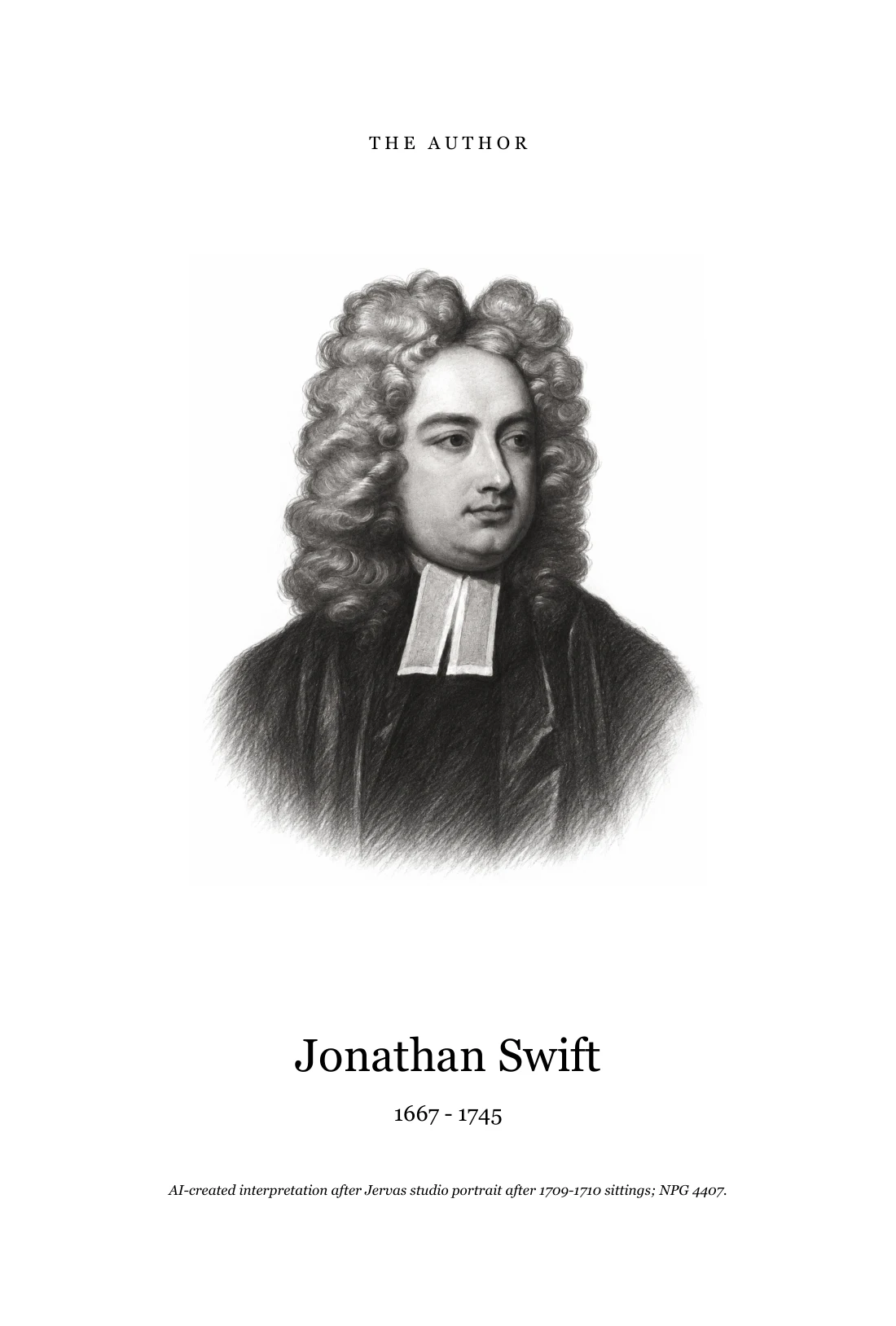
Because he had been at the heart of it. From 1710 Swift was the most effective writer the Tory government had, editing its paper The Examiner and acting as a go-between for its two leaders, Robert Harley and Henry St John, Viscount Bolingbroke. When Queen Anne died in 1714 the Tories fell, the Whigs took power for a generation, and Swift was left in Dublin as Dean of St Patrick’s Cathedral, a post he had been given the year before.
In Ireland he became a hero by attacking English policy. In 1724 his Drapier’s Letters, published under a pseudonym, helped defeat a scheme to flood Ireland with copper coins minted under an English patent, the same affair that lies behind the Lindalino episode. Swift knew that a writer could be prosecuted for this kind of thing, and he took care.
Did the publisher change Gulliver’s Travels?
Yes. Motte, sensing a bestseller but fearing prosecution, softened or cut the most dangerous passages, including the Lilliputian court scenes and the Lindalino rebellion, and even added some praise of Queen Anne. Swift was not pleased. For a 1735 Dublin edition he added a letter from Captain Gulliver to his cousin Sympson complaining about the tampering, and in it, Gulliver says, the changes went so far:
that I do hardly know my own work.
“A Letter from Captain Gulliver to his Cousin Sympson”, Gulliver’s Travels (1735 edition)
Swift once told his friend Alexander Pope, in a letter of 1725, that his chief aim in all his labours was “to vex the world rather than divert it”. He managed both. The book was an immediate success, and readers spent months arguing over who was who.
Gulliver's Travels
1726. Four voyages, from the tiny court of Lilliput to the land of the rational horses. An adventure on the surface and, underneath, some of the sharpest political comedy in English.
A Modest Proposal
1729. Swift’s most notorious pamphlet, a calm, statistical plan to solve Irish poverty by eating the children of the poor. The darkest joke he ever told.



Is Gulliver’s Travels a children’s book?
It became one, usually in shortened versions that keep Lilliput and Brobdingnag and drop the rest. The full text is stranger and much more biting, especially in the last voyage, where Gulliver comes home unable to bear the company of human beings. Read it whole and the satire stops feeling like history; it is about anyone who has watched politicians perform for promotion.
For more books that mocked the powerful, see The sharpest satires in classic literature, Did you know Candide was banned the year it was published? and Did you know Flatland is a satire disguised as a geometry lesson?.
Sail with him from the first voyage: open Gulliver’s Travels, wake up on a beach tied to the ground by countless slender strings, and watch Swift’s politicians climb onto their ropes.
Questions readers ask
Is Gulliver’s Travels a satire?
Yes. Jonathan Swift wrote it as a satire on the politics, science and human nature of his day, especially the party politics of early eighteenth-century Britain, disguised as a sailor’s travel memoir.
Who is Flimnap in Gulliver’s Travels?
Flimnap, the Lilliputian treasurer who excels at rope-dancing, is generally interpreted as a caricature of Sir Robert Walpole, the Whig politician who dominated British government in the 1720s.
What do the Big-Endians and Little-Endians represent?
Their war over which end of an egg to break is usually read as a mockery of religious quarrels, particularly between Catholics and Protestants, and of the bloodshed such small differences caused.