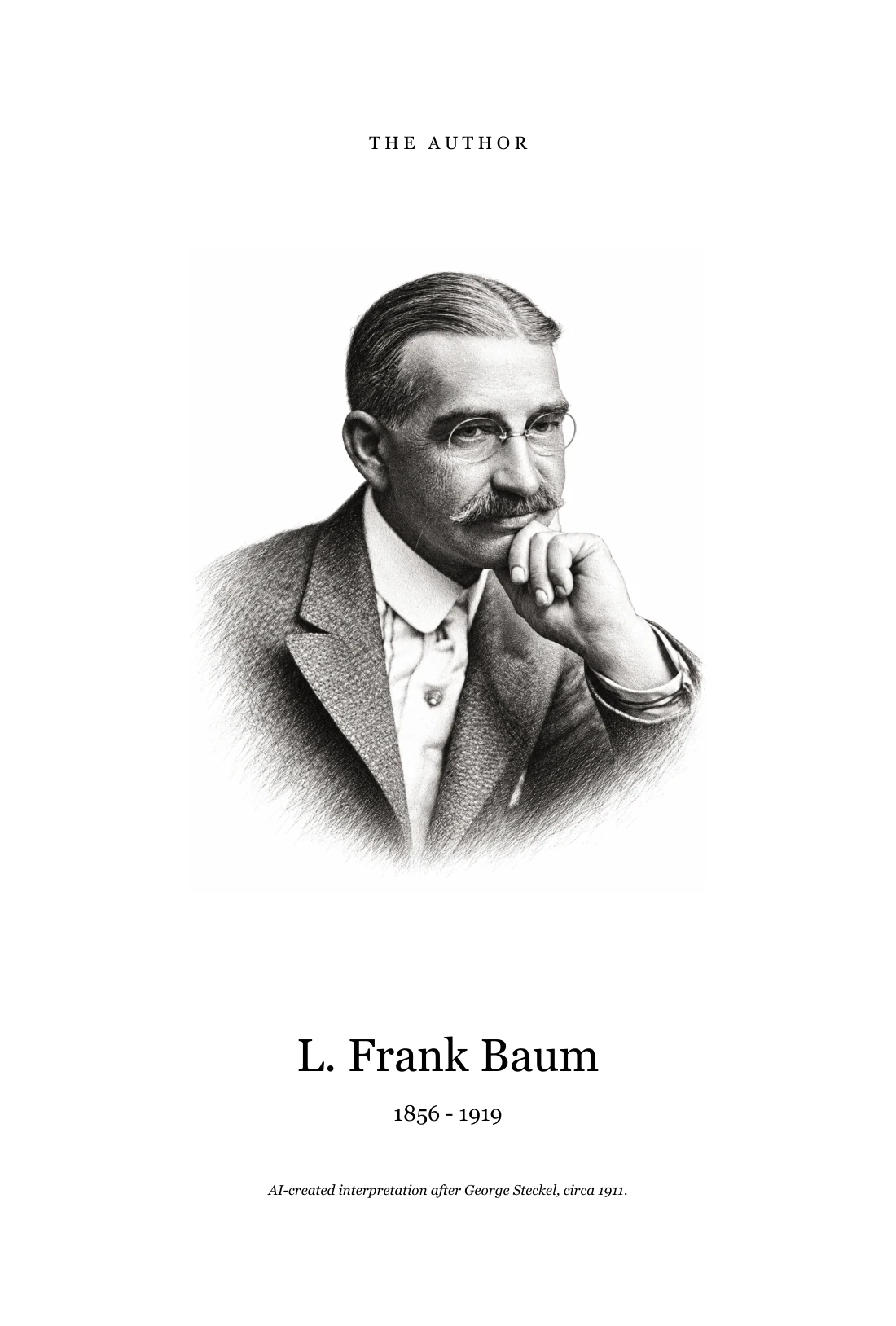
In 1902, with The Wonderful Wizard of Oz still selling strongly, L. Frank Baum published The Life and Adventures of Santa Claus. It is a full fairy-tale biography of Santa, from his first day as a baby to the moment he becomes immortal, and it explains along the way where the reindeer, the chimneys and the stockings came from.
By then Americans already knew what Santa looked like and what he did, thanks to “A Visit from St. Nicholas” and decades of magazine illustrations. What nobody had told them was how he came to be. Baum, who loved inventing histories for magical things, filled the gap.
What happens in The Life and Adventures of Santa Claus?
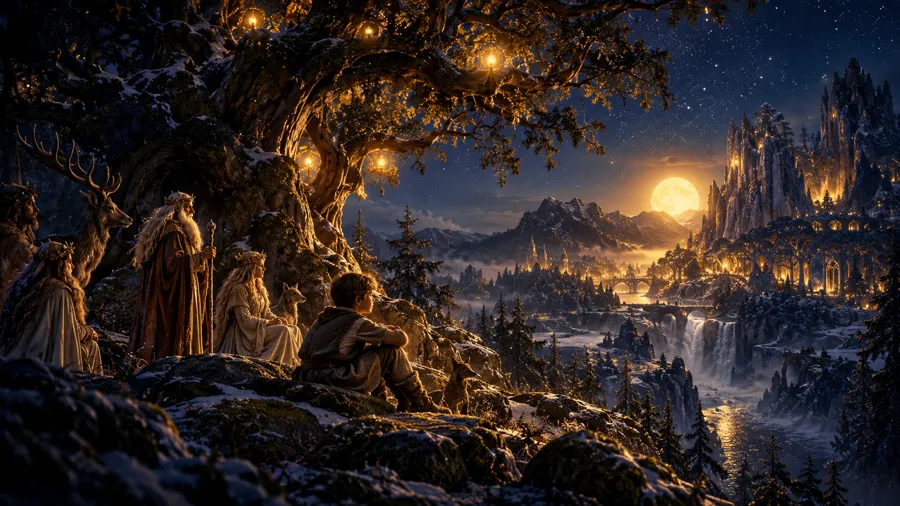
The book is told in three parts, Youth, Manhood and Old Age. It opens in the great Forest of Burzee, a home of fairies, nymphs and other Immortals, where Ak, the Master Woodsman of the World, finds an abandoned human baby. A wood-nymph named Necile begs to raise him, and she calls him Neclaus, meaning Necile’s little one, which soon becomes simply Claus.
Claus grows up among the Immortals and, as a young man, realises how many children in the mortal world are poor, lonely or neglected. He settles in the Laughing Valley and begins carving toys to give away. Everything that follows is Baum’s inventive explanation of the Santa Claus we know:
- Why he travels by night and slips down chimneys rather than knocking at doors.
- How children came to hang up stockings for him to fill.
- Where his reindeer come from, beginning with the first two, Glossie and Flossie.
- How the Immortals came to protect him, and finally to let him live for ever.
There is danger too. The Awgwas, wicked creatures who hate to see children happy, set out to stop Claus’s work, and the Immortals must decide whether to go to war on his behalf. It is gentle by modern standards but has real stakes.

What is it like to read today?
It reads like a cross between a fairy tale and a legend, with a slightly more solemn voice than the Oz books and plenty of Baum’s playful invention. The chapters are short and the whole book is brief, which makes it a natural December read-aloud: a chapter a night through Advent works well.
Baum’s Immortals are worth meeting in their own right: the grumpy Knooks who guard the wild beasts, the Ryls who colour the flowers, and the gentle wood-nymphs who adopt Claus. The Forest of Burzee was a place Baum returned to, too; its fairies weave the magic cloak in Queen Zixi of Ix. Reading the Santa book first gives Baum’s wider world a pleasing sense of history.
It suits children of about six and up, especially those starting to ask how Santa does it all, and adults who enjoy Christmas folklore. Because it is told as a straightforward history, it treats Santa as entirely real, which many families will find is exactly the point.
The Life and Adventures of Santa Claus
1902. A baby found in an enchanted forest grows up to become Santa Claus. Baum’s full fairy-tale history of Christmas, reindeer and all.
The Road to Oz
1909. The fifth Oz book, in which Dorothy’s road trip ends at Ozma’s birthday party, where Santa Claus is among the guests.


Did Baum write any more about Santa Claus?
He did. In 1904 he published a short story, “A Kidnapped Santa Claus”, in which the Daemons of the Caves try to stop Christmas by carrying Santa off. And the 1902 book has had a long life on screen, most notably as a stop-motion television special in 1985.
Baum wrote a great deal beyond Oz, and his other fantasies share the same warmth. Queen Zixi of Ix and American Fairy Tales are good next steps; we look at the whole range in Did you know L. Frank Baum wrote far more than Oz?. For more books to share this season, see classic Christmas books for children and the best Christmas classics, and for a surprise from Baum’s best-known book, Did you know Dorothy’s slippers were silver in the book?
But this is the one for December. Settle in by the fire, open The Life and Adventures of Santa Claus, and meet the baby in the Forest of Burzee before he ever saw a reindeer.

More Christmas fantasy—and a different kind of Nicholas
Baum’s invented Santa history belongs to fantasy. If that imaginative approach appeals to you, there are other seasonal worlds to explore. If you want the history of legends and customs instead, choose a historical study and keep its purpose separate from a fairy tale.
Christmas-Tree Land
Christmas-Tree Land takes Rollo and his sister into fir woods, a mysterious cottage and unfamiliar stories. It is another enchanted seasonal world, without trying to repeat Baum’s explanation of Santa’s origins.
Karl Krinken, His Christmas Stocking
Karl Krinken, His Christmas Stocking lets the objects in a stocking carry stories. It brings the imaginative scale down from an enchanted upbringing to the gifts a child can hold.
St. Nicholas: His Legend and His Rôle in the Christmas Celebration and Other Popular Customs
St. Nicholas: His Legend and His Rôle in the Christmas Celebration and Other Popular Customs studies the saint’s legends and associated practices. Read it as historical inquiry from its period, not as another invented Santa adventure.


Explore more Christmas fantasy books, or follow the historical route through books about Christmas traditions.
Two more discoveries from Baum’s world
Questions readers ask
Who wrote The Life and Adventures of Santa Claus?
L. Frank Baum, the author of The Wonderful Wizard of Oz. It was published in 1902.
What is The Life and Adventures of Santa Claus about?
It is a fairy-tale biography of Santa Claus, who is found as a baby in an enchanted forest, raised by a wood-nymph, and grows up to make toys for the world’s children. It explains his reindeer, chimneys and stockings, and how he became immortal.
Is The Life and Adventures of Santa Claus suitable for children?
Yes. It was written for children and works well read aloud to ages six and up, a chapter at a time, though it has a few mildly scary scenes with the wicked Awgwas.