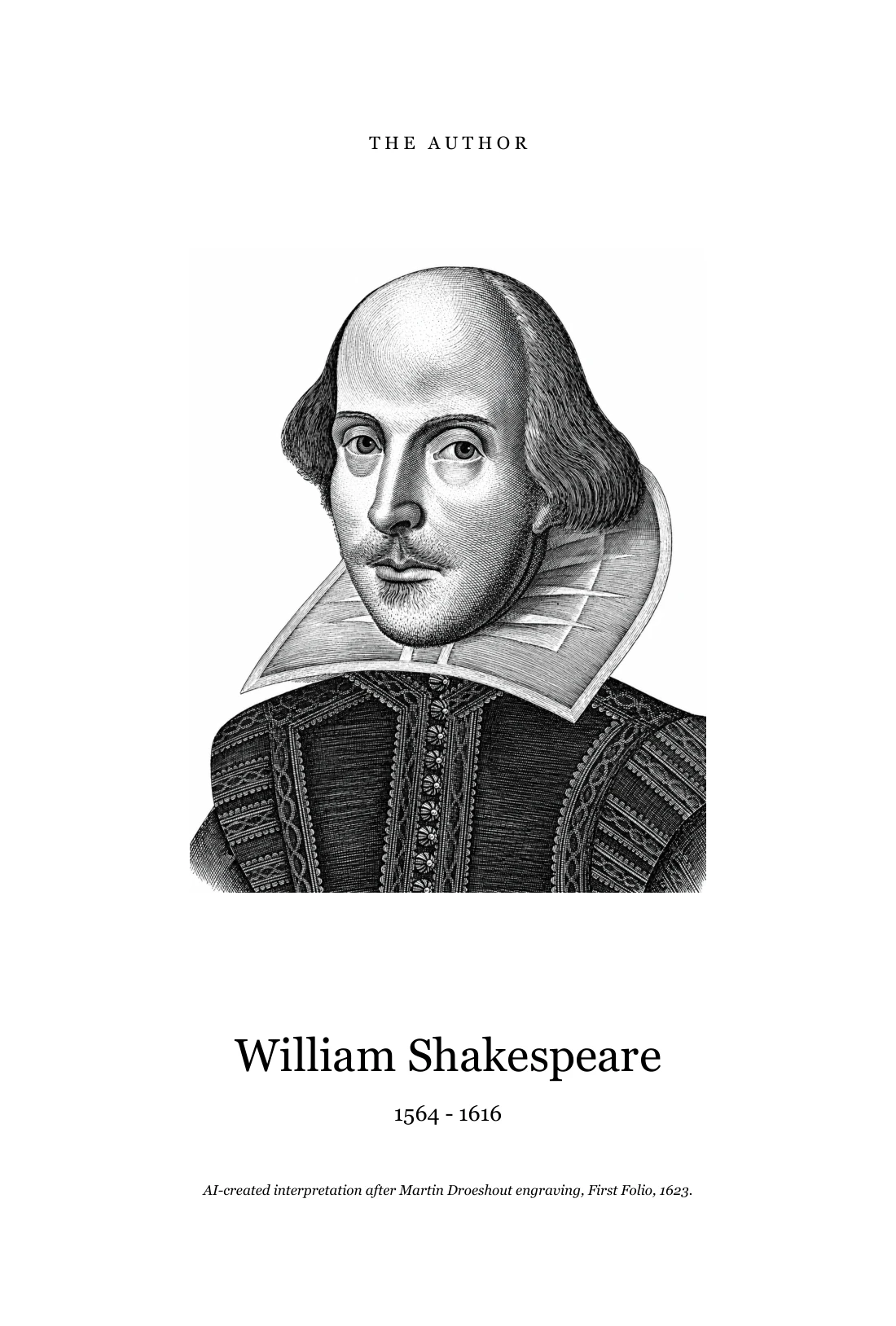
The title comes from Act 5, Scene 5 of Macbeth. Macbeth is shut up in Dunsinane, waiting for an army he cannot beat, when a cry goes up inside the castle and his servant Seyton tells him the queen is dead. His answer is one of the most desolate speeches in Shakespeare: life is a brief candle, a walking shadow, a poor player who struts and frets his hour upon the stage, and then nothing.
Life’s but a walking shadow; a poor player, / That struts and frets his hour upon the stage, / And then is heard no more: it is a tale / Told by an idiot, full of sound and fury, / Signifying nothing.
William Shakespeare, Macbeth, Act 5, Scene 5
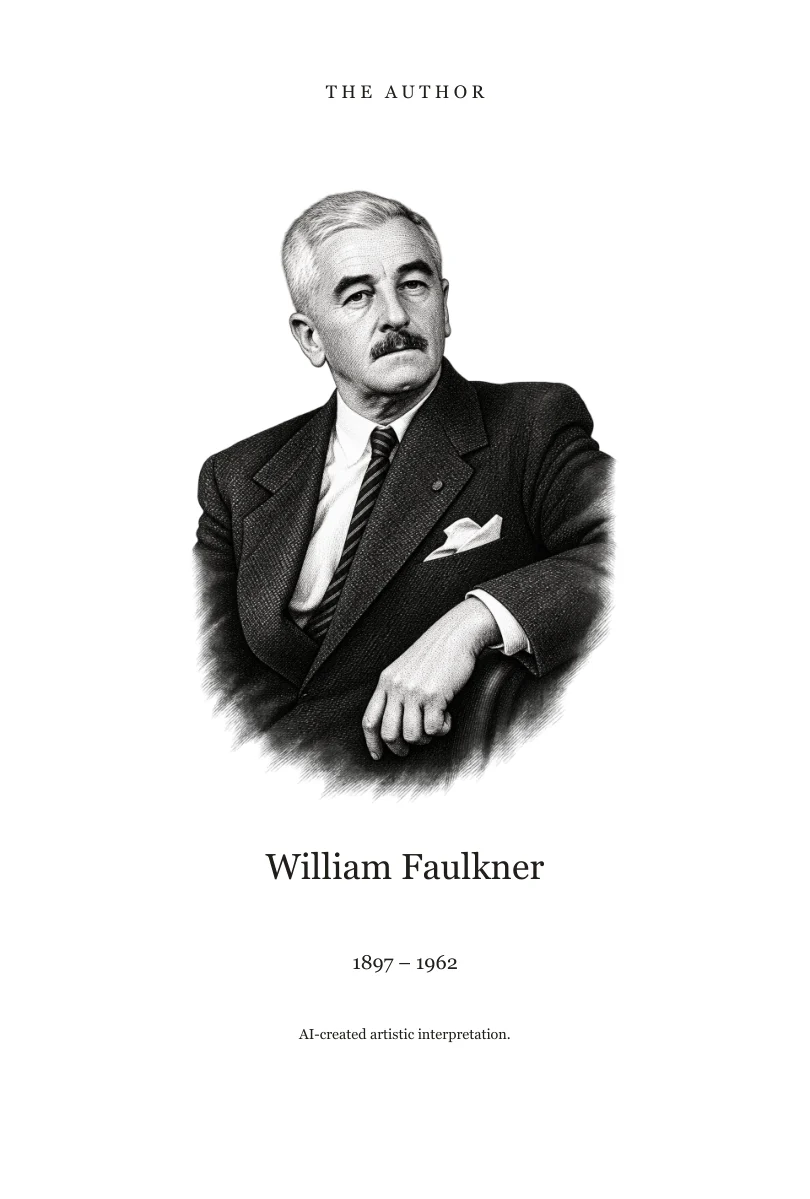
William Faulkner took the phrase for the novel he published on 7 October 1929, his fourth. It had been called Twilight while he wrote it. The new title was more than a borrowed flourish. It describes, almost literally, how the book begins.
Why is it called The Sound and the Fury?
Because the first section is, quite precisely, a tale told by an idiot, in the old sense of the word. Its narrator is Benjy Compson, a man with a severe intellectual disability, who turns thirty-three on the day his section takes place, Holy Saturday, 7 April 1928. Benjy cannot speak, and cannot tell past from present. A smell, a word or the glint of a fire sends him back thirty years without warning, and Faulkner gives us his mind exactly as it is: vivid, sensory, sorrowful and unsorted.
The rest of the speech fits too. The Sound and the Fury is the story of the Compsons, an old Mississippi family in steep decline, told in four sections by three brothers and an outside narrator. Their yesterdays light the way to dusty death: drink, debt, a sold pasture, a lost sister, a suicide foreshadowed long before it comes. Critics have argued for a century over whether the book signifies nothing, as Macbeth would say, or whether its last section, centred on the family’s Black servant Dilsey on Easter Sunday, finds something that endures.

How do you read the Benjy section?
Faulkner knew it was demanding. He wanted the shifts in time printed in different coloured inks, and wrote to his editor Ben Wasson in 1929 that he wished publishing were advanced enough to use coloured ink for such things. It was not. Instead he used italics to signal many of the jumps, and when Wasson tried to replace them with line breaks, Faulkner insisted on putting them back.
The colour edition finally arrived in 2012, when the Folio Society published a limited edition of 1,480 numbered copies with Benjy’s section printed in fourteen colours, one for each time period, worked out by the Faulkner scholars Stephen M. Ross and Noel Polk. Most readers, though, manage with ordinary black type and a little patience. Read the first section once for its feeling, without trying to sort it, and you will find later sections quietly explaining what you saw.
Was The Sound and the Fury a success?
Not at first. The novel puzzled many reviewers and sold modestly. Faulkner’s fortunes turned with Sanctuary in 1931, a more sensational book, which sent readers back to its predecessor. By the time he won the Nobel Prize in Literature for 1949, The Sound and the Fury was widely regarded as his masterpiece.
It has been filmed twice, loosely by Martin Ritt in 1959, with Yul Brynner as Jason and Joanne Woodward as Quentin, Caddy’s daughter, and by James Franco in 2014, who also played Benjy. Neither has displaced the book.
Be prepared for the language of its time and place. The Compsons and their neighbours use racist slurs freely, and the Black family who hold the household together are seen largely through white eyes. Faulkner’s portrait of Dilsey is among his most admired, but the world around her is 1920s Mississippi, unsoftened.
The Sound and the Fury
1929. The fall of the Compson family, told by three brothers and a final, steadier voice. Difficult at first and devastating by the end: the book to read if you read only one Faulkner.
Macbeth
Shakespeare’s tightest tragedy. Ambition, murder and the speech that gave Faulkner his title, all in a play you can read in an evening.
Mrs. Dalloway
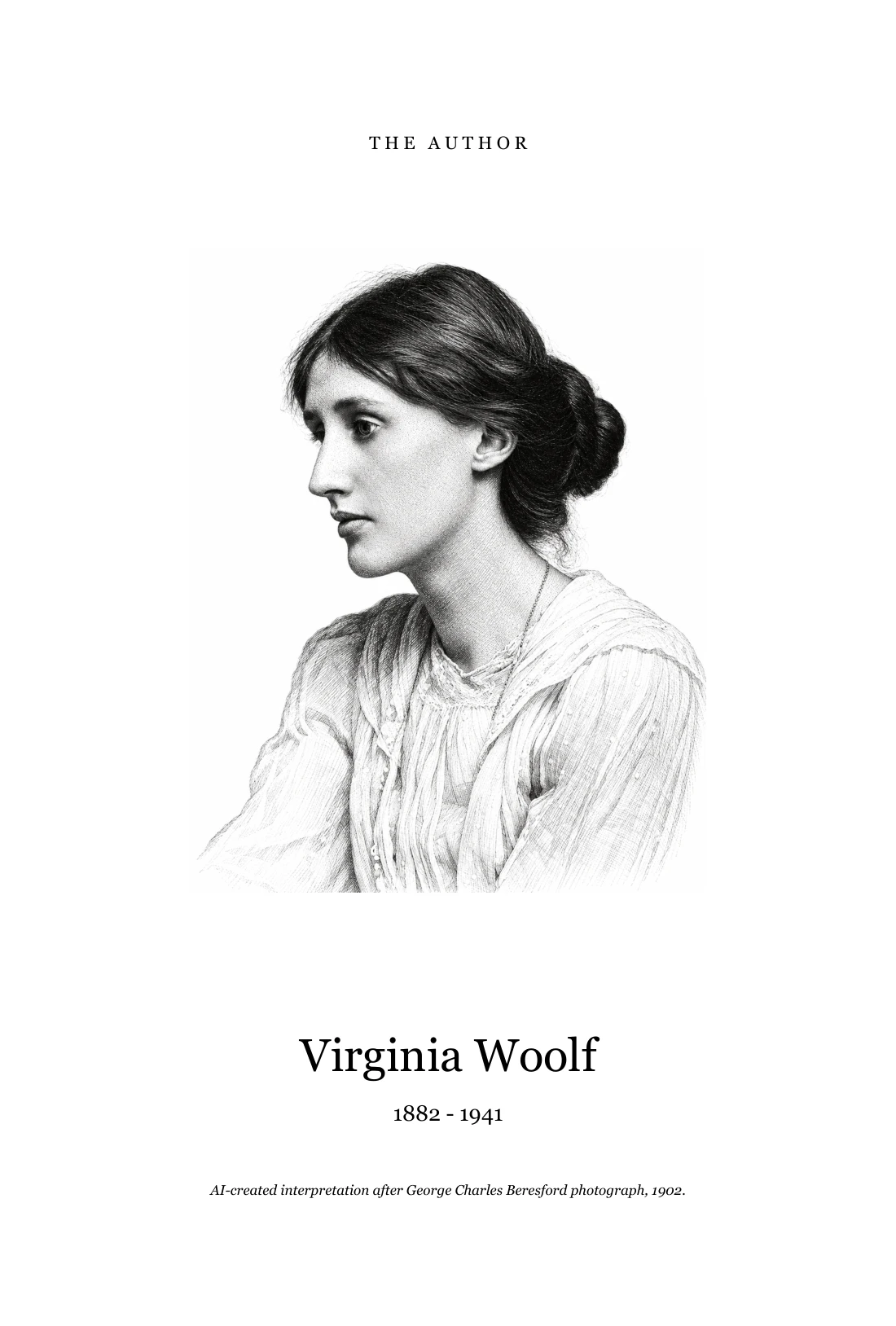
Virginia Woolf’s 1925 day in London, another book that lives inside its characters’ minds. A gentler introduction to the same modernist techniques.



Where to go next
Macbeth has lent phrases to a whole shelf of books and films; see Films you didn’t know were Shakespeare, and if the play is new to you, Which Shakespeare play should you read first? For the movement Faulkner belongs to, read Modernism explained in four books and Essential American classics.
Start with the speech, then the novel. Read Act 5, Scene 5 of Macbeth, then open The Sound and the Fury at Benjy’s fence, and listen for the sound and the fury.
Questions readers ask
Where does the title The Sound and the Fury come from?
From Macbeth’s soliloquy in Act 5, Scene 5 of Shakespeare’s Macbeth, which calls life “a tale / Told by an idiot, full of sound and fury, / Signifying nothing.”
Who is the idiot in The Sound and the Fury?
The phrase points to Benjy Compson, the intellectually disabled narrator of the first section, whose memories move freely between past and present. Faulkner’s novel uses the word in Shakespeare’s older sense.
Why is The Sound and the Fury so hard to read?
The first two sections follow their narrators’ thoughts directly, jumping between years without warning. Faulkner wanted coloured inks to mark the shifts; italics do some of the work, and the later sections clarify much of what happens.