Two hundred and fifty-eight pages at one end, eight hundred at the other. That is the spread of Charles Dickens’s novels in our library, from Hard Times to David Copperfield, and it means the answer to “how long are Dickens novels?” is: anything from about five hours to about sixteen.
Those hours are our book cards’ rule of thumb, fifty pages an hour, applied to each edition. Treat them as rough guides, because reading speeds vary widely, and Dickens’s long novels, with their crowded casts and running jokes, tend to take longer than their page counts suggest. For a second measure, we counted the words in each novel’s Project Gutenberg text.
Dickens’s novels by length
Here are the nine Dickens novels below, shortest first by our page counts, with an approximate word count for each.
- $15.99
Hard Times
1854. About 103,000 words. Coketown, Mr Gradgrind and his facts. Written in weekly parts for Dickens’s own magazine, and his shortest novel by far.
- $18.99
A Tale of Two Cities
1859. About 136,000 words. London, Paris and the Revolution, in thirty-one weekly instalments. Tight, fast and built on a pair of rivals who look strikingly alike.
- $20.99
Oliver Twist
1837–39. About 158,000 words. The workhouse boy who asks for more, first published in monthly parts in a magazine Dickens edited.
- $23.99
Great Expectations
1860–61. About 184,000 words. Pip, the convict and Miss Havisham, written week by week for All the Year Round. Long enough to be rich, short enough to race through.
- $25.99
The Old Curiosity Shop
1840–41. About 216,000 words. Little Nell and her grandfather on the road, serialised weekly in Master Humphrey’s Clock.
- $27.99
Barnaby Rudge
1841. About 253,000 words. Dickens’s first historical novel, built around the Gordon Riots of 1780, and the second novel he ran in Master Humphrey’s Clock.
- $29.99
Bleak House
1852–53. About 353,000 words. Fog, the Court of Chancery and Jarndyce and Jarndyce, in twenty monthly parts. Almost exactly as long as David Copperfield by our word count.
- $29.99
The Pickwick Papers
1836–37. About 300,000 words. Mr Pickwick, Sam Weller and a ramble round England in monthly numbers. Dickens’s first novel.
- $29.99
David Copperfield
1849–50. About 354,000 words. Dickens’s most autobiographical novel, and the one he called his favourite child. The longest of his novels on our shelves.


You will notice that the order by pages and the order by words do not quite match. Bleak House has fewer pages in our edition than The Pickwick Papers but more words. Page counts depend on type and layout, so take both figures as approximate; either way, David Copperfield and Bleak House are the giants.
Which is the shortest Dickens novel?
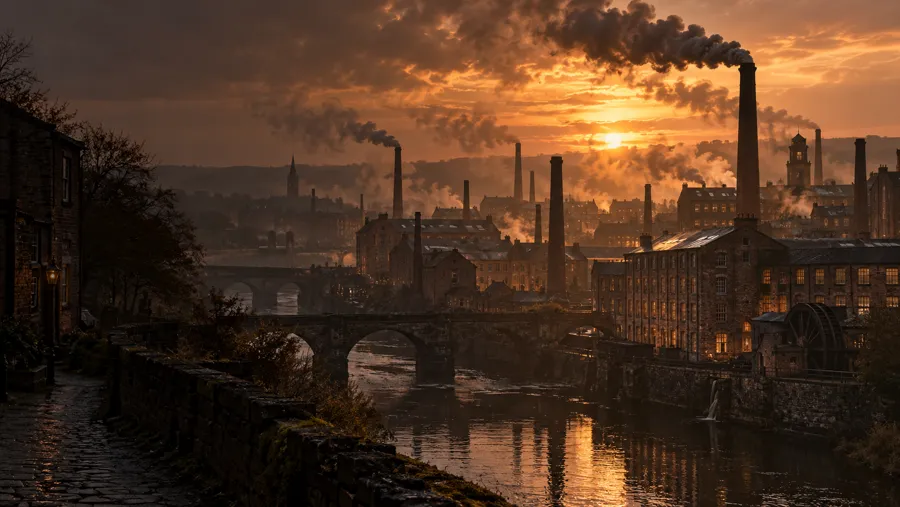
Hard Times, by a wide margin. By our count it is less than a third the length of Bleak House, the novel Dickens finished just before it. It ran in twenty weekly parts in Household Words, the magazine he edited, between April and August 1854, partly to lift the magazine’s flagging sales. The weekly format forced him to be brief, and the book is unusually concentrated as a result: one industrial town, a small cast and an argument about education and work that never lets go.
Which is the longest Dickens novel?
Of the novels here, David Copperfield and Bleak House are effectively tied at around 350,000 words each by our count, with The Pickwick Papers next. All three were sold in the format that produced Dickens’s longest books: monthly numbers, slim paper-covered parts issued over a year and a half or more. Bleak House came out in twenty parts between March 1852 and September 1853. A monthly serial needed plenty in each number, and Dickens filled it with subplots, minor characters and comic set pieces.
Several of his other long monthly novels, including Little Dorrit and Our Mutual Friend, are not on our shelves at the moment, so they are not in the list above.
Why are some Dickens novels so much shorter?
Mostly because of the way they were published. The pattern is clear once you line them up:
- Monthly numbers, the longest: The Pickwick Papers, David Copperfield, Bleak House.
- Monthly instalments in a magazine, middling: Oliver Twist, which ran in Bentley’s Miscellany from February 1837 to April 1839.
- Weekly instalments in his own magazines, the shortest: Hard Times in Household Words, and A Tale of Two Cities and Great Expectations in All the Year Round.
- The exception: The Old Curiosity Shop and Barnaby Rudge both ran weekly in Master Humphrey’s Clock in 1840–41, and both are long, because each ran for many months.
Weekly parts were short, often a chapter or two, and readers expected each one to move the story along. That pressure is why A Tale of Two Cities and Great Expectations feel so taut compared with the generous sprawl of the monthly books.
How to plan a Dickens novel
Follow the original rhythm. A weekly-serial novel reads well at two or three chapters a day; a monthly-number novel at a number a week, which usually means three or four chapters. At that pace even David Copperfield lasts about five months, the way its first readers would have taken it over nineteen.
If you are new to Dickens, begin with one of the shorter books. Where to start with Charles Dickens suggests an order, and Did you know many great Victorian novels first came out in instalments? explains the serial system in detail. For single books, see How long is David Copperfield?, How long is Bleak House?, How long is Great Expectations? and How long is A Tale of Two Cities?. The Charles Dickens page lists everything we stock, including the unfinished Mystery of Edwin Drood.
And if five hours is all you have this week, spend them in Coketown. Hard Times is Dickens at full strength in the smallest space he ever gave himself.
Questions readers ask
What is the shortest Dickens novel?
Hard Times (1854). Our edition runs to 258 pages, about five hours of reading, and by our count it has around 103,000 words, less than a third of Bleak House.
What is the longest Dickens novel?
Among those we stock, David Copperfield and Bleak House are the longest, each around 350,000 words by our count. Our edition of David Copperfield runs to 800 pages, about sixteen hours.
How long does it take to read a Dickens novel?
Anything from about five hours for Hard Times to about sixteen for David Copperfield or The Pickwick Papers, based on 50 pages an hour. Many readers take longer, and speeds vary a great deal.
 A Christmas Carol86 pages · $10.99
 The Chimes86 pages · $10.99
 The Cricket on the Hearth88 pages · $10.99
 The Mystery of Edwin Drood276 pages · $16.99