
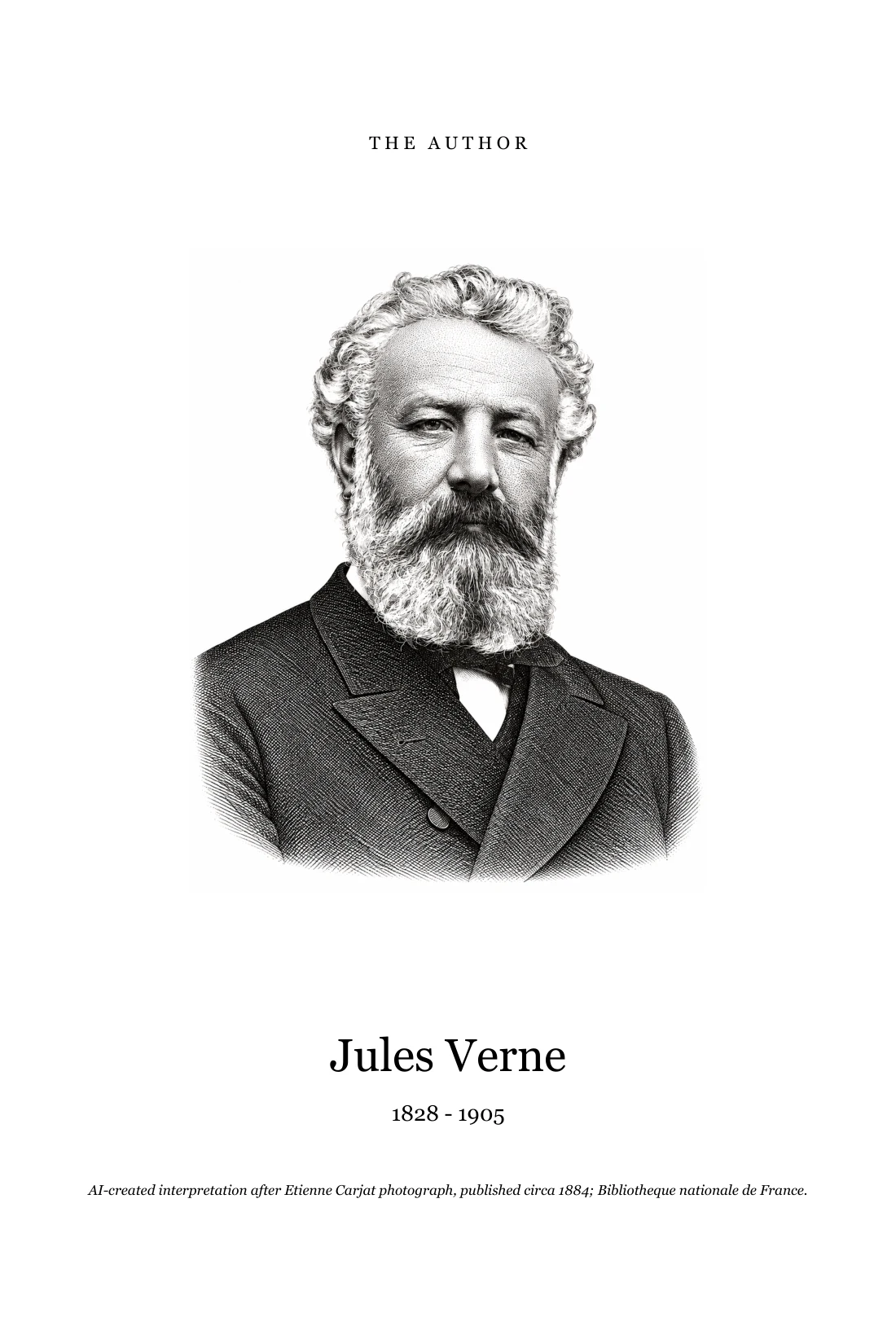
On 14 November 1889, Nellie Bly boarded a steamer at Hoboken, across the river from New York, with a single small bag and an assignment from her newspaper, the New York World: to go around the world in less than eighty days, and so beat the record of Jules Verne’s fictional hero Phileas Fogg. She arrived back on 25 January 1890, after 72 days, 6 hours and 11 minutes.
Fogg’s journey, published in 1872 as a newspaper serial and in 1873 as a book, had made going round the world in eighty days a byword for speed and nerve. Bly turned the novel into a challenge, and nearly two decades after it was written, she beat Fogg by about a week.
Nellie Bly around the world: how the race worked
Nellie Bly was the pen name of Elizabeth Cochrane, then in her mid-twenties and already famous for an undercover investigation of a New York asylum, in which she had herself committed in order to report on conditions inside. A stunt on the scale of a round-the-world race suited her and her editor, Joseph Pulitzer’s World, perfectly.
She travelled east, by steamship across the Atlantic, by train across Europe, and through the Suez Canal, Ceylon, Singapore, Hong Kong and Japan, then across the Pacific to San Francisco and by special train across the United States. The World printed regular updates and ran a contest inviting readers to guess her exact time.
She was not the only one racing. On the same day she left, the magazine Cosmopolitan sent its own writer, Elizabeth Bisland, around the world in the opposite direction. Bisland finished several days after Bly, but her trip was a remarkable feat in its own right.

How does the novel compare?
Verne’s Phileas Fogg is a very different traveller. He is a precise, silent English gentleman who bets his fellow members of the Reform Club £20,000 that he can circle the globe in eighty days, and sets out that very evening with his new French servant, Passepartout. A detective, Fix, follows them all the way, convinced that Fogg is a bank robber on the run.
The route is similar to Bly’s, through Suez, India, Hong Kong, Japan and America, but Fogg meets far more trouble: a missing railway line in India, a rescue from a funeral pyre, an attack on a train in the American West. It is a novel of timetables and near-misses, and Verne makes the ticking clock thrilling.
Around the World in Eighty Days
1873. Phileas Fogg bets his fortune that he can circle the globe in eighty days, with Passepartout at his side and a detective on his heels. The book Nellie Bly raced.
Journey to the Centre of the Earth
1864. A professor, his nephew and their guide descend through an Icelandic volcano. Verne’s other great journey, straight down.
Five Weeks in a Balloon
1863. Verne’s first Extraordinary Voyage: a crossing of Africa by hydrogen balloon. If you want the balloon, here it is.


Is Around the World in Eighty Days still worth reading?
Very much so. It is short, quick and funny, and Passepartout’s scrapes give the book a comic energy that Fogg’s icy calm sets off perfectly. Its chapters are brief and full of cliffhangers, making it a good family read-aloud from about nine and an easy solo read for teenagers and adults.
It is also very much a book of its time. Verne writes about the peoples Fogg passes through with the stereotypes of a nineteenth-century European, and some passages, especially in India and the American West, read badly now. They are worth noticing and talking about, but they do not overwhelm the story.
One more thing: the ending turns on a detail that is easy to spoil, so if you have not read it, keep away from summaries until you have. It is one of the most satisfying final twists in adventure fiction.

Where to go next
If you enjoy the voyage, Verne wrote dozens more; we pick the best in Jules Verne’s Extraordinary Voyages: where to start. For another Verne surprise hidden in a famous title, see Did you know Twenty Thousand Leagues Under the Sea is a distance, not a depth? And if Bly’s trip has given you the travel bug, there is more in Classic travel writing.
Nellie Bly proved it could be done in seventy-two days. Phileas Fogg still does it with more style. Join him at the Reform Club on a quiet October evening, and open Around the World in Eighty Days.
Questions readers ask
How long did it take Nellie Bly to go around the world?
Nellie Bly went around the world in 72 days, 6 hours and 11 minutes, leaving on 14 November 1889 and returning on 25 January 1890. She beat Phileas Fogg’s fictional eighty days by about a week.
Did Nellie Bly meet Jules Verne?
Yes. During her journey she made a detour to Amiens in France, where Jules Verne and his wife welcomed her to their home.
Is Around the World in Eighty Days based on a true story?
No. Phileas Fogg is fictional, though Verne was inspired by the new railways, steamships and canals that made such a journey possible in the 1870s. Nellie Bly’s real race came later, in 1889.
 The Mysterious Island556 pages · $24.99
 The Master of the World128 pages · $11.99
 Robur the Conqueror158 pages · $12.99
 The Survivors of the Chancellor: Diary of J.R. Kazallon, Passenger170 pages · $13.99