
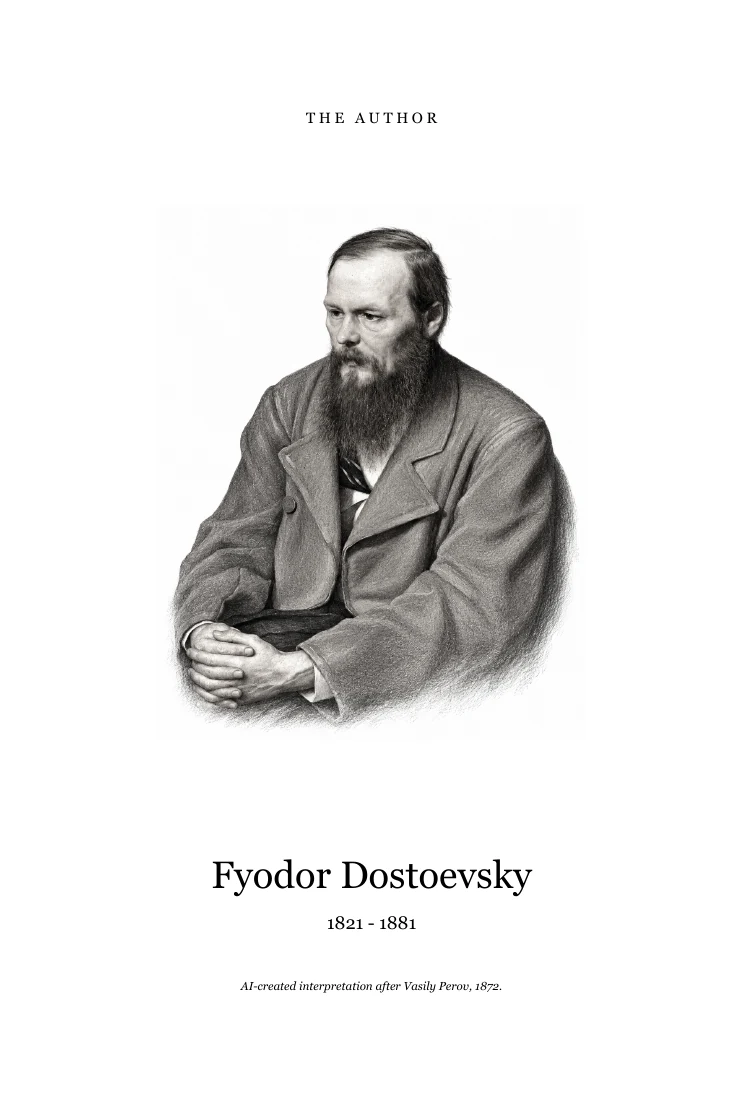
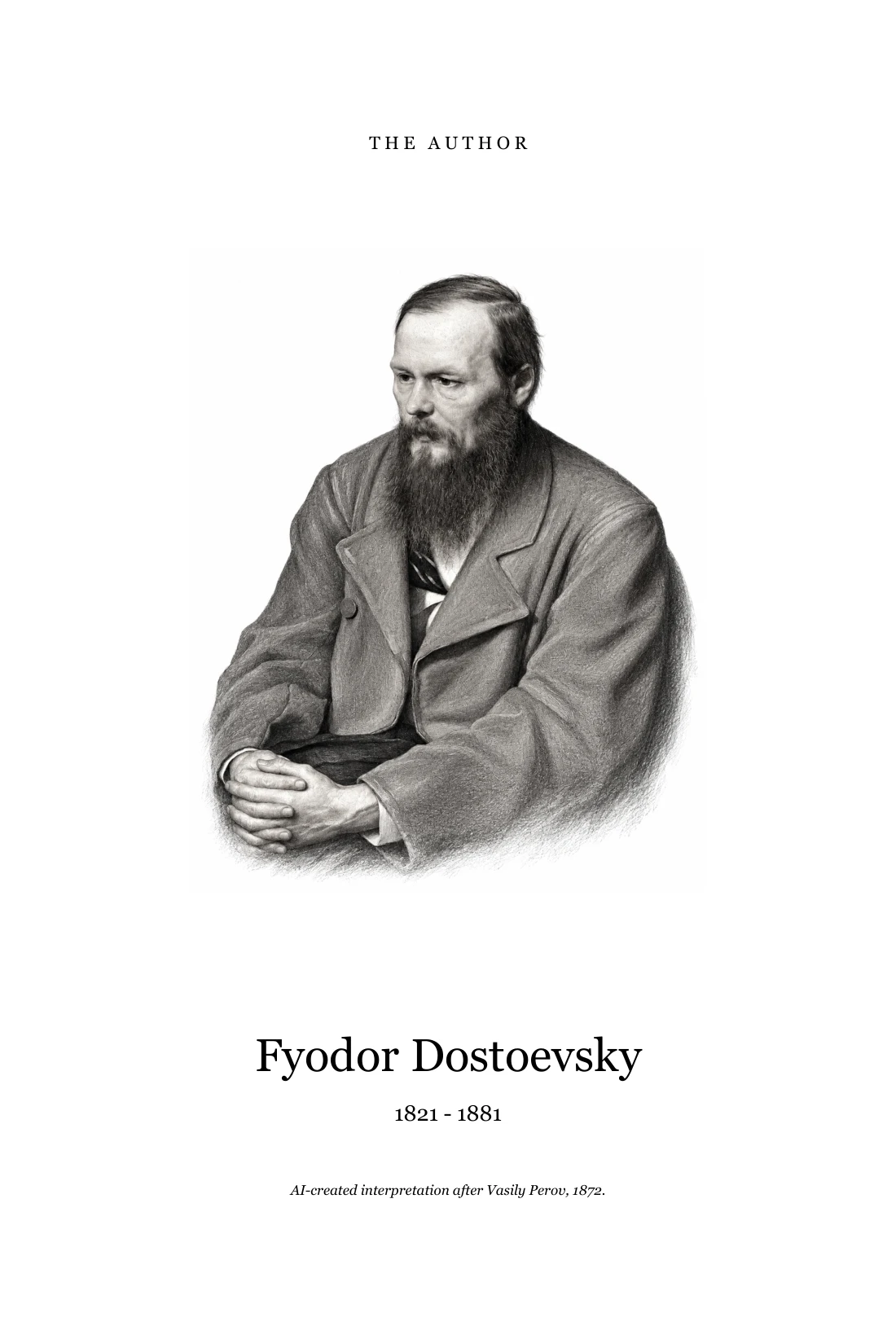
The Gambler, Dostoevsky’s short novel about roulette, debt and obsession, was written against the clock. In 1865, desperate for money, he had signed a contract with the publisher Fyodor Stellovsky that sold him the rights to a collected edition of his works. Hidden in the deal was a trap: Dostoevsky also had to deliver a brand-new novel by 1 November 1866. If he missed the date, Stellovsky would be free to publish anything Dostoevsky wrote, without paying him, for nine years.
By October 1866 Dostoevsky had not written a word of it. He was busy with Crime and Punishment, which was appearing in instalments in a Moscow magazine, and the deadline was a month away. Friends are said to have suggested he share the work with other writers. He refused, and decided instead to hire a stenographer.
How Dostoevsky wrote The Gambler in 26 days
The stenographer was Anna Grigoryevna Snitkina, a twenty-year-old student of the new skill of shorthand. She arrived at Dostoevsky’s flat in St Petersburg on 4 October, by the Russian calendar of the day, and they set to work. He dictated in the daytime; she took the pages home, transcribed them overnight, and brought them back the next day for him to revise.
They finished on 29 October, twenty-six days after they began. Dostoevsky took the manuscript to Stellovsky, only to find, by Anna’s later account, that the publisher was conveniently away. On her advice, Dostoevsky had the manuscript officially registered with a local police official before the deadline passed, proving he had kept his side of the bargain. The rights to his work were safe.

Is The Gambler based on Dostoevsky’s life?
Very largely. Dostoevsky was a compulsive gambler for years, losing heavily at roulette in the spa towns of Germany, and the book is full of things he knew from painful experience: the feverish logic of the system, the conviction that the next spin will win everything back, the shame of pawning possessions and begging for loans.
The narrator, Alexei Ivanovich, is a young tutor travelling with the household of a Russian general at a German resort called Roulettenburg. The general is deep in debt and waiting for a rich, elderly relative to die; Alexei is helplessly in love with the general’s stepdaughter, Polina, who treats him with contempt. Polina is often thought to draw on Apollinaria Suslova, the woman Dostoevsky had travelled with in Europe a few years earlier, during one of his worst gambling sprees.
What is Dostoevsky’s The Gambler like to read?
Fast. It was written at speed and it reads that way, breathless and nervy, with scenes that build to fever pitch at the roulette table. It is also much funnier than readers expecting Dostoevsky’s usual intensity might guess. The pompous general, the scheming Frenchmen and, above all, a formidable old Russian lady who takes the casino by storm are wonderful comic creations.
Short by his standards, it is one of the best ways into Dostoevsky. It has his psychological depth and his feverish characters without the length of the great novels, and readers who enjoy it are well prepared for Crime and Punishment, the book he went straight back to finishing once The Gambler was delivered.
The Gambler
1866. A young tutor, a ruined general and a casino in a German spa town. Dictated in twenty-six days to keep the rights to Dostoevsky’s books.
Crime and Punishment
1866. A poor student commits a murder and is pursued by his conscience and a patient detective. The novel Dostoevsky was writing at the same time.
White Nights
1848. A lonely dreamer meets a young woman on the St Petersburg embankment over four white nights. A perfect evening’s read.
Notes from Underground
1864. The bitter, brilliant confession of a man living under the floorboards of society. Short, sharp and unforgettable.



Where to go next
Read The Gambler first if you are new to Dostoevsky, then White Nights for his gentle side, and Crime and Punishment when you are ready for the full experience. Our guide Where to start with Dostoevsky maps the way, and Russian classics for beginners widens the view. Both The Gambler and White Nights also feature among the classics you can read in one evening.
You will also find Dostoevsky’s name spelled more than one way, depending on the translation; his early novel Poor Folk and The Gambler appear here under Fyodor Dostoyevsky. It is the same writer.
Begin in Roulettenburg, with Alexei returning from a fortnight’s absence to find the general’s household in uproar and everyone short of money, and open The Gambler. Then imagine it being dictated at speed, a page at a time, with a career on the line.
Questions readers ask
How long did it take Dostoevsky to write The Gambler?
Twenty-six days. Dostoevsky dictated it to the stenographer Anna Snitkina between 4 and 29 October 1866, to meet a contract deadline of 1 November.
Why did Dostoevsky write The Gambler so quickly?
His contract with the publisher Fyodor Stellovsky required a new novel by 1 November 1866. If he missed the deadline, Stellovsky could publish his future work without paying him for nine years.
Is Dostoevsky’s The Gambler autobiographical?
In large part. Dostoevsky was a compulsive roulette player himself, and the novel draws on his own losses in German spa towns and, many believe, on his relationship with Apollinaria Suslova.