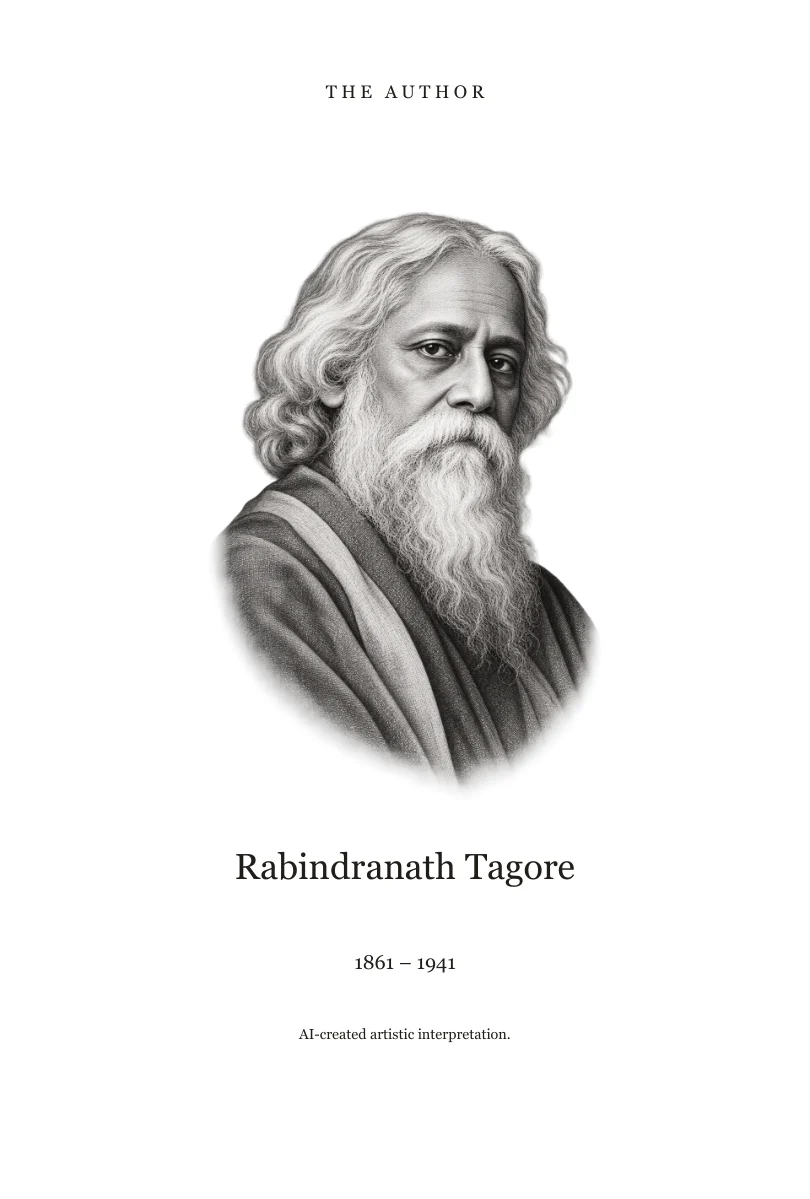
When the Swedish Academy announced the 1913 Nobel Prize in Literature, the winner was Rabindranath Tagore, poet, songwriter, novelist and educator from Bengal. He was the first laureate in literature from outside Europe, and the first person from Asia to win a Nobel Prize in any field.
The prize honoured Gitanjali, a slim book of prose poems that Tagore had translated into English himself and published in London only the year before. The Academy’s citation praised his profoundly sensitive, fresh and beautiful verse, and the skill with which he had made it part of the literature of the West in his own English words.
How did Tagore win the Nobel Prize?
By 1912 Tagore was already the most celebrated writer in Bengal, but almost unknown in Europe. That year he travelled to England, bringing English versions of poems from several of his Bengali collections. He had made them, he said, partly to pass the time while recovering from illness.
In London he showed them to the painter William Rothenstein, who had met him in India. Rothenstein passed them to W. B. Yeats, who was deeply moved and wrote an admiring introduction. The India Society published Gitanjali: Song Offerings in a small edition late in 1912, and it was quickly reprinted. Within a year it had reached the Nobel committee in Stockholm.
Not everyone was pleased. Some European critics grumbled that a little-known foreign poet had beaten established names, and the decision has sometimes been described as a surprise. But the book’s English readers had already made up their minds, and so had a wider world: the prize made Tagore famous across Europe, America and Asia, and he spent much of the following two decades travelling and lecturing.
Who was Rabindranath Tagore?
Tagore was born in Calcutta in 1861 into a wealthy, intensely artistic family, and was writing poetry as a boy. Over a long life he produced poems, songs, plays, short stories, novels and essays, and took up painting in his sixties. He founded a school at Santiniketan in rural Bengal that grew into a university, Visva-Bharati.
He was knighted by the British in 1915 and gave the knighthood back in 1919 in protest at the massacre of unarmed protesters at Amritsar. And he holds a rare distinction for any poet: his songs became the national anthems of two countries, India and Bangladesh.
Where the mind is without fear and the head is held high; / Where knowledge is free; / Where the world has not been broken up into fragments by narrow domestic walls
Rabindranath Tagore, Gitanjali (1912)
Gitanjali
1912. The prize-winning book: short devotional prose poems about God, nature, love and death, in Tagore’s own English.
The Home and the World
1916. Tagore’s great political novel, a love triangle set during the Swadeshi movement in Bengal, told in turn by its three main characters.
The Book of Tea
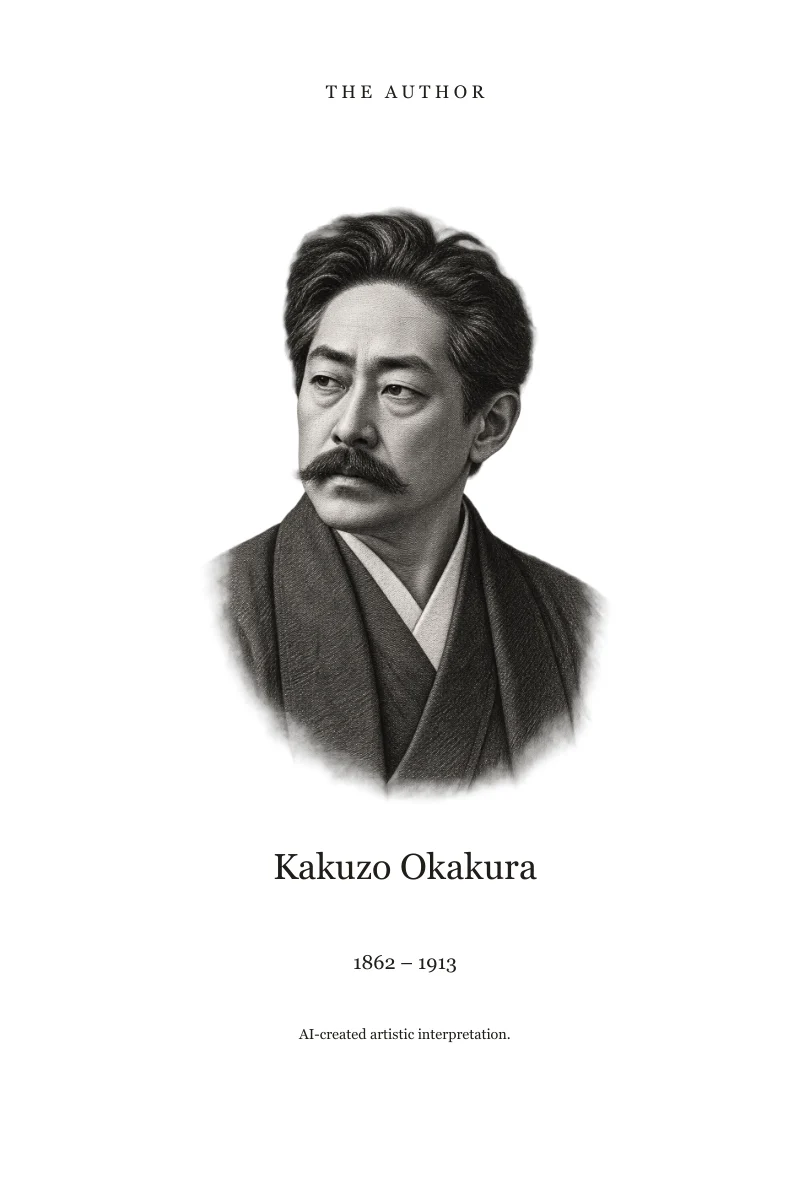
Another Asian classic written in English for Western readers in the same years: Kakuzo Okakura on tea, art and the art of living.


What is Gitanjali like to read today?
Quiet, direct and surprisingly modern. The poems are short — some only a few lines — and written in rhythmic English prose rather than rhyme. They speak to a god who is also a lover, a friend, a guest at the door, and they are full of everyday images: lamps, rain, boats, flowers, a traveller on a road. You can read the whole book in an afternoon or keep it by the bed for one poem a night.
Remember that you are reading Tagore in a form he chose for Western readers. His Bengali originals are rhymed and musical, and many were written to be sung; the English versions are freer and plainer. That is a loss in one sense, but it is also why the book travelled so far. These are the poems, in these words, that won him the prize.
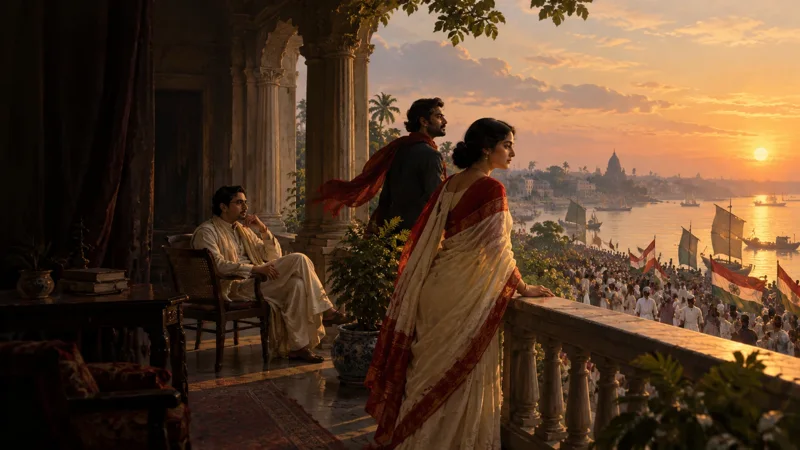
If you want to see Tagore the storyteller rather than the mystic, turn to The Home and the World. Nikhil, a liberal landowner, encourages his wife Bimala to step beyond the women’s quarters of the house, just as a charismatic nationalist named Sandip arrives. It is a novel about love and politics that still feels urgent, and it was filmed by Satyajit Ray in 1984.
For more poetry to read slowly, see our guide to classic poetry collections and, if verse feels daunting, how to read poetry. Our list of Asian classics in English is the place to go next.
Begin as the first readers in London did, with the opening page of Gitanjali and a poem about a frail vessel filled again and again with fresh life.
Questions readers ask
When did Tagore win the Nobel Prize?
Rabindranath Tagore won the Nobel Prize in Literature in 1913, mainly for Gitanjali, the English collection of his poems published in London in 1912.
Who was the first non-European to win the Nobel Prize in Literature?
Rabindranath Tagore, in 1913. He was also the first Asian to win a Nobel Prize in any category.
Did Tagore translate Gitanjali himself?
Yes. He made the English versions himself, drawing on poems from several of his Bengali books, and W. B. Yeats wrote the introduction to the 1912 edition.
What is Tagore’s most famous novel?
The Home and the World (1916) is his best-known novel in English. It is set during the Swadeshi movement in Bengal and was filmed by Satyajit Ray in 1984.
 Stories from Tagore154 pages · $12.99
 Nationalism80 pages · $10.99
 Sādhanā: The Realisation of Life110 pages · $11.99
 Creative Unity122 pages · $11.99