

THE PIPCUB BLOG · 656 ARTICLES
Stories behind the stories.
Reading orders, author guides, hand-picked lists and the surprising histories of the books we love.
Every article
385–408 of 656
 Authors · 4 min read
Did you know the designer William Morris helped invent the fantasy novel?
He is remembered for wallpapers, tapestries and beautiful books. In the last years of his life William Morris also wrote a shelf of prose romances that set fantasy free of our world for good, and Tolkien and C. S. Lewis both read them closely.
 Series & reading order · 4 min read
Shakespeare’s Roman plays in order: Julius Caesar, Antony and Cleopatra and Coriolanus
Three plays, one source book and roughly five hundred years of Roman history. Shakespeare’s Roman plays can be read in the order he wrote them or the order the events happened, and the two sequences tell different stories.
 Reading lists · 4 min read
Second-chance romances: classics about love that returns
Long before it was a genre label, the second-chance romance was one of the oldest shapes in fiction: two people who got it wrong once, meeting again older and warier. The classics did it first, and some of them did it best.
 Reading time · 4 min read
How long is The Golden Bowl? Henry James’s last major novel, timed
On paper, The Golden Bowl is a ten-hour book. In practice it is denser than its page count suggests, and the honest answer is closer to fourteen hours, or longer if you read James the way he asks to be read.

 Did you know? · 4 min read
Did you know a Rider Haggard novel helped inspire The Jungle Book?
Where did Mowgli come from? Kipling named three sources, and one of them was a Zulu romance by his friend Rider Haggard: Nada the Lily, and a cave where two wolves leap night after night at a dead man’s bones.
 How to read · 4 min read
How to read late Henry James: The Ambassadors and The Golden Bowl
The long sentences are not a wall between you and the story. They are the story. Learn how James’s late novels move, and they become some of the most absorbing books in English.
 Authors · 4 min read
Where to start with G. K. Chesterton
Chesterton wrote around eighty books and thousands of essays, and he could turn a lamp post or a piece of chalk into an argument. The G. K. Chesterton books to begin with are the ones where that habit of mind meets a story.

 Did you know? · 4 min read
Did you know Burl was written by a deaf-blind author?
He lost the sight of both eyes by sixteen and his hearing by middle age, and he went on writing poems, children’s books and a frontier novel. Morrison Heady is almost forgotten now, but a seven-year-old Helen Keller knew him as Uncle Morrie.
 Reading lists · 4 min read
The greatest villains in classic literature, and why we can’t look away
A great villain does not just stand in the hero’s way. He charms, argues, grieves or grins, and the best literary villains are often the characters readers remember longest.
 Did you know? · 3 min read
Did you know The King in Yellow inspired True Detective?
When True Detective’s first season began muttering about the Yellow King and Carcosa in 2014, many viewers went searching for the source. They found a book of stories published in 1895 by Robert W. Chambers, and a fictional play that drives its readers mad.
 Series & reading order · 4 min read
Henry James’s early novels in order, from Roderick Hudson to Washington Square
Before The Portrait of a Lady made him a major novelist, Henry James spent a decade learning his trade in public. These are the early novels in the order he published them, from a first attempt he later disowned to Washington Square.
 Authors · 4 min read
William Hope Hodgson: sea horror and the Night Land
Before he wrote a word of fiction, William Hope Hodgson was a sailor, a photographer of storms and a bodybuilder who ran his own gym. Then he wrote some of the strangest horror in English.
 Young readers · 3 min read
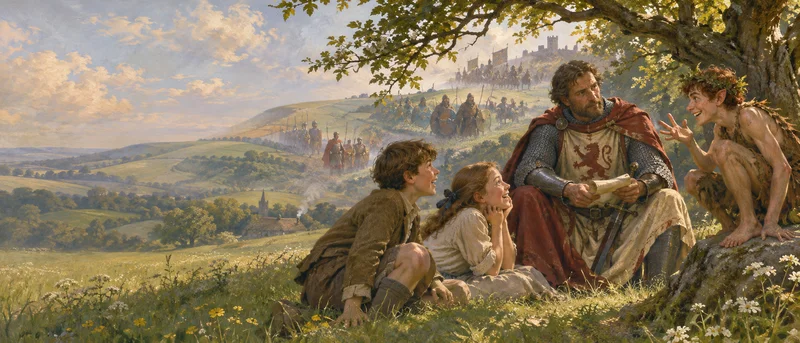
Puck of Pook’s Hill: Kipling’s English history, told by a fairy
Two children act A Midsummer Night’s Dream in a fairy ring on Midsummer Eve, three times over, and Puck himself steps out of the bushes. What he shows them is England, a thousand years of it.
 Reading lists · 4 min read
Classic novels for Game of Thrones fans: feuds, crowns and medieval war
Rival houses, disputed crowns, cruel guardians and sisters who hate each other: none of it was invented in Westeros. Six classic novels of feud and war for readers who want more.
 Books on screen · 4 min read
Thus Spake Zarathustra and 2001: A Space Odyssey: the book behind the music
Three rising notes, pounding timpani and a sunrise over the Earth. The most famous music in science fiction began as a tone poem about a German philosophical book, and the book is stranger than either the music or the film.
 Did you know? · 4 min read
Did you know Arsène Lupin crossed swords with Sherlock Holmes?
France’s gentleman-burglar had barely been in print a year when his creator invited the world’s most famous detective to the party. Conan Doyle’s side was not amused, and Holmes had to change his name.
 Literary history · 4 min read
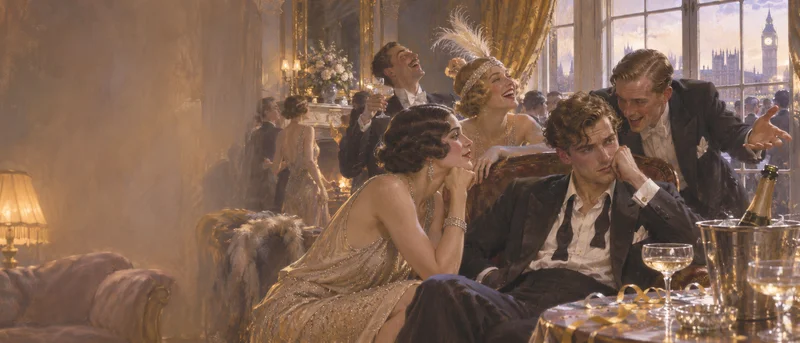
Who were the Bright Young Things? The 1920s set behind Vile Bodies
They threw fancy-dress parties, raced round London on midnight treasure hunts and read about themselves in the morning papers. Then Evelyn Waugh, one of their own, wrote the novel that fixed them in place.
 Did you know? · 4 min read
Did you know a vampire story was a sensation 78 years before Dracula?
Long before Count Dracula, Europe went mad for a pale, seductive aristocrat called Lord Ruthven. His story was a hit partly because everyone thought Lord Byron had written it.
 Reading lists · 4 min read
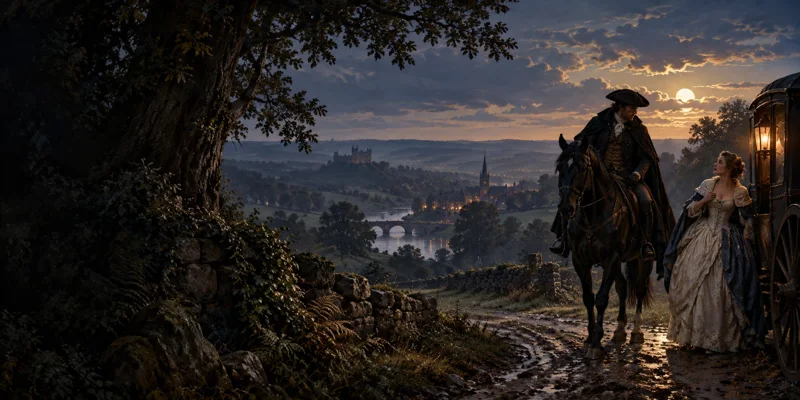
Books like Bridgerton: classic romances of rakes, balls and scandal
The season, the scandal sheet, the rake who swears he will never marry: Bridgerton’s ingredients are much older than the Regency. Here are the classic romances where they were first mixed.
 Authors · 5 min read
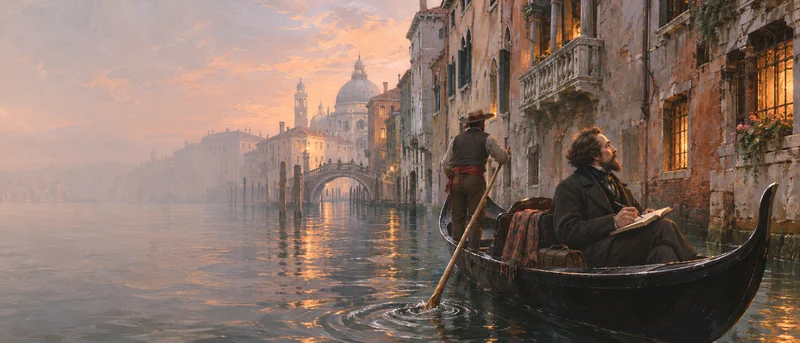
Did you know Charles Dickens wrote travel books? Pictures from Italy and more
Between the novels, Charles Dickens crossed the Atlantic, lived for a year in Genoa and spent nights tramping London’s streets until dawn, and he wrote it all down. His travel books are the closest thing we have to Dickens talking in his own voice.
 Did you know? · 4 min read
Did you know The Well of Loneliness was banned in Britain for two decades?
The Well of Loneliness contains no explicit scene at all. Its offence, in the eyes of a London magistrate in 1928, was to ask readers to sympathise with a woman who loved women, and for that the seized copies were to be destroyed.
 Series & reading order · 4 min read
The Bastable children: E. Nesbit’s Treasure Seekers in order
Six motherless children, one failing family business and a narrator who will not admit he is Oswald. E. Nesbit’s Bastable books are three novels and a handful of stories, and they are funnier in order.
 Did you know? · 4 min read
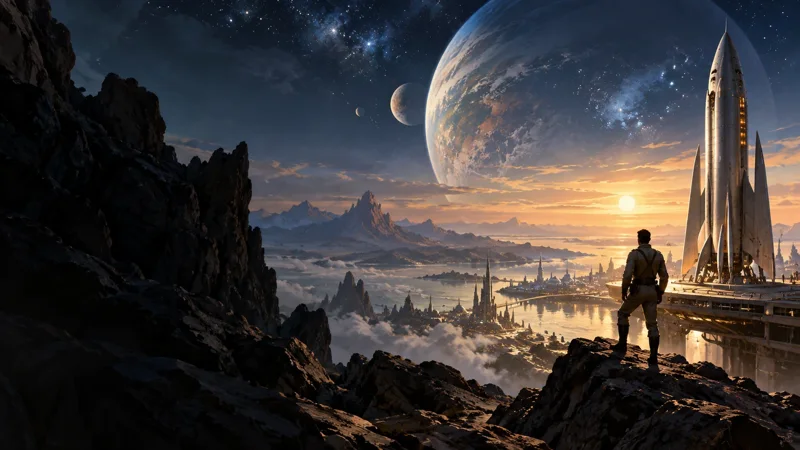
Did you know The Skylark of Space helped launch the space opera?
Before Star Wars, before Star Trek, before the phrase “space opera” existed, a young American chemist wrote a novel in which a spaceship crosses thousands of light-years. It sat in a drawer for years, then helped invent a genre.
 Reading lists · 4 min read
Essential American classics, from Moby-Dick to Gatsby
Several of the books now called essential American classics were flops, scandals or best-sellers that critics dismissed. Here are the six to read first, in order, and why each one earned its place.