It starts with a low C, held by double basses, contrabassoon and organ, so deep it is felt as much as heard. Then the trumpets climb C, G, C, the orchestra blazes into a chord, and the timpani pound. In Stanley Kubrick’s 2001: A Space Odyssey (1968) those bars play over the opening image of the Sun, Earth and Moon lined up in space. Most people who know them have no idea they are the first page of a piece called Also sprach Zarathustra, or that the title belongs to a book.
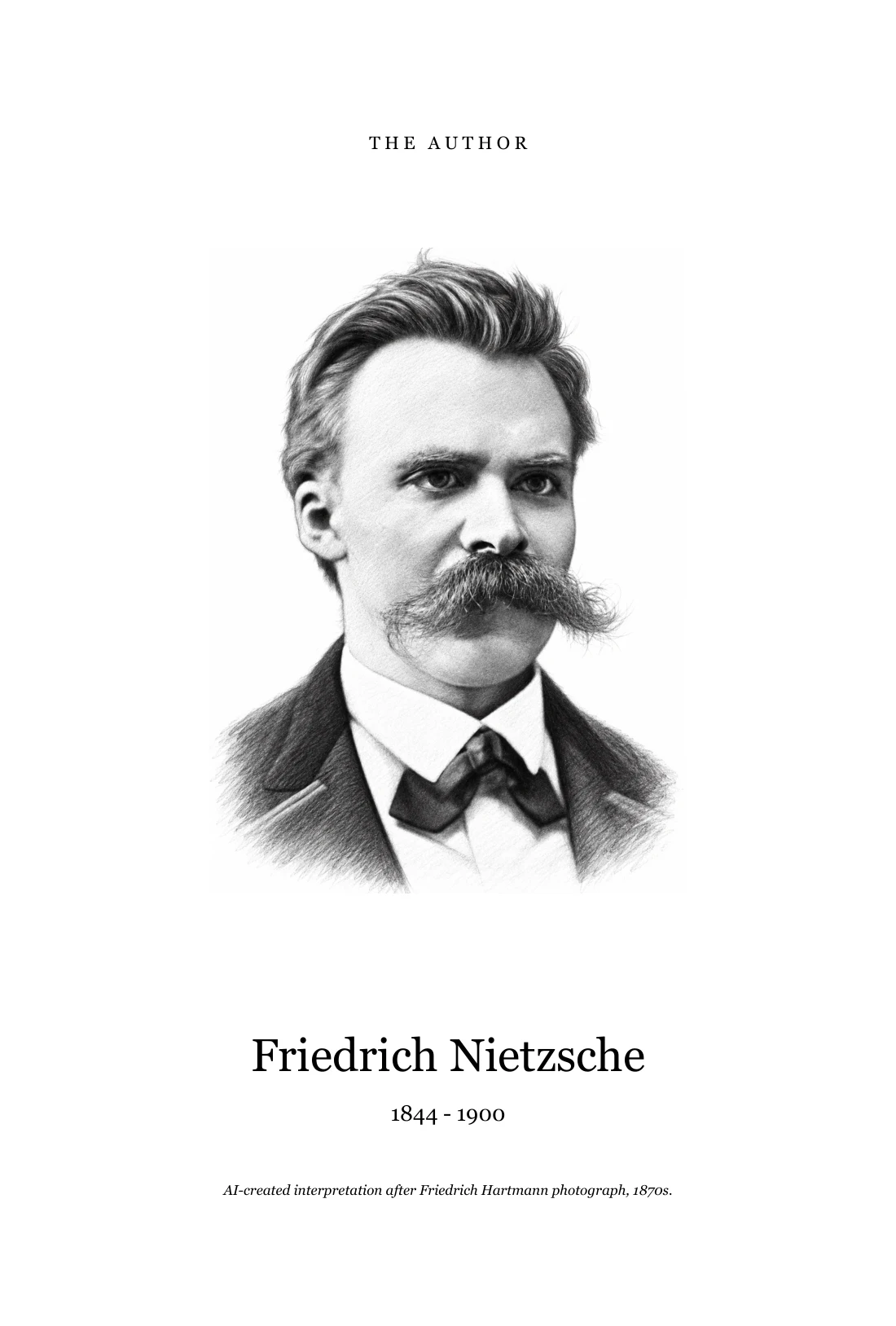
The music is by Richard Strauss, who wrote it in 1896. The book is Friedrich Nietzsche’s Thus Spake Zarathustra, published in four parts between 1883 and 1885. Strauss was inspired by Nietzsche; Kubrick chose Strauss. The links between the book and the film run through the music, and it is worth being careful about how far they go.
How Nietzsche became a tone poem
Strauss conducted the first performance in Frankfurt on 27 November 1896. A tone poem is orchestral music that tells or evokes a story without words, and Strauss took his headings from Nietzsche. The opening, which he called “Sunrise” in his programme, answers the book’s prologue, whose text is printed in the score. The sections that follow carry titles that match chapters of the book: “Of the Backworldsmen”, “Of Joys and Passions”, “The Song of the Grave”, “Of Science and Learning”, “The Convalescent”, “The Dance Song”. The whole piece lasts about half an hour.
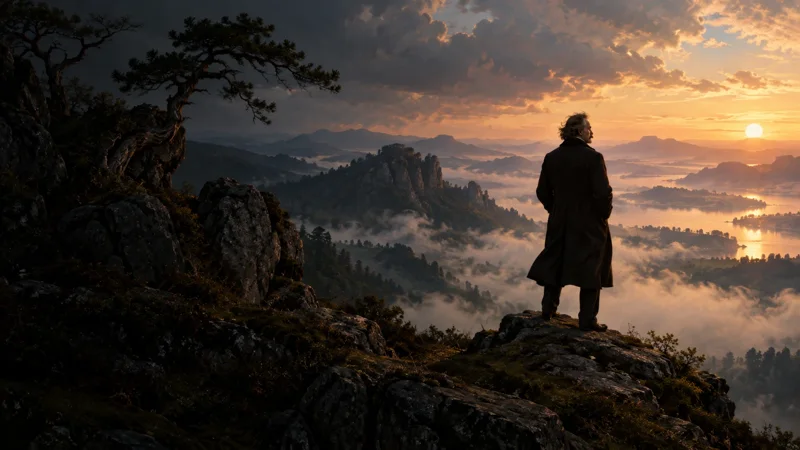
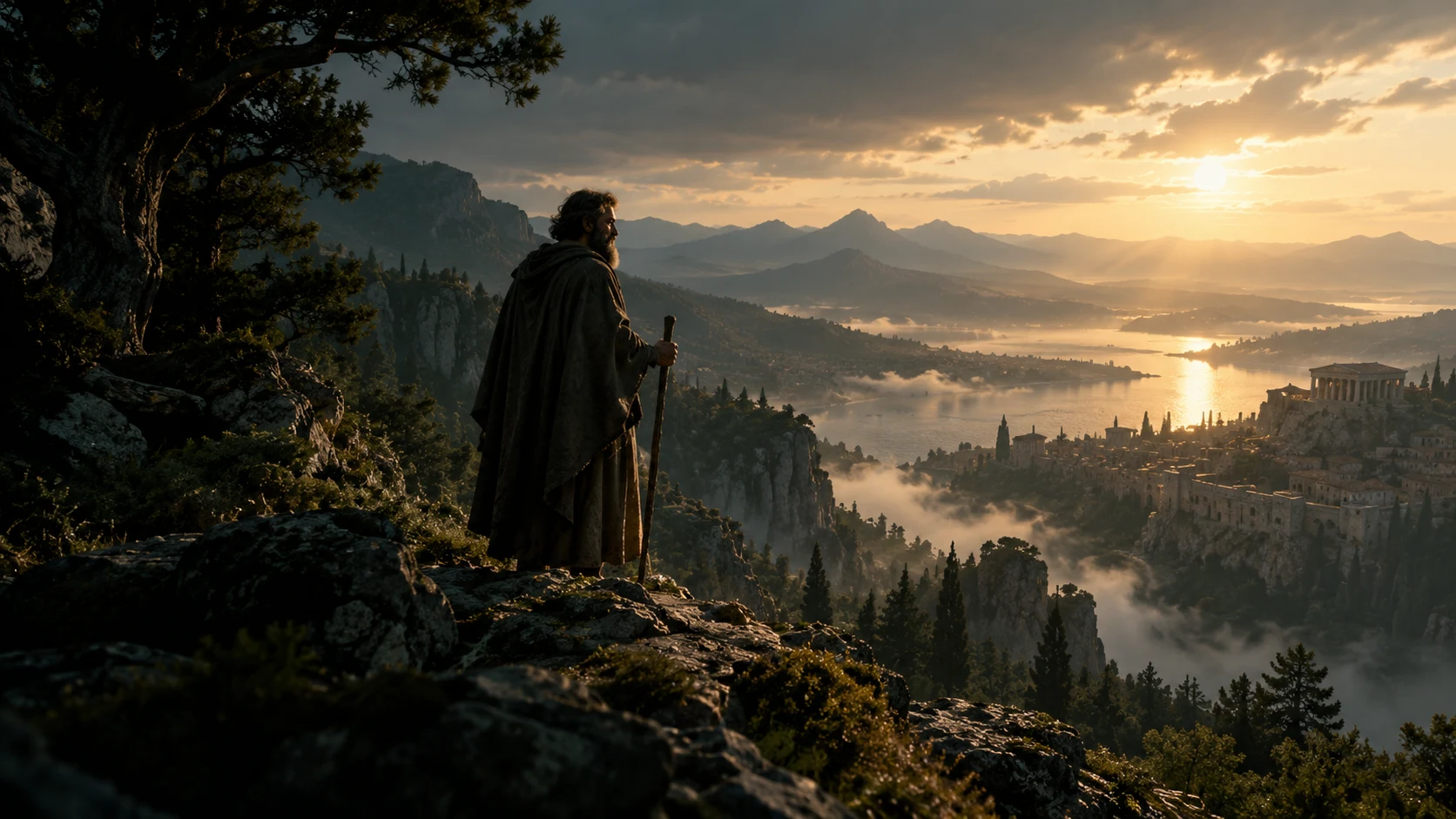
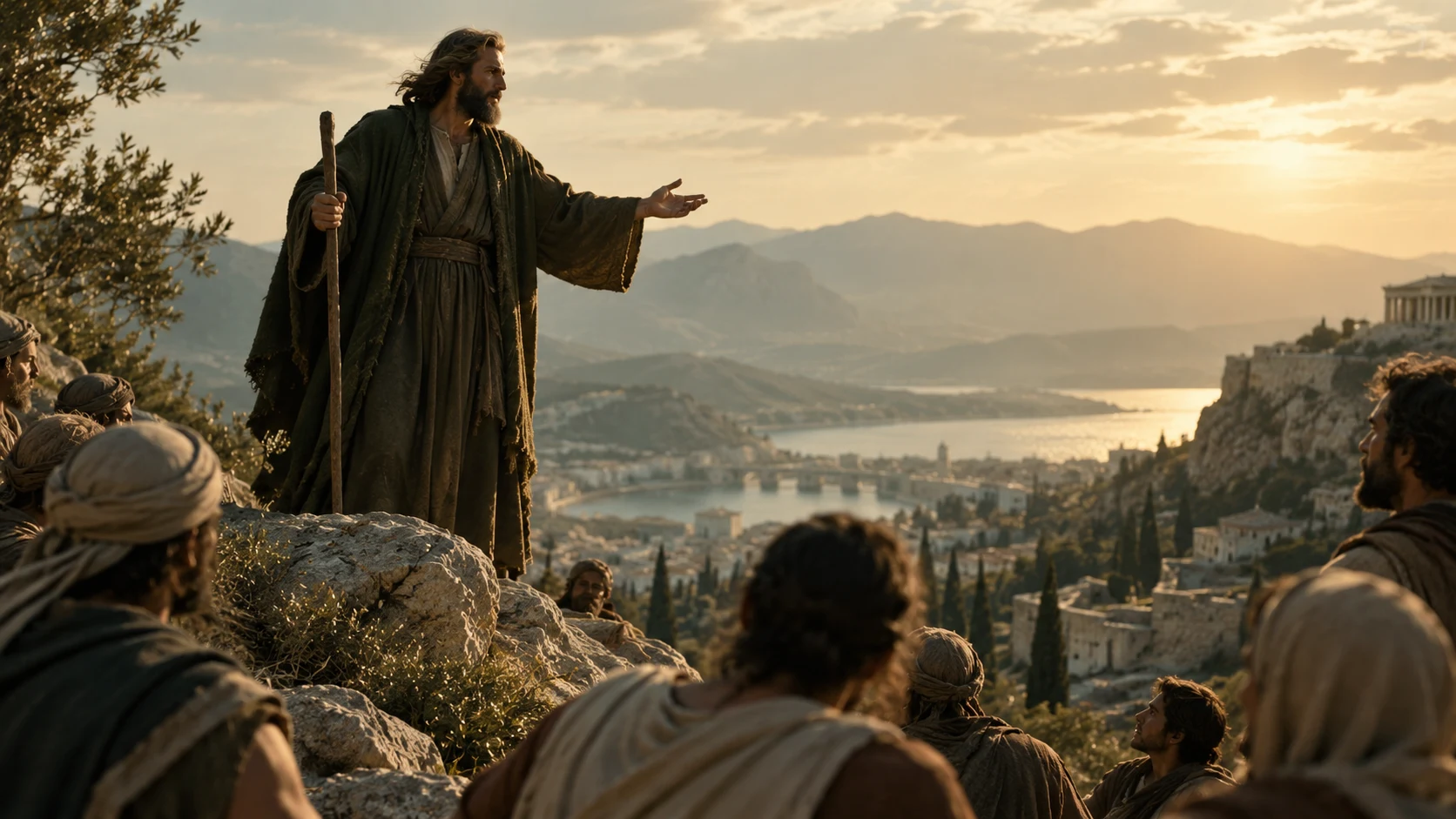
When Zarathustra was thirty years old, he left his home and the lake of his home, and went into the mountains. There he enjoyed his spirit and solitude, and for ten years did not weary of it. But at last his heart changed,—and rising one morning with the rosy dawn, he went before the sun, and spake thus unto it:
Friedrich Nietzsche, *Thus Spake Zarathustra*, trans. Thomas Common, Zarathustra’s Prologue
That sunrise is Strauss’s starting point. The famous fanfare is a musical dawn, built on the simplest intervals in nature, and the tone poem ends unresolved, poised between two keys a semitone apart. Strauss was not setting Nietzsche’s philosophy point by point. He used the chapters he chose as a scaffold for the music’s structure, and the piece can be enjoyed without reading a word of the book.
Why Kubrick used Also sprach Zarathustra in 2001
Kubrick originally commissioned a full score from Alex North, the composer of Spartacus. While editing, he cut to classical recordings he had chosen as temporary guides, and in the end he kept them, dropping North’s music entirely. North reportedly discovered this only when he saw the film at its premiere.
The fanfare marks three key moments: the opening titles, the scene in which an ape-man first grasps a bone as a tool, and the ending, in which the astronaut Dave Bowman is transformed into the Star Child. It works as a pair of bookends and as a signal of each leap in evolution, from ape to human to something beyond. Many critics have read that pattern as a nod to Nietzsche, whose Zarathustra teaches that humanity is a bridge to a higher type, the Übermensch, and in a 1980 interview Kubrick described Bowman as being transformed into “some kind of super being”. But the film itself never mentions Nietzsche, and the connection is a reading by critics rather than anything the screenplay states.
What is Thus Spake Zarathustra about?
Nietzsche subtitled it “a book for all and none”. It follows Zarathustra, a prophet named after the ancient Persian Zoroaster, who comes down from ten years on a mountain to teach. On the way down he realises that an old hermit in the forest has not yet heard that God is dead. In a market town he tells a crowd gathered to watch a tightrope walker that mankind must create something higher than itself, and they laugh at him. He goes on to deliver dozens of short sermons, parables and songs, then returns to solitude, struggling with the idea Nietzsche considered the book’s centre: the eternal recurrence, the thought that every moment of life might repeat itself endlessly.
Its style owes much to Luther’s German and to the poetry of the Bible, and in English it is full of thee and thou. It is far more poetic than argumentative. Nietzsche had the fourth part printed privately in an edition of forty copies for friends, and it was not published for general sale until 1892, after his collapse.
Man is a rope stretched between the animal and the Superman—a rope over an abyss.
Friedrich Nietzsche, *Thus Spake Zarathustra*, Zarathustra’s Prologue
Read that line beside the film’s final image and you can see why the comparison keeps being made. Just remember that it is a comparison. Nietzsche was writing about human values, not space travel, and the book is a philosophical poem rather than a story about evolution.
Newcomers will find a route into Nietzsche in how to read Nietzsche, and philosophy books for beginners has gentler starting points. For the film’s other genre ancestors, see the science fiction firsts.
Put the Strauss on, then open Thus Spake Zarathustra at the prologue. The sunrise is there on the first page, exactly where the music found it.
Questions readers ask
What is the music at the start of 2001: A Space Odyssey?
It is the opening fanfare, known as “Sunrise”, of Richard Strauss’s tone poem Also sprach Zarathustra (1896). The recording in the film is Herbert von Karajan’s with the Vienna Philharmonic.
Is 2001: A Space Odyssey based on Thus Spoke Zarathustra?
No. The film was developed by Stanley Kubrick and Arthur C. Clarke from Clarke’s short stories, chiefly “The Sentinel”. It uses Strauss’s music, which was inspired by Nietzsche’s book, and some critics see Nietzschean ideas in its story of evolution.
What does Also sprach Zarathustra mean?
It is German for “Thus spoke Zarathustra”, the title of Nietzsche’s 1883–85 book. Older English translations, such as Thomas Common’s, use “Thus Spake Zarathustra”.
Why did Kubrick use Also sprach Zarathustra?
Kubrick chose existing classical recordings over a commissioned score by Alex North. The fanfare marks each great transformation in the film, from ape to man and from man to Star Child.
 The Genealogy of Morals142 pages · $12.99
 Beyond Good and Evil178 pages · $13.99