

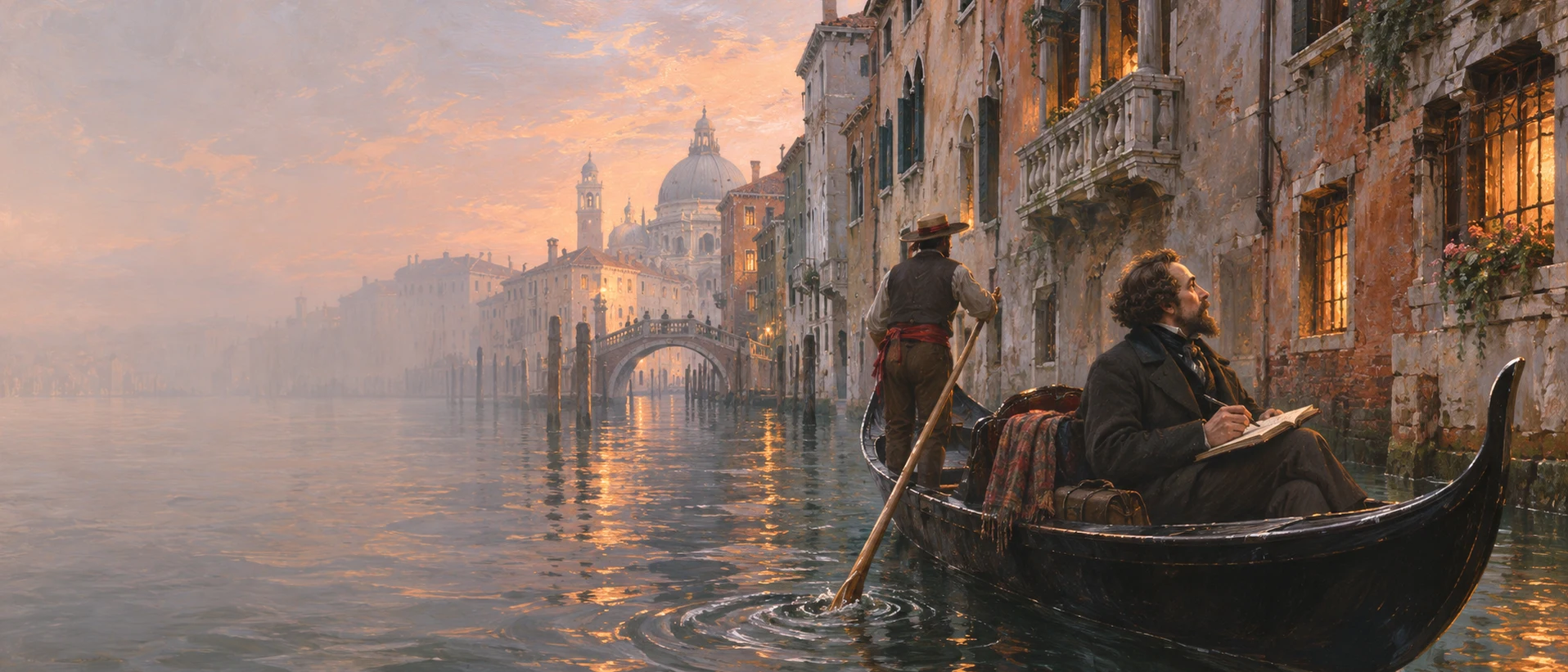

On the road from Gravesend to Rochester, a traveller gives a lift to “a very queer small boy” of nine who asks to stop at the top of Gad’s Hill and look at the house there. His father has told him that if he works hard, he might live in it one day. The traveller is amazed, because the house is his own, and the boy, it becomes clear, is his younger self.
That scene opens “Travelling Abroad”, one of the essays in The Uncommercial Traveller, and it is a good introduction to Dickens’s travel writing: personal, playful and never quite what you expect. Charles Dickens wrote three travel books. American Notes (1842) records his first visit to the United States and Canada, Pictures from Italy (1846) a year spent living in Genoa, and The Uncommercial Traveller gathers the wanderings, at home and abroad, that he wrote up for his own magazine from 1860 onwards.
What travel books did Charles Dickens write?
- $13.99
Pictures from Italy
1846. A year in Italy with his family, from the coach rolling out of Paris to the crater of Vesuvius. Funny, irreverent and far more interested in crowds, festivals and puppet shows than in famous paintings. The best place to start.
- $16.99
American Notes
1842. Nearly five months in America at the age of thirty: Boston, New York, Philadelphia, the canals, the prairie and Niagara. Generous about much of what he found, appalled by the prisons and scathing about slavery.
- $19.99
The Uncommercial Traveller
1860 onwards. Essays from All the Year Round in which Dickens plays a traveller for “Human Interest Brothers”: shipwrecks, workhouses, cheap theatres, emigrant ships and London by night. The most varied of the three.


American Notes: Dickens in the New World
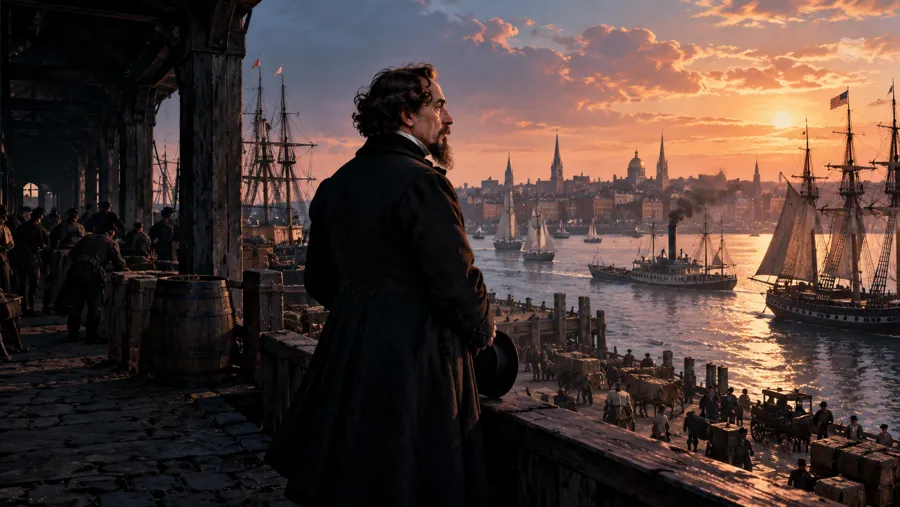
On 3 January 1842, a month short of his thirtieth birthday, Dickens sailed from Liverpool with his wife Catherine on the steamship Britannia. When they landed in Boston later that month he was mobbed. He travelled south as far as Richmond, west by river steamboat to St Louis and north into Canada, by steamboat, rail and coach, and made a point of visiting prisons and asylums. His letters home to friends, among them John Forster, formed the basis of the book.
He liked a great deal of what he saw, but some of it he could not forgive. The book closes with an attack on slavery, and he used the trip to argue for international copyright, since American publishers were freely pirating his novels. He was especially disturbed by the Eastern Penitentiary in Philadelphia, with its system of total isolation.
The system here, is rigid, strict, and hopeless solitary confinement. I believe it, in its effects, to be cruel and wrong.
Charles Dickens, American Notes (1842)
The tour also fed his fiction: the American chapters of Martin Chuzzlewit, serialised in 1843–44, turn what he had seen into broad satire. And one chapter, on the education of the deafblind Laura Bridgman in Boston, had a remarkable afterlife; it was reading it that set Helen Keller’s mother on the path to Anne Sullivan, as we tell in Helen Keller’s memoir.
Pictures from Italy: the Dickens family in Genoa
In midsummer 1844 an English travelling carriage “of considerable proportions” rolled out of the Hôtel Meurice in Paris, carrying Dickens and his family towards Italy. The plan was a year in Genoa, with the head of the family free to wander wherever his restless humour took him. He went to Parma, Bologna, Venice, Rome, Naples and up Vesuvius.
In a short preface, which he called “The Reader’s Passport”, Dickens explains that he will not lecture on Italian politics or describe famous pictures and statues at length. What he offers instead is impressions, most of them written on the spot and sent home in letters.
This Book is a series of faint reflections—mere shadows in the water—of places to which the imaginations of most people are attracted in a greater or less degree, on which mine had dwelt for years, and which have some interest for all.
Charles Dickens, Pictures from Italy (1846)
The preface ends by filling in a passport for the reader: complexion fair, eyes very cheerful, nose not supercilious. Then the book begins, and lives up to it. Some of its best pages describe Genoese marionettes and the Roman carnival; one of its darkest, a public execution in Rome, which Dickens watched with horror. Venice, which he could not bring himself to describe directly, is written as a dream. More Italian classics are gathered in Classic novels set in Italy.
The Uncommercial Traveller: travel without leaving home
Dickens founded All the Year Round in 1859, and by the end of that year he had found a persona for it. On 22 December he made a speech for the Commercial Travellers’ School in London, and in January 1860 the first “Uncommercial Traveller” essay appeared. Seventeen came out that year and were collected in 1861; he went on adding more in the 1860s, and the complete set was published in 1875, after his death.
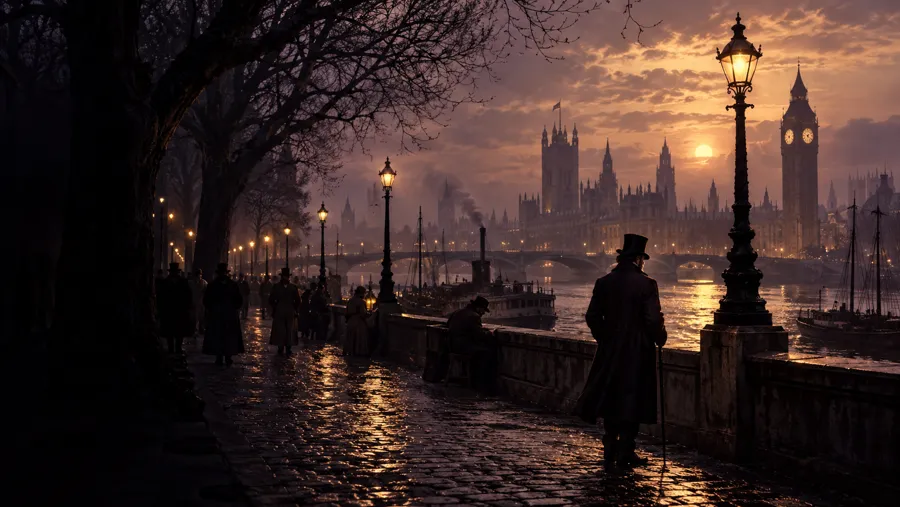
The “travel” is sometimes literal: a trip to Anglesey to see the wreck of the Royal Charter, a crossing on the Calais night mail, an emigrant ship of Latter-day Saints bound for the Great Salt Lake. Just as often it is a walk across London. In “Night Walks” a spell of sleeplessness sends him out into the streets from midnight to sunrise, until he has finished his “education in a fair amateur experience of houselessness”. It is some of the finest journalism he ever wrote.
Which Dickens travel book should you read first?
Start with Pictures from Italy. It is the shortest, the sunniest and the most purely enjoyable, and it shows Dickens as a tourist rather than a critic. Read American Notes next for the man with opinions, and keep The Uncommercial Traveller for dipping into: each essay stands alone, and few take more than twenty minutes. For the novels, our guide Where to start with Charles Dickens has a route in, and for more journeys, try Classic travel writing.
Or begin at the beginning of the road, with that carriage leaving Paris on a Sunday morning. Open Pictures from Italy, show your passport and go.
Questions readers ask
Did Charles Dickens write travel books?
Yes. He wrote American Notes (1842), about his first visit to North America, Pictures from Italy (1846), about the year he lived in Genoa, and The Uncommercial Traveller, essays first published in All the Year Round from 1860.
What is American Notes about?
It describes Dickens’s tour of the United States and Canada from January to June 1842, including Boston, New York, Philadelphia, Washington and Niagara Falls. Its closing chapters include a fierce condemnation of slavery.
Where did Dickens live in Italy?
In Genoa, where he spent about a year from the summer of 1844 with his family, travelling from there to Venice, Rome, Naples and elsewhere. Pictures from Italy grew out of that stay.
Why is it called The Uncommercial Traveller?
Dickens cast himself as a traveller who sells nothing, travelling instead, as he put it, for “the great house of Human Interest Brothers”. The persona seems to have grown out of a speech he gave for the Commercial Travellers’ School in December 1859.
 Great Expectations532 pages · $23.99
 A Christmas Carol86 pages · $10.99
 A Tale of Two Cities360 pages · $18.99
 Oliver Twist420 pages · $20.99



