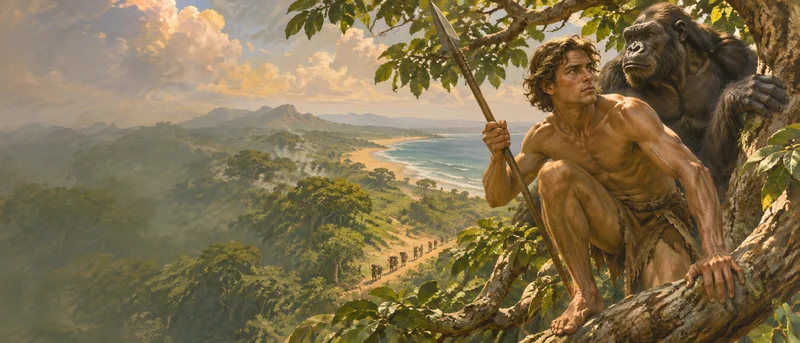
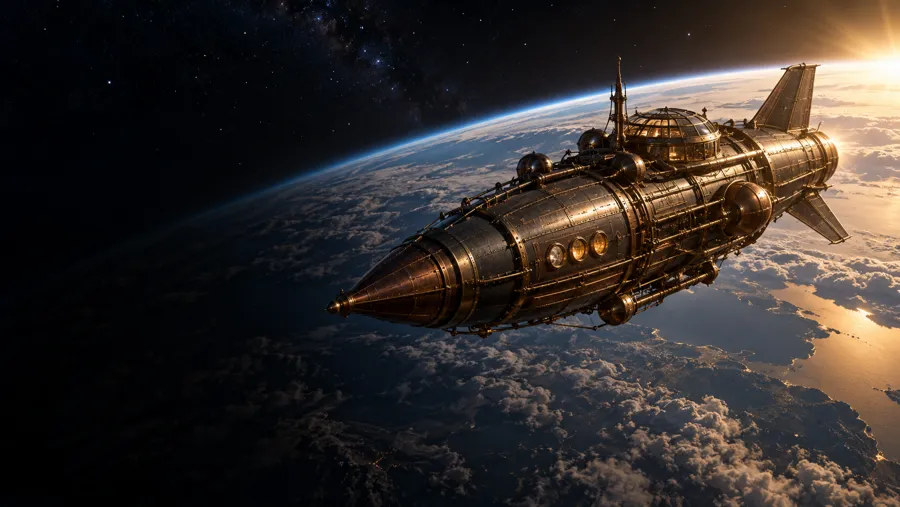
The Skylark of Space opens with an accident. A government chemist named Richard Seaton is electrolysing a solution of an unknown metal, “X”, on a copper steam-bath when the bath leaps from under his hand, smashes across the laboratory table and flies out of the open window. Through his binoculars he watches it dwindle to a speck, still travelling in a straight line. Within a few pages Seaton has worked it out: the reaction has released the energy locked inside the copper, and the energy can be steered.
From that copper bath comes a spaceship, the Skylark, and from the Skylark comes one of the founding books of space opera. Earlier writers had sent their heroes to the Moon or Mars. E. E. Smith sent his out of the solar system altogether, across distances measured in hundreds and then thousands of light-years, into wars between alien empires. That leap of scale is why the novel is so often called the first great space opera.
Was The Skylark of Space the first space opera?
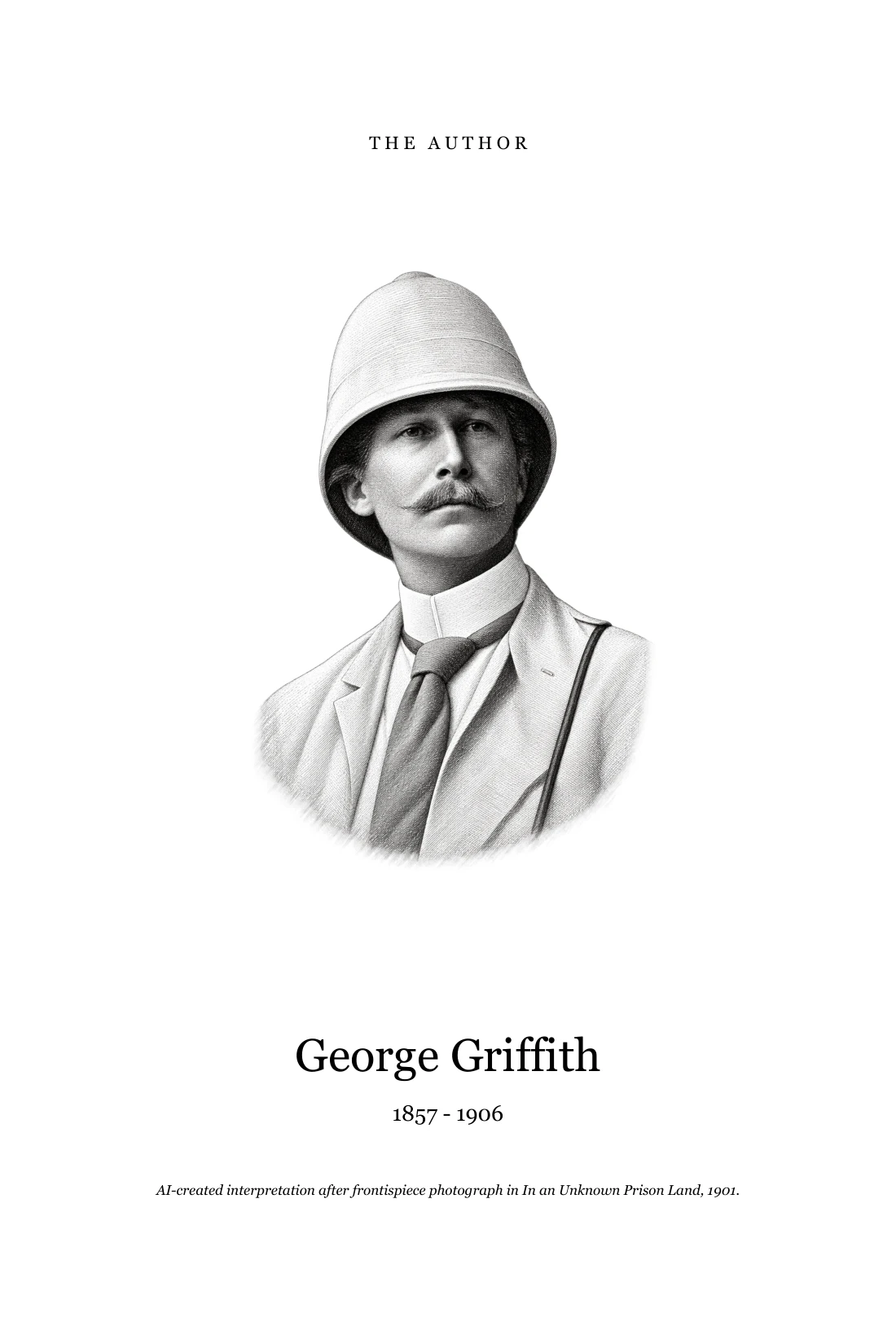
It depends whom you ask, and the honest answer is that it helped launch the genre rather than inventing it alone. Scholars have found grand interplanetary adventures earlier: Percy Greg, Garrett P. Serviss, George Griffith and Robert Cromie were all writing space voyages around the turn of the century, and the critic E. F. Bleiler named Robert William Cole’s The Struggle for Empire as the first space opera. Edmond Hamilton’s interstellar war story Crashing Suns began in Weird Tales the same month that Skylark began in Amazing Stories.
What Skylark had was influence. Smith became the writer most often called the father of space opera, and the novelist and editor Frederik Pohl said that few books besides those of Wells and Verne had inspired more imitators. Isaac Asimov, less kindly, judged it a total flop as literature. Both could be right.
Who wrote The Skylark of Space?
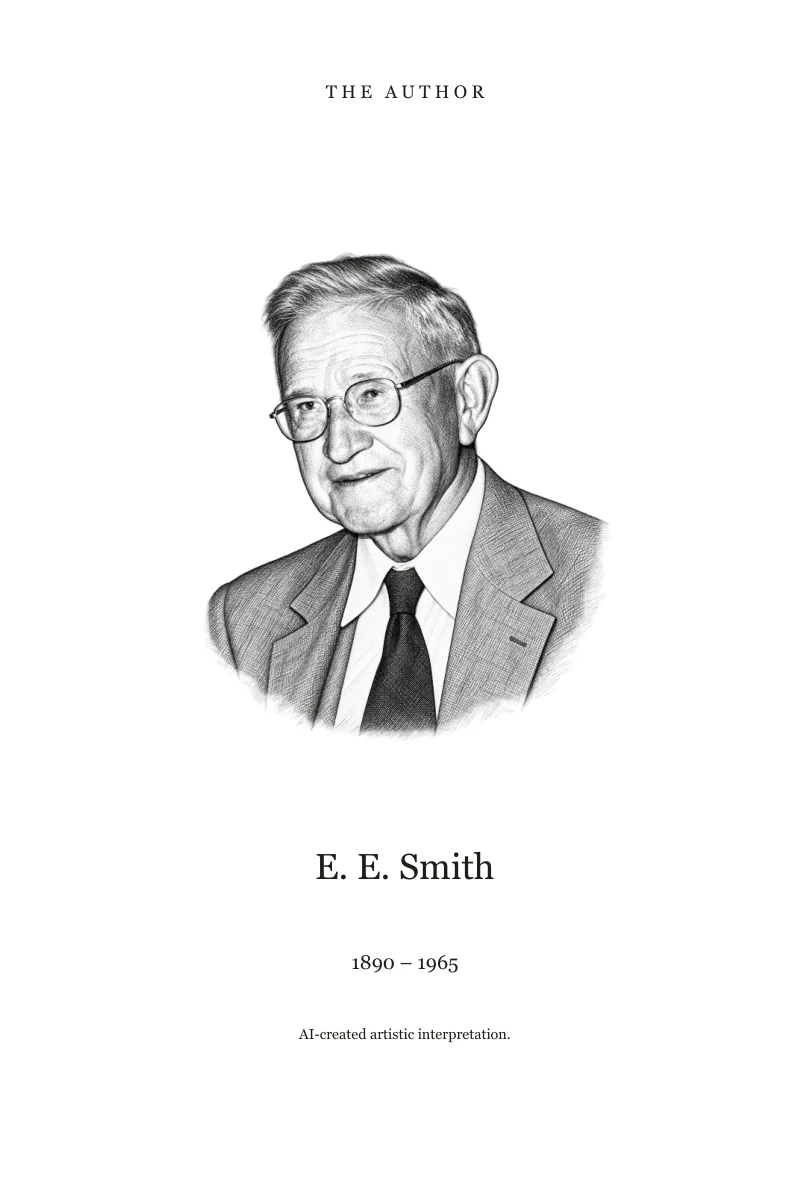
Edward Elmer Smith, born in Wisconsin in 1890, was a chemist who made his living in the food industry, specialising in doughnut mixes. He began the novel in 1915, after an evening of talk about space travel at the home of his college friend Carl Garby. Smith was uneasy about writing the love story, so Garby’s wife, Lee Hawkins Garby, offered to handle it, and the two wrote roughly the first third together. Smith finished it alone around 1920, then spent years failing to find a publisher.
Hugo Gernsback’s Amazing Stories finally took it and ran it in three parts, from August to October 1928, with both authors named. The August issue also carried Philip Francis Nowlan’s Armageddon 2419 A.D., the first appearance of the hero who became Buck Rogers, which makes it a landmark issue in the history of science fiction. Gernsback added “Ph.D.” to Smith’s byline, and he was “Doc” Smith from then on.
The magazine’s editors were not shy about what they had bought. Their note on the first instalment set the tone for a century of cover blurbs:
Perhaps it is a bit unethical and unusual for editors to voice their opinion of their own wares, but when such a story as “The Skylark of Space” comes along, we just feel as if we must shout from the housetops that this is the greatest interplanetarian and space flying story that has appeared this year.
Editorial note, Amazing Stories, August 1928
What is it like to read now?
Fast, earnest and enormous. Seaton and his millionaire friend Martin Crane build their ship; Seaton’s rival Marc “Blackie” DuQuesne, a ruthless scientist in league with the World Steel Corporation, schemes to seize the secret and abducts Seaton’s fiancée, Dorothy Vaneman; the chase flings everyone far beyond the stars. There are alien civilisations, colossal weapons and a great deal of confident physics, much of it invented on the spot.
The dialogue is stiff, and the love scenes are of their time. More troubling is the opening chapter’s Black laboratory assistant, written as a caricature in comic dialect, a reminder of the casual racism of much early pulp fiction. Read past it and you find the thing that made the book matter: the sheer exhilaration of a writer who decided that the whole galaxy was available as a setting.
The Skylark of Space
Serialised 1928. A chemist frees the energy of copper, builds a starship and chases a kidnapper across the galaxy. The text first printed in Amazing Stories, with Lee Hawkins Garby credited alongside Smith.
A Honeymoon in Space
George Griffith’s honeymoon tour of the solar system in an anti-gravity ship, serialised in 1900. One of the planetary romances that space opera grew out of.
A Princess of Mars
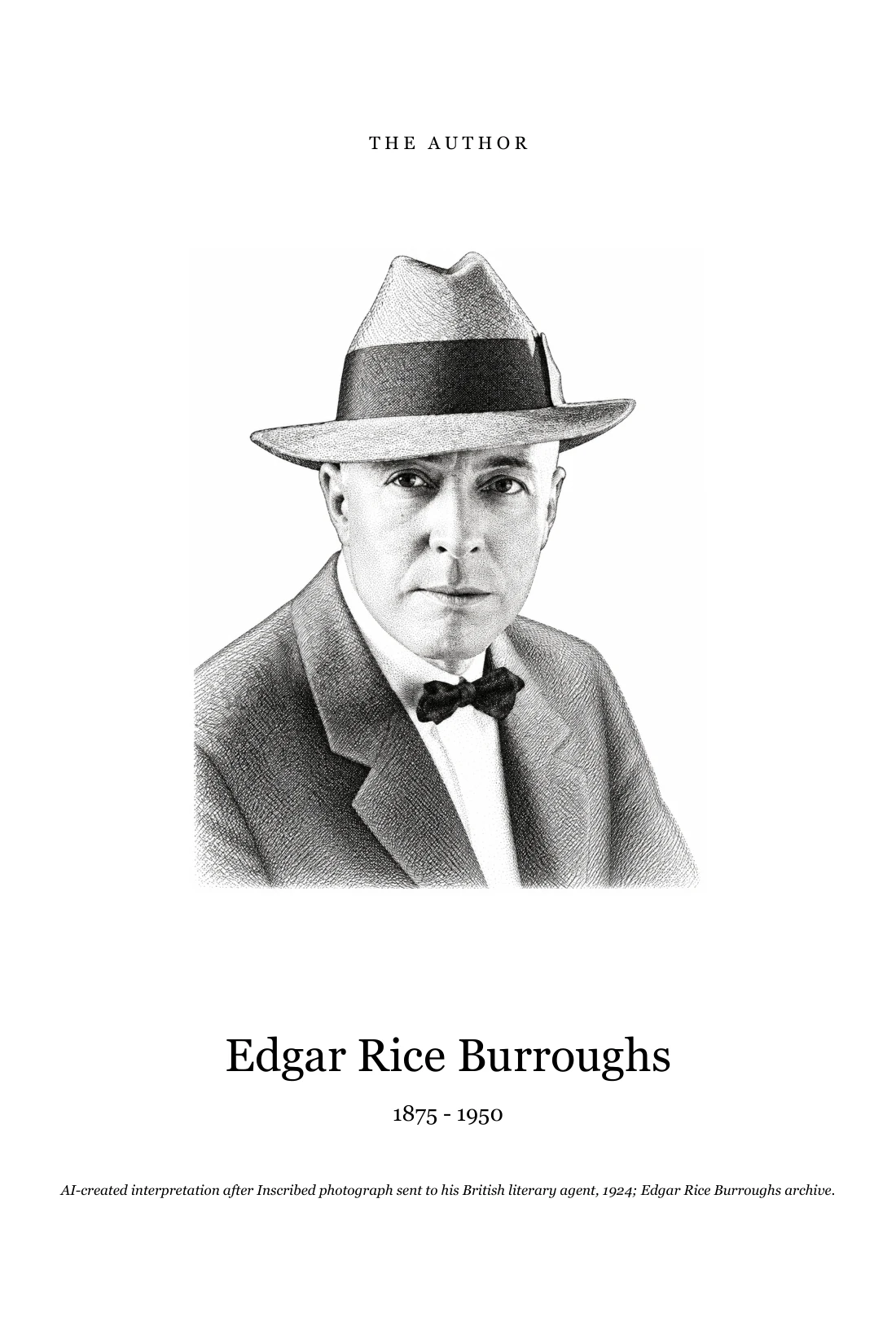
Edgar Rice Burroughs’s 1912 adventure on a dying Mars. Smith’s novel fuses this kind of planetary romance with the lone-inventor story.



What came after Skylark?
Smith wrote three sequels: Skylark Three in 1930, Skylark of Valeron in the mid-1930s and, decades later, Skylark DuQuesne, serialised in 1965, the year he died. In between he created the Lensman series, an even larger saga that many readers think is his best work. The 1946 book edition of the first novel kept Garby’s name; a 1958 revision dropped it.
To trace the line from here, read The science fiction firsts, meet one of Smith’s forerunners in George Griffith: Victorian science fiction’s forgotten star, and follow the magazines themselves in The pulp magazines that gave us Tarzan, John Carter and Cthulhu. Our science fiction shelf holds the rest.
Then go back to the copper bath. The Skylark of Space asks you to forgive its prose and rewards you with something rarer: the feeling of watching a writer discover, page by page, how big a story can be.
Questions readers ask
What is considered the first space opera?
E. E. Smith’s The Skylark of Space, serialised in Amazing Stories in 1928, is often called the first great space opera. Some historians point to earlier works, such as Robert William Cole’s The Struggle for Empire, so it is safest to call Skylark one of the genre’s founding books.
Who coined the term space opera?
The science fiction fan and writer Wilson Tucker coined it in 1941 in his fanzine Le Zombie, as a dismissive label modelled on “horse opera” and “soap opera”.
Who was Lee Hawkins Garby?
The wife of Smith’s college friend Carl Garby. She offered to write the love interest and romantic dialogue, co-wrote roughly the first third of the novel, and was credited as co-author in the 1928 magazine serial.