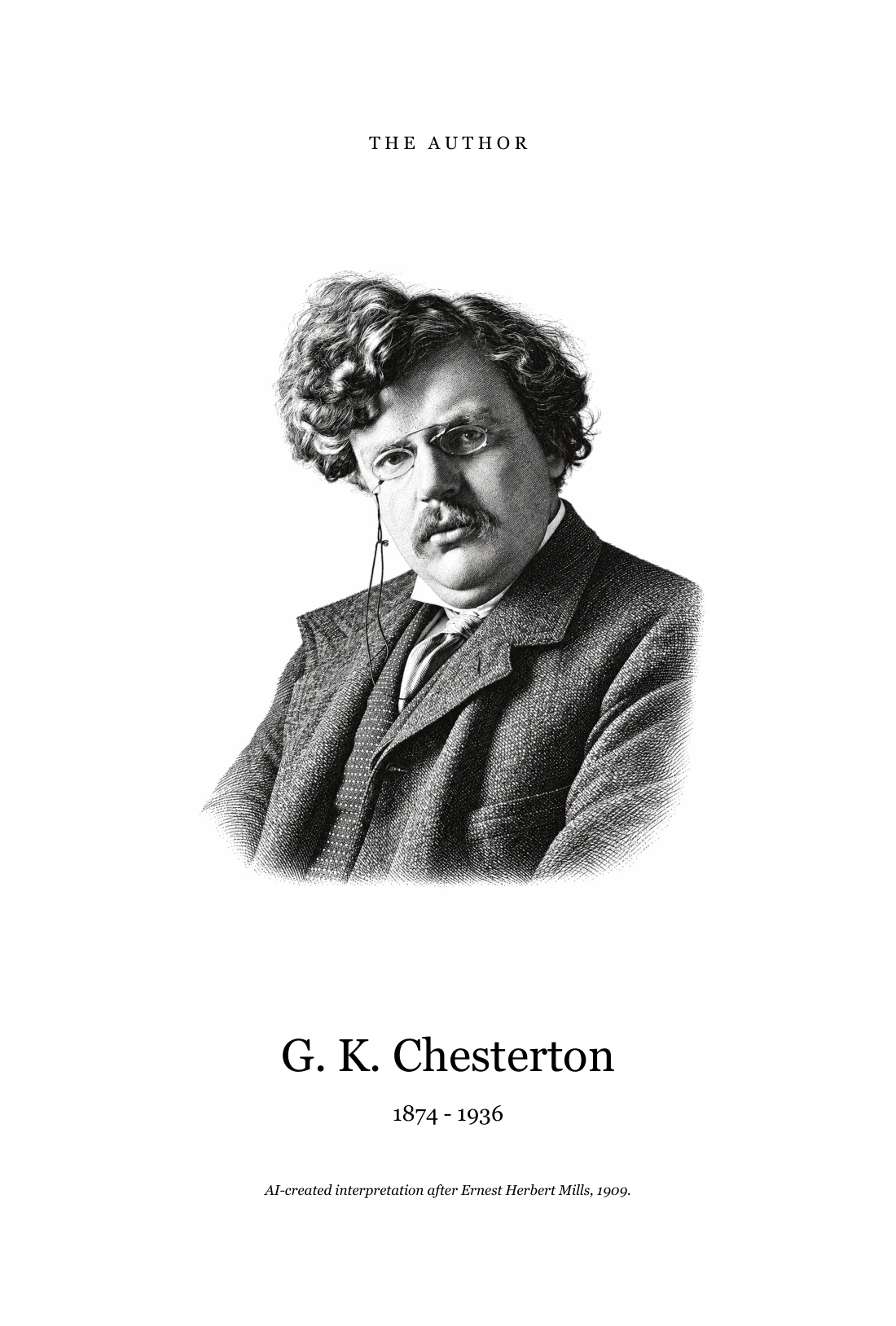
Asked by a newspaper what was wrong with the world, Chesterton is supposed to have replied in four words: “Dear Sir, I am.” It is the most quoted thing he never provably wrote. The Chesterton Society, which has looked, says it has found no documentary evidence that the letter exists.
The story survives because it sounds exactly like him: brief, paradoxical, cheerfully self-mocking and serious underneath. That is also the best description of his fiction. If you want a single place to start among the G. K. Chesterton books, make it The Man Who Was Thursday, a short comic thriller that turns into something stranger the further you go. Then choose your road: detective stories, political fantasy or the books of argument that made him famous in his own day.
Which G. K. Chesterton books should you read first?
These four cover the range. They are all short, the longest barely over two hundred pages, and each shows a different side of G. K. Chesterton.
- $12.99
The Man Who Was Thursday
1908. A poet who is secretly a policeman gets himself elected to an anarchist council whose seven members are named after the days of the week. Subtitled A Nightmare, it starts as a spy caper and ends somewhere close to theology. Do not let anyone tell you the twists.
- $14.99
The Innocence of Father Brown
1911. The first twelve Father Brown stories. A dumpy little priest with an umbrella solves crimes by imagining his way into the mind of the criminal, and the solutions are as clever as anything in the genre.
- $12.99
The Napoleon of Notting Hill
1904. His first novel, set eighty years in the future, in 1984. England chooses its king by rotation, the lot falls on a practical joker, and one young man takes his joke about Notting Hill’s independence with deadly seriousness.
- $12.99
Orthodoxy
1908. Chesterton’s account of how he came to Christianity, written because a critic dared him to. Even readers who share none of his conclusions tend to enjoy the journey.



The story that comes before the argument
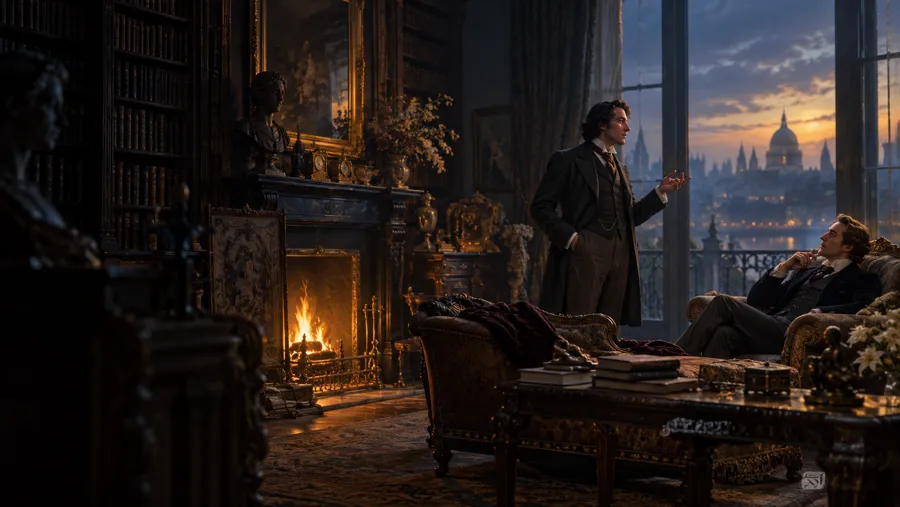
The Man Who Was Thursday opens in an artistic London suburb, with a sunset and a quarrel between two poets, one an anarchist and the other a champion of law and order. Within a few chapters there is a secret meeting under a pub, a duel in France and a chase across the countryside, all narrated with the relish of someone who grew up on adventure stories. It is his best-known novel and the best proof that ideas can be thrilling.
The suburb of Saffron Park lay on the sunset side of London, as red and ragged as a cloud of sunset.
G. K. Chesterton, The Man Who Was Thursday (1908)
The Napoleon of Notting Hill is gentler and odder. Writing in 1904, Chesterton begins by mocking the prophets of his day, who all assumed the future would be a giant extension of their own theories, and then imagines a 1984 in which London has barely changed at all. What follows is a mock-heroic war between London boroughs that becomes, almost against the reader’s will, moving.
Father Brown, the easiest way in
Many readers meet Chesterton through his detective, and there is no better introduction to the way his mind works. Each Father Brown story is a puzzle with a moral twist: the priest is not cleverer than the police because he notices more mud on a boot, but because he understands how people deceive themselves. The stories are short enough to read one a night, and The Innocence of Father Brown contains several of the best, including “The Blue Cross”, which introduces the great thief Flambeau.
Readers who finish it will want The Wisdom of Father Brown next. The full sequence of five collections, and where the priest came from, is in Father Brown books in order. If you like his fair-play puzzles, our guide to Golden Age detective novels shows where the tradition went after him.
Chesterton the arguer
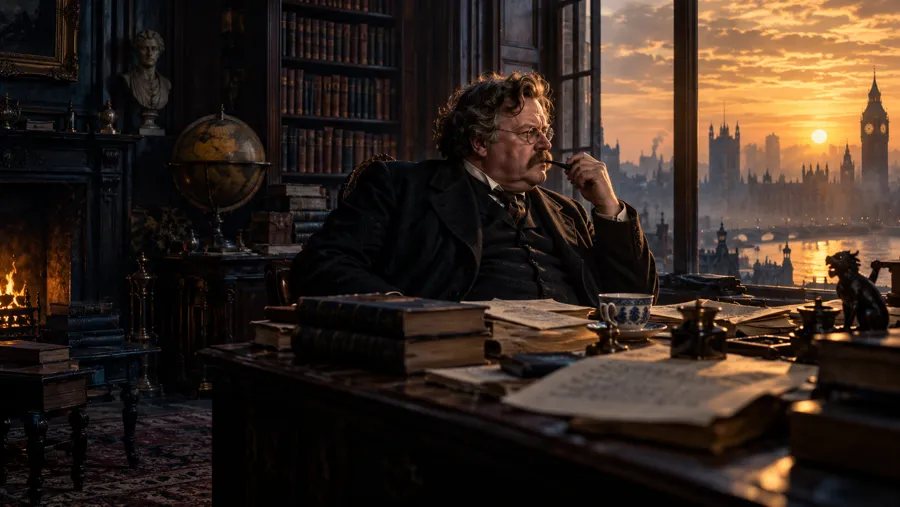
In his lifetime Chesterton was as famous for his journalism and his public debates, many of them with his friend and opponent George Bernard Shaw, as for his novels. His book Heretics (1905) took on the leading thinkers of the day. Critics complained that he had attacked everyone else’s philosophy without stating his own, and one of them, G. S. Street, said he would worry about his own philosophy when Chesterton had produced his. Orthodoxy was the answer.
It was perhaps an incautious suggestion to make to a person only too ready to write books upon the feeblest provocation.
G. K. Chesterton, Orthodoxy (1908)
Orthodoxy is autobiography as much as apologetics. It is full of images Chesterton enjoyed too much to waste, including the romance he never wrote about an English yachtsman who miscalculates his course and lands in England, believing it to be a new island in the South Seas. Later he went further, and The Everlasting Man (1925), which C. S. Lewis credited with helping his own return to faith, is the natural next step for readers who want more.
Where to go after the first four
- For more comic fantasy: Manalive, in which a whirlwind of a newcomer turns a dull London boarding house upside down and is then put on trial by the lodgers for crimes from burglary to attempted murder, or The Club of Queer Trades, a set of linked mysteries about impossible professions.
- For more mystery: The Man Who Knew Too Much, Chesterton’s other detective, a well-connected gentleman who knows everybody’s secrets and can do nothing about them.
- For the essayist at play: Tremendous Trifles, short newspaper pieces that start from a pocket knife or a piece of chalk and end up anywhere.
- For poetry: The Ballad of the White Horse, a long ballad about King Alfred and the Danes.
Chesterton was received into the Catholic Church in 1922 and died at his home in Beaconsfield in 1936. Writers as different as T. S. Eliot and Jorge Luis Borges admired him, and his paradoxes are still quoted by people who have never opened one of his books. Begin with the sunset over Saffron Park. Open The Man Who Was Thursday, and find out who Sunday is.
Questions readers ask
What is G. K. Chesterton’s most famous book?
His best-known novel is The Man Who Was Thursday (1908), and his best-known character is the priest-detective Father Brown. Among the G. K. Chesterton books of argument, Orthodoxy (1908) is the most widely read.
Which Chesterton book should I read first?
Start with The Man Who Was Thursday if you want a novel, or The Innocence of Father Brown if you prefer short detective stories. Both are short and give a good sense of his style.
Did Chesterton really write “Dear Sir, I am” to The Times?
Probably not. The anecdote is widely repeated, but the Chesterton Society says no documentary evidence for the letter has been found.
 The Man Who Knew Too Much156 pages · $12.99
 The Wisdom of Father Brown186 pages · $13.99
 Manalive150 pages · $12.99
 The Club of Queer Trades122 pages · $11.99