

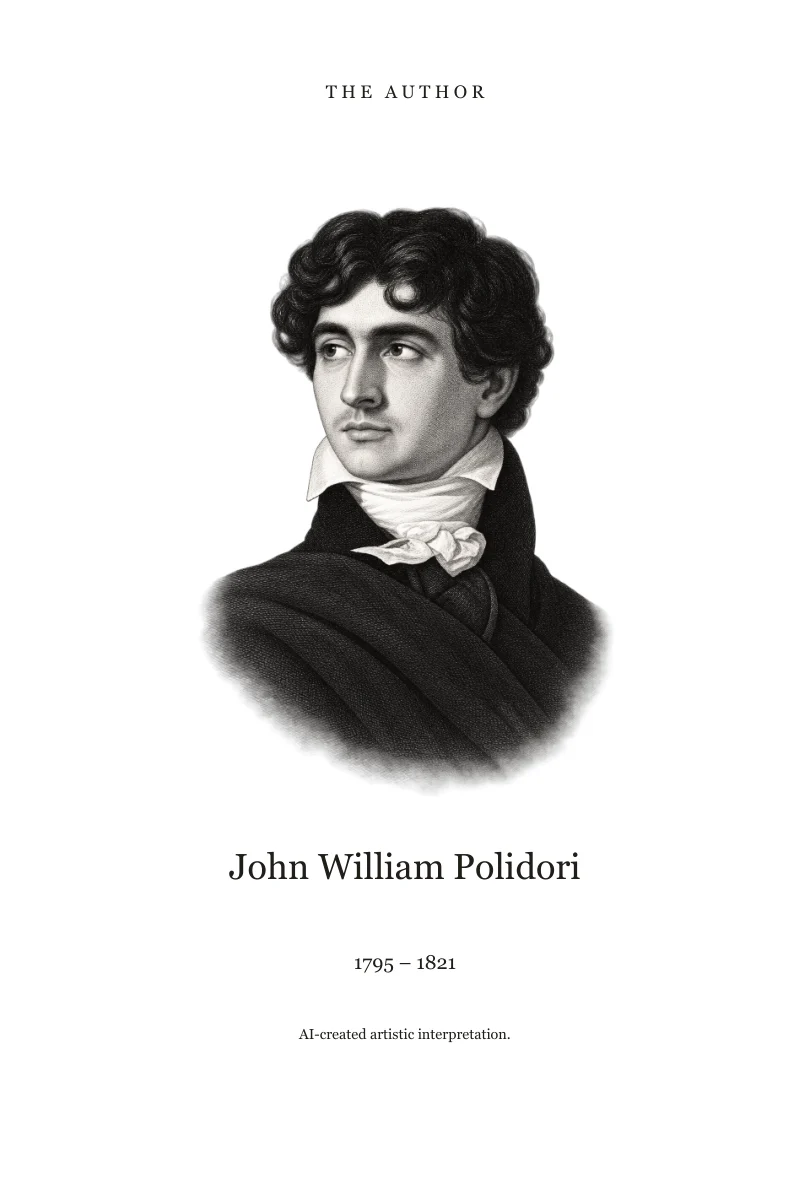
On 1 April 1819 the New Monthly Magazine in London printed a short story under the heading “The Vampyre: A Tale by Lord Byron”. Byron had not written it. The author was his former travelling physician, John William Polidori, and the false byline helped turn a short tale into the first great vampire craze, a full seventy-eight years before Dracula.
The Vampyre by John William Polidori is short enough to read in an hour. Its influence ran for most of the nineteenth century, through magazines, stage melodramas and opera houses, and its central figure is the clear ancestor of every elegant, dangerous vampire who came after.
Who really wrote The Vampyre?
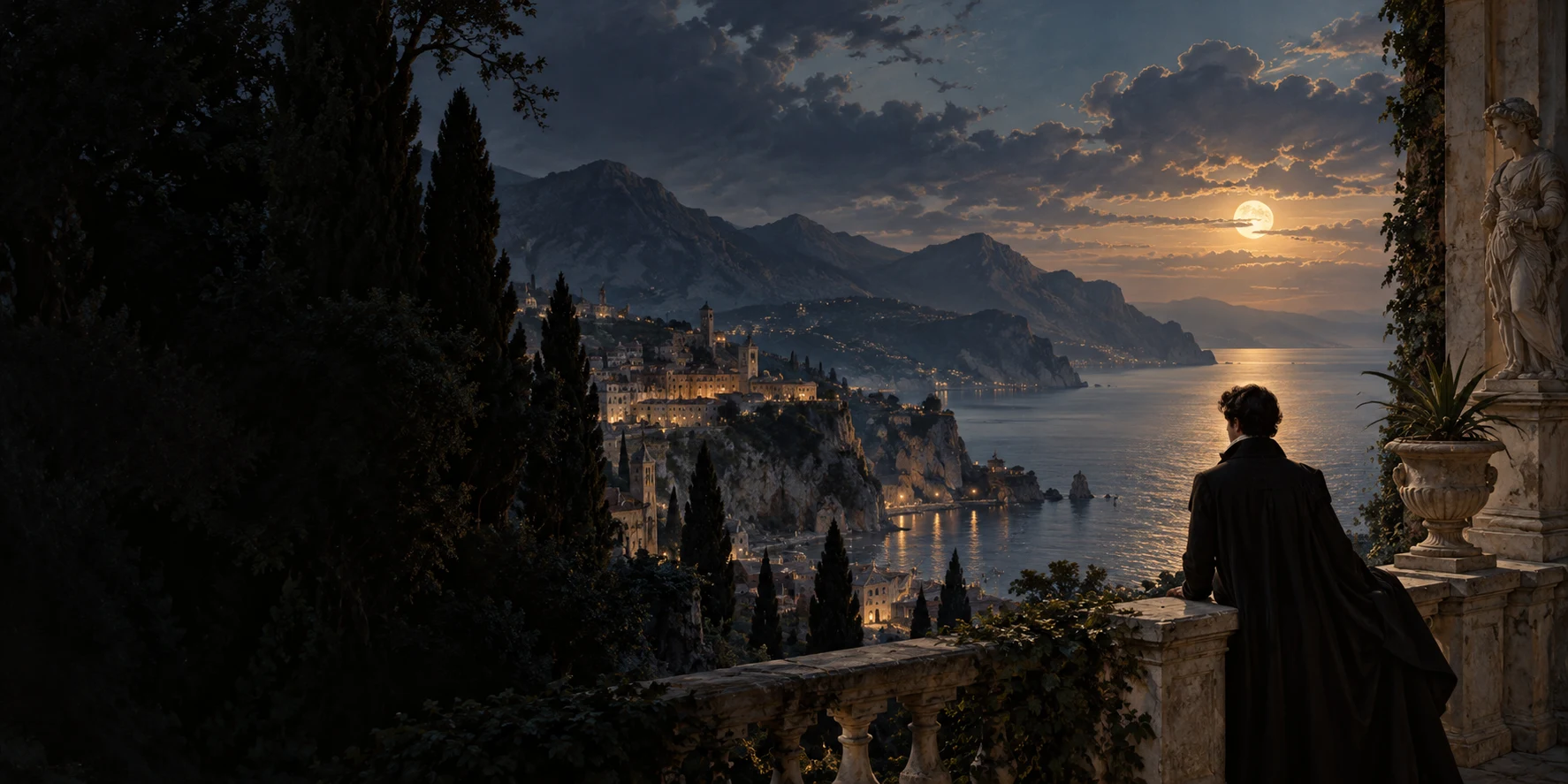
The story began in the wet summer of 1816 at the Villa Diodati on Lake Geneva, where Byron set his guests a ghost-story challenge. Byron started a tale about a mysterious traveller and abandoned it. Polidori later took the idea and built his own story on it. (The whole holiday is told in The ghost story contest that gave us Frankenstein and The Vampyre.)
How the manuscript reached the magazine is murky, but its publisher, Henry Colburn, was happy to sell it as Byron’s. Both men protested. Polidori wrote to the magazine for its next issue explaining that though the groundwork was certainly Lord Byron’s, its development was his own. Byron, for his part, published his own abandoned fragment later that year, apparently to put some distance between himself and the story.
It made little difference. Readers wanted a Byron vampire, and they assumed they had one.
How big a sensation was it?
Very big indeed for such a small book. Six different London editions dated 1819 are known, some still naming Byron on the title page. An English-language edition was printed in Paris the same year, and French and German translations followed. Goethe is said to have declared it Byron’s masterpiece.
The stage took it up at once. Charles Nodier’s melodrama Le Vampire was a hit in Paris in 1820, and James Planché’s English version, The Vampire, or The Bride of the Isles, opened in London that same year at the Lyceum. Some thirty-five stage adaptations are thought to have appeared in Europe and America across the century, and in 1828 Heinrich Marschner turned the story into an opera, Der Vampyr.
What made Lord Ruthven new?
Earlier vampires had mostly belonged to folklore and village graveyards. Polidori’s walks into London drawing rooms. Lord Ruthven is cold, rich, fascinating and morally empty, and his name came from Glenarvon, a novel by Byron’s former lover Lady Caroline Lamb in which a thinly disguised Byron appears as Clarence de Ruthven. Readers did not have to work hard to see whom Polidori was drawing. His opening paragraph sets the tone:
It happened that in the midst of the dissipations attendant upon a London winter, there appeared at the various parties of the leaders of the ton a nobleman, more remarkable for his singularities, than his rank.
John William Polidori, The Vampyre (1819)
A few lines later comes the detail that would echo through a century of fiction: “the dead grey eye”, which seems to fall on a face like a weight rather than look into it. Count Dracula’s aristocratic title and his power to fascinate both have their precedent in this man.
- June 1816
Byron proposes a ghost-story contest at the Villa Diodati
- 1 Apr 1819
The Vampyre appears in the New Monthly Magazine, credited to Byron
- 1819
Six London book editions are dated this year, and translations begin
- 1820
Stage versions by Nodier in Paris and Planché in London
- Aug 1821
Polidori dies in London, aged 25
- 1828
Marschner’s opera Der Vampyr
- 1872
Sheridan Le Fanu’s Carmilla brings the vampire to Styria
- May 1897
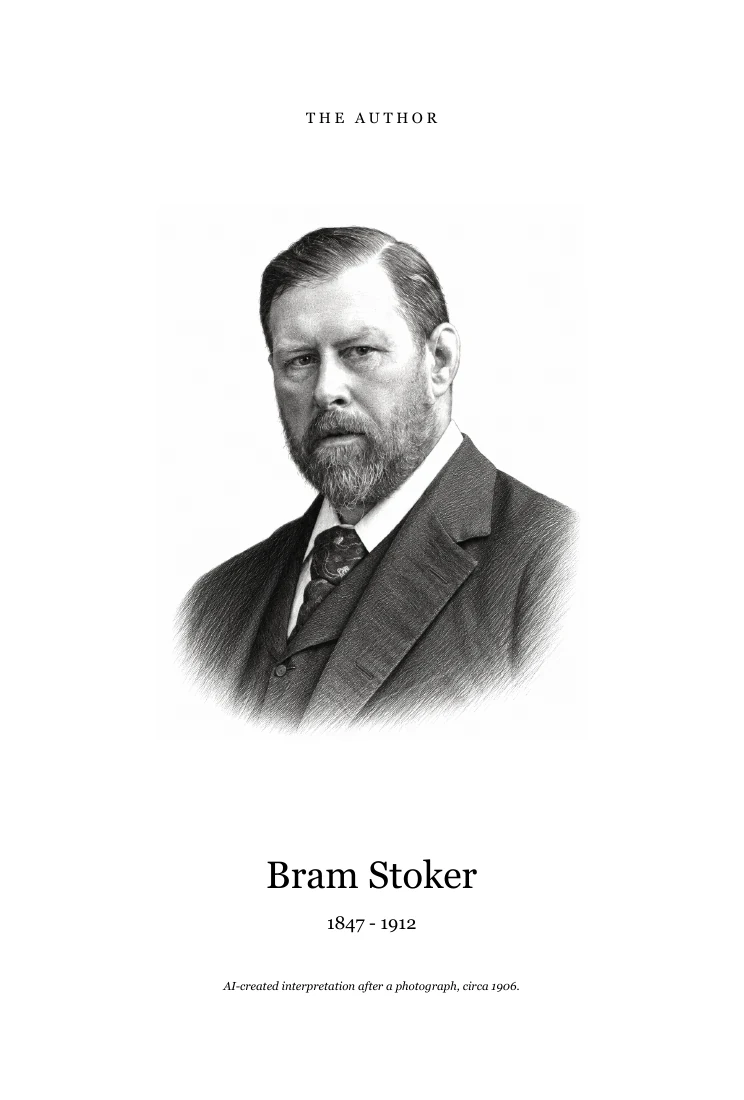
Bram Stoker’s Dracula is published
What happened to Polidori?
Very little of the fame reached him, and much of the credit went to Byron. On 24 August 1821 he died at his father’s house in London. The inquest jury returned a verdict of death by the visitation of God, though his family believed he had taken prussic acid. He was twenty-five.
The Vampyre
1819. A young Englishman travels with a fascinating, heartless lord and slowly understands what he is. The first aristocratic vampire in English fiction, in under fifty pages.
Dracula
1897. Bram Stoker’s Count, the most famous of Lord Ruthven’s descendants, hunted by a band of friends who piece the truth together from diaries and letters.
Dracula's Guest
1914. Stoker’s posthumous collection, opening with a tale of an Englishman lost on Walpurgis Night and widely linked to Dracula.


To follow the line all the way, read Vampire classics before Dracula and after, and for the episode some call Stoker’s lost opening, Did you know Dracula has a “lost” first chapter?. There is more on Stoker on the Bram Stoker page.
Read them in order. Start with The Vampyre on a winter evening, watch Lord Ruthven work his way through London society, and then open Dracula and see how much of him Stoker kept.
Questions readers ask
Who wrote The Vampyre?
John William Polidori, Lord Byron’s physician, wrote it, developing an idea from a fragment Byron abandoned in 1816. It was first published in April 1819 falsely credited to Byron.
Was The Vampyre the first vampire story?
Vampires appeared in folklore and poetry before it, but The Vampyre is widely regarded as the first modern vampire story in English prose and the first to make the vampire an aristocratic seducer.
How long before Dracula was The Vampyre published?
Seventy-eight years. The Vampyre appeared in 1819 and Bram Stoker’s Dracula in 1897.
