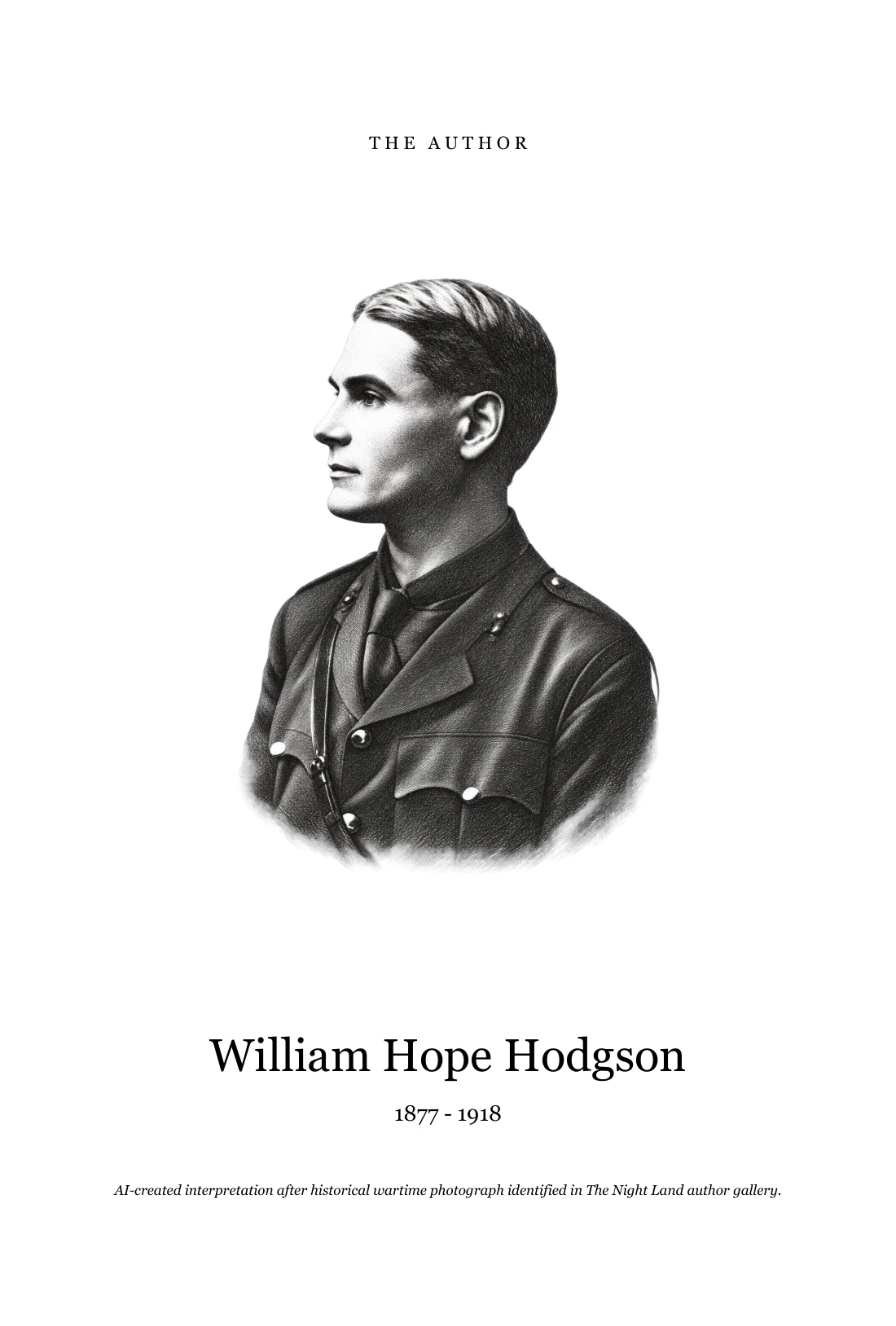
In 1902 Harry Houdini, performing in Blackburn, faced a challenger on stage. A local gym owner arrived with handcuffs and other restraints, which according to Houdini’s biographers came from the town’s police, and applied them so roughly that the escape artist struggled to get free and complained afterwards of injuries and jammed locks. The gym owner was William Hope Hodgson, twenty-four years old and not yet a writer.
Within a decade he had published four novels that horror writers still argue about. If you are looking for where to start with William Hope Hodgson books, begin with The House on the Borderland, his most famous and most accessible; go to sea with The Boats of the Glen Carrig; and save The Night Land, his vast vision of the dying Earth, for when you are ready to be swallowed whole.
Who was William Hope Hodgson?
He was born in 1877 at Blackmore End in Essex, the second of twelve children of an Anglican clergyman who moved parishes so often that the family lived in eleven of them, including one in the west of Ireland. At thirteen he ran away to sea, was brought back, and was finally allowed to sign on as a ship’s apprentice in 1891. He spent most of the next decade as a sailor, eventually earning his mate’s certificate.
Life on board was brutal. Short and fine-featured, he was bullied by older seamen and responded by making himself formidably strong. He also took up photography, shooting cyclones, lightning and sharks. Back on land in 1899, he opened a school of physical culture in Blackburn, and when that failed to pay he turned to writing articles, then stories. The first, “The Goddess of Death”, appeared in 1904.
William Hope Hodgson books: the four novels
Hodgson wrote all four of his novels in a few years, and they appeared between 1907 and 1912. In the foreword to the third, The Ghost Pirates (1909), he described it as completing a kind of trilogy with the first two, three very different books sharing related ideas. The Night Land came last, and it is unlike anything else.
- $12.99
The Boats of the Glen Carrig
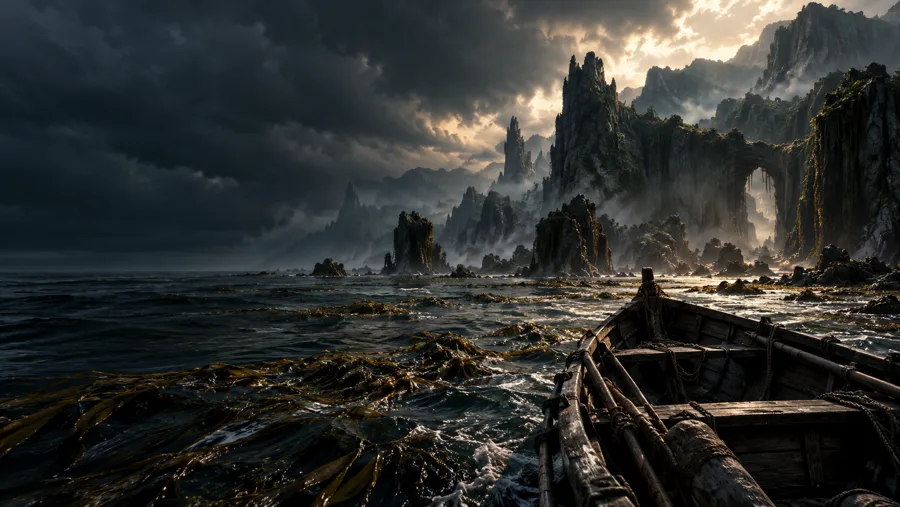
1907. Shipwrecked sailors drift into a sargasso of weed, giant crabs and tentacled “weed men”, told in a deliberately antique voice. His first novel, and the purest of his sea horrors.
- $12.99
The House on the Borderland
1908. A recluse in a remote house in the west of Ireland fights off swine-faced creatures from a pit, then is carried out across time to watch the solar system die. His masterpiece of cosmic dread.
- $20.99
The Night Land
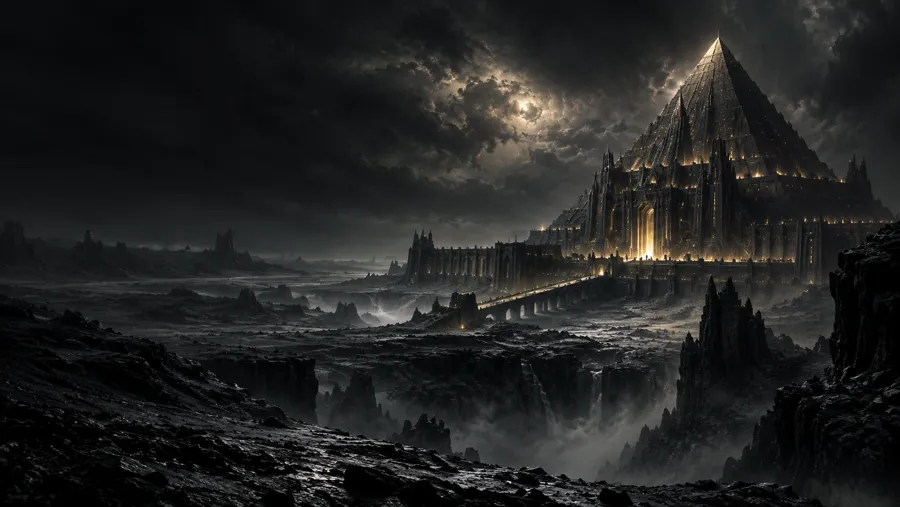
1912. Millions of years from now, the sun has gone out and the last humans shelter in a metal pyramid, watched by vast things in the dark. One man walks out into the night to find the woman he loves.


Why start with The House on the Borderland?
Because it is short and it moves. It begins as a found manuscript, discovered by two men on a fishing holiday, and settles into a siege story of real menace before it does something no ghost story of 1908 had done: it lifts its narrator out of his study and sends him through aeons. The house sits at the edge of something much larger than a haunting.
H. P. Lovecraft did not read Hodgson until 1934, but once he did, he praised him at length in the revised version of his essay Supernatural Horror in Literature, singling out this novel and The Night Land. Readers who come to Hodgson from Lovecraft often find him the more unsettling of the two, because he describes so precisely what he cannot explain.
Is The Night Land worth reading?
Yes, with a warning. It is long, nearly plotless for stretches, and written in an invented archaic English that some readers find hypnotic and others cannot bear. It opens with a grieving seventeenth-century man who dreams himself into the far future, and then it builds the most complete dying world of its era: the Last Redoubt, the Watchers, the Ab-humans, the Night Hounds and the House of Silence.
the Last Redoubt—that great Pyramid of grey metal which held the last millions of this world from the Powers of the Slayers.
William Hope Hodgson, The Night Land (1912)
Take it slowly, a chapter at a time, and let the strangeness accumulate. Writers from Clark Ashton Smith to Greg Bear and China Miéville have treated it as a landmark, and once you have seen the pyramid in the dark, it is hard to forget.
Carnacki, the war and a short life
To earn steadier money, Hodgson created Carnacki, an occult detective who investigates hauntings with cameras and an electric pentacle, and whose cases began appearing in 1910. He married Bessie Farnworth in February 1913 and moved to the south of France, but returned when war broke out. Rather than go back to sea, he took a commission in the Royal Artillery, survived a serious riding accident, re-enlisted, and was killed by a shell near Ypres in April 1918. He was forty.
Readers who want more darkness should try Weird fiction before Lovecraft, Classic horror novels that still frighten and The greatest sea stories ever written. The Welsh master of the uncanny gets his own guide in Arthur Machen: the Welsh master of the weird.
The manuscript the fishermen found in the ruins is waiting. Open The House on the Borderland on a dark evening, and listen for something at the door.
Questions readers ask
What is William Hope Hodgson best known for?
The novels The House on the Borderland (1908) and The Night Land (1912), his sea horror stories, and the occult detective Thomas Carnacki.
What order should I read William Hope Hodgson’s books in?
Publication order works well: The Boats of the Glen Carrig (1907), The House on the Borderland (1908), The Ghost Pirates (1909) and The Night Land (1912). For a first taste, though, start with The House on the Borderland.
Did H. P. Lovecraft like William Hope Hodgson?
Yes. Lovecraft discovered Hodgson in 1934 and praised The House on the Borderland and The Night Land in the revised version of his essay Supernatural Horror in Literature.