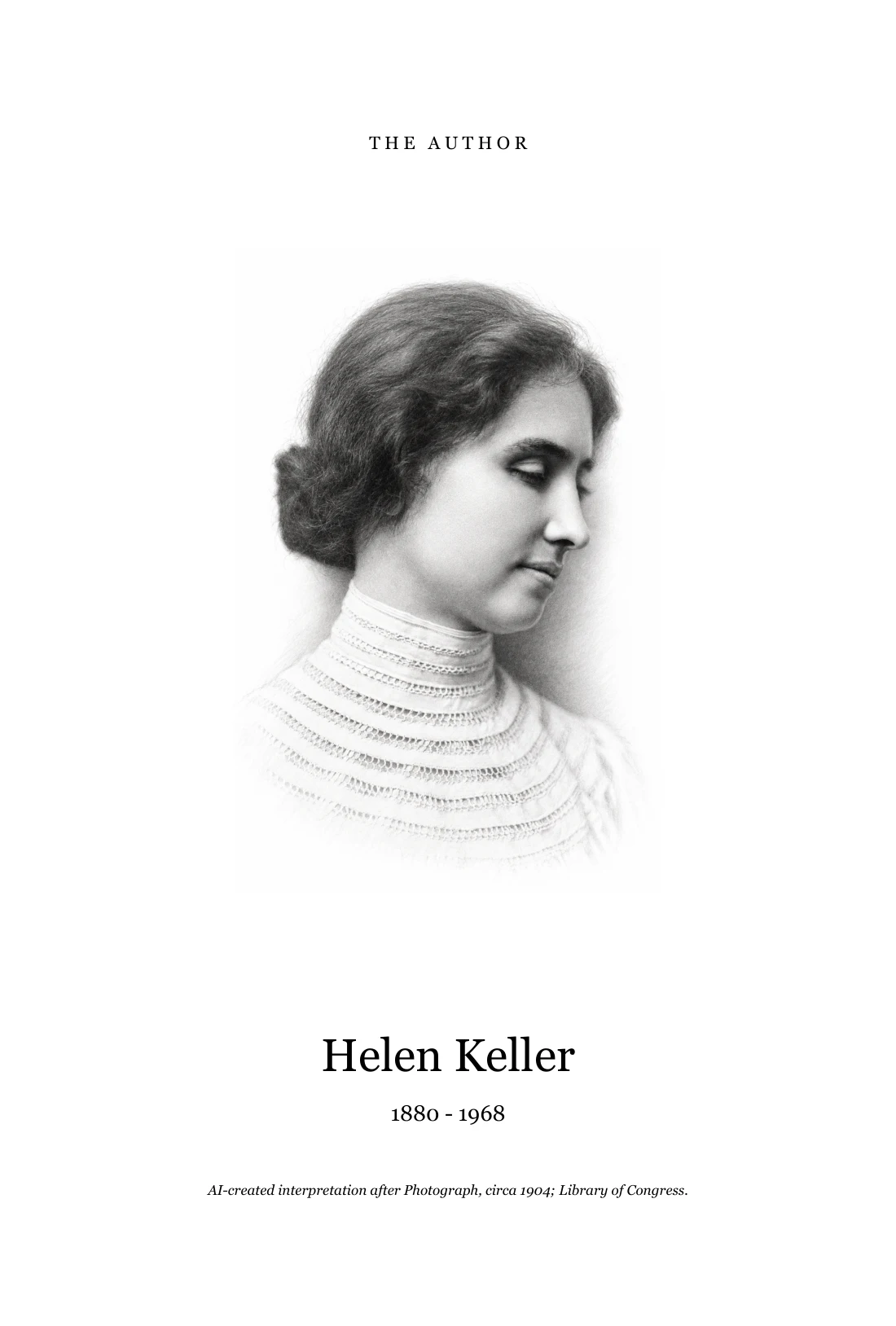
In March 1888 a seven-year-old girl in Tuscumbia, Alabama, wrote to a friend in Kentucky. She told him that she loved to run and hop and skip in the warm sun, that her baby sister was not coming to Boston, and that she herself was going there in June. She signed herself Helen A. Keller, and she addressed the letter to “uncle Morrie”.
Uncle Morrie was Morrison Heady, a poet and novelist who, like Helen, could neither see nor hear. Four years earlier he had published Burl, a story of the Kentucky frontier, and its preface told readers frankly how it had been made: its author was blind and deaf, and every word spoken to him had to be spelled out, letter by letter, on his hand.
My dear uncle Morrie,--I am happy to write you a letter, I do love you, and I will hug and kiss you when I see you.
Helen Keller, letter to Morrison Heady, 1 March 1888
Who was Morrison Heady?
Morrison Heady was born in Elk Creek, Spencer County, Kentucky, in 1829. As a small child he lost the sight of one eye to a chip from a woodcutter’s axe; at sixteen an accident while playing with a schoolmate took the sight of the other. A fall from a horse in childhood had damaged his hearing, and it faded over the years until he was completely deaf by about the age of forty.
He spent a year at the Kentucky School for the Blind and some fourteen months at the Ohio school, but most of his education came from reading, in raised type, and from friends who read to him. He built up one of the largest private collections of embossed books in the country. The press of his day called him the “Blind Bard of Kentucky”.
- 1829
Born at Elk Creek, Spencer County, Kentucky.
- c. 1845
Loses the sight of his second eye, at about sixteen.
- 1854
Begins collecting donations to print Paradise Lost in embossed type for blind readers, and meets Laura Bridgman in Boston.
- 1860
Appointed to raise funds for what became the American Printing House for the Blind.
- 1864
Publishes The Farmer Boy, a life of George Washington for children, as “Uncle Juvinell”.
- 1884
Burl is published in Nashville by the publishing house of the Methodist Episcopal Church, South.
- 1888
Receives letters from the young Helen Keller.
- 1915
Dies in December, aged eighty-six.

How did a deaf-blind man write a novel?
With ingenuity. Heady wore a cotton glove printed with the letters of the alphabet, so that friends could spell words onto his hand simply by touching the right places, and the preface to Burl describes exactly this: he could receive no communication “except through an alphabet which he carries upon his hand.” He could still speak clearly, so he could answer aloud.
He was also an inventor. Among the devices credited to him is the diplograph, a typewriter that could switch between three systems of raised writing for the blind: Boston line letter, New York Point and braille. He campaigned for years for more books that blind readers could use for themselves.
What is Burl about?
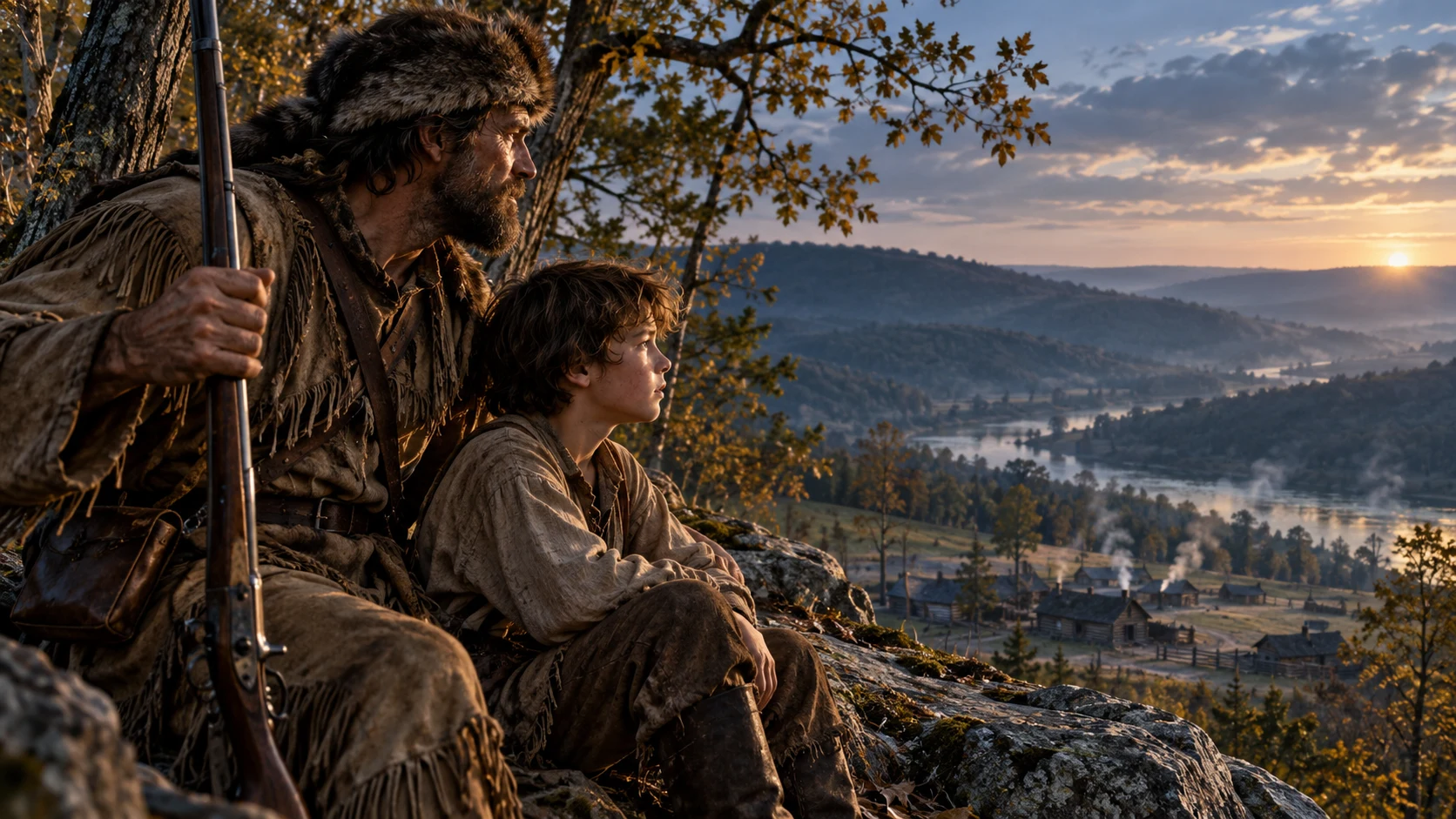
Burl is set around 1789 on the northern border of Kentucky, when settlers and the Native peoples of the Ohio country were still at war. Its hero is Big Black Burl, an enslaved man of enormous strength and good humour, who is devoted to his master’s family and above all to their small son, Bushie. When disaster falls on the family and then the boy goes missing, Burl takes to the war-path with his great dog, Grumbo, to bring him home.
The chapters have titles like “How Big Black Burl Figured in Ambush” and “How Big Black Burl Figured on the Peace-path”, and Heady tells the story with a storyteller’s relish: hunting scenes, a bear fight, comic dialogue, and set pieces of the Kentucky woods. Its editor, W. P. Harrison, admired its “quiet humor”, and noted that the book contains not a word of complaint about its author’s own disabilities.
Modern readers should know what kind of book it is. Burl is a product of the post-war South and of a Methodist publisher in Nashville, and it presents slavery through the comforting myth of the loyal, contented slave: Burl speaks in heavy dialect, uses the racial slurs of the period, and at one point declines his freedom. Native Americans are mostly the “savages” of frontier legend, although a young Native character, Kumshakah, becomes a friend to the boy later on. It is worth reading as a historical document as much as an adventure.
Heady and Helen Keller
Keller’s letters to Heady were printed in 1903 with her autobiography, The Story of My Life, which she wrote while she was a student at Radcliffe. In a second letter, sent from South Boston in October 1888, she thanks him for a book of stories he had sent her and describes for him the Pilgrims at Plymouth. The editor’s note introducing him gets one detail wrong, saying he lost his sight and hearing as a boy, when his hearing in fact failed gradually and was gone completely only by about the age of forty.
For Keller’s own story, and how a college student came to write a bestseller, see Did you know Helen Keller wrote The Story of My Life as a college student?. And for a fictional detective who works without sight, meet Max Carrados, the blind detective.
Read The Story of My Life first if you have not, then open Burl and listen for the voice of the man Keller loved enough to send her hugs: a storyteller who never once mentions what he could not see or hear.
Questions readers ask
Who was Morrison Heady?
Morrison Heady (1829–1915) was a Kentucky poet, novelist and inventor who became blind as a youth and later completely deaf. Known as the Blind Bard of Kentucky, he wrote Burl (1884) and campaigned for books for blind readers.
What is Burl by Morrison Heady about?
Burl is a frontier adventure set in Kentucky around 1789. An enslaved man called Big Black Burl sets out to rescue his master’s young son. It reflects the racial attitudes of the 1880s South, including a romanticised view of slavery.
Did Helen Keller know Morrison Heady?
Yes. As a child she wrote to him as “uncle Morrie”, and two of her 1888 letters to him were printed with The Story of My Life in 1903.
How did Morrison Heady communicate?
He wore a glove printed with the alphabet, and people spelled words onto his hand by touching the letters. He kept the ability to speak, so he could reply aloud.