
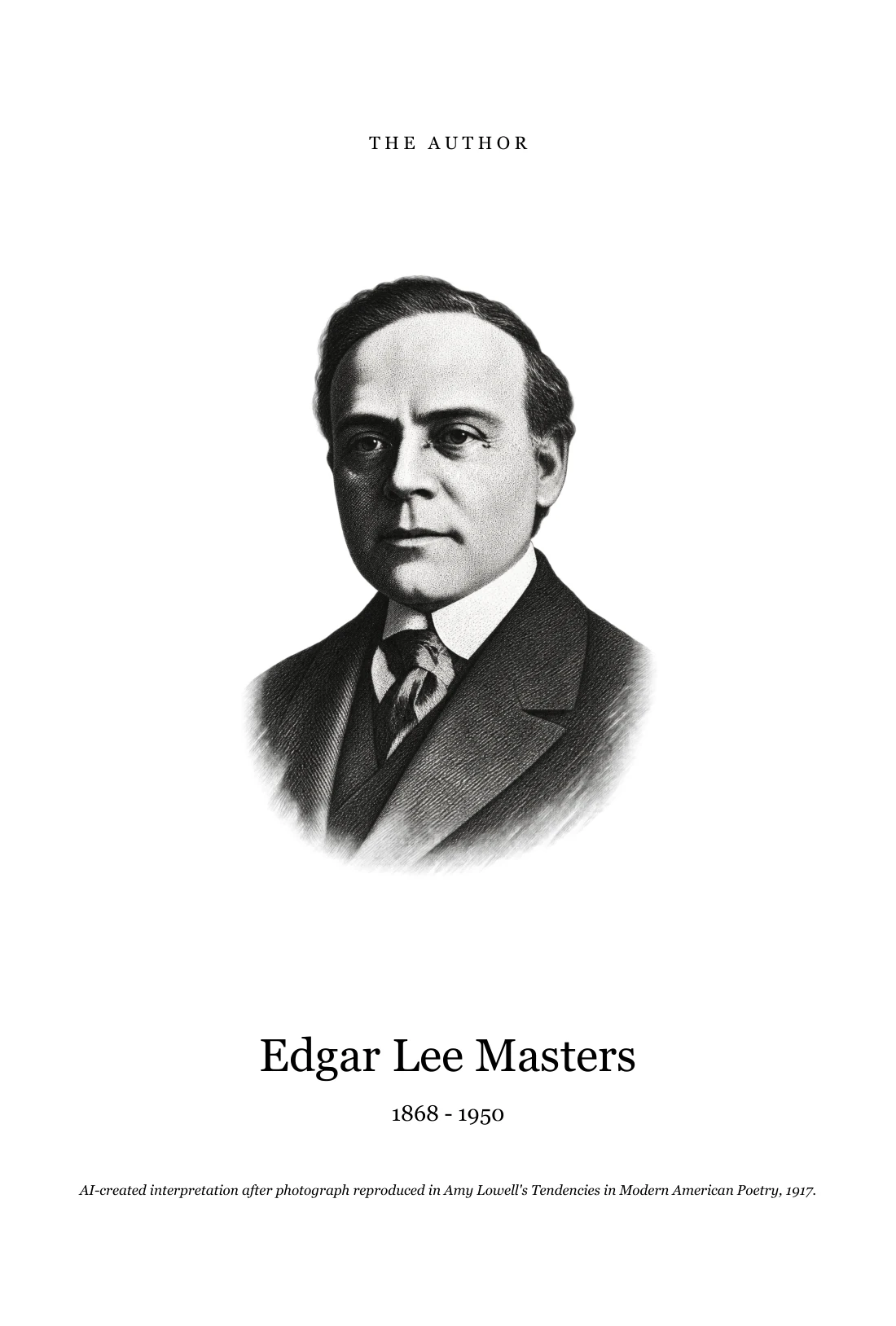

Between May 1914 and January 1915, readers of Reedy’s Mirror, a weekly magazine in St Louis, met a town one grave at a time. Each instalment brought new short poems in free verse, each spoken by a dead citizen of a place called Spoon River, and each signed by a poet nobody had heard of, Webster Ford. In November the magazine’s editor, William Marion Reedy, revealed who he really was: Edgar Lee Masters, a busy Chicago lawyer.
When the poems were collected as Spoon River Anthology in April 1915, they became a sensation. Critics praised them, the public bought them, and the book has been read, taught and performed ever since.
What is Spoon River Anthology about?
It is a portrait of a small Midwestern town, told entirely by its dead. The opening poem, “The Hill”, names them as they lie in the cemetery: “Where are Elmer, Herman, Bert, Tom and Charley, / The weak of will, the strong of arm, the clown, the boozer, the fighter?” Then, one by one, they speak for themselves.
With nothing left to protect, they say what they could not say alive. Doc Hill, who tended the town’s sick poor day and night, admits he did it because his wife hated him, and that at his funeral he saw the woman he secretly loved hiding behind an oak tree. Knowlt Hoheimer, shot at Missionary Ridge, wishes he had stayed home and gone to jail for stealing hogs rather than lie under a monument inscribed “Pro Patria”. Petit, the Poet, regrets a lifetime of tidy triolets and villanelles written “While Homer and Whitman roared in the pines”.
Because the poems answer one another, the book works like a puzzle. Mrs. Benjamin Pantier follows her husband’s epitaph with her side of the marriage. The grave after Knowlt Hoheimer’s belongs to Lydia Puckett, who says the hogs were not the real reason he ran off to the war: “Back of every soldier is a woman.” Slowly the town’s scandals, feuds and hidden loves come into view.
Not every voice is bitter. Lucinda Matlock, who lived to ninety-six, spun, wove, nursed the sick and buried eight of her twelve children, ends her epitaph by scolding the complainers around her. Fiddler Jones has no regrets about the farm he neglected for his music. The book’s range of tone, from rage to wry comedy to something close to joy, is a large part of why it lasts.
Degenerate sons and daughters, / Life is too strong for you— / It takes life to love Life.
Edgar Lee Masters, “Lucinda Matlock”, Spoon River Anthology

Was Spoon River a real place?
The river is real: the Spoon River runs through Fulton County, Illinois, near Lewistown, where Masters went to school. The town is invented, but it was built from two real ones, Lewistown and Petersburg, where Masters had spent his childhood on his grandparents’ farm. Many of his characters were based on people he knew or had heard about, sometimes thinly disguised and occasionally not disguised at all. Walk through Oak Hill Cemetery in Lewistown today and you will find many of the surnames from the book on the stones.
Not everyone was flattered. Lewistown kept the book out of its schools and library until 1974, and Masters is said to have remarked that his mother disliked the book while his father adored it.
How did Masters come to write it?
Masters had been writing conventional verse for years, with modest success. It was Reedy, his editor and friend, who pushed him to find something more distinctive, and who introduced him to the Greek Anthology, the ancient collection of short epigrams and epitaphs. Masters took that old form of the grave inscription, moved it to the prairie, and let the dead speak in plain modern free verse.
There is a sly joke near the end. The last of the epitaphs belongs to “Webster Ford”, the pen name Masters had hidden behind, who confesses that he hid his vision of Apollo for years for fear of being mocked.
Spoon River Anthology
1915. More than two hundred voices from one Illinois hilltop cemetery. Read it straight through for the story, or dip in at random, one grave at a time.
Winesburg, Ohio: A Group of Tales of Ohio Small Town Life
1919. Sherwood Anderson’s interlocking tales of an Ohio town carry the Spoon River idea into prose, with the living instead of the dead.
Cane
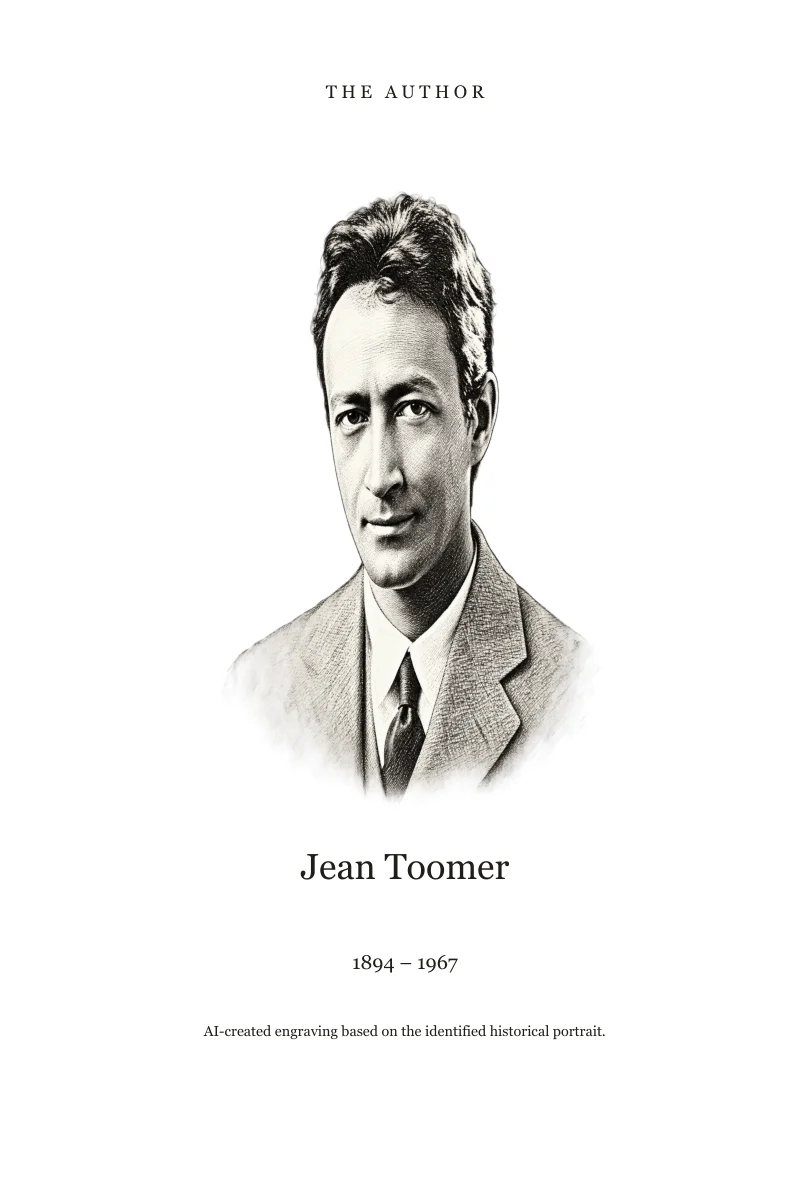
1923. Jean Toomer’s mix of poems and portraits of a Georgia town, which critics have often compared with Masters’s book.



How to read Spoon River Anthology
In small doses, at first. Each poem is short, rarely more than a page, so a handful at bedtime works well. But keep a finger in the index: half the pleasure is following one family or one scandal across several graves. Actors have long used the poems as audition pieces, and they are made to be read aloud.
For related reading, see Sherwood Anderson and the small-town story, Cane: the Harlem Renaissance landmark and Classic poetry collections to keep by the bed.
Begin on the hill with Elmer, Herman, Bert, Tom and Charley. Open Spoon River Anthology at “The Hill”, and by the time you reach the last grave, you will know Spoon River better than most of its residents did.
Questions readers ask
What is Spoon River Anthology about?
It is a 1915 collection of free-verse epitaphs in which the dead of the fictional small town of Spoon River, Illinois, describe their lives and deaths, revealing the town’s secrets and connections.
Is Spoon River a real town?
No, but the Spoon River is a real river in Illinois, and the town was modelled on Lewistown and Petersburg, where Edgar Lee Masters grew up. Many characters were based on real local people.
How many poems are in Spoon River Anthology?
The first edition of 1915 had 213 poems, and Masters added 33 more in an expanded edition in 1916. In all, 212 characters give 244 accounts of their lives.
Why was Spoon River Anthology banned?
People in Lewistown, Illinois, recognised themselves and their neighbours in its unflattering portraits, and the book was kept out of the town’s schools and library until 1974.