
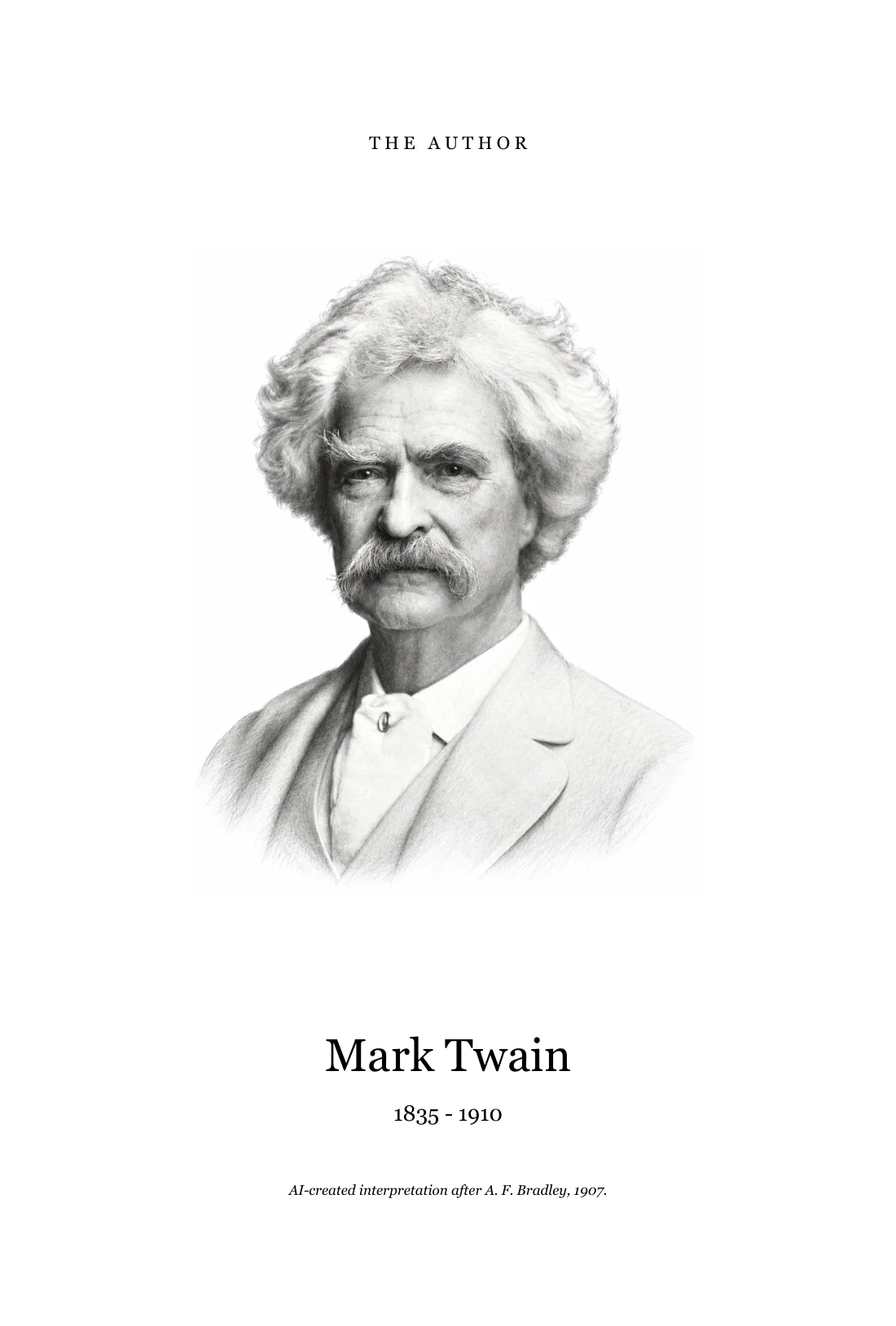
A French critic had read the story and could not see the joke. Writing about American humorists in the Revue des deux Mondes in 1872, Thérèse Bentzon translated Mark Twain’s jumping frog story into French, and Twain complained that she had done it to prove there was nothing so very funny about it. Twain’s response was to translate her French back into English, word by word, and print all three versions side by side.
The result is in Sketches New and Old (1875), and it is one of the funniest things Mark Twain ever did. It is also a reminder of how much the frog mattered to him. The story he was defending was the one that had first made his name.
How did the jumping frog make Mark Twain famous?
In 1865 Samuel Clemens was a little-known newspaperman in the West. The humorist Artemus Ward had asked him for a piece for a book, and Clemens wrote up a tale he had heard in the mining town of Angels Camp, in California’s Calaveras County. It reached New York too late for Ward’s book, so it went instead to a weekly paper, The Saturday Press, which printed it on 18 November 1865 as “Jim Smiley and His Jumping Frog”.
The story brought the name Mark Twain national attention. In December, Bret Harte ran a revised version in The Californian under the title by which it is still best known, “The Celebrated Jumping Frog of Calaveras County”. In 1867 it became the title story of Twain’s first book, The Celebrated Jumping Frog of Calaveras County, and Other Sketches, published in New York in a first printing of a thousand copies.

What happens in the jumping frog story?
Almost nothing, beautifully. A narrator is asked by a friend back East to look up a certain Reverend Leonidas W. Smiley. He finds old Simon Wheeler dozing by the bar-room stove of a tavern in the decayed mining camp of Angel’s, and asks his question. Wheeler has never heard of Leonidas, but he did know a Jim Smiley, and he backs the narrator into a corner and tells him all about it.
Jim Smiley would bet on anything: a horse race, a dog fight, which of two birds would fly off a fence first. One day he catches a frog, names it Dan’l Webster and spends three months teaching it to jump. Then a stranger comes to town and Smiley offers to bet forty dollars that his frog can outjump any frog in Calaveras County. The stranger has no frog, so Smiley goes off to the swamp to catch him one, and leaves the stranger alone with Dan’l Webster. You can guess that this is a mistake. How it is a mistake is the punchline, and we will leave it to Wheeler.
The joke is less the frog than the telling. Wheeler narrates with total gravity, never smiles, and never seems to suspect that his story is funny. Twain later wrote, in “How to Tell a Story” (1895), that “the humorous story is told gravely”, and that this was the American way of telling one. The frog is his first great demonstration of it.
The jumping frog in three languages
In Sketches New and Old the piece is titled “The Jumping Frog: In English. Then in French. Then Clawed Back into a Civilized Language Once More by Patient, Unremunerated Toil.” It comes in three parts:
- The original English story, here called “The Notorious Jumping Frog of Calaveras County”, with a note on how to pronounce Calaveras.
- The French translation from the Revue des deux Mondes, printed in full.
- Twain’s literal retranslation of the French, which turns Wheeler’s easy drawl into gloriously mangled English.
I cannot speak the French language, but I can translate very well, though not fast, I being self-educated.
Mark Twain, Sketches New and Old (1875)
The retranslation begins “It there was one time here an individual known under the name of Jim Smiley”, and it does not get more dignified. It is a joke about translation, about French grammar and about the national pride of an author who had been gently patronised, and Twain plays the wounded party for all he is worth.
What else is in Sketches New and Old?
The book gathers about sixty short pieces from the first decade of Twain’s career, some reprinted and some, as his preface says, appearing for the first time. Among them are “Journalism in Tennessee”, about a newspaper office where a rival editor calls to settle an account with a pistol; “Cannibalism in the Cars”, a grim comedy about snowbound train passengers; “A Ghost Story”; and “A True Story, Repeated Word for Word as I Heard It”, a much more serious piece told in the voice of a formerly enslaved woman.
It is a book to dip into rather than read straight through, and the best pieces show the voice of Tom Sawyer and Huckleberry Finn already fully formed.
More Mark Twain
For the story of how Samuel Clemens became Mark Twain, read Did you know Mark Twain’s pen name comes from his years as a riverboat pilot?. And for the best short fiction by his contemporaries, see the best classic short story collections.
But start with the frog. Turn to the jumping frog in Sketches New and Old, read Wheeler’s version first, then the French, then Twain’s revenge. It takes twenty minutes, and you will understand why a country laughed in 1865.
Questions readers ask
When was The Celebrated Jumping Frog of Calaveras County published?
It first appeared as “Jim Smiley and His Jumping Frog” in The Saturday Press, a New York weekly, on 18 November 1865. It became the title story of Mark Twain’s first book in 1867.
Is the Jumping Frog of Calaveras County a true story?
It is a tall tale. Twain said he based it on a story he heard in the mining town of Angels Camp, California, but the gambler Jim Smiley and his frog are comic inventions.
What is the name of the frog in Mark Twain’s story?
The frog is called Dan’l Webster, after the American statesman Daniel Webster. His owner, Jim Smiley, trains him to jump and bets on him against all comers.
Which book has Mark Twain’s retranslation of the jumping frog?
Sketches New and Old (1875) prints the story in English, then the 1872 French translation, then Twain’s word-for-word retranslation back into English.
 The Adventures of Tom Sawyer270 pages · $15.99
 Adventures of Huckleberry Finn354 pages · $18.99
 A Connecticut Yankee in King Arthur’s Court314 pages · $17.99
 The Prince and the Pauper200 pages · $13.99